What Is a Plenary Indulgence, Specifically?

Not forgiveness — something else entirely
The single most common misunderstanding about indulgences is that they forgive sin. They don't, and they never have according to official Catholic teaching. The Catechism is explicit on this point: an indulgence is "a remission before God of the temporal punishment due to sins whose guilt has already been forgiven" (CCC 1471). The forgiveness of guilt happens through confession — through the Sacrament of Reconciliation, which has its own separate process. An indulgence addresses a different, second layer entirely: what Catholic teaching calls the temporal punishment due to sin, which the Church holds can remain even after guilt is forgiven, and which Catholic tradition connects to purification in purgatory if it isn't resolved during life.
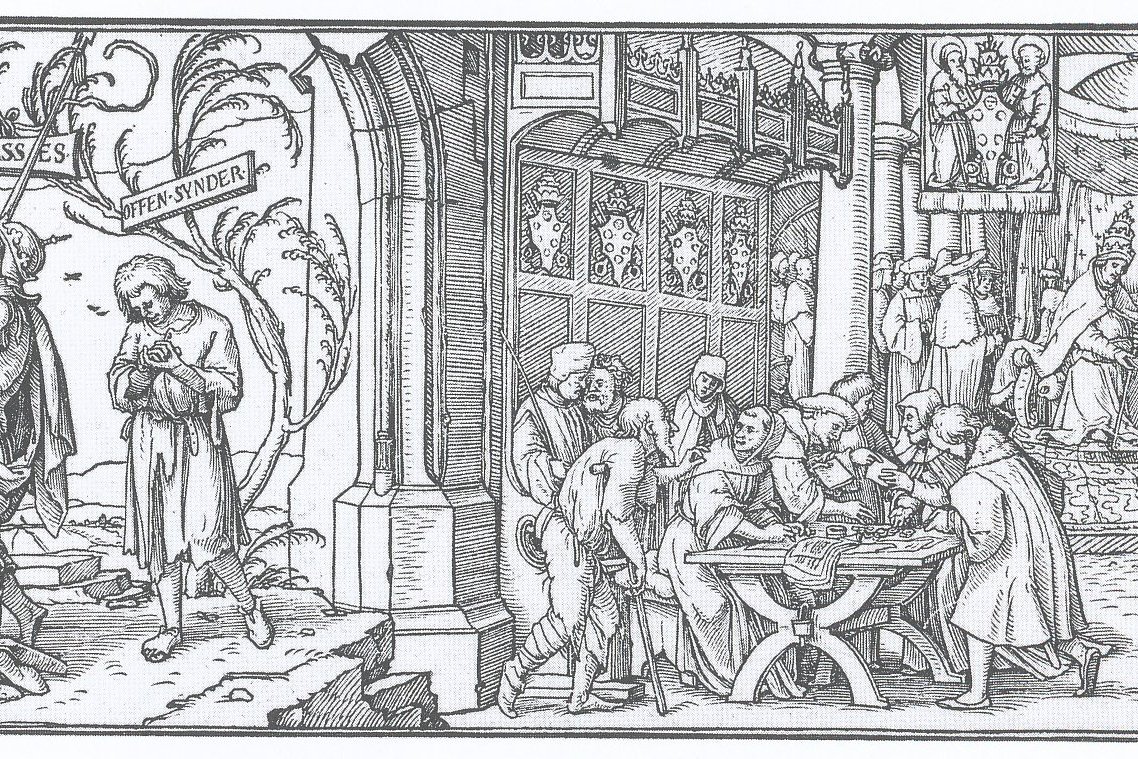
Hans Holbein the Younger, The Sale of Indulgences, c. 1529, woodcut, Kunstmuseum Basel — public domain.
That distinction — guilt forgiven through confession, temporal punishment addressed through indulgences, penance, and charity — is the entire foundation the rest of Catholic indulgence teaching sits on. Miss it, and the whole subject sounds far stranger and more transactional than it actually is in official doctrine.
Plenary versus partial
The Church distinguishes two kinds of indulgence:
- A partial indulgence remits part of the temporal punishment due to sin.
- A plenary indulgence remits all of it — hence "plenary," from the Latin plenus, meaning full.
Only one plenary indulgence can be gained per day under ordinary circumstances (with a traditional exception made for the moment of death), while partial indulgences have no such daily limit. In practice, this means plenary indulgences are tied to specific, named acts the Church designates as carrying this fuller remission — not something available through any prayer at any time.
The four conditions, in full
To receive a plenary indulgence, current Church discipline (set out in the Enchiridion of Indulgences, the Vatican's official manual on the subject) requires all of the following:
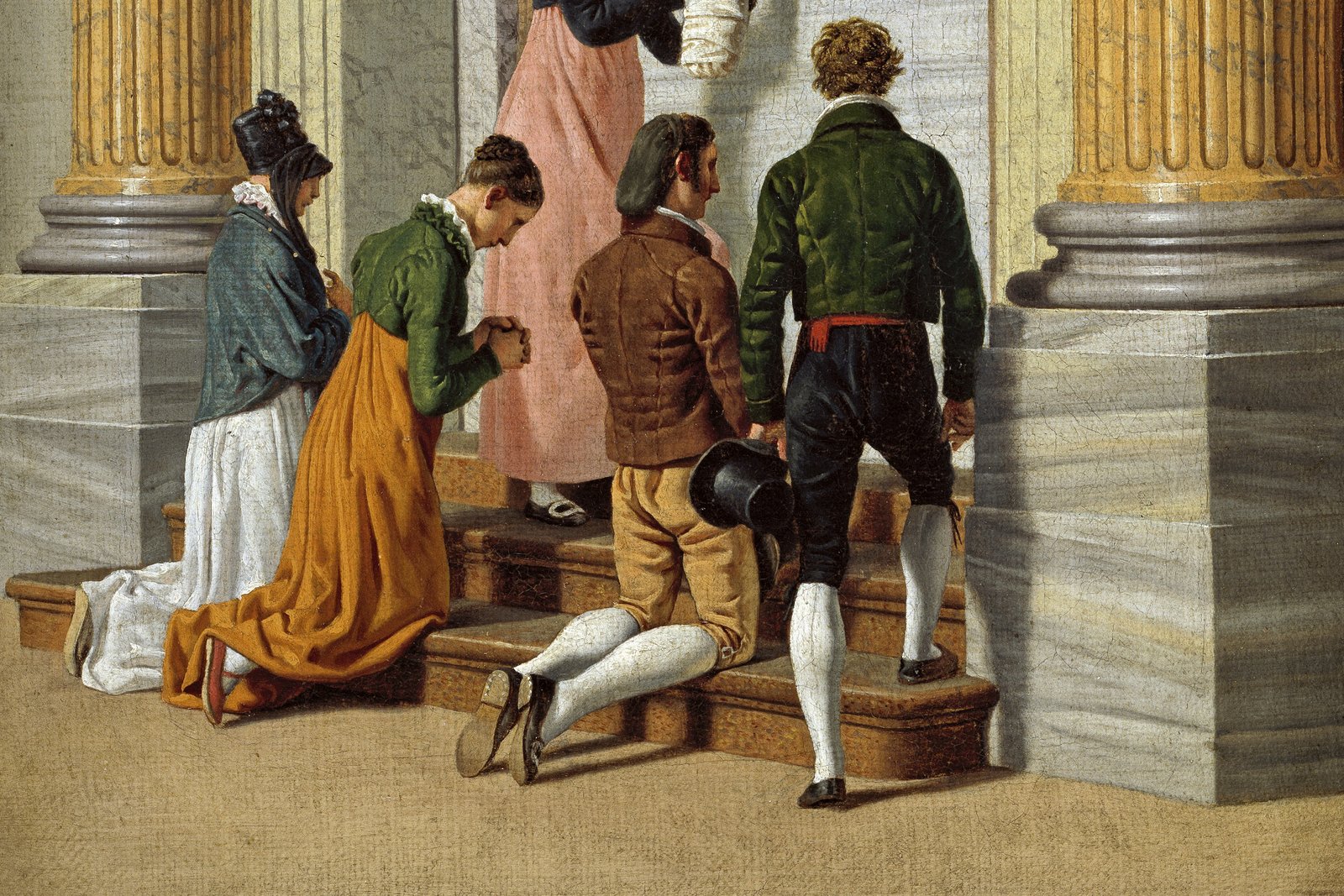
- Performing the specific indulgenced work named for that indulgence — this varies case by case. Examples include making a pilgrimage to a designated church on a particular feast day, praying certain prayers before the Blessed Sacrament, or performing a work of charity during a Jubilee Year.
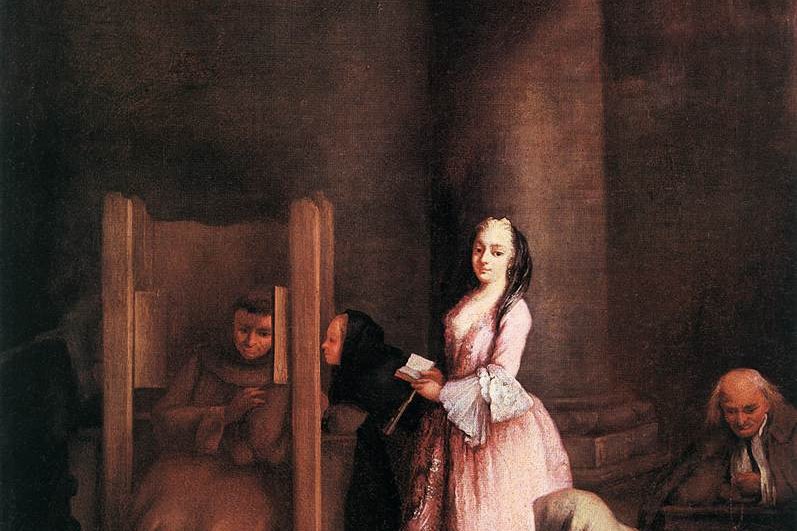
- Sacramental confession — within roughly a week before or after the indulgenced act.
- Receiving Holy Communion — within the same window.
- Praying for the intentions of the Pope — typically an Our Father and Hail Mary, or any prayer of one's choosing, offered for whatever intentions the Pope currently holds.
- Complete detachment from all sin, even venial sin — this is the condition Church teaching treats as hardest to fulfill, since it asks for a disposition free of any attachment to sin at all, not merely the absence of mortal sin.
If that last condition of full detachment is not completely met, the Church teaches that the indulgence is instead gained only partially, rather than not at all — an important pastoral nuance, since perfect detachment from sin is a high bar for anyone.
The history that makes this all sound suspicious
Indulgences carry weight in popular memory mostly because of one specific 16th-century abuse: the sale of indulgences, most infamously by the Dominican friar Johann Tetzel, who raised funds partly for the rebuilding of St. Peter's Basilica by preaching that indulgences could be purchased for the dead. This practice provoked Martin Luther to post his 95 Theses in Wittenberg in 1517, an event conventionally marking the start of the Protestant Reformation.
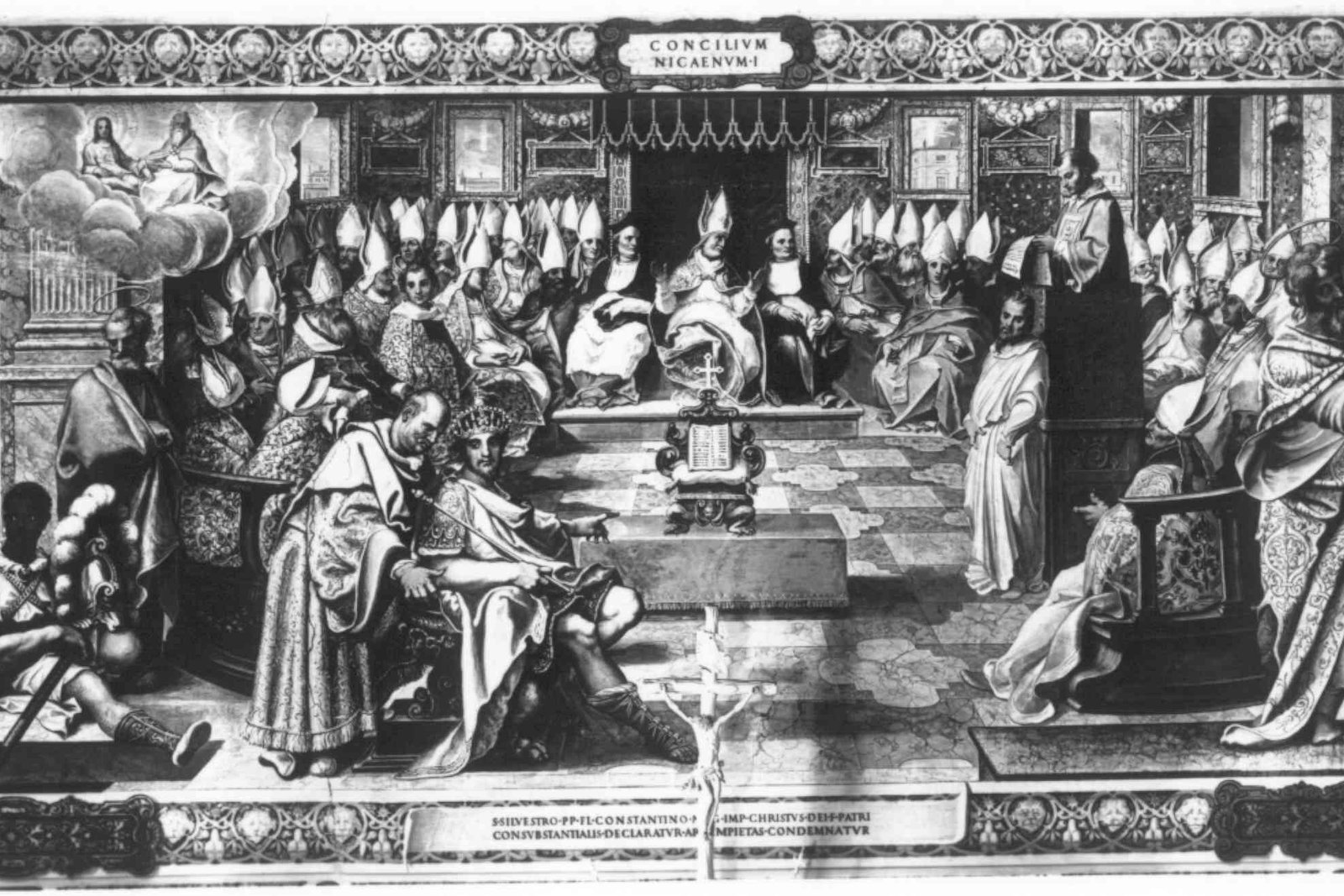
The Catholic Church's own later reform addressed this directly. The Council of Trent (1545-1563), called partly in response to the Reformation, explicitly condemned "all evil gains for the obtaining of indulgences" and abolished the sale of indulgences outright. Every indulgence granted by the Church since has been tied to prayer, pilgrimage, or works of charity and piety — never to a payment.
Where the temporal punishment idea comes from
Understanding why the Church distinguishes guilt from "temporal punishment" at all requires a bit more of the underlying theology. Catholic teaching holds that even after sin is forgiven and its eternal consequence removed, sin still tends to leave behind an attachment to created things and a kind of disordering effect that calls for further purification — what the Catechism describes as needing "either here on earth, or after death in the state called Purgatory" (CCC 1472). This is why the Church has long encouraged concrete acts of penance even after confession and absolution: prayer, fasting, almsgiving, and other works of charity are understood as ways of working through that temporal debt during life, rather than leaving all of it to be purified after death. An indulgence functions within this framework as the Church drawing on what it calls the treasury of merit — the superabundant merits of Christ and the saints — and applying them, under the specific conditions above, to remit some or all of that remaining temporal punishment on a person's behalf.
Indulgences for the dead
One use of indulgences that surprises people unfamiliar with the topic: they can be offered on behalf of the souls of the deceased believed to be in purgatory, though never for other living people. This reflects the Catholic doctrine of the communion of saints — the belief that the Church includes the living, the dead being purified in purgatory, and the saints in heaven, bound together in one spiritual family where prayer and good works can be offered for one another across that boundary. Offering an indulgence for a deceased relative or friend remains one of the most common ways Catholics practice this teaching today, particularly during November, traditionally dedicated to prayer for the dead, and during designated Jubilee Years, when the Church often extends special plenary indulgences tied to pilgrimage.
Trivia
What is the Catholic Church's exact definition of an indulgence?
What is the difference between a plenary and a partial indulgence?
What are the conditions required to receive a plenary indulgence?
Is buying an indulgence still possible in the Catholic Church today?
Can an indulgence be applied to someone who has already died?
Related Reading