What Is the Deposit of Faith?

An image borrowed from banking
The phrase "deposit of faith" sounds bureaucratic to modern ears, but its origin is surprisingly concrete. It comes from a financial image Paul uses twice in his letters to Timothy: guard the parathēkē, the Greek word for something valuable left in someone's keeping — money handed to a trustworthy custodian, not to spend, but to protect and eventually return intact (1 Timothy 6:20, 2 Timothy 1:14). The early Church read this instruction to Timothy as describing something bigger than personal integrity: it became, over time, a way of naming revelation itself as something entrusted to the Church to be safeguarded, not something the Church invents or owns outright.
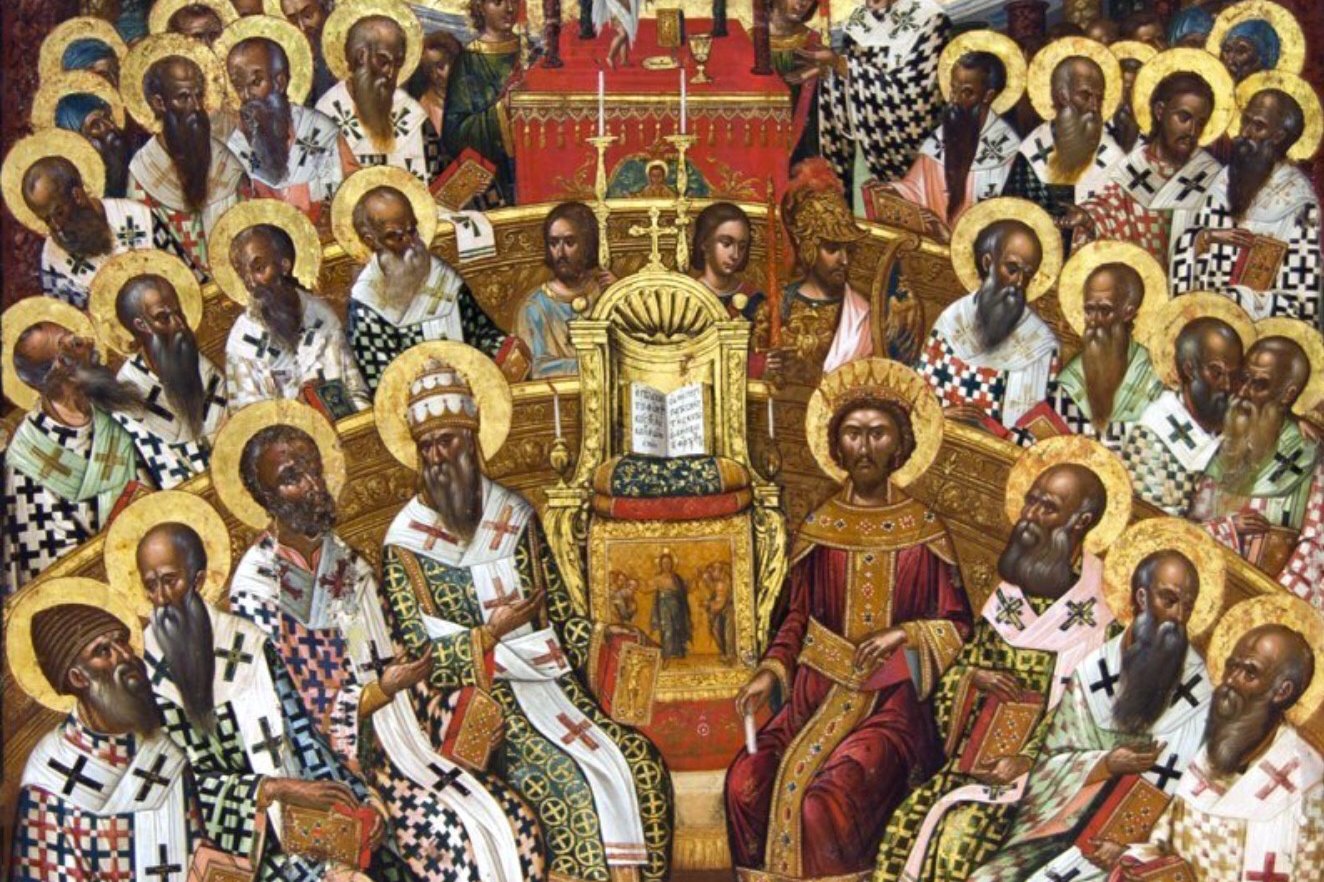
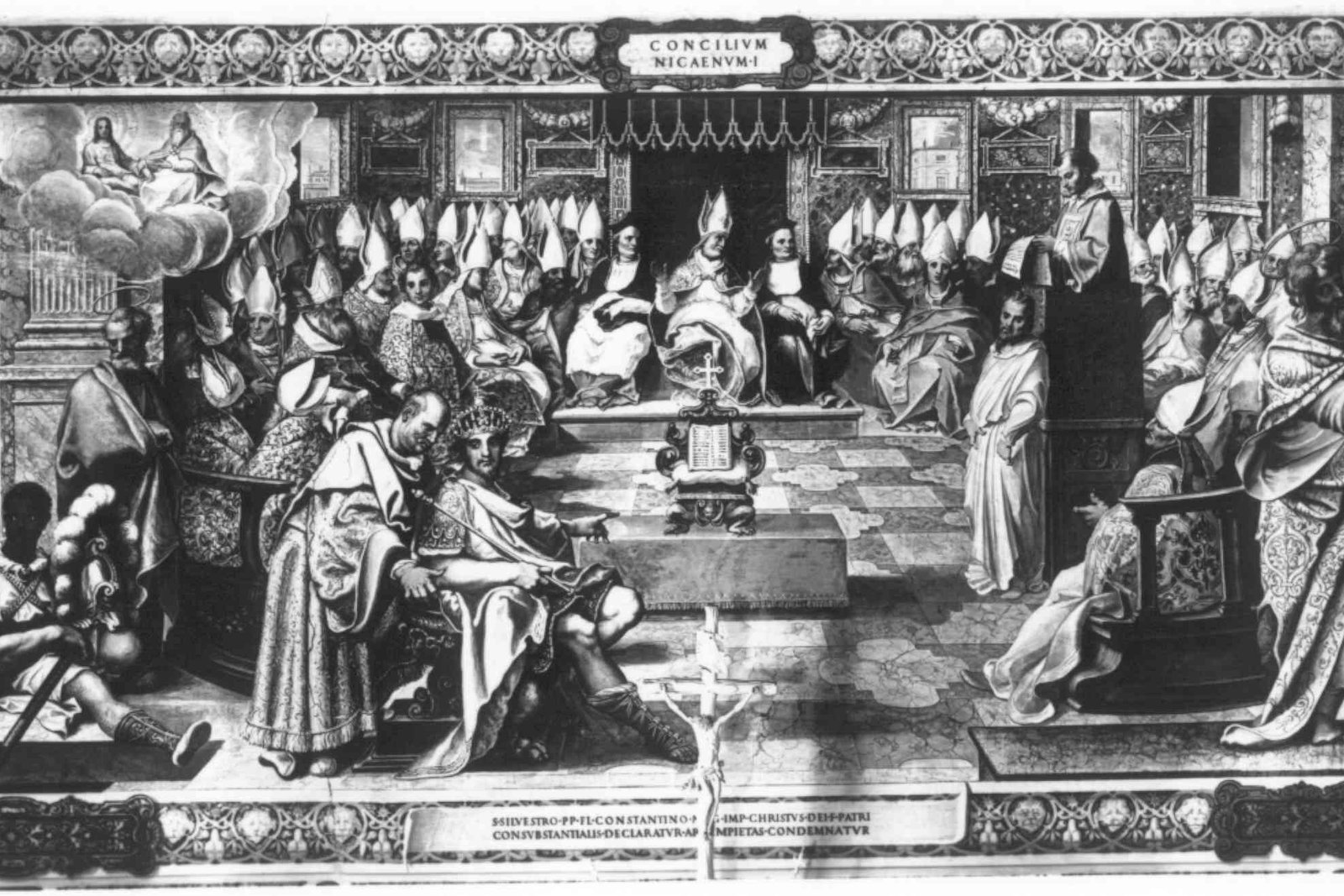
Michael Damaskinos, The First Council of Nicaea, 1591, Icon Museum, Heraklion, Crete — public domain.
By the time the phrase entered formal theological vocabulary, centuries later, depositum fidei had come to mean the entire body of revealed truth — everything God has made known about himself and about the path to salvation, culminating in Jesus Christ — handed to the apostles and, through them, to the Church across every generation since.
What actually makes up the deposit
Catholic teaching holds that this deposit is transmitted through two channels that work together rather than separately: Sacred Scripture, the written Word of God, and Sacred Tradition, the living transmission of that same revelation carried forward through the Church's teaching, worship, and life even where it isn't written down verse by verse. The Second Vatican Council's Dei Verbum insists these aren't two independent sources that might contradict or compete with each other, but "one sacred deposit of the Word of God, committed to the Church," flowing from a single spring (Dei Verbum, §10).
This is a point that regularly gets flattened in casual conversation, where "Bible" and "Church teaching" sometimes get treated as rival authorities. Catholic teaching doesn't frame it that way: Scripture and Tradition are understood as two intertwined modes of transmitting the same underlying revelation, both ultimately answerable to — and never above — the deposit they carry.
Closed, but not frozen
One of the more counterintuitive aspects of the deposit of faith is that it's considered closed. Catholic teaching holds that public revelation reached its completion with Christ and the apostolic age — there is no new revealed truth to be added after the death of the last apostle, and later reported private revelations, even ones the Church formally approves (a Marian apparition, for instance), are never treated as additions to this deposit, only as aids that can help the faithful live out what has already been revealed.
But "closed" doesn't mean static. What theologians call the development of doctrine — a term most associated with St. John Henry Newman's influential 19th-century writing on the subject — describes how the Church's understanding and articulation of the deposit can genuinely deepen over centuries without the underlying content changing. The doctrine of the Trinity, for example, wasn't fully spelled out in a tidy formula anywhere in Scripture, yet the Church holds that this doctrine was implicitly contained in revelation from the start and was drawn out with increasing precision over the early centuries, especially through councils like Nicaea in 325, which formally defined the divinity of the Son against the Arian controversy of the time. The content doesn't change; the Church's grasp of it sharpens.
Guarded, not owned
This is where the deposit of faith connects directly to the Magisterium, the Church's teaching office. The Magisterium's job, according to the Catechism, is to serve this deposit, not to stand above it or add to it (Catechism, 86) — a distinction the Church takes seriously enough to build its entire self-understanding of teaching authority around it. A pope or council can clarify, define more precisely, or defend the deposit against distortion, but Catholic teaching is explicit that no one, including the pope, has authority to alter its actual content or introduce something genuinely new into it.
That's the through-line back to Paul's original image: a deposit, held in trust, meant to be guarded faithfully and handed on intact — not a private possession to be reshaped at will, and not a museum piece to be left untouched and unexplained, but a living inheritance the Church understands itself as protecting for every generation still to come.
A term with real stakes in Church history
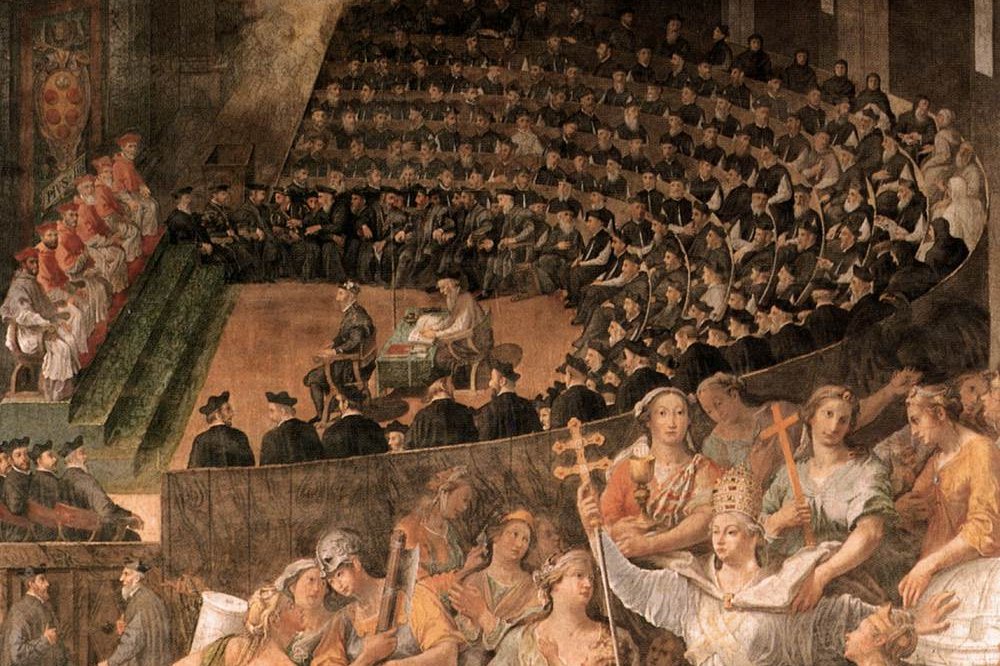
The phrase carries more weight than its quiet, technical sound suggests, because entire theological controversies have turned on exactly what does and doesn't belong to this fixed inheritance. The Protestant Reformation of the 16th century, for instance, hinged in large part on a disagreement over the deposit's actual channels of transmission — Reformers argued for sola scriptura, Scripture alone, as the sufficient rule of faith, while the Catholic Church, reaffirmed at the Council of Trent, insisted the deposit was carried through Scripture and Tradition together, inseparably. That disagreement, rooted directly in how each side understood the deposit of faith, remains one of the defining fault lines between Catholic and Protestant Christianity today.
Guarding it in practice
In ordinary parish life, the deposit of faith rarely gets named explicitly, but it sits underneath almost everything the Church teaches and hands on — the creeds recited at Mass, the content of a catechism class, the homilies preached from week to week. All of it is meant, in Catholic understanding, to trace back to this single, fixed inheritance rather than to any individual bishop's, theologian's, or pastor's personal opinion. That's precisely why the Church invests so much structural effort in preserving it carefully: not out of rigidity for its own sake, but because the tradition holds that what was entrusted to the apostles is worth protecting intact, exactly as Paul once urged a young bishop named Timothy to do with the deposit placed in his own care.
Trivia
What exactly is the deposit of faith in Catholic teaching?
Where does the phrase 'deposit of faith' come from?
Can the deposit of faith change or grow over time?
What is the difference between the deposit of faith and the Magisterium?
Does the deposit of faith include only the Bible?
Related Reading