Tradition vs. Dogma: What Catholics Must Believe vs. May Believe

Why this distinction gets lost so easily
Part of the confusion is linguistic. English uses the single word "tradition" for two very different things: capital-T Sacred Tradition, a specific theological category referring to the authoritative transmission of apostolic teaching, and lowercase "tradition" in its everyday sense — customs, legends, and stories passed down through generations, some of them centuries old and beloved, but never formally defined as binding doctrine. A saint's legend that's been retold at every local parish festival for four hundred years and a formally defined dogma like the Trinity can both get called "traditional Catholic belief" in casual conversation, even though they occupy entirely different tiers of authority within the Church's own self-understanding.
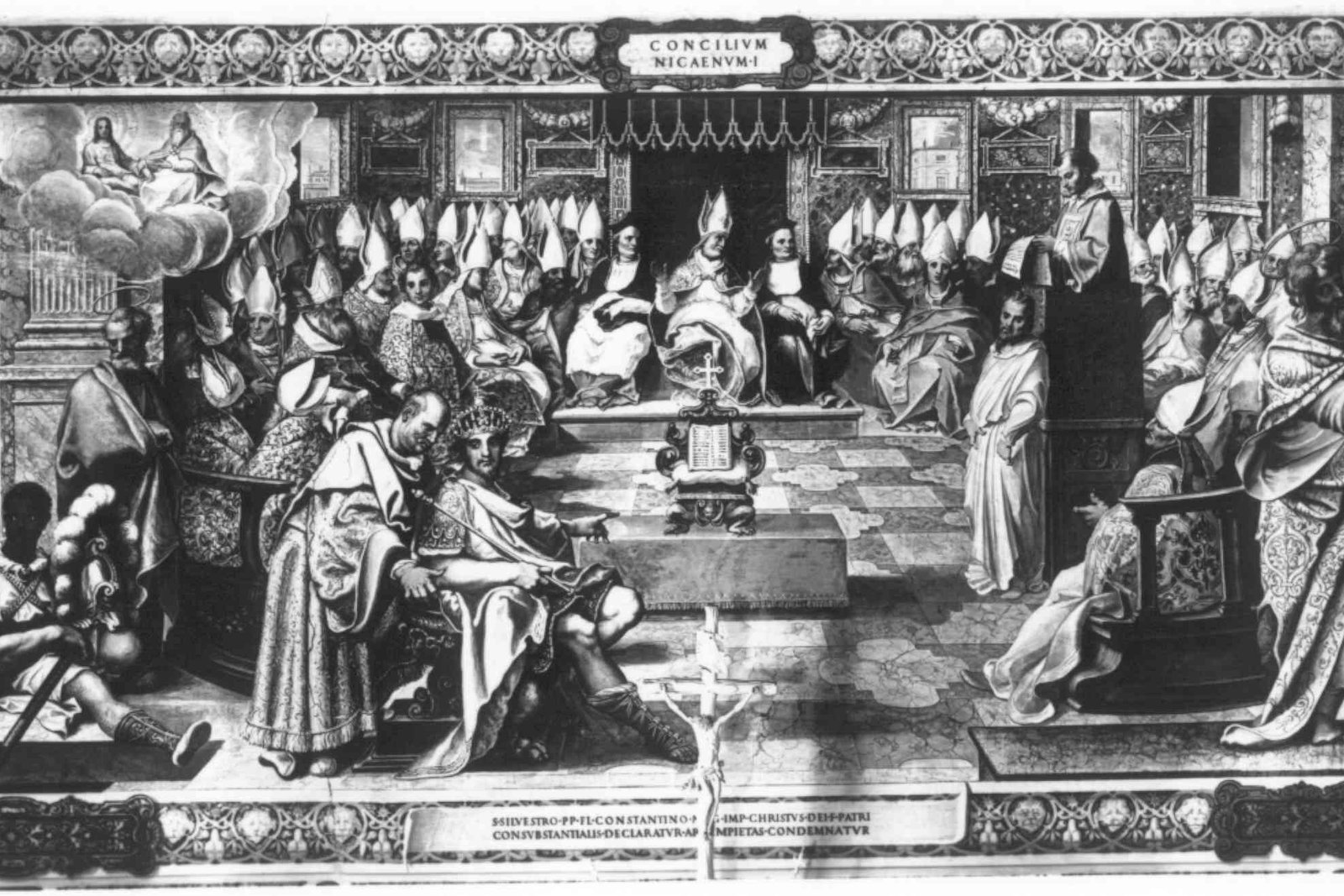
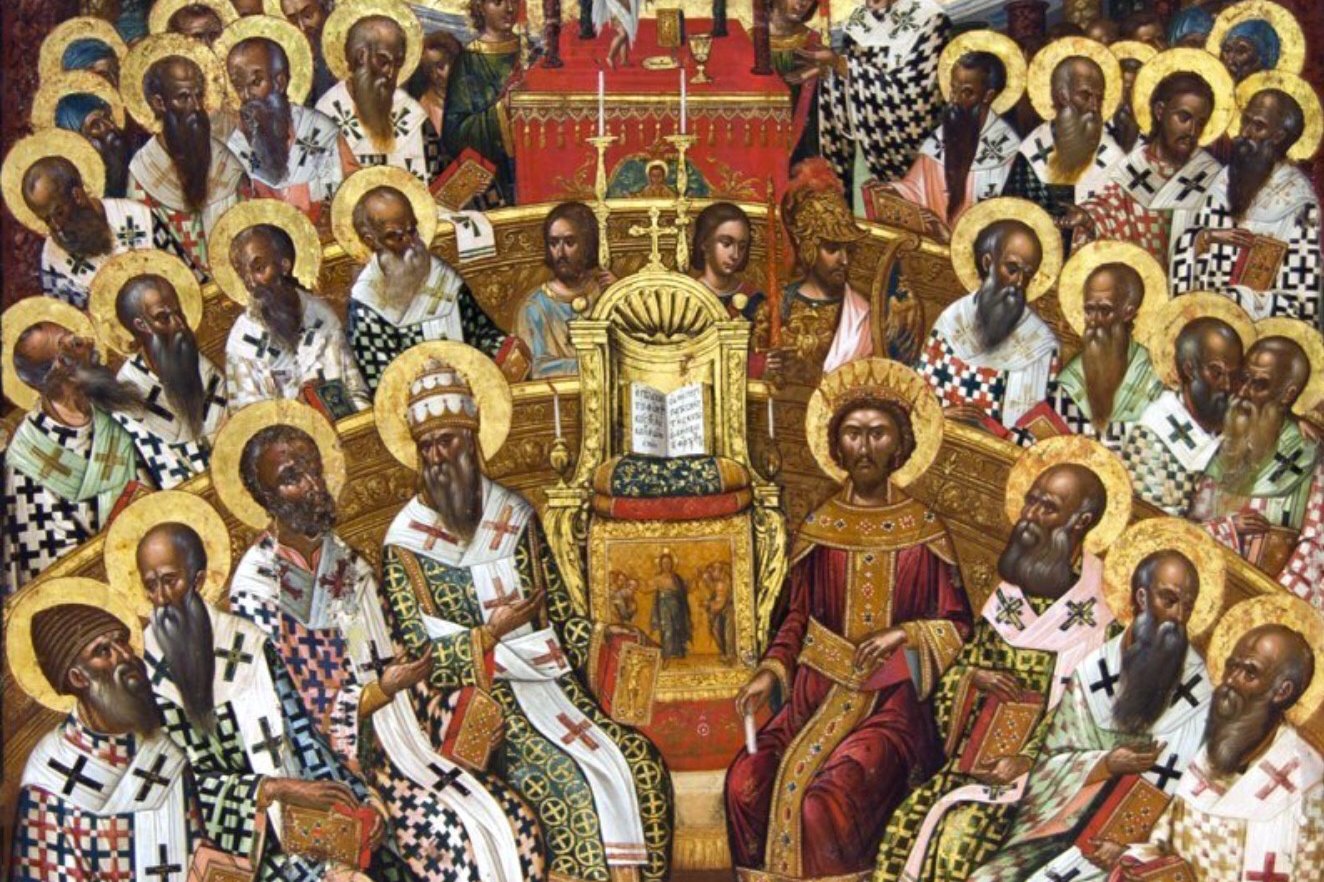
The Council of Nicaea, fresco, Sistine Salon, Vatican Apostolic Palace — public domain.
This matters for a very practical reason: readers of saints' stories and Church history, including on a blog like this one, benefit from knowing which parts of a story are load-bearing doctrine and which parts are devotional color — beautiful, often meaningful, but not something the Church requires anyone to affirm as historically or theologically certain.
What dogma actually is
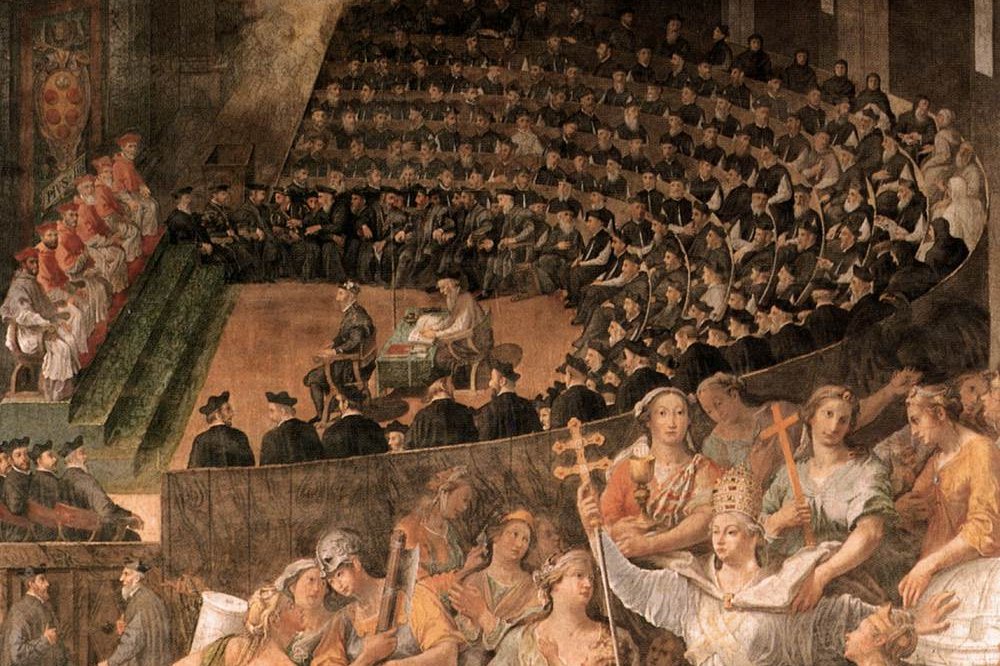
The Catechism describes divine Revelation as coming to the Church through Scripture and Sacred Tradition together, which "make up a single sacred deposit of the Word of God" entrusted to the Church (CCC 97). Out of that deposit, the Church formally defines certain truths as dogma — doctrines it holds to be divinely revealed and proposes as requiring the full assent of faith from every Catholic. Central examples include the Trinity, the divinity of Christ, the Immaculate Conception, and the bodily Assumption of Mary — truths solemnly defined, typically through an ecumenical council (like Nicaea in 325 or Trent in the sixteenth century) or, far more rarely, through a pope exercising the narrow charism explained in Papal Infallibility, Explained.
Dogma isn't invented on the spot; the Church's own theology holds that it clarifies and formally articulates what has always been believed, often in response to a controversy that made a more precise statement necessary. The doctrine of the Trinity, for instance, wasn't a new fourth-century idea — it was a precise formulation, hammered out at Nicaea, of what the Church already believed about the Father, Son, and Holy Spirit based on Scripture and apostolic teaching, made necessary by the Arian controversy denying Christ's full divinity.
Where hagiography fits in
Hagiography — literally "writing about the holy," the literary genre of saints' lives — occupies a very different tier. Ancient and medieval hagiographers often wrote to edify and inspire far more than to produce precise, modern-style biography, and their accounts sometimes include vivid legendary details: a specific dramatic miracle, an exact number of years in the desert, a dialogue reconstructed centuries after the fact. None of that is dogma. It's pious tradition — cherished, often carrying real spiritual meaning, but not something the Church asks anyone to affirm with the same certainty owed to the Trinity or the Resurrection.
The Patron Saints Directory on this blog notes exactly this distinction about patronage itself: "Tradition and papal designation, not dogma — nothing in Catholic doctrine requires belief in any specific patronage." The same principle extends further: a saint's specific legendary encounter with a wolf, a dragon, or a miraculous rescue is very often the kind of detail worth naming plainly as legend, distinct from the verified core of who that person was and why the Church canonized them.
The tiers between "must believe" and "just a story"
It isn't actually a binary between dogma and legend — Catholic theology recognizes several tiers of teaching authority in between. Dogmas require the full assent of faith, since they're held to be divinely revealed. A step below, some doctrines are taught infallibly by the Church's ordinary and universal Magisterium (its bishops teaching in union with the Pope) without being formally defined as divinely revealed dogma in the same solemn way. Below that sits the ordinary, non-infallible teaching of the Magisterium — encyclicals, pastoral letters, and other guidance owed serious and respectful assent by Catholics, but which remains open, in principle, to future development, clarification, or even correction as understanding deepens. And beneath all of that sits devotional tradition and legend, which Catholics are free to hold, doubt, or set aside without any conflict with Church teaching at all.
Why this hierarchy actually protects belief, not weakens it
It might seem, at first glance, like admitting some cherished saint stories are "just legend" undermines confidence in Catholic teaching generally. The opposite is closer to the truth. By clearly marking which truths are defended as certain and binding, the Church protects the weight and seriousness of dogma itself — if everything from the Trinity to a specific miracle story were treated with identical certainty, dogma would carry no more authority than folklore, and folklore would carry an authority it was never meant to have. Keeping the categories distinct lets both survive intact: the defined core of the faith stands on solid, carefully guarded ground, while the vast, colorful tradition of legend and devotion around it remains free to be loved, retold, and enjoyed for exactly what it is.
Trivia
What exactly is a dogma?
Isn't "Sacred Tradition" itself supposed to be authoritative in Catholic teaching?
Can a Catholic doubt a saint's popular legend without being unfaithful?
How does the Church officially distinguish dogma from other levels of teaching?
Does the existence of unverified legends make Catholic teaching untrustworthy?
Related Reading