What Is a Catholic Annulment? A Clear Explanation

Not a religious divorce
The single most important thing to understand about a Catholic annulment is what it is not: it is not a Catholic version of divorce, and it does not dissolve a marriage. The Catholic Church holds, on the authority of Christ's own teaching, that a valid, consummated sacramental marriage cannot be dissolved by any human authority — not a court, not a bishop, not even the pope. This is precisely why annulments exist as a distinct process in the first place: since the Church cannot end a valid marriage, the only remaining question a Church tribunal can examine is whether a valid marriage bond actually came into existence at the time of the wedding at all.
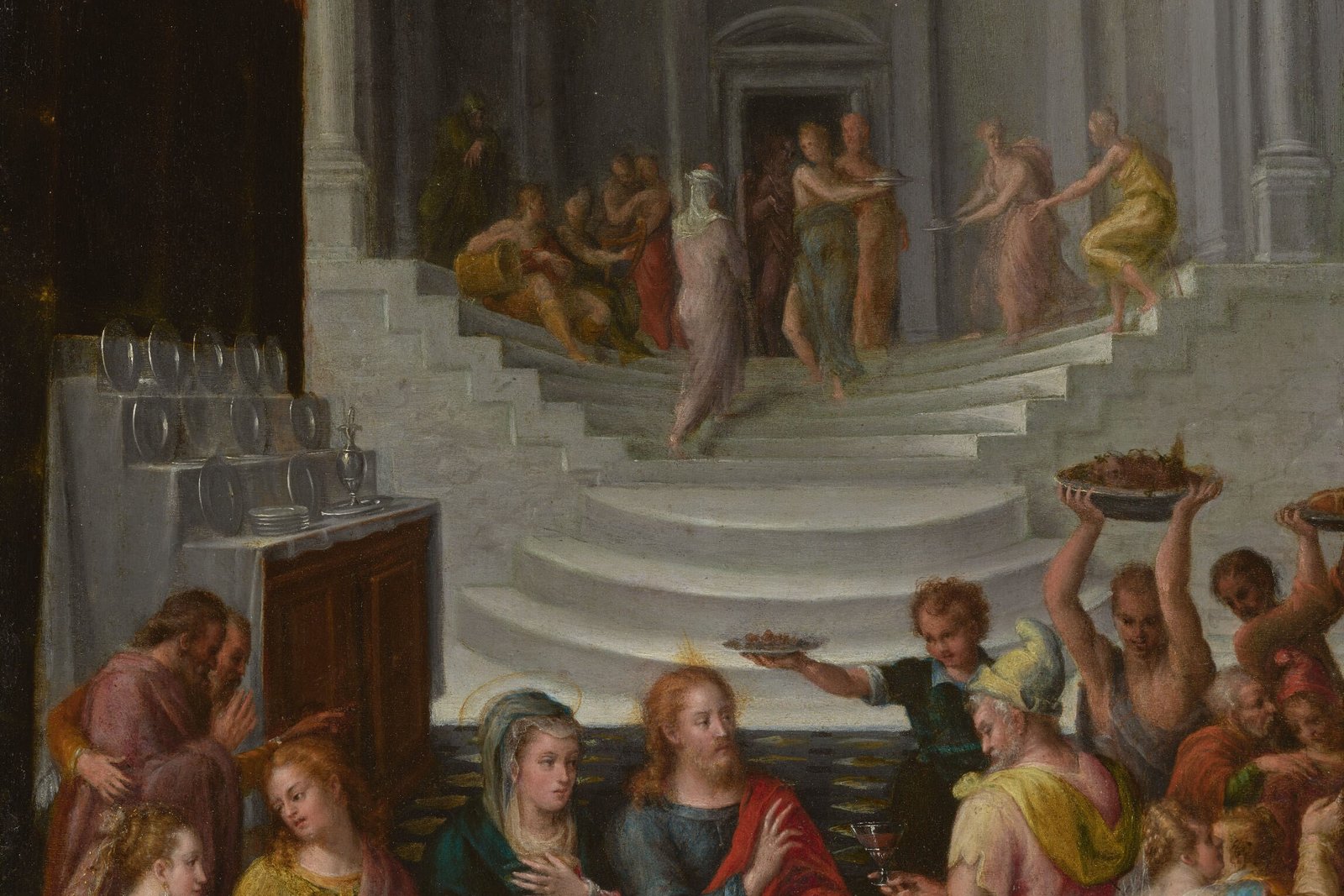
Lavinia Fontana, The Wedding Feast at Cana, 1595-1596 — public domain.
The formal, technically correct term is a declaration of nullity, not "annulment" in the popular sense of canceling something that existed. A declaration of nullity is a finding, after a formal Church investigation, that whatever took place at the wedding ceremony did not create a valid marriage bond — because some essential requirement for true marital consent was missing from the very beginning, even if neither party recognized that at the time.
What makes a marriage bond valid in the first place
Catholic teaching on marriage, covered in more depth in this site's explanation of the Sacrament of Marriage, holds that a valid marriage requires free, full, and informed consent from both parties to enter into a lifelong, exclusive, and open-to-life union. Canon law identifies several conditions that must all be present for that consent to be valid — including that both parties are free of certain legal impediments, that they possess sufficient psychological and emotional capacity to understand and commit to what marriage actually requires, and that they are not entering the marriage under serious deception, coercion, or with a deliberate exclusion of some essential element of marriage, such as fidelity, permanence, or openness to children.
If any of these essential elements was genuinely missing at the moment of consent — not afterward, but at the time the vows were exchanged — a Church tribunal can determine that no valid marriage bond was ever actually formed, regardless of how long the couple lived together afterward or how the relationship functioned in practice.
What the process actually involves
Contrary to a common assumption, an annulment is not something a Catholic can simply request and receive automatically after a civil divorce. It requires a formal process before a diocesan marriage tribunal, generally beginning when one of the former spouses (called the petitioner) files a formal petition explaining the grounds on which they believe the marriage lacked validity from the outset.
The process typically involves detailed written testimony from the petitioner, an opportunity for the other former spouse (the respondent) to participate and respond, and testimony from witnesses — often family members or close friends — who knew the couple around the time of the wedding and can speak to the couple's circumstances, maturity, and understanding at that time. A tribunal, made up of trained canon lawyers and, in many dioceses, a judge with theological and legal formation, then reviews all of this evidence and issues a formal decision. Cases affirming nullity in some jurisdictions require an additional review, sometimes by an appellate tribunal, before the finding becomes final.
Why legitimacy of children is never affected
Because a declaration of nullity concerns the validity of the marriage bond, not the reality of the relationship or family that resulted from it, canon law is explicit and unambiguous that children born of a marriage later found null remain fully legitimate — exactly as if the marriage had been valid all along. This detail matters enormously to many Catholics considering the annulment process, who sometimes delay seeking one for years out of a mistaken fear that pursuing it could somehow affect how the Church regards their children. It cannot, and does not.
Why annulments exist at all
Understanding annulments requires holding two Catholic convictions together that can initially seem to pull in opposite directions: an unwavering commitment to the permanence of valid marriage, and genuine pastoral compassion for Catholics whose marriages, in fact, never achieved the full validity marriage requires. The annulment process exists precisely at the intersection of those two convictions — it allows the Church to remain fully faithful to Christ's teaching on the indissolubility of true marriage while still offering a real, careful path forward for Catholics whose original consent, for specific and demonstrable reasons, never actually created the lasting bond marriage is meant to be.
For Catholics navigating divorce and considering remarriage within the Church, this process — however lengthy or emotionally difficult it can feel — exists to answer one specific, narrow theological question honestly, rather than to punish, judge, or retroactively erase a relationship and the years, and often children, that came from it.
Trivia
What is a Catholic annulment?
Does an annulment mean the marriage never happened?
Are children born during an annulled marriage considered illegitimate?
What's the difference between an annulment and a divorce?
How long does the annulment process usually take?
Related Reading