Saint Nicholas Day Customs Explained

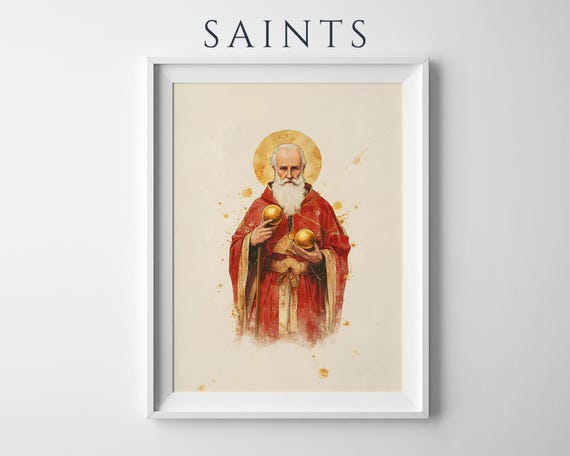
A bishop remembered more for kindness than doctrine
Unlike many saints whose feast days commemorate a theological controversy they weathered or a martyrdom they endured, Saint Nicholas is remembered in popular tradition almost entirely for acts of quiet generosity. He is honored as a bishop of Myra, a city in the Roman province of Lycia in what is now southwestern Turkey, active in the fourth century. Much of what's told about his specific life events comes down through tradition and later hagiography rather than contemporary documentation from his own lifetime — a caveat worth stating plainly, since the details of his biography are considerably less firmly established than the enormous popular devotion that grew up around his memory.
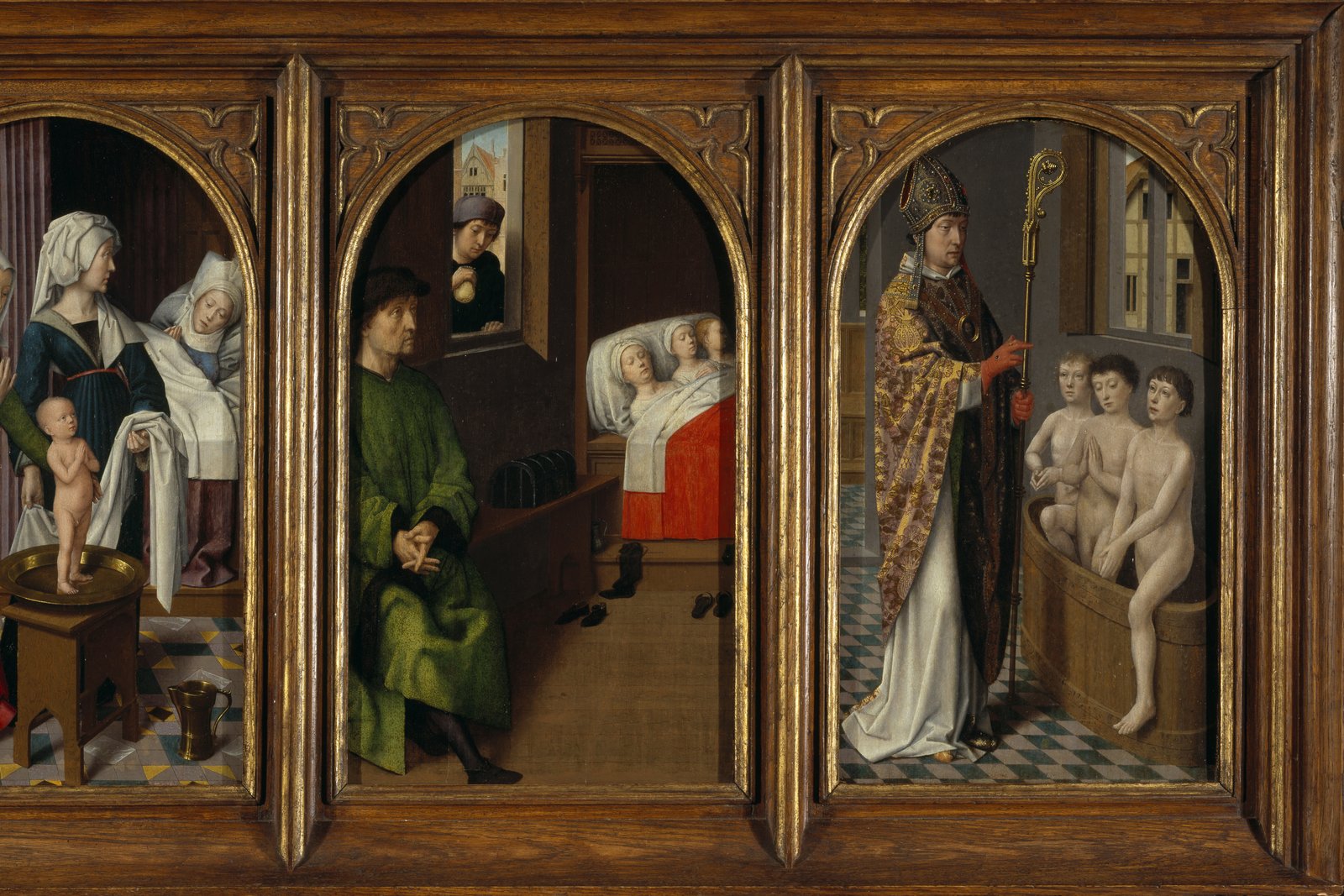
Gerard David, Three Legends of Saint Nicholas (early 16th century), National Galleries of Scotland, public domain via Wikimedia Commons
The three daughters and the bags of gold
The story most responsible for shaping how Nicholas is remembered involves no miracle in the dramatic sense, just deliberate, hidden kindness. According to the traditional account, Nicholas learned of a poor man in his city with three daughters he could not afford to provide dowries for — without a dowry, the daughters faced being sold into servitude, since marriage was effectively closed off to them. Rather than offer the gift publicly, Nicholas is said to have secretly tossed a bag of gold coins through the family's window on three separate nights, one for each daughter, asking for no recognition and revealing himself only by chance, in some versions of the story, when the father caught him in the act on the third visit. Whatever the precise historical accuracy of the story's details, it's the account that later Christian tradition consistently returns to as the reason child-focused, secretive gift-giving became attached to his name.
Shoes by the door
That story of coins delivered through a window or down a chimney is the thread most directly connected to the household custom kept in many Catholic and broader Christian families today. On the evening of December 5th, children leave a shoe — sometimes two — out by a door, window, or fireplace, and wake the next morning, December 6th, to find them filled: small treats like fruit, nuts, candy, sometimes a few coins, echoing the gold the story describes Nicholas leaving behind. In some households, a switch or a small lump of coal accompanies the treats for children who misbehaved, a lighter-hearted echo of judgment tucked into an otherwise generous custom. The specific items vary a great deal by country and family — the shoe-filling custom took root especially strongly across parts of continental Europe long before it had much presence in English-speaking countries.
Distinct from — and the ancestor of — Santa Claus
It's worth being clear about a distinction that gets blurred in most popular retellings: the Santa Claus figure familiar from modern advertising and children's stories developed out of Saint Nicholas over many centuries, filtered especially through Dutch "Sinterklaas" traditions carried to America by Dutch immigrants, and reshaped considerably from there by nineteenth- and twentieth-century commercial and literary influences. The bishop the Catholic Church continues to honor on December 6th is not identical to that later cultural figure, even though the line of influence between them is real and traceable. Families who keep Saint Nicholas Day as a distinct observance are often doing so precisely to hold onto that older, more specific figure — a real historical bishop remembered for a particular, deliberate act of generosity — rather than letting December's gift-giving collapse entirely into the secular Christmas figure that grew out of his memory.
Keeping Advent's shape intact
Part of what draws some Catholic families to a deliberate Saint Nicholas Day observance is calendar logic as much as devotion. Advent is meant to function as a season of preparation and anticipation, distinct in character from Christmas itself, which properly begins only on December 25th and continues for the following weeks of the Christmas season. Giving a small gift on December 6th, tied specifically to a saint's story rather than to Christmas, lets a family mark Advent's own character without either skipping gift-giving during the season entirely or letting Advent collapse into an extended prelude to Christmas morning. It's a small custom, but one that carries a surprising amount of liturgical common sense inside it — a reminder, once a year, that the waiting season and the feast it prepares for aren't quite the same thing.
A patron for sailors, children, and the falsely accused
Beyond the story of the three daughters, tradition attaches a cluster of other patronages to Nicholas, most of them growing out of separate legends rather than a single documented biography. He's long been invoked as a patron of sailors, tied to stories of calming storms at sea and rescuing ships in danger; of children, obviously, through the gift-giving tradition; of pawnbrokers and bankers, an association some trace back playfully to the three bags of gold; and of the falsely accused and wrongly imprisoned, through accounts of his intervening on behalf of men unjustly condemned. Some hagiographers also connect him to the Council of Nicaea in 325, the great gathering of bishops that produced the Nicene Creed still recited at Mass today, though his attendance there rests on later tradition rather than a contemporary record naming him among the council's participants.
Regional variations on the custom
The shoe-and-treat custom takes noticeably different shapes depending on where it's kept. In the Netherlands, "Sinterklaas" arrives — according to the beloved local tradition — by boat from Spain in mid-November and spends the following weeks visiting homes and schools before his main gift-giving night on December 5th, a far more elaborate season-long observance than the single-night custom kept elsewhere. In Germany and Austria, Nicholas (Nikolaus) is often paired with a sterner companion figure, variously called Knecht Ruprecht or Krampus depending on the region, who carries the switch-and-coal side of the tradition so that Nicholas himself can remain a purely generous figure. In parts of Eastern Europe, including Poland and Ukraine, Saint Nicholas Day remains one of the most anticipated children's holidays of the entire year, often rivaling Christmas morning itself in the excitement it generates. Despite these regional differences, the core image stays remarkably consistent across all of them: a quiet gift left behind by someone who wants no credit, discovered only the next morning.
Why the custom endures
Part of what has kept Saint Nicholas Day alive for well over a thousand years, even as it absorbed into Santa Claus in the broader culture, is how well the central story teaches something to children directly, without a lecture attached. A bishop who gives in secret, asking nothing in return, models a very specific kind of generosity that the modern, highly visible version of Christmas gift-giving doesn't always capture. Families who keep the older custom distinct from Christmas morning often say exactly this: it isn't about having two gift days instead of one, it's about giving children a concrete, memorable picture of what unselfish generosity looks like, attached to a real historical figure rather than an abstract virtue — a small, repeatable lesson built into the rhythm of the Advent season itself.
Trivia
When is Saint Nicholas Day, and who was he?
What is the shoe tradition on Saint Nicholas Day?
What story explains why Saint Nicholas became connected to secret gift-giving?
Is Saint Nicholas the same figure as Santa Claus?
Why do some Catholic families deliberately separate Saint Nicholas Day from Christmas gift-giving?
Related Reading