Advent Explained: The Season of Waiting Before Christmas

A season that starts in the dark
Walk into most churches on the First Sunday of Advent and the first thing you notice is what's missing. The flowers are simpler, the music quieter, the priest's vestments have shifted from ordinary green to a deep violet. It feels, oddly, a little like Lent. And in a sense it is meant to — not because Advent is about sin and penance, but because it shares Lent's basic posture: don't rush past this. Something is coming, and it deserves your full attention first.
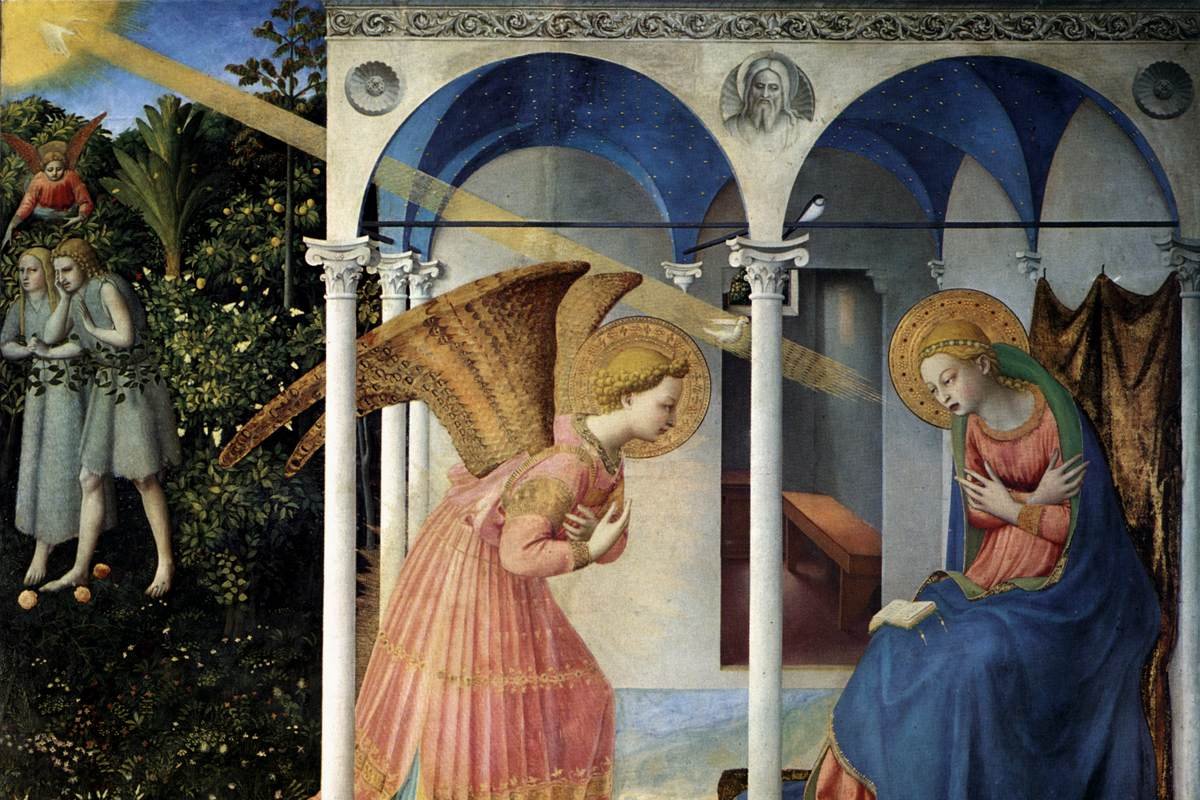
Fra Angelico, The Annunciation (c. 1430-1432), Museo del Prado. Public domain, via Wikimedia Commons.
Advent is the opening season of the entire liturgical year. It begins on the Sunday closest to November 30, the feast of Saint Andrew the Apostle, and unfolds across four Sundays until Christmas Eve. Depending on which day of the week Christmas falls, the season can run anywhere from twenty-two to twenty-eight days. Short as it is, the Church has always treated it as spiritually weighty — a compressed rehearsal for readiness that goes well beyond decorating a tree.
Waiting for two comings, not one
The word "advent" comes from the Latin adventus, meaning "coming" or "arrival." Most people assume that arrival is Bethlehem, and it is — but only half of it. The Catechism of the Catholic Church places Advent's meaning in a wider frame: the Church, in celebrating the liturgy of Advent, "makes present this ancient expectancy of the Messiah" while also renewing "the ardent desire for his second coming" (CCC 524).
That double focus explains why Advent's readings can feel almost contradictory if you're only half listening. One Sunday you hear the prophet Isaiah dreaming of a child who will bring peace to the nations. The next you hear Christ himself warning his disciples to stay alert, because no one knows the day or the hour of his return. Both threads belong to the same season. Advent is not just nostalgia for a birth that already happened; it is training in vigilance for a return that hasn't happened yet. As Jesus tells his disciples in the Gospel of Mark, "Be watchful! Be alert! You do not know when the time will come" (NABRE, Mark 13:33).
That is why Advent, for all its warmth, carries an undertone of urgency. It's a season that asks you to live two clocks at once: the calendar counting down to December 25, and the deeper, unscheduled clock of a Lord who could come at any hour.
The wreath, week by week
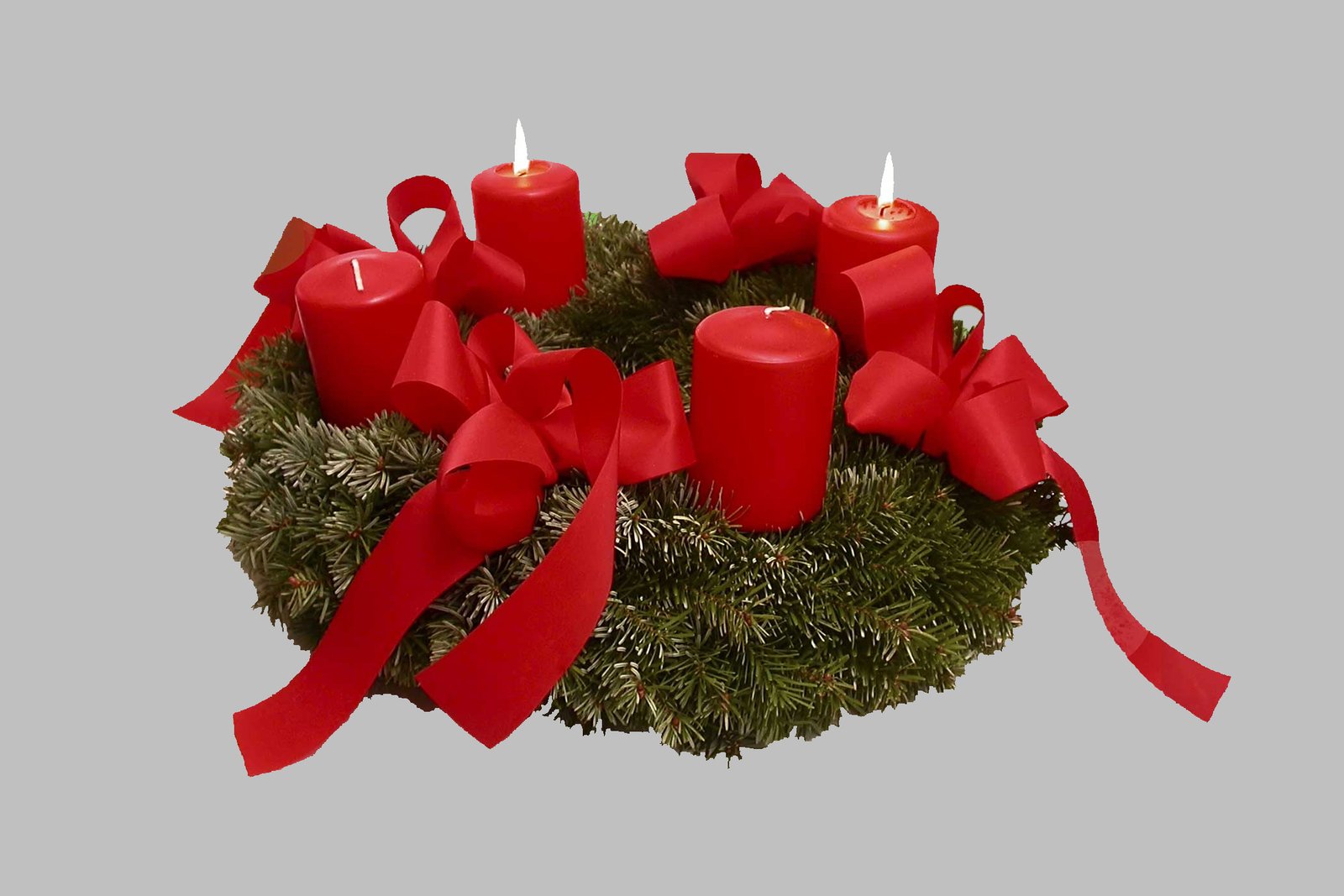
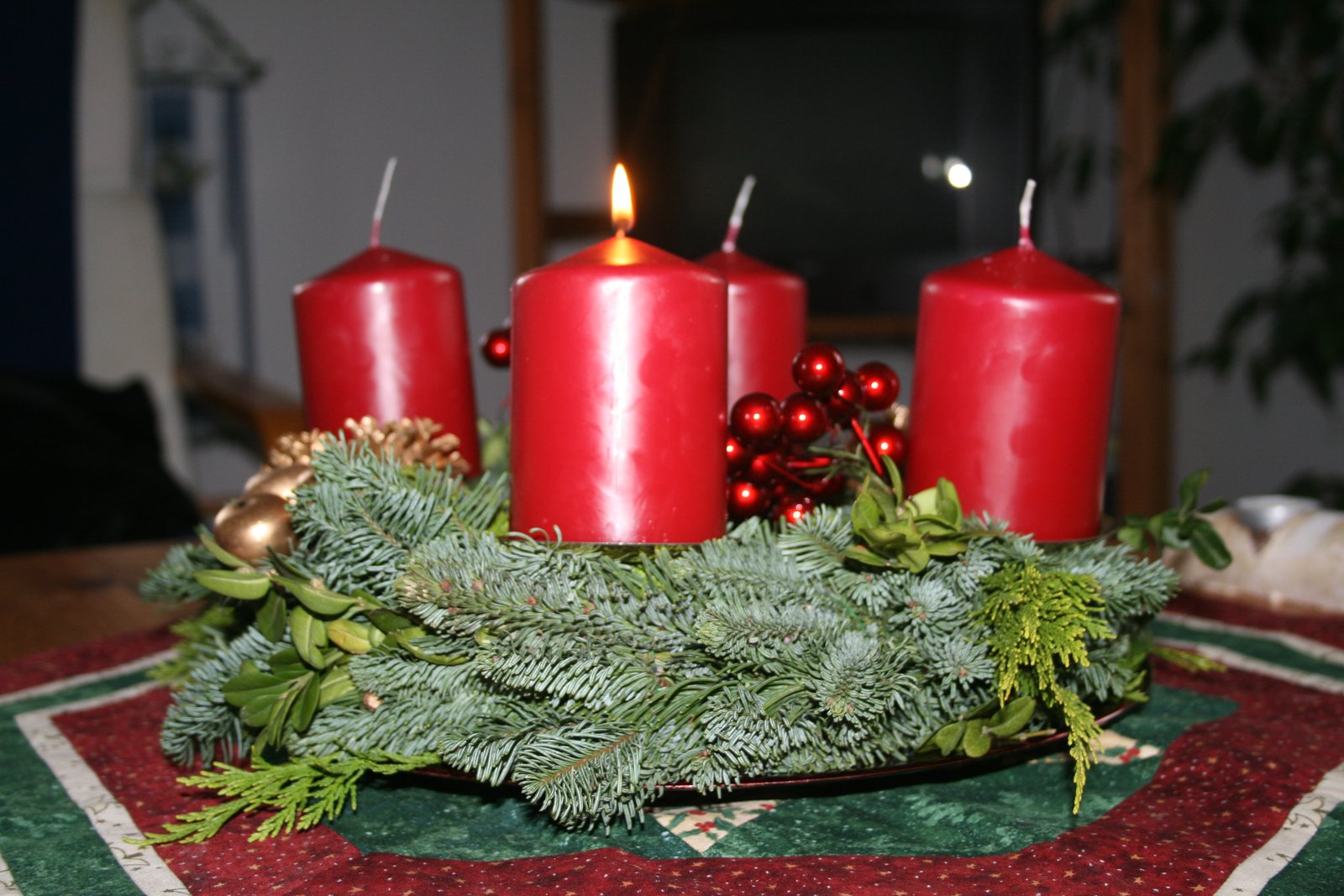
Few Advent customs are as recognizable as the wreath — a circle of evergreen branches holding four candles, usually three violet and one rose, lit in succession across the four Sundays. The circle itself is an old symbol of eternity, the greenery a sign of persistent life through winter's dead months. The wreath isn't part of official Church law; it grew out of German folk piety in the nineteenth century and spread widely because it does something a calendar can't: it makes the waiting visible. Each week, literally, there is more light.
Many families and parishes attach themes to the four candles — hope, peace, joy, and love are common groupings — though these pairings are customary rather than fixed by liturgical rubric, and different traditions assign them differently. What stays constant is the rhythm: a small, deliberate ritual repeated four times, teaching patience through repetition rather than through a single grand gesture.
Gaudete Sunday and the color that breaks the pattern
If you're keeping track of the violet candles, the third one throws off the pattern — it's rose, not violet, and it marks the Third Sunday of Advent, traditionally called Gaudete Sunday. The name comes from the Latin word for "rejoice," drawn from the entrance antiphon of that Sunday's Mass: "Rejoice in the Lord always." The priest may wear rose vestments instead of violet, a brief softening of the season's more restrained palette.
Gaudete Sunday functions as a kind of midpoint sigh of relief. The Church acknowledges that Advent's watchfulness is real, but so is the nearness of its fulfillment — Christmas is now close enough to allow a flash of the joy that's coming. It's the liturgical equivalent of catching sight of the finish line while still mid-race.
Violet, not purple penance
It's worth being precise about Advent's liturgical color. Violet is used, the same family of color worn during Lent, but the Church has been careful across the centuries to distinguish the two seasons in tone even when they share a hue. Lent's violet carries the weight of repentance for sin, oriented toward the cross. Advent's violet is oriented toward a birth and a return — sober, watchful, but fundamentally hopeful rather than penitential in the Lenten sense. Some parishes even use a slightly bluer shade of violet for Advent to mark that difference, though this remains a matter of local custom rather than universal rule.
Why the waiting matters
It would be easy to read Advent as a quaint prelude to the "real" celebration — four weeks of throat-clearing before Christmas gets to speak. But the Church's instinct here runs the other way. A birth that arrives without any expectation loses most of its meaning. Advent insists that hope is not passive. Watching, in the biblical sense, is itself a form of participation in the thing you're waiting for.
That's worth carrying past the wreath and the calendar. Whatever else the season asks of you — a slower week, a quieter table, an extra candle lit on a dark evening — it is ultimately asking for attention. Something is coming. Advent simply refuses to let you sleep through it.
For readers tracing the rest of the liturgical calendar, Lent, Explained covers the season that leads from another kind of desert toward Easter, and Holy Week, Explained walks through the culminating days of that journey.
Trivia
How long is Advent?
What do the Advent wreath candles mean?
Why is one candle pink instead of purple?
Is Advent a penitential season like Lent?
What is Advent actually preparing Catholics for?
You May Also Like
Related Reading