The Ten Commandments Today: What They Mean in Modern Life

Rules or a map?
It's easy to hear "Ten Commandments" and picture a list of prohibitions handed down to keep an ancient, unruly desert people in line — rules with no obvious bearing on a life spent mostly online, at work, and in traffic. The Catechism frames them differently: as a summary of the natural moral law, an expression of what genuine human flourishing actually requires, not an arbitrary code imposed from outside (CCC 2070). Jesus, in the Sermon on the Mount, doesn't discard them; he pushes them deeper, tracing commandments like "do not murder" back to the anger that precedes it (Matthew 5:21-22). Read that way, the ten aren't a fence around ancient Israel. They're a map of where human life actually goes wrong, still.
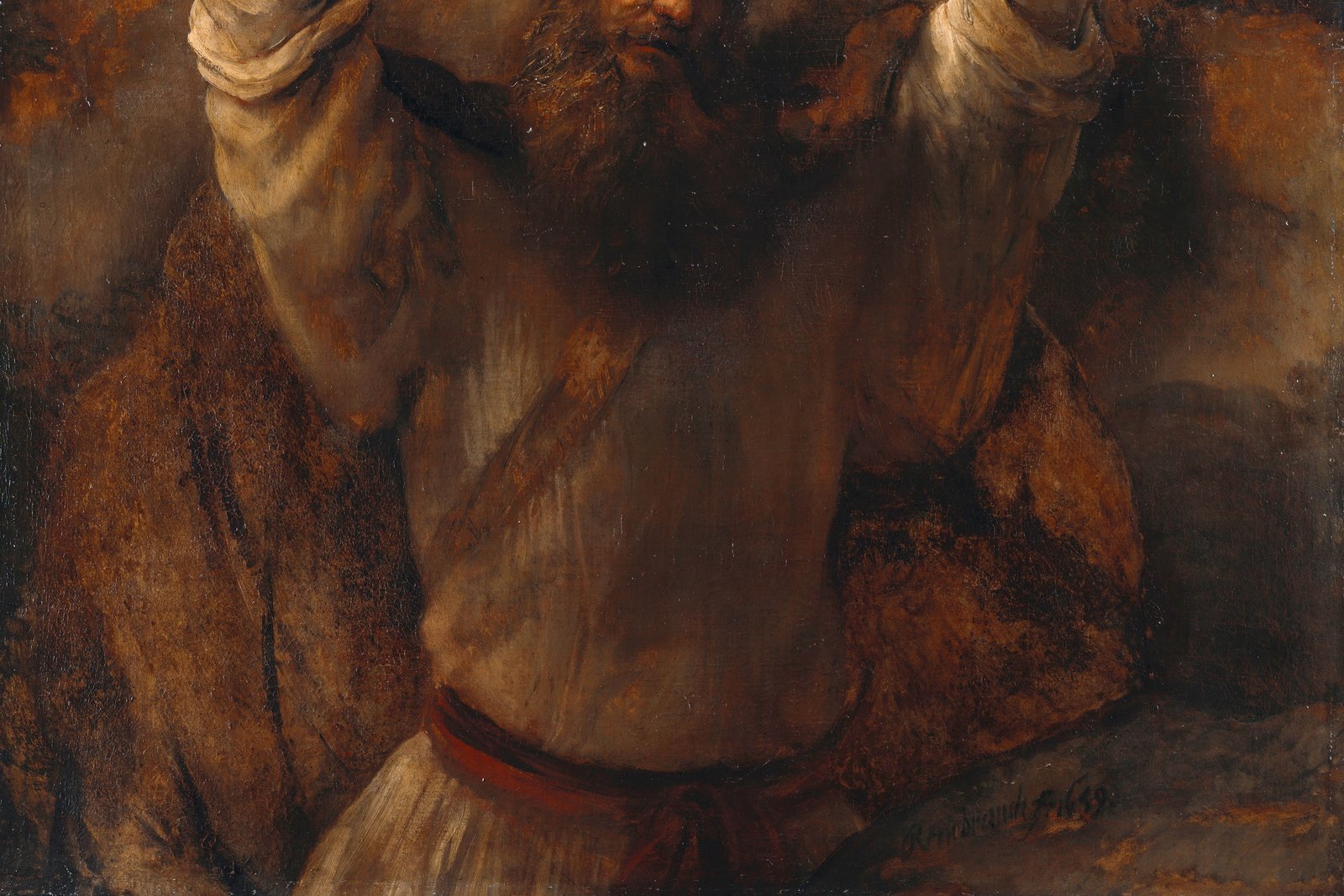
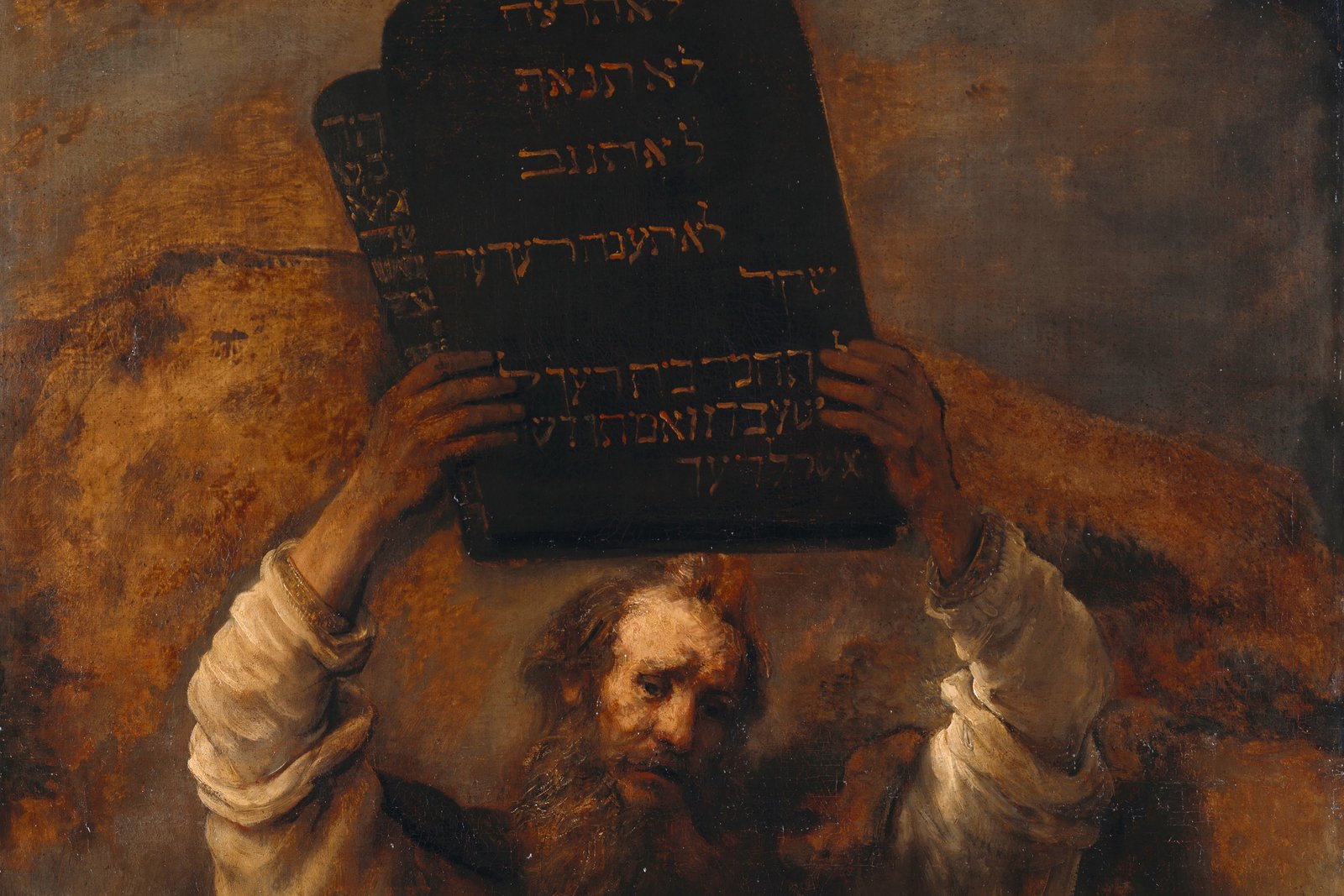
Rembrandt, Moses with the Ten Commandments, 1659, Gemäldegalerie, Berlin — public domain.
I am the Lord your God; you shall not have strange gods before me. The Catechism treats this first commandment as the foundation the rest rest on — right worship, and refusing to give ultimate devotion to anything less than God (CCC 2084-2141). Modern life doesn't usually offer literal idols, but it offers no shortage of things treated with god-like priority: a career, a body image, a political cause, a phone. The commandment asks what actually gets the first and last thought of a person's day.
You shall not take the name of the Lord your God in vain. Beyond casual cursing, the Church reads this as a call to reverence in how God is spoken of at all — invoking God's name carelessly, using faith language to manipulate or impress, or swearing false oaths (CCC 2142-2159). A modern version shows up whenever religious language gets used as a rhetorical weapon rather than spoken with any real reverence behind it.
Remember the Sabbath day, keep it holy. The Church holds that Christians moved the weekly day of worship and rest to Sunday in honor of the Resurrection, while keeping the underlying principle intact: a rhythm of rest and worship isn't optional decoration on a busy life, it's commanded (CCC 2168-2195). The midnight work email is a direct modern collision with this one — a culture that treats constant availability as a virtue is, in the Church's terms, working against a divine command to actually stop.
Honor your father and your mother. This extends, in Catholic moral teaching, beyond childhood obedience into how adult children care for aging parents, and how authority generally is exercised and respected within a family (CCC 2197-2257). The modern edge of this commandment often shows up in decisions about elder care, inheritance disputes, and how much patience is extended to a parent who was imperfect.
You shall not kill. The Church reads this as protecting the dignity of every human life from conception to natural death, which is why Catholic moral teaching connects it directly to abortion, euthanasia, and unjust violence, while also extending it to anger, hatred, and refusal to forgive as violations of its spirit (CCC 2258-2330). A modern application many people miss: the commandment also touches how people talk about others online, where contempt and dehumanizing language can do real relational harm without a single physical blow.
You shall not commit adultery. Rooted in the goodness and exclusivity of the marriage covenant, this commandment is also where the Church places its broader teaching on chastity and the right ordering of sexuality (CCC 2331-2400). Its most common modern battleground may not be a physical affair at all, but the slower erosion of fidelity through emotional entanglements, pornography, or a phone relationship a spouse doesn't know about.
You shall not steal. Beyond outright theft, Catholic teaching applies this to fraud, unjust wages, tax evasion, intellectual property theft, and failing to return what was borrowed or found (CCC 2401-2463). A distinctly modern form: downloading or streaming content in ways that knowingly bypass fair payment to its creators falls under the same principle as walking out of a store with unpaid goods, even when it feels less tangible.
You shall not bear false witness against your neighbor. This covers lying under oath, but the Catechism extends it to gossip, slander, detraction (revealing someone's real faults without a good reason), and flattery (CCC 2464-2513). Online life multiplies the opportunities for all of these — a single unverified post shared without checking its truth functions, morally, much like spreading a false rumor by word of mouth once did.
You shall not covet your neighbor's wife... nor anything that is your neighbor's. The final two commandments (split this way in Catholic numbering) address the interior desire itself, not just the outward act — envy of another's relationship or possessions, left to fester, is treated as its own moral problem even before it produces any external sin (CCC 2514-2557). Social media, built substantially around curated comparison, may be the single most efficient coveting-generation machine in ordinary daily life today.
Not a museum piece
None of this reads the commandments as artifacts of an ancient legal system to be respected from a distance. The Church's claim is stronger: that they describe the actual shape of a well-lived human life, in any century, and that a phone buzzing at midnight, a coveted vacation photo, or an unpaid stream of a film are simply today's version of the same struggles Moses came down the mountain to address.
Trivia
Are the Ten Commandments still binding on Christians, or were they replaced by Jesus's teaching?
Where do the Ten Commandments come from in the Bible?
Does the Catholic Church number the Ten Commandments differently than other Christians?
Why does the Third Commandment about the Sabbath matter for Catholics today if Sunday, not Saturday, is the day of rest?
Related Reading