The Jesus Prayer: History and Practice

A prayer born in the desert
The Jesus Prayer did not arrive fully formed. Its roots trace to the Desert Fathers and Mothers — the hermits and ascetics who withdrew into the Egyptian desert beginning in the 3rd and 4th centuries, seeking a life of unbroken prayer and radical simplicity. Their collected sayings, later gathered as the Apophthegmata Patrum ("Sayings of the Desert Fathers"), repeatedly recommend short, constantly repeated invocations of Christ's name as a way of living out Saint Paul's instruction in his first letter to the Thessalonians: "Pray without ceasing" (1 Thessalonians 5:17).
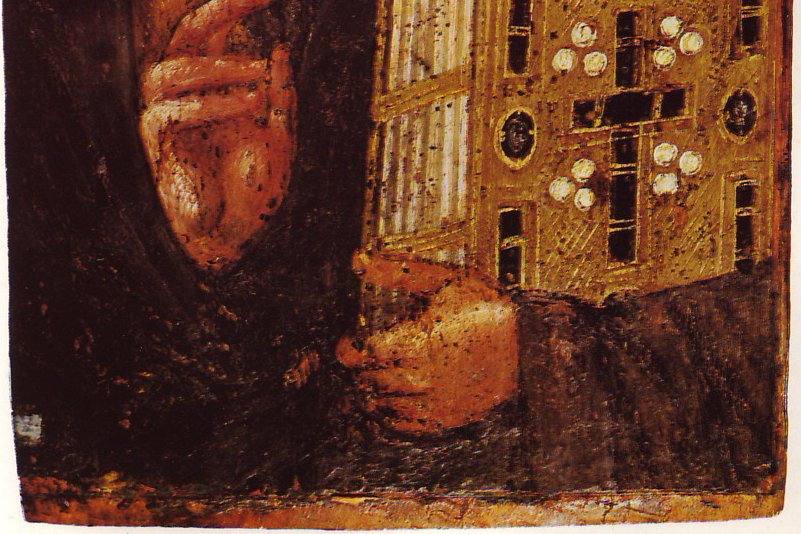
Christ Pantocrator icon, Saint Catherine's Monastery, Mount Sinai, 6th century — public domain.
Over the following centuries, that impulse crystallized into something closer to the prayer known today. Monks on Mount Sinai and, later, the monastic communities of Mount Athos in Greece developed both the fixed wording — "Lord Jesus Christ, Son of God, have mercy on me, a sinner" — and a structured method for praying it, often synchronized with the rhythm of breathing: the first half of the phrase on the in-breath, the second half on the out-breath. This school of prayer became known as Hesychasm, from the Greek hesychia, meaning stillness or inner quiet.
The theology packed into nine words
The Catechism of the Catholic Church names the Jesus Prayer directly, describing it as a prayer that "combines the Christological hymn of Philippians 2:6-11 with the cry of the publican and the blind men begging for light" (CCC 2667). That reference points to two Gospel moments: the tax collector in Luke's Gospel who prays simply, "God, be merciful to me a sinner" (Luke 18:13), and the blind beggars who cry out, "Son of David, have pity on us!" (Matthew 9:27), refusing to be silenced by the crowd around them.
Compressed into those nine words is also a full statement of who Jesus is — "Son of God" — and a full statement of the human condition before him: not righteous, not deserving, simply asking for mercy. Eastern Christian teachers have long pointed out that almost nothing essential to Christian faith is missing from the prayer, which is part of why it can be repeated for a lifetime without becoming exhausted of meaning.
A controversy over how far the prayer could reach
The Hesychast method of prayer did not spread without resistance. In the fourteenth century, a Calabrian monk named Barlaam publicly attacked the Athonite hesychasts, mocking their claim that sustained prayer of this kind could allow a person to experience the uncreated "light" that the apostles reportedly saw at Christ's Transfiguration — the same light described in the Gospel accounts of Mount Tabor. The monk and theologian Gregory Palamas rose to defend the practice, arguing for a distinction between God's unknowable essence and his energies, through which God could be genuinely experienced by someone given over to unceasing prayer like the Jesus Prayer. The Eastern Church eventually vindicated Palamas's position at a series of councils in Constantinople in the 1340s, and he was later canonized; the episode, known as the Hesychast controversy, left the Jesus Prayer not as a marginal monastic habit but as a practice with a fully worked-out theological defense behind it, one still cited in Orthodox teaching on prayer today.
The prayer rope, and why it isn't a rosary
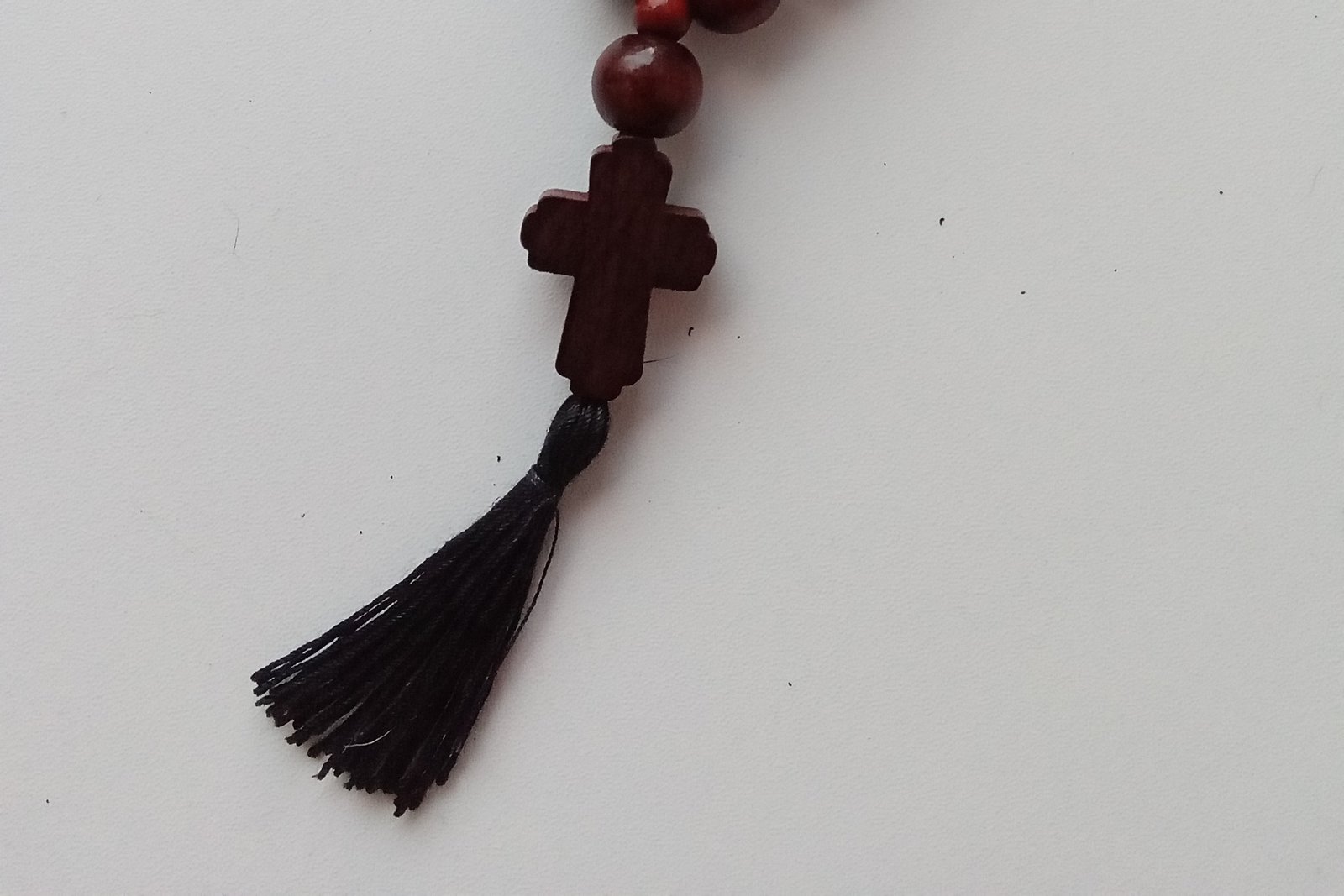
Most people who pray the Jesus Prayer regularly use a prayer rope — called a chotki in Russian tradition or komboskini in Greek — a cord, usually black wool, tied with a series of small knots, often in multiples of 33 (a number traditionally associated with the years of Christ's earthly life) or 100. Unlike a Catholic rosary, which counts distinct prayers across different beads (Our Fathers, Hail Marys, Glory Bes), the prayer rope counts a single repeated phrase, knot by knot, without changing the words.
The rope itself carries devotional meaning beyond counting — its knots are traditionally tied in a complex pattern understood as a small cross woven into wool, and monastic tradition holds that the devil cannot easily untie it, a folk image for the prayer rope's role in spiritual warfare against distraction.
From Russian monasteries to a modern audience
Much of the Jesus Prayer's spread outside strictly monastic circles owes to a short, anonymous 19th-century Russian spiritual memoir called The Way of a Pilgrim, which follows a wandering peasant who learns to pray the Jesus Prayer continuously after a priest teaches him the Philokalia — a large anthology of Eastern Christian spiritual writing compiled in the 18th century. The book, first published in Russian in the 1880s, became widely read in English translation during the 20th century and introduced many Western readers, Catholic and Protestant alike, to a form of prayer their own traditions had not emphasized in the same way.
The Trappist monk and writer Thomas Merton, one of the most influential 20th-century voices in Catholic contemplative spirituality, wrote appreciatively of the Jesus Prayer and helped further its reception among Western Catholics interested in Eastern monasticism's approach to unceasing prayer.
How it's prayed today
There's no single required posture or setting. Some pray the Jesus Prayer seated in silence, working through a full prayer rope; others repeat it silently through the day — while walking, waiting, or doing manual work — treating it as a kind of background prayer running underneath ordinary activity rather than a set-aside devotional period.
Teachers within the Hesychast tradition typically caution beginners against forcing the "prayer of the heart" — the deeper, more spontaneous stage the tradition describes — and recommend instead simply repeating the words attentively and slowly, without rushing to achieve a particular inner experience. Like the Anima Christi or other short devotional prayers, its value lies less in reciting it once than in letting its repetition slowly reshape attention over months and years.
Trivia
What are the exact words of the Jesus Prayer?
Where does the Jesus Prayer come from?
Is the Jesus Prayer only used in Eastern Orthodox Christianity, or do Catholics pray it too?
Do you need prayer beads to pray the Jesus Prayer?
What does it mean for the prayer to move from the mind into the heart?
Related Reading