Lectio Divina Explained — Praying With Scripture in Four Movements

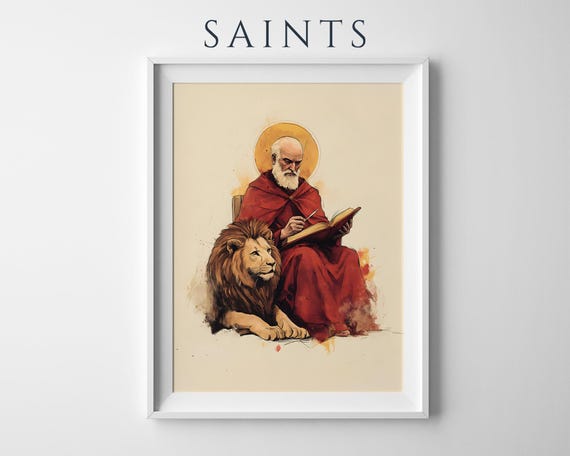
Reading slowly enough that it becomes prayer
Most reading is aimed at covering ground — a chapter, an article, a day's news. Lectio divina asks for the opposite instinct: a handful of verses, read slowly enough, and returned to often enough, that the text stops functioning as information to be processed and starts functioning as an occasion for encounter. The practice traces back to the earliest centuries of Christian monastic life, when monks — with far more unstructured time than most people have today, but also a deliberate discipline about how they used it — developed habits of reading Scripture that were meant to lead directly into prayer, not stop short of it.
Photo: Aaron Burden / Wikimedia Commons (CC0)
The clearest formal articulation of the practice comes from a twelfth-century Carthusian monk named Guigo II, whose short work The Ladder of Monks (Scala Claustralium) laid out four distinct steps as rungs on a ladder rising from the earthly act of reading to the otherworldly stillness of contemplation. Those four steps — lectio, meditatio, oratio, contemplatio — remain the standard structure taught today, even though the practice itself predates Guigo's formalization by many centuries.
Lectio: reading
The first movement is simply reading — but reading slowly, usually a short passage, often just a handful of verses from one of the Gospels or the Psalms, read once through without rushing to interpret or apply it. The goal at this stage isn't analysis. It's closer to letting the words settle, noticing which phrase, image, or detail seems to catch attention without forcing that noticing. Many practitioners read the passage aloud, even alone, since the physical act of speaking the words slows the pace in a way silent reading often doesn't.
Meditatio: meditation
The second movement turns from reading to reflection. Whatever word, image, or phrase stood out during the lectio stage becomes the focus of quiet consideration — turning it over, asking what it might mean, connecting it to one's own life and circumstances. The Catechism describes this general movement of meditation as "above all a quest," where "the mind seeks to understand the why and how of the Christian life, in order to adhere and respond to what the Lord is asking" (CCC 2705). It's less about producing a tidy interpretation than about letting the passage begin to ask questions of the reader, rather than the other way around.
Oratio: prayer
The third movement is where meditation opens naturally into direct address to God — no longer thinking about the text, but speaking to God in response to it. This might be a prayer of gratitude, a request, an expression of sorrow, or simply an honest reaction to whatever the passage surfaced. The Catechism's description of meditation more broadly captures the shift this stage represents: "We pass from thoughts to reality... 'Lord, what do you want me to do?'" (CCC 2706) — reflection turning, almost without a deliberate decision to make it happen, into conversation.
Contemplatio: contemplation
The fourth and final movement is the hardest to describe precisely because it's the least active of the four. Contemplation, in this tradition, isn't another exercise to perform — it's simply resting, wordlessly, in God's presence, without needing further reading, reflection, or speech to sustain the moment. Saint Teresa of Ávila's description of contemplative prayer, quoted in the Catechism, captures the shift in tone: "nothing else than a close sharing between friends... taking time frequently to be alone with him who we know loves us" (CCC 2709). Not every session of lectio divina reaches this fourth stage, and the tradition doesn't treat that as a failure — the earlier three movements are complete practices of prayer in their own right, whether or not they open into this final, quieter rest.
A living tradition, not a museum piece
Lectio divina isn't a historical curiosity kept alive only in monasteries. The Second Vatican Council's document on divine revelation, Dei Verbum, explicitly encouraged the whole Church toward "the sacred Scriptures," recommending prayerful reading, and the practice has seen a notable revival among ordinary Catholic laypeople in the decades since, supported by numerous popes who have recommended it as an accessible entry point into a deeper prayer life, not a specialized technique reserved for religious professionals.
Starting simply
For someone trying lectio divina for the first time, the four Latin terms can make the practice sound more technical than it needs to be in practice. A workable starting point: choose a short Gospel passage, perhaps four to eight verses; read it slowly, once, then again; notice whatever word or image seems to draw attention; sit with that for a few minutes, letting it prompt reflection; let the reflection turn into whatever prayer feels honest in response; and then simply stay quiet for a moment before moving on with the day. No stage needs to be forced, and the whole exercise rarely needs more than fifteen or twenty minutes to be genuinely worthwhile. What Guigo formalized eight centuries ago as a ladder remains, in practice, closer to a habit than a technique — one that gets easier, and more natural, the more regularly it's kept.
Trivia
What does 'lectio divina' mean, and where did it come from?
What are the four movements of lectio divina?
Do I need a special method or training to practice lectio divina?
How is lectio divina different from ordinary Bible study?
Can lectio divina be practiced in a group, or only alone?
Related Reading