The Porziuncola, Assisi

A ruined chapel and a young man looking for direction
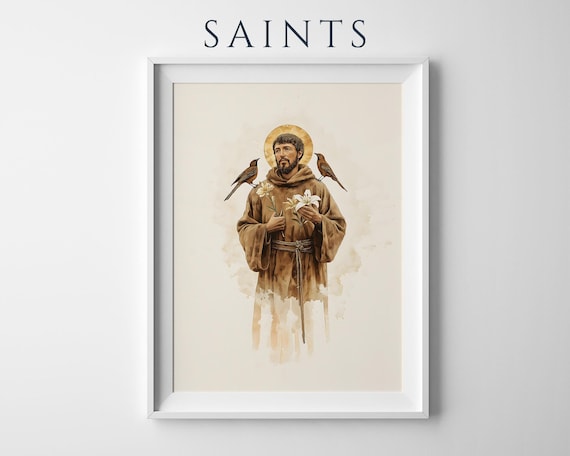
Before it meant anything to anyone, the Porziuncola was just a small, abandoned stone chapel in a wooded plain below the hill town of Assisi, dedicated to Our Lady of the Angels and belonging, at least nominally, to a nearby community of Benedictine monks. By the early 1200s, it had fallen into disrepair, one of several small ruined churches that Francis of Assisi took it upon himself to rebuild in the years right after his conversion — a period when Francis, still working out what his new life would look like, was quite literally repairing broken buildings with his own hands before he understood he was also meant to repair something much larger.
Photograph by Diego Baglieri, the Porziuncola chapel inside the Basilica of Santa Maria degli Angeli, Assisi -- CC BY-SA 4.0, Wikimedia Commons.
Around 1208, while praying in the restored chapel, Francis heard what he understood as Christ's direct instruction through the Gospel reading of the day — to take nothing for the journey, no staff, no bag, no money, no second tunic (a passage drawn from Matthew 10 and Luke 9). He took the instruction as a call to a specific way of living, and the Porziuncola became the physical anchor for that new life. The Benedictine monks who technically owned the land granted it to Francis and his growing band of followers in exchange for a token yearly rent, famously a basket of fish from the nearby river — an arrangement Francis is said to have insisted on precisely so that the friars would never consider themselves owners of the property, only its stewards.
The birthplace of two religious orders
The tiny chapel quickly became the operational center of what would grow into the Franciscan order. Francis held his early general chapters there — gatherings of the growing community to discuss their common life and mission — and by the 1220s these meetings reportedly drew thousands of friars to camp in the fields surrounding the chapel, an almost comic contrast between the size of the founding room and the scale of what had grown out of it.
The Porziuncola's importance extends beyond the friars themselves. In 1212, Clare of Assisi, a young noblewoman drawn to Francis's way of life, came to the chapel on the night of Palm Sunday and received a plain habit from Francis's own hands, the act traditionally marking the founding of what became the Poor Clares, the women's branch of the Franciscan movement. That single small room, in other words, sits at the origin point of both major branches of the Franciscan family — a distinction shared by very few buildings anywhere in Christian history.
Dying on the ground he had chosen to live on
As his health failed in 1226, worn down by illness and the physical toll of his austere life, Francis asked to be brought back to the Porziuncola. He spent his final weeks in a small hut near the chapel, and on the evening of October 3, 1226, he died there, having reportedly asked his companions to lay him on the bare ground, stripped even of his own habit, as a final, literal expression of the total poverty he had spent his life preaching. It's a detail some hagiographers frame as a deliberate final gesture, consistent with a man who had spent decades insisting his followers own nothing; whether every detail of the deathbed accounts is historically precise or shaped somewhat by later devotional retelling, the core event — his death at the Porziuncola surrounded by his brothers — is well attested in the earliest Franciscan sources.
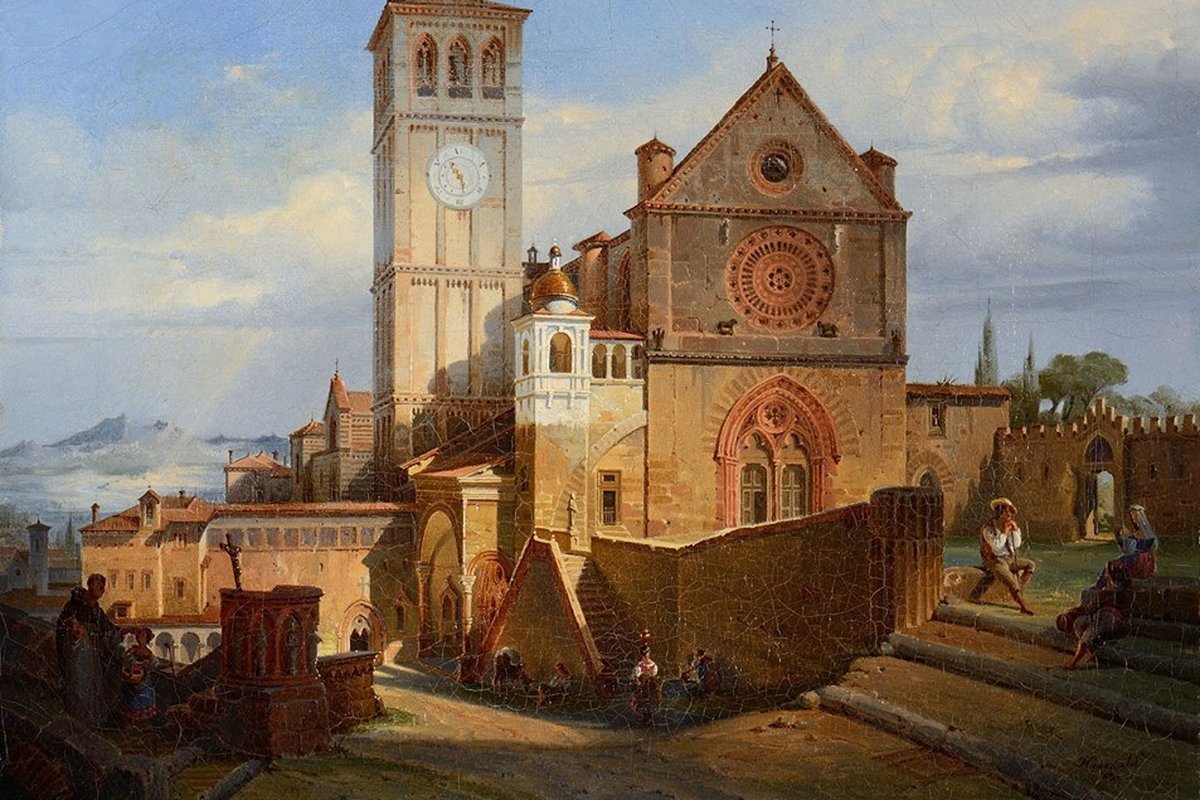
Two years later, Francis was canonized, and construction soon began nearby on the grand Basilica of Saint Francis of Assisi, built on the opposite side of the hill town to house his tomb — a striking, deliberately monumental building that stands in visual tension with the small, humble Porziuncola where his active ministry had actually centered. Together, the two sites bracket Francis's story: one built where he lived and worked and died, the other built to honor him after death on a scale he would likely have found uncomfortable.
A small chapel enclosed inside a much larger one
As Franciscan devotion to the Porziuncola spread across Europe in the centuries after Francis's death, the chapel itself faced a practical problem: it was too small and too exposed to accommodate the growing number of pilgrims, and its modest stone structure needed protection from weather and wear. In the late 16th century, Pope Pius V ordered the construction of a large Renaissance basilica specifically designed to enclose the Porziuncola whole, roofing the entire original chapel beneath its own central dome rather than replacing it. That basilica, Santa Maria degli Angeli, was completed by the 1600s and still stands today, meaning a visitor now walks into a large 16th-century church only to find the original, far smaller and far older chapel preserved intact directly beneath its dome — a building inside a building, the old one protected rather than demolished.
The Pardon of Assisi
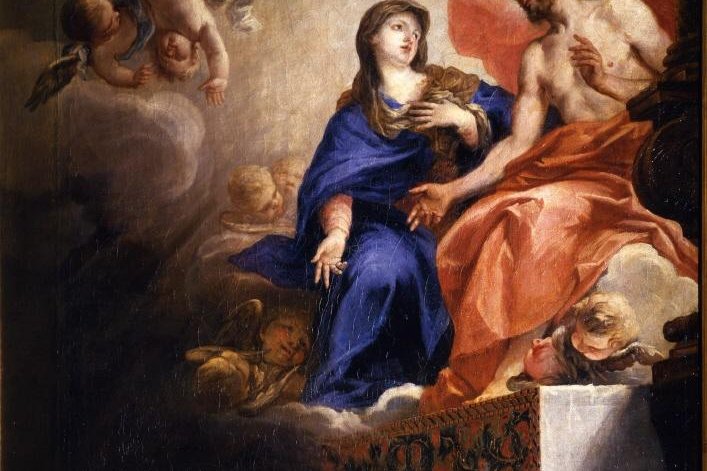
One of the Porziuncola's most enduring legacies is a specific indulgence tied to the chapel. Franciscan tradition holds that Christ appeared to Francis there and offered, through him, a full remission of temporal punishment for sin to anyone who visited the chapel under the normal conditions of confession and Communion — a grant Pope Honorius III is said to have approved around 1216. Known as the Portiuncula Indulgence, or the Pardon of Assisi, it remains attached to the chapel's feast day of August 2 each year, and the Church has since extended a version of the same indulgence more broadly to parish churches on that date, meaning a tradition that began in one small room outside Assisi now touches Catholic parishes worldwide once a year.
For a building so easy to overlook on a map — smaller than most parish chapels, entirely hidden inside a larger church — the Porziuncola carries an outsized share of Franciscan history within its stone walls: a founding, a female order's beginning, a death, and an indulgence still observed eight centuries later.
Trivia
What does the word 'Porziuncola' mean?
Why is the Porziuncola important to Franciscan history?
Did Saint Francis die at the Porziuncola?
Why is the Porziuncola now inside a much larger church?
What is the Portiuncula Indulgence?
Related Reading