Shepherds' Field, Bethlehem

An open field in Luke's account of the Nativity
Among the four Gospels, only Luke records the episode that gives Shepherds' Field its name: an angel appearing at night to shepherds "keeping watch over their flock," announcing the birth of a savior in nearby Bethlehem, followed by what Luke describes as a multitude of the heavenly host praising God before the shepherds set out to see the child for themselves. That single scene — humble laborers, not kings or priests, receiving the first news of Christ's birth — has resonated through Christian art, liturgy, and popular devotion for two thousand years as a statement about who the Gospel is addressed to first. Readers curious about how this moment fits within the wider biblical tradition of angelic announcement can find more detail in the story of the angel appearing to the shepherds.
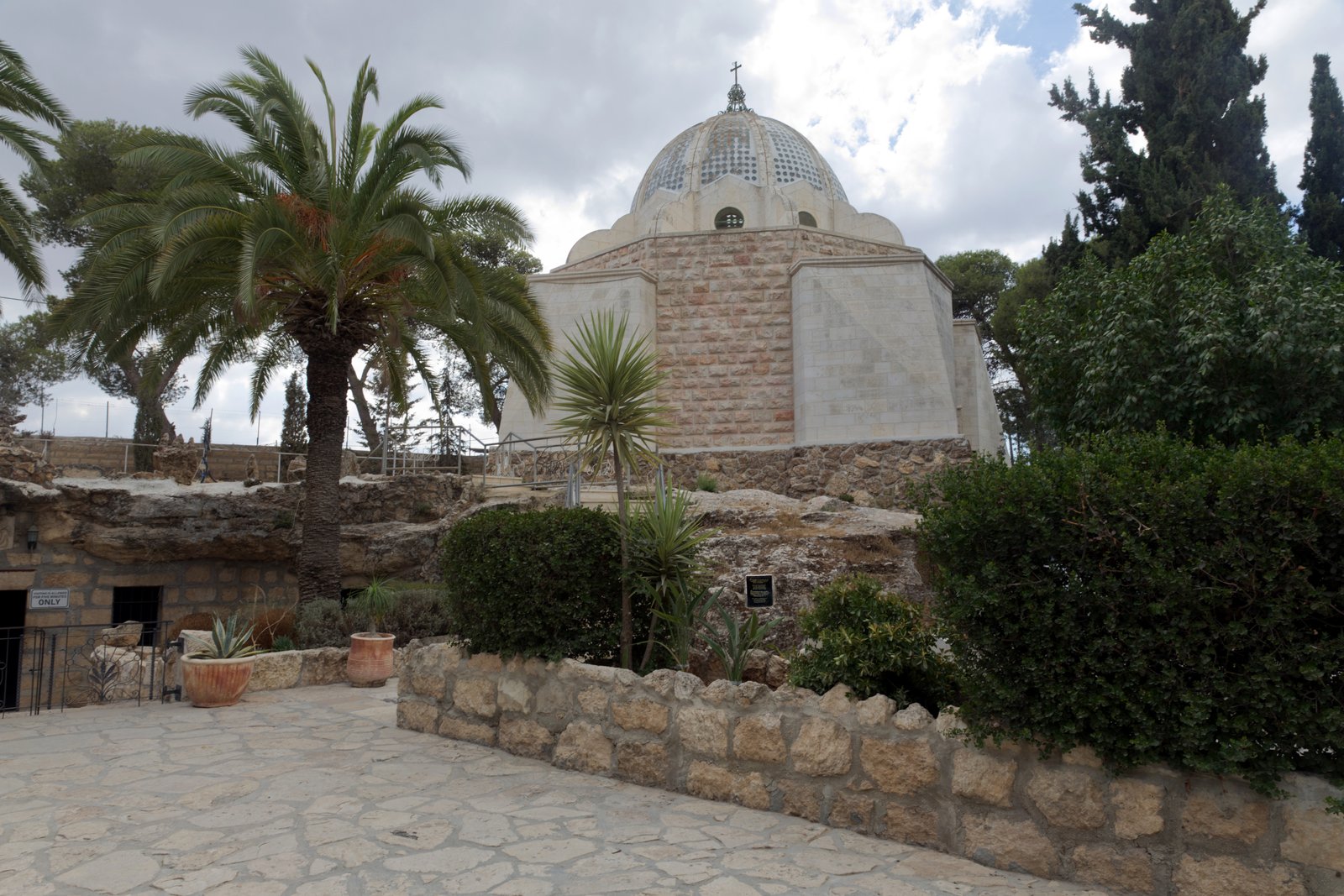
Photograph by Ronnie Macdonald, Chapel of the Shepherds' Field, Bethlehem, 2022 — CC BY 4.0, Wikimedia Commons.
Luke gives no precise geographic marker beyond placing the shepherds somewhere in the fields near Bethlehem, leaving the exact location open to later tradition rather than fixed textual certainty. That ambiguity is itself instructive: unlike sites tied to more specific topographical details in the Gospels, Shepherds' Field represents a broad agricultural landscape rather than one single identifiable spot, and Christian communities in the region settled, over centuries, on the area east of Bethlehem now occupied by the town of Beit Sahour as the traditional setting.
Ancient veneration in Beit Sahour
Archaeological evidence indicates that this general area, a landscape of caves, terraced hillsides, and agricultural land east of Bethlehem, was venerated as the shepherds' field by at least the early Byzantine period, several centuries after Christ's birth. Excavations at what is now the Greek Orthodox site have uncovered the remains of a monastery and church dating to roughly the fourth or fifth century, along with earlier cave dwellings and ancient cisterns consistent with a long history of pastoral use in the immediate area — physical evidence, if not conclusive proof, supporting the antiquity of the tradition associating this landscape with Luke's account.
The caves themselves are a significant feature of the site's identity: shepherds in this region have long used natural limestone caves as shelters for themselves and their flocks, both from weather and from predators, and one particular cave at the Orthodox-associated site has been venerated for centuries as a specific shelter connected to the Gospel narrative, even though, as with most Holy Land traditional sites, its precise historical accuracy cannot be verified with certainty.
Two neighboring chapels, two traditions
Today Beit Sahour hosts two separate traditional Shepherds' Field sites, situated within a short walk of one another but administered by different Christian communities. The Greek Orthodox site centers on the ancient cave and the ruins of the Byzantine-era monastery, preserving a strong sense of continuity with the earliest documented veneration of the area. The Roman Catholic site, under the custodianship of the Franciscan Custody of the Holy Land — the religious order entrusted by the Church with guardianship of many of the region's holiest Christian sites — features a strikingly modern chapel completed in 1954, designed by the Italian architect Antonio Barluzzi in a distinctive tent-like shape meant to evoke the temporary shelters shepherds themselves would have used.
Barluzzi, among the most prolific architects of modern Holy Land churches, designed the chapel with an open, star-shaped skylight above the altar, a deliberate architectural reference to the star traditionally associated with the Nativity narrative, and surrounded the building with excavated caves and terraced grounds that give visitors a tangible sense of the pastoral landscape the Gospel scene describes. Both sites, despite their differing traditions and administering communities, draw on the same underlying regional memory of this landscape as the setting for the shepherds' encounter with the angelic announcement.
A landscape still worked by shepherds today
What distinguishes Shepherds' Field from many other traditional biblical sites is the degree to which its underlying agricultural character has persisted into the present. Beit Sahour remains an area where sheep and goat herding continues as a working part of the local economy, and visitors to either Shepherds' Field site not infrequently encounter contemporary shepherds and flocks moving across the same terraced hillsides — a rare instance of a biblical landscape's traditional use continuing largely unbroken rather than having given way entirely to modern development.
For pilgrims visiting Bethlehem, a stop at Shepherds' Field typically comes as a companion visit to the Church of the Nativity itself, connecting the story of Christ's birth to the specific detail Luke alone preserves: that the first people summoned to witness it were not dignitaries but working shepherds, on ordinary land just outside the town, doing the ordinary work of watching their flocks through the night.
Both traditional sites also preserve remains of ancient cave dwellings and cisterns cut into the soft limestone, the kind of simple rural shelter shepherds in this region would genuinely have used at the time of Christ's birth, giving visitors a tangible sense of the humble, unremarkable setting the Gospel places at the center of one of Christianity's most celebrated announcements.
Trivia
What is Shepherds' Field in Bethlehem?
What does the Bible say happened at Shepherds' Field?
Why are there two different Shepherds' Field sites near Bethlehem?
How old are the traditions marking these sites?
Can visitors still see shepherds and flocks near the site today?
Related Reading