Siena and the Sanctuary of Saint Catherine

A dyer's daughter in medieval Siena
Catherine Benincasa was born in 1347 in Siena, one of the wealthiest and most politically significant city-states of medieval Tuscany, the twenty-fourth of twenty-five children born to a wool and cloth dyer and his wife — a large but not unusually so family for the era, though the number reflects the high infant mortality typical of fourteenth-century urban life. Her early life was shaped by the Black Death, which struck Siena with devastating force during her childhood and killed a substantial portion of the city's population, and by the intense civic and political rivalries that characterized relations between Italian city-states and the fractured, geographically displaced papacy of the period. The fuller account of her extraordinary life and influence appears in our article on Saint Catherine of Siena.
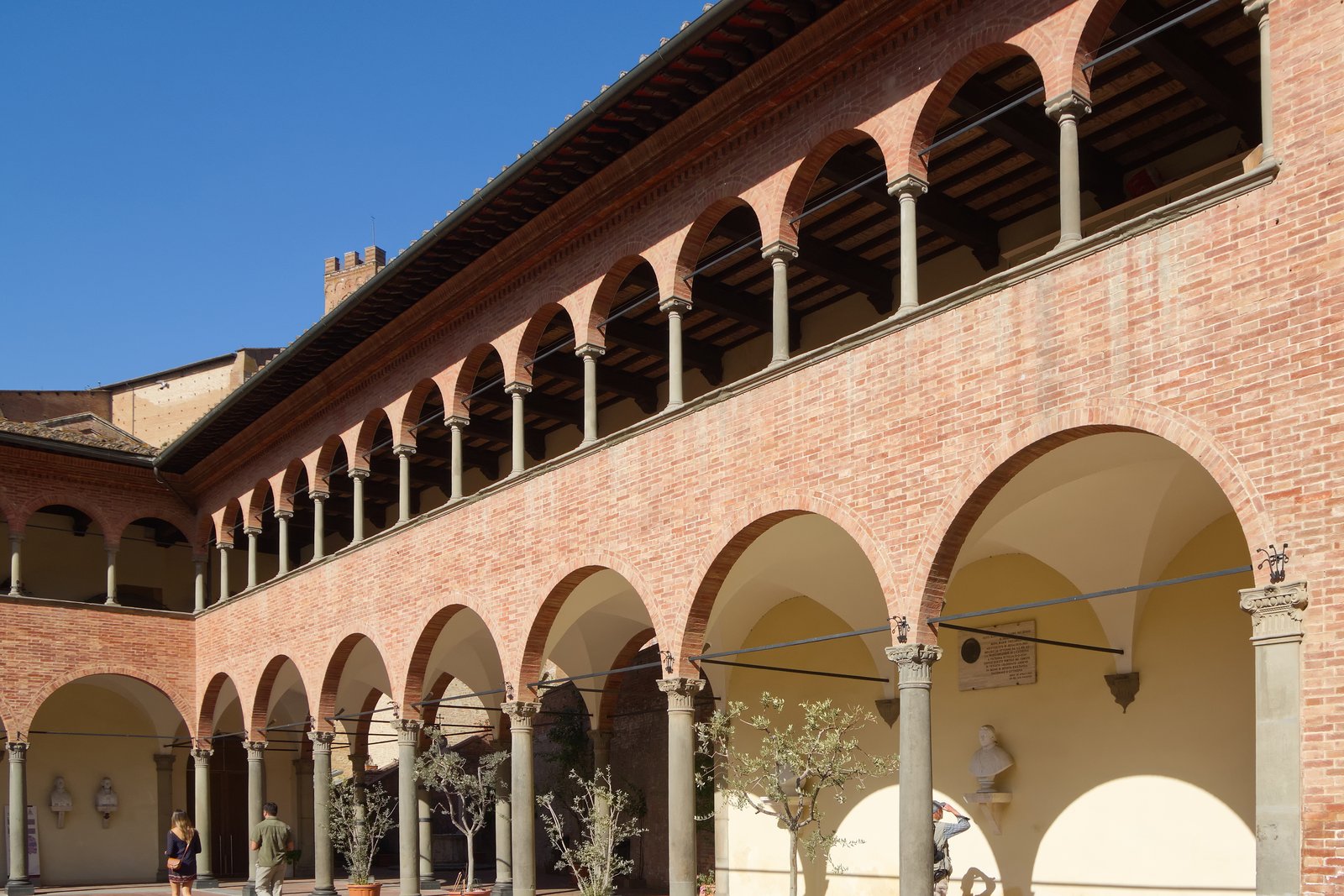
Photograph by Berthold Werner, Italy, Siena, Santuario di Santa Caterina — CC BY-SA 4.0, Wikimedia Commons.
Catherine resisted her family's efforts to arrange a conventional marriage for her, and by her teenage years had committed herself to a devout religious life, eventually becoming a lay member (a "mantellata") of the Dominican Third Order rather than entering a formal convent, allowing her to remain living at home while pursuing an intensely disciplined life of prayer, fasting, and eventually public religious and political activity that would have been unusual for a formally cloistered nun of the period.
From a Sienese house to European politics
What set Catherine apart from most medieval mystics was the degree to which her spiritual authority translated directly into political influence at the highest levels of the Church, despite her complete lack of formal education, official position, or noble status. She corresponded extensively with popes, cardinals, and rulers across Italy and beyond, and became one of the most persistent and effective voices urging Pope Gregory XI to end the papacy's nearly seven-decade residence in Avignon, France — the period historians call the "Avignon Papacy" — and return the papal court to Rome, which he finally did in 1377, a shift in which Catherine's advocacy, including a personal journey to Avignon to press the case directly, is widely credited as a significant factor.
Following Gregory's death and the ensuing Western Schism, which saw rival claimants to the papacy dividing the loyalty of Catholic Europe, Catherine continued working, through letters and personal appeals, to support the legitimacy of the Rome-based papal line and press for reconciliation, activity that continued until her death in Rome in 1380 at only thirty-three. Her major theological work, "The Dialogue," dictated to secretaries during periods of ecstatic prayer rather than composed through conventional writing, would later contribute to her being declared a Doctor of the Church in 1970 — one of only a small number of women, alongside Teresa of Ávila, to hold that title, granted to figures whose theological writings are recognized as being of outstanding benefit to the universal Church.
A house turned into a sanctuary
Catherine's family home in Siena survived long after her death, and in the sixteenth century, as her cult and reputation grew substantially following her canonization in 1461, the house was formally converted into a sanctuary and devotional complex incorporating the original rooms of the Benincasa family residence. Multiple chapels were added around and above the historic core, decorated over subsequent centuries with artwork depicting scenes from Catherine's life, while specific rooms within the complex retained direct connections to documented or traditional events — including a room associated with the family's dyeing workshop and spaces linked to Catherine's periods of prayer and reported mystical experience.
The sanctuary complex, situated in the Fontebranda district of Siena near the workshops that had defined her father's trade, remains architecturally distinct from the grander basilicas built for many other major saints, retaining much of the intimate, domestic character of an actual medieval Sienese townhouse even as it was progressively adapted for religious use over the centuries.
Siena's saint, divided and venerated
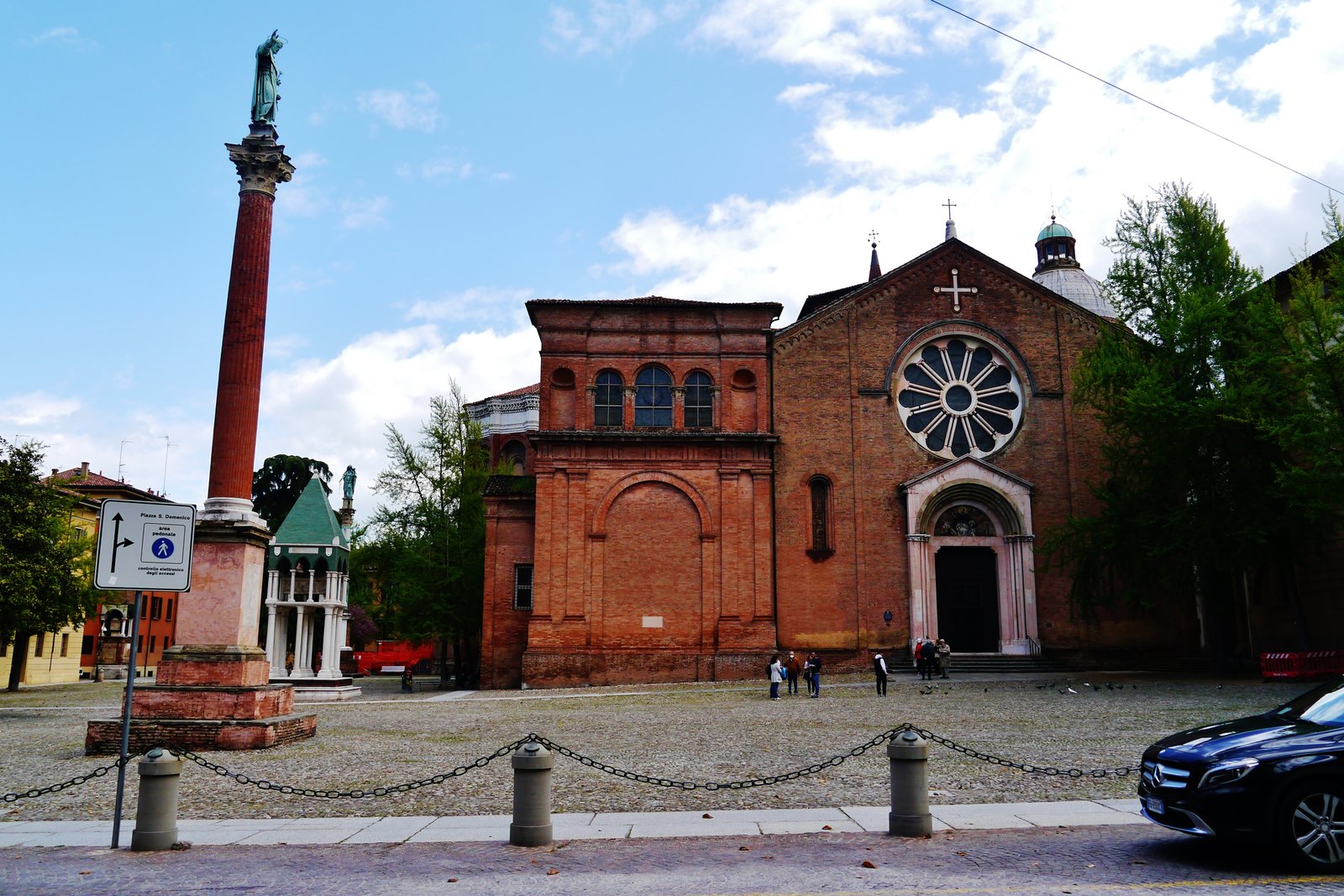
Catherine's body itself lies in Rome, at the Basilica of Santa Maria sopra Minerva, near the Pantheon, where she was originally buried — but according to a well-established Sienese tradition, a group of citizens determined to secure some physical connection to their native saint managed to obtain her head, reportedly smuggling it out of Rome concealed in a bag past papal guards who would not have permitted the removal of a full body relic. That head has been venerated since in a reliquary at the Basilica of San Domenico in Siena, a separate site from her family home and sanctuary, giving the city two distinct Catherine-related pilgrimage destinations connected by her life story but located in different parts of the historic center.
Both sites remain active today: the Sanctuary of Saint Catherine continues to function as a devotional complex and museum documenting her domestic life and spiritual development, while the Basilica of San Domenico draws pilgrims specifically to venerate her head relic. Together they preserve, in physically divided but complementary form, the story of a woman who rose from a dyer's household in a provincial Italian city to become one of the medieval Church's most consequential and least conventional voices.
Trivia
Why is Catherine of Siena's head kept separately from her body?
What is the Sanctuary of Saint Catherine in Siena?
Why was Catherine of Siena significant in the history of the papacy?
Was Catherine of Siena formally educated?
Related Reading