Salvador Dalí's Christ of Saint John of the Cross

A crucifixion with no violence in it
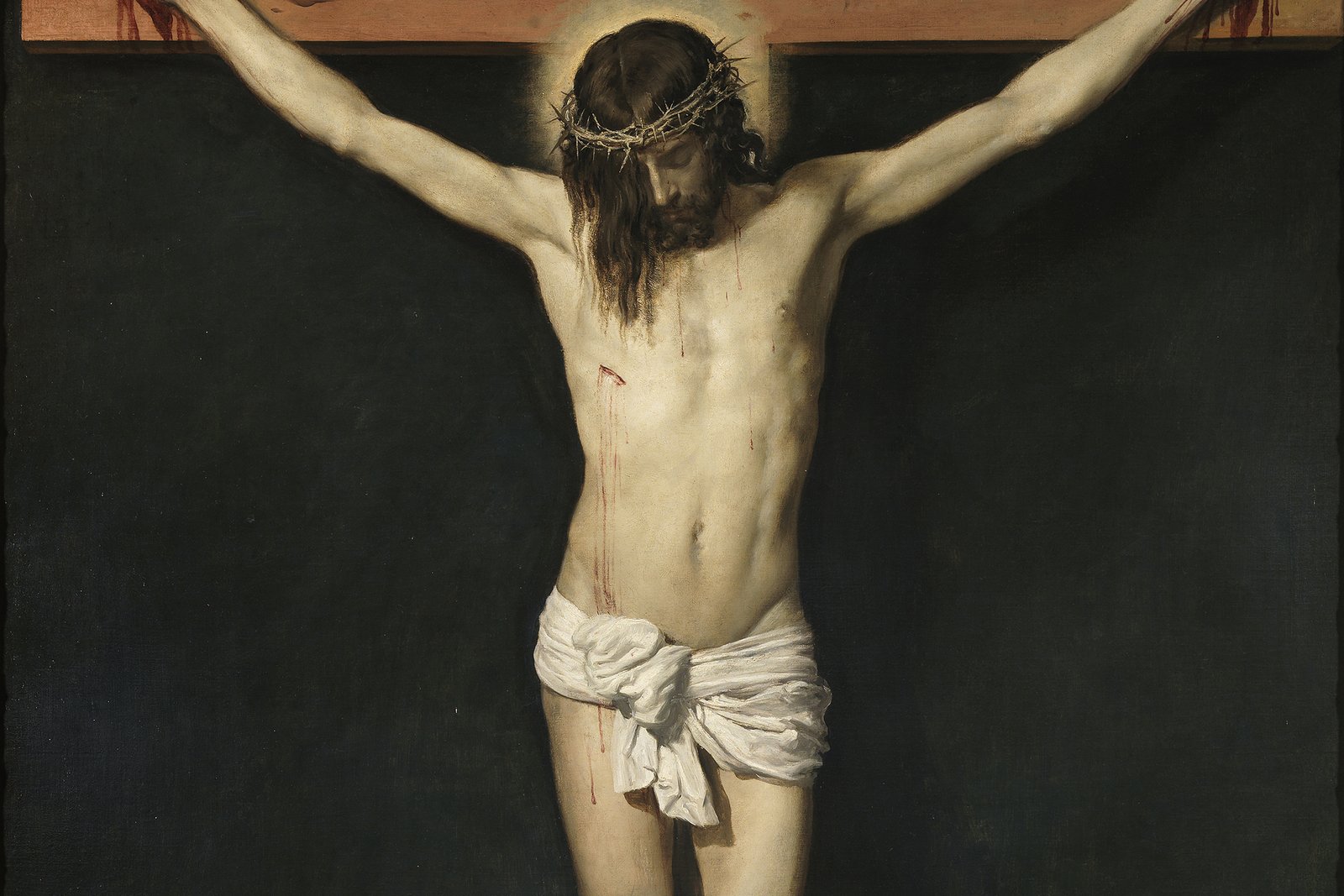
Salvador Dalí spent the first half of his career as one of Surrealism's most instantly recognizable provocateurs, filling canvases with melting clocks, burning giraffes, and dreamlike distortions of the human body. By 1951, when he completed Christ of Saint John of the Cross, he had entered what he called his "nuclear mysticism" period — a turn toward religious and scientific themes that surprised many who associated him purely with Surrealist shock value. The painting that resulted is, in its way, still shocking, just not for the reasons his earlier work had been.
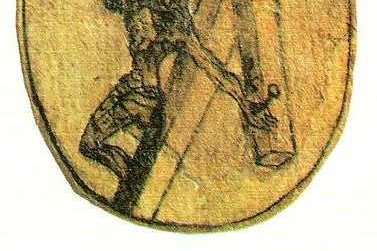
Attributed to Saint John of the Cross, crucifixion sketch, c. 1550, Monastery of the Incarnation, Ávila — public domain.
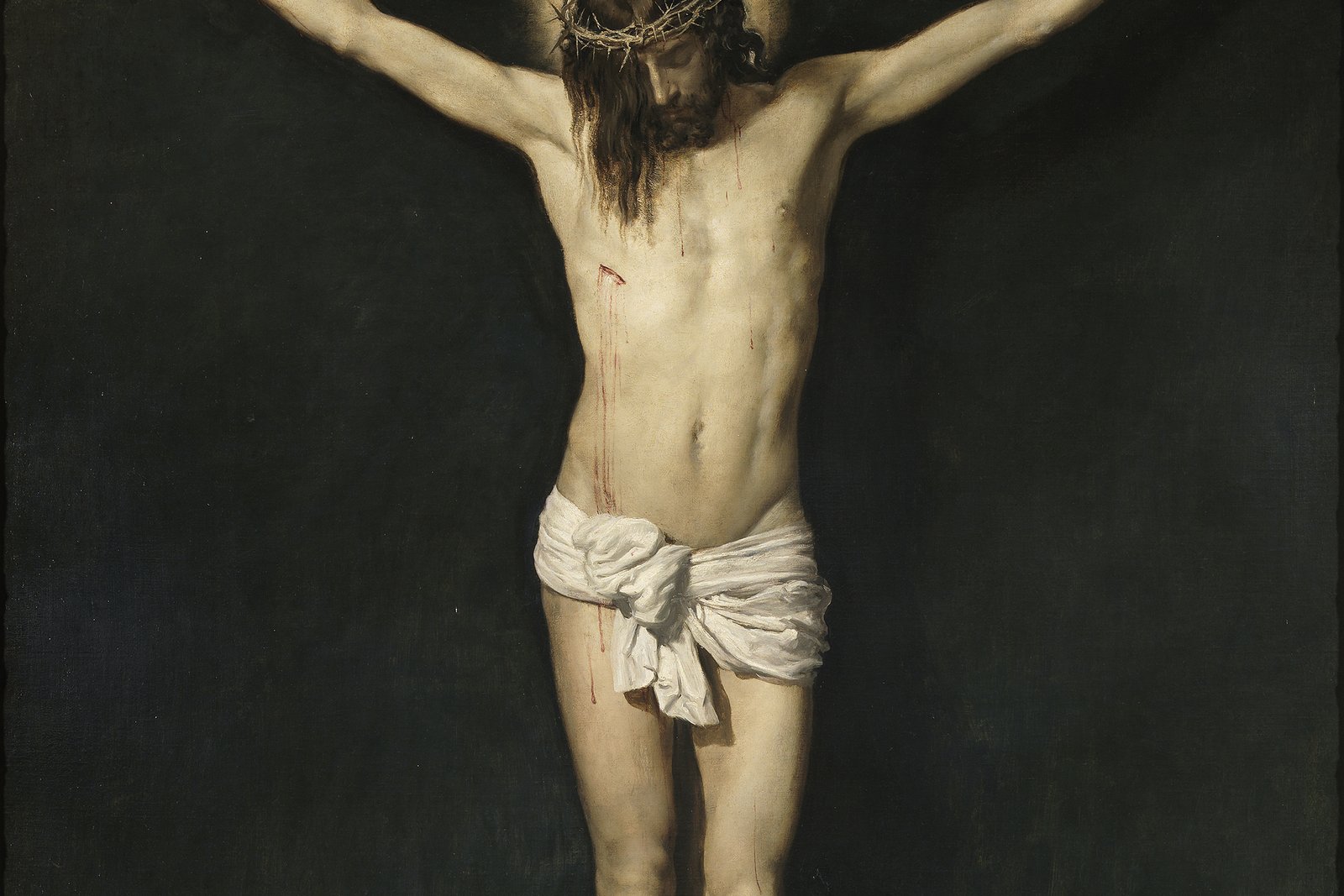
Traditional crucifixion imagery, going back centuries in Western sacred art, tends to emphasize Christ's physical suffering: the crown of thorns pressing into his scalp, blood from the nail wounds, a body sagging under its own weight, often surrounded by grieving figures at the foot of the cross. Dalí stripped all of that away. His Christ hangs suspended against a black sky, seen from an extreme high angle that puts the viewer somewhere above and slightly behind his head, looking down along the length of his outstretched arms toward a luminous bay and boat scene borrowed from a real fishing village Dalí knew on the Catalan coast. There is no crown of thorns, no visible wounds, no blood. The effect is less an image of agony than of quiet, almost weightless transcendence — a body that seems to float rather than hang.
A viewpoint borrowed from a saint's own hand
The painting's most distinctive feature, its extreme aerial perspective, wasn't Dalí's invention from nothing. He traced it directly to a source he found genuinely compelling: a small, rough pen-and-ink sketch traditionally attributed to Saint John of the Cross, the sixteenth-century Spanish Carmelite friar, poet, and mystic best known for his writings on the "dark night of the soul." According to the tradition surrounding this sketch, preserved today at the Monastery of the Incarnation in Ávila, John drew it after experiencing a vision of Christ crucified, seen from precisely this unusual angle — as if looking down from heaven itself rather than up from the foot of the cross, the vantage point nearly every other crucifixion in the history of Western art had used.
Dalí encountered a reproduction of this centuries-old sketch and became fascinated by its geometry, adopting its unusual viewpoint almost exactly for his own much larger, much more elaborate composition. It's a striking collaboration across four hundred years: a private devotional drawing made by a mystic in a Spanish monastery becoming the structural foundation for one of the most famous religious paintings of the twentieth century, made by an artist whose public reputation could hardly have seemed further removed from quiet Carmelite spirituality.
Dalí's own account of the painting's origin
Dalí gave his own explanation for the painting's genesis, describing what he called a "cosmic dream" in 1950 in which he claimed to have seen the nucleus of an atom — and that this image, he said, later revealed itself to him as the body of Christ. This account fit the broader "nuclear mysticism" phase of his career, during which Dalí was preoccupied with reconciling his Catholic faith, reawakened later in life, with contemporary developments in physics, particularly the splitting of the atom and the discoveries of particle science that had reshaped public imagination since the Second World War. Whatever the precise sequence of Dalí's own creative process, he was explicit in linking his personal vision to John of the Cross's historical sketch, treating the older work as both inspiration and validation for the strange angle he had already been drawn to.
The painting also reflects careful, deliberate technical planning rather than spontaneous inspiration alone. Dalí reportedly built a small gantry structure to study how a body would appear from the specific elevated angle he wanted, using it to work out the foreshortening of Christ's arms, torso, and legs with the same rigorous, almost scientific precision he brought to his engagement with contemporary physics.
From private commission to public icon
Dalí completed the painting in 1951, and the following year it was purchased by the Kelvingrove Art Gallery and Museum in Glasgow, Scotland — a decision that drew criticism at the time from some in the Scottish art world who objected to spending public funds on a living Surrealist rather than more traditional works, and even, at one point, from art students who felt the museum should have prioritized contemporary Scottish art. That controversy has long since faded. The painting has become one of Kelvingrove's most visited and most reproduced works, and reproductions of it — postcards, prints, devotional cards — have circulated widely, in a strange echo of exactly the process that carried John of the Cross's own small sketch, centuries earlier, from a private vision in an Ávila monastery into an image known and copied far beyond the walls where it was first drawn.
Trivia
Why is Dalí's painting called Christ of Saint John of the Cross?
What is unusual about the composition of Dalí's Christ?
Did Dalí claim to have a vision inspiring the painting?
Where can Christ of Saint John of the Cross be seen today?
Is the original sketch by Saint John of the Cross still preserved?
Related Reading