Romanesque Tympanums: Stone Sermons Above the Church Door

A theological billboard in stone
Romanesque church builders, working across Europe roughly from the late 10th through the 12th centuries, developed the tympanum into one of the most powerful tools available for communicating theological content to a largely illiterate medieval population. Positioned directly above the main entrance, typically framed by the surrounding arch of the doorway, a tympanum's carved relief was among the first things any visitor saw approaching the church, and its imagery was rarely gentle. Scenes of Christ enthroned in overwhelming majesty, or of souls being physically sorted and judged, confronted worshippers with the spiritual stakes of their faith before they had even crossed the threshold into the nave, functioning less as passive decoration than as a direct, unavoidable address to every person entering the building.
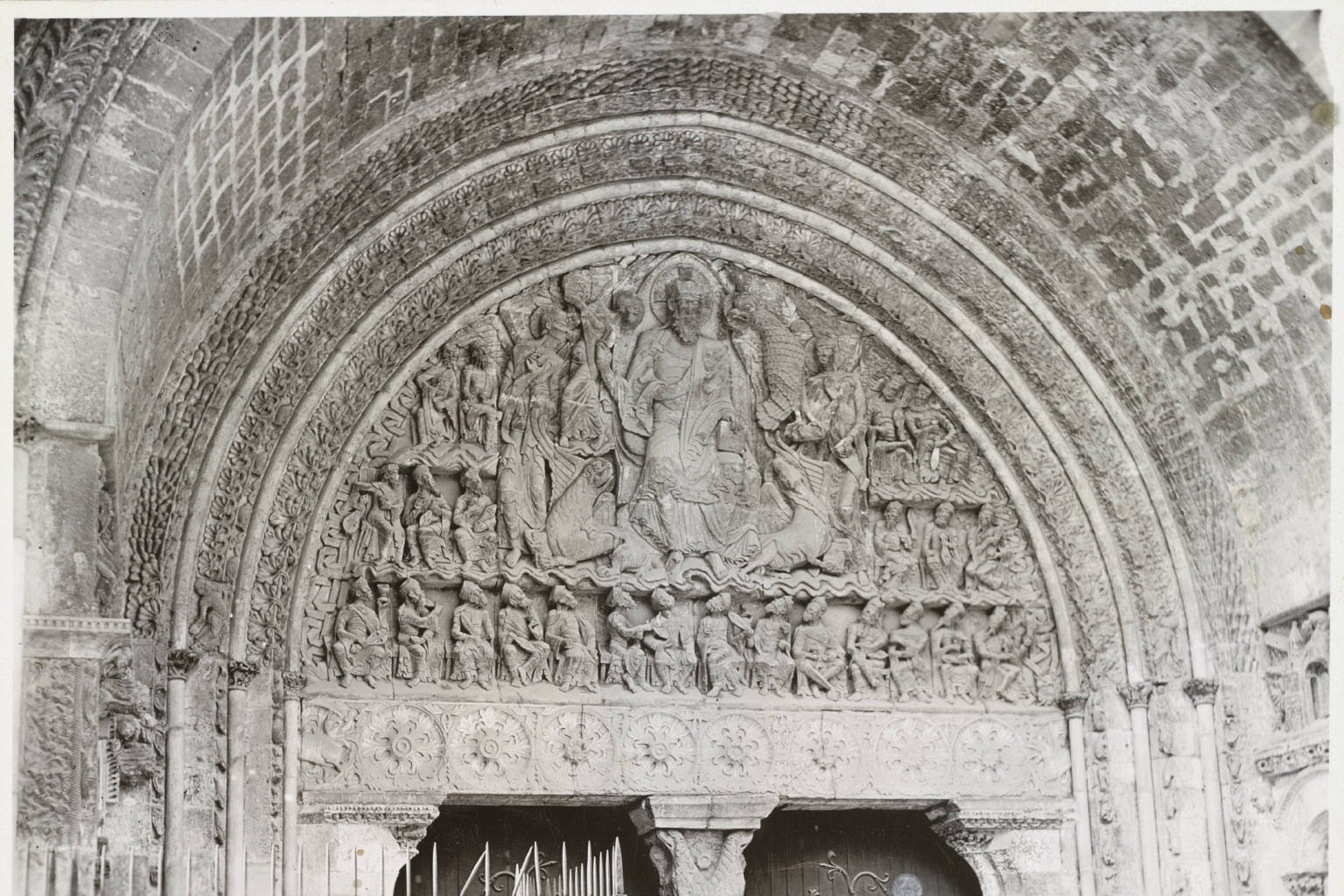
South portal tympanum, Abbey of Saint-Pierre, Moissac, France, c. 1130 AD. Photograph, 1915 — no known copyright restrictions (Wikimedia Commons).
Christ in Majesty: the dominant image
The single most common subject for Romanesque tympanum sculpture was Christ in Majesty, an image showing Christ enthroned frontally, often within an almond-shaped frame known as a mandorla symbolizing divine glory, frequently accompanied by the four winged creatures traditionally associated with the Evangelists — a man or angel for Matthew, a lion for Mark, an ox for Luke, and an eagle for John — drawn from apocalyptic visions described in the biblical books of Ezekiel and Revelation. This composition drew on a much older tradition of imperial and divine authority imagery stretching back to Byzantine and even earlier Roman visual conventions, adapted to proclaim Christ's cosmic sovereignty to medieval congregations in unmistakable visual terms.
Moissac's masterwork
Among all surviving Romanesque tympanums, the south portal of the Abbey of Saint-Pierre in Moissac, in southwestern France, is widely regarded by art historians as a high point of the form. Carved around 1130, the tympanum depicts Christ in Majesty at its center, flanked by the four Evangelist symbols and surrounded by twenty-four elders from the Book of Revelation, each individually carved with turning heads and varied poses, gazing upward toward the enthroned Christ in postures of intense adoration. The technical sophistication of the carving, achieving a remarkable sense of movement and individualized characterization within a densely packed composition, has made Moissac a touchstone reference point for scholars studying the broader development of Romanesque sculpture across the pilgrimage routes of medieval France and Spain.
Judgment scenes for pilgrims on the road
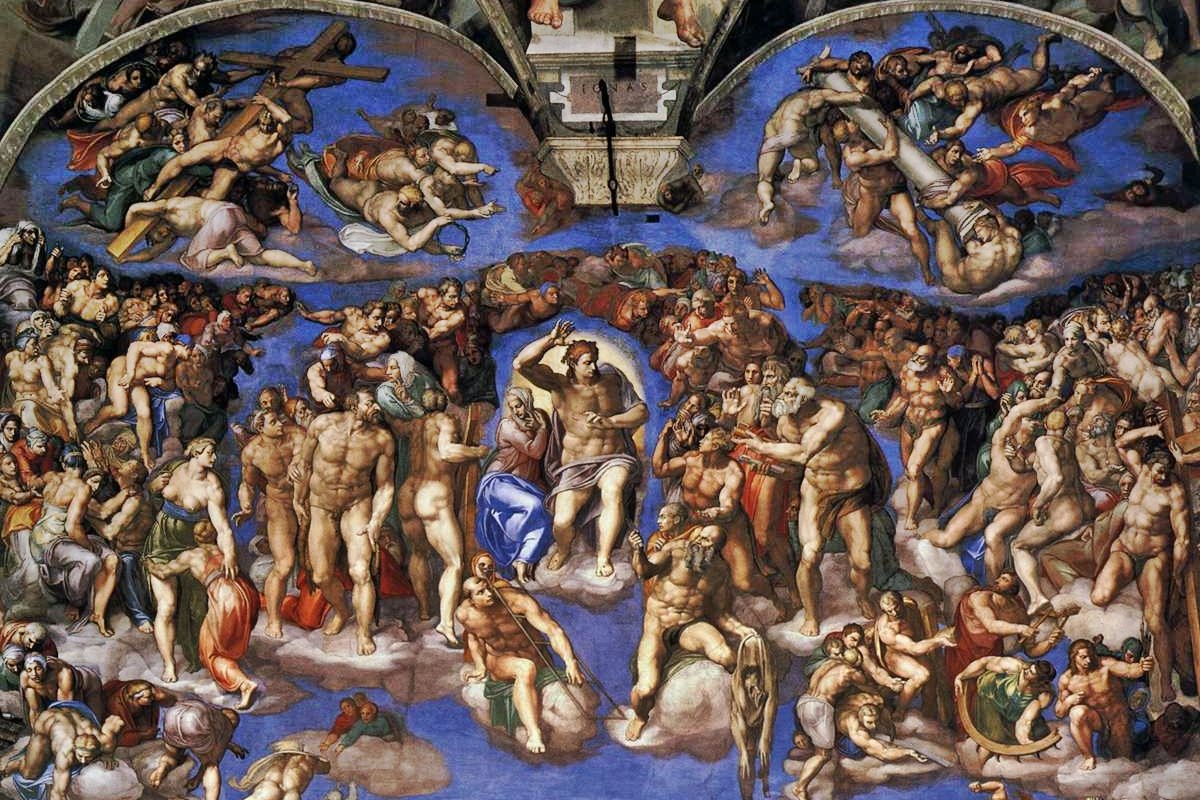
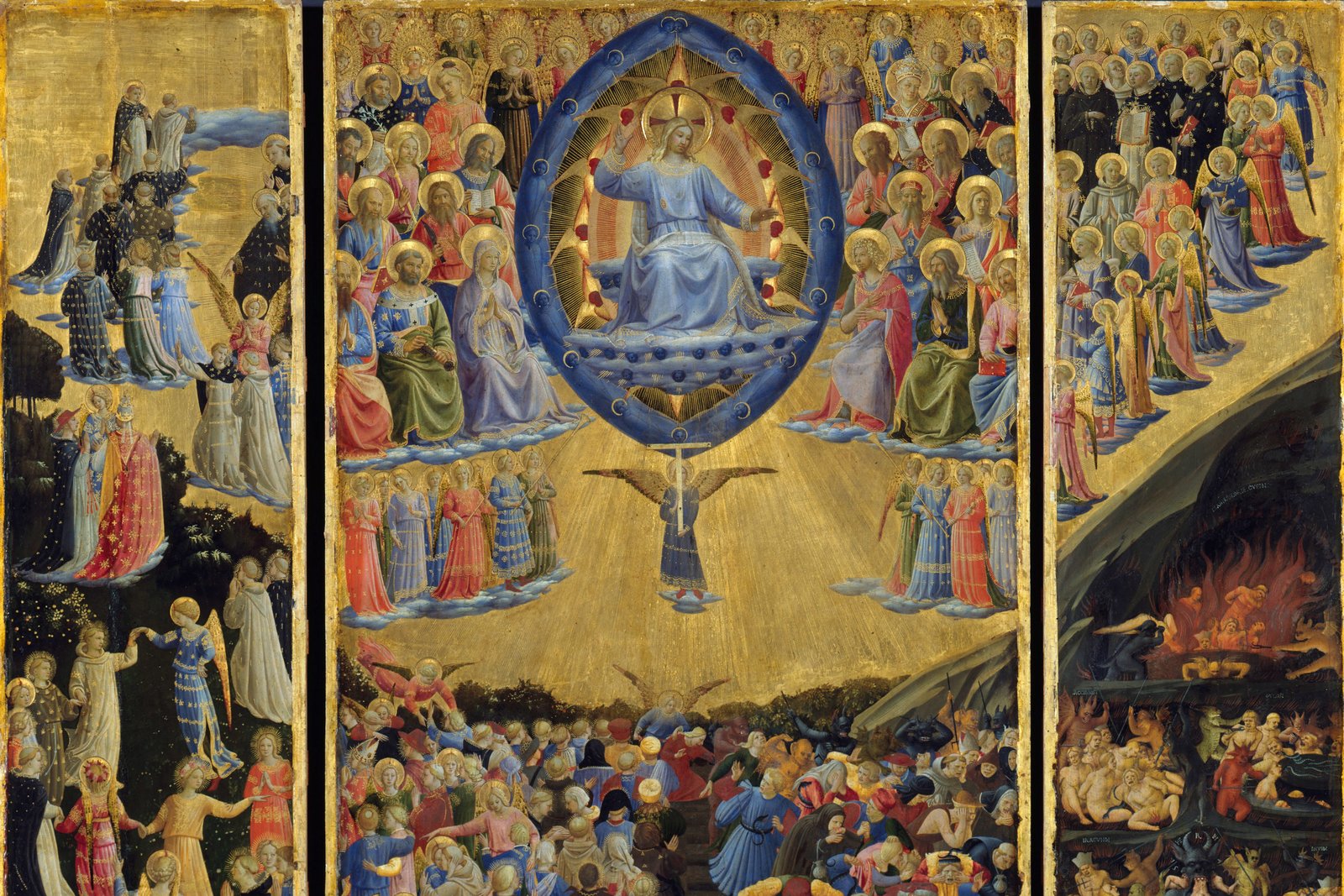
Many of the churches that invested most heavily in elaborate tympanum sculpture sat along major medieval pilgrimage routes, particularly those leading toward the shrine of Saint James at Santiago de Compostela in northern Spain. For pilgrims undertaking these often arduous, lengthy journeys as acts of penance or devotion, a church's tympanum served as a kind of way-marker of spiritual seriousness, reinforcing the penitential purpose of their travel with visceral imagery of judgment and salvation. Some tympanums went further than Moissac's serene vision of Christ's majesty, depicting explicit Last Judgment scenes with souls being weighed on scales, demons dragging the condemned toward punishment, and the saved being welcomed into blessedness — a visual tradition that would find even fuller, more dramatic expression in later Gothic cathedral portals and, centuries later, in works such as Michelangelo's own vision of the Last Judgment painted for the Sistine Chapel.
Craftsmanship under real technical constraints
Producing a tympanum of the scale and detail seen at major Romanesque churches required considerable technical skill and logistical coordination. Sculptors worked with local stone, often carving elements in sections before assembly, and had to solve genuine structural challenges in supporting substantial carved weight directly above a functional doorway that needed to remain structurally sound for centuries of use. The relatively low relief and stylized, compressed figural proportions characteristic of much Romanesque tympanum sculpture partly reflect these practical constraints, as well as deliberate stylistic choices favoring symbolic clarity and hierarchical emphasis over naturalistic anatomical accuracy, a visual approach quite different from the more fluid, individualized figure style that would later emerge in the Gothic period.
A tradition that shaped church architecture for centuries
Romanesque tympanum sculpture established a visual and theological convention that persisted, in evolving form, throughout the medieval period and beyond: the church entrance as a site of serious theological communication, not merely a functional passage. Even as Gothic architecture introduced taller, more naturalistic sculptural programs across cathedral facades, the fundamental idea pioneered in Romanesque tympanums — that the threshold of a sacred building deserved its own carved sermon — continued to shape how European church builders thought about the relationship between architecture, sculpture, and the spiritual experience of entering sacred space.
Surviving examples across France, Spain, and Italy also give modern scholars an unusually direct window into medieval religious imagination, since tympanum programs were typically designed by the same clergy who determined a community's broader theological priorities, then executed by sculptors working within very public, highly visible commissions. Unlike manuscript illumination, largely confined to monastic libraries and private devotion, a tympanum was built to be seen by an entire parish or pilgrimage community, week after week, for generations. That public, repeated encounter with carved theology helps explain why these weathered stone reliefs, despite centuries of exposure to the elements, remain among the most studied and most visited works of medieval religious art today.
Trivia
What is a tympanum in church architecture?
What subjects were most commonly carved on Romanesque tympanums?
Why is the tympanum at Moissac Abbey in France so significant?
Why were such elaborate scenes placed above church entrances specifically?
Did the style of tympanum carving change after the Romanesque period?
Related Reading