Michelangelo's Last Judgment: The Sistine Chapel's Second Act

A commission from two popes
The Last Judgment was not Michelangelo's idea alone. Pope Clement VII first commissioned the work shortly before his death in 1534, and his successor, Pope Paul III, confirmed and pushed forward the project, eager to see the chapel's altar wall transformed into a fitting companion to the ceiling Michelangelo had painted a generation earlier. By the time work began in 1536, Michelangelo was over sixty years old, already regarded as one of the towering artistic figures of his age, and reportedly reluctant to take on such a physically demanding project again after the grueling years spent on the ceiling. He nonetheless devoted roughly five years to the altar wall, working largely without assistants on the figural painting itself, a decision that reflects both his exacting personal standards and his declining trust in collaborative workshop practice by this stage of his career.
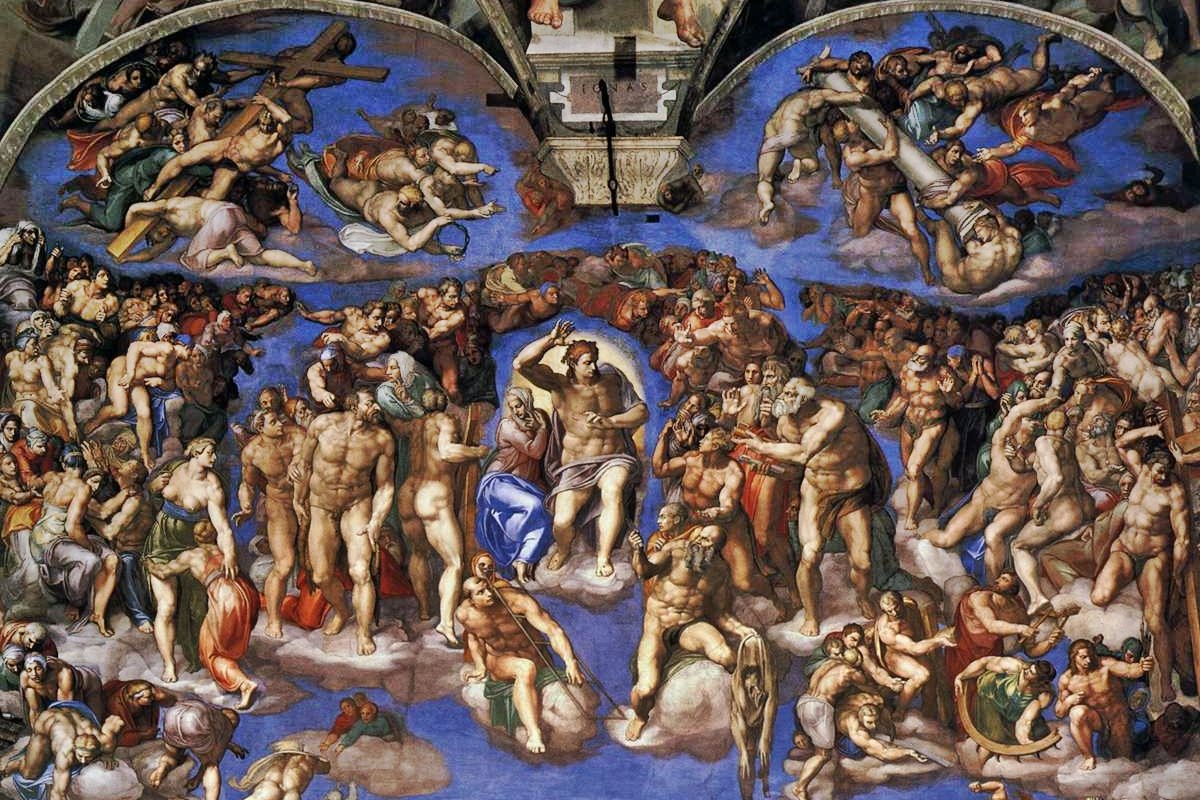
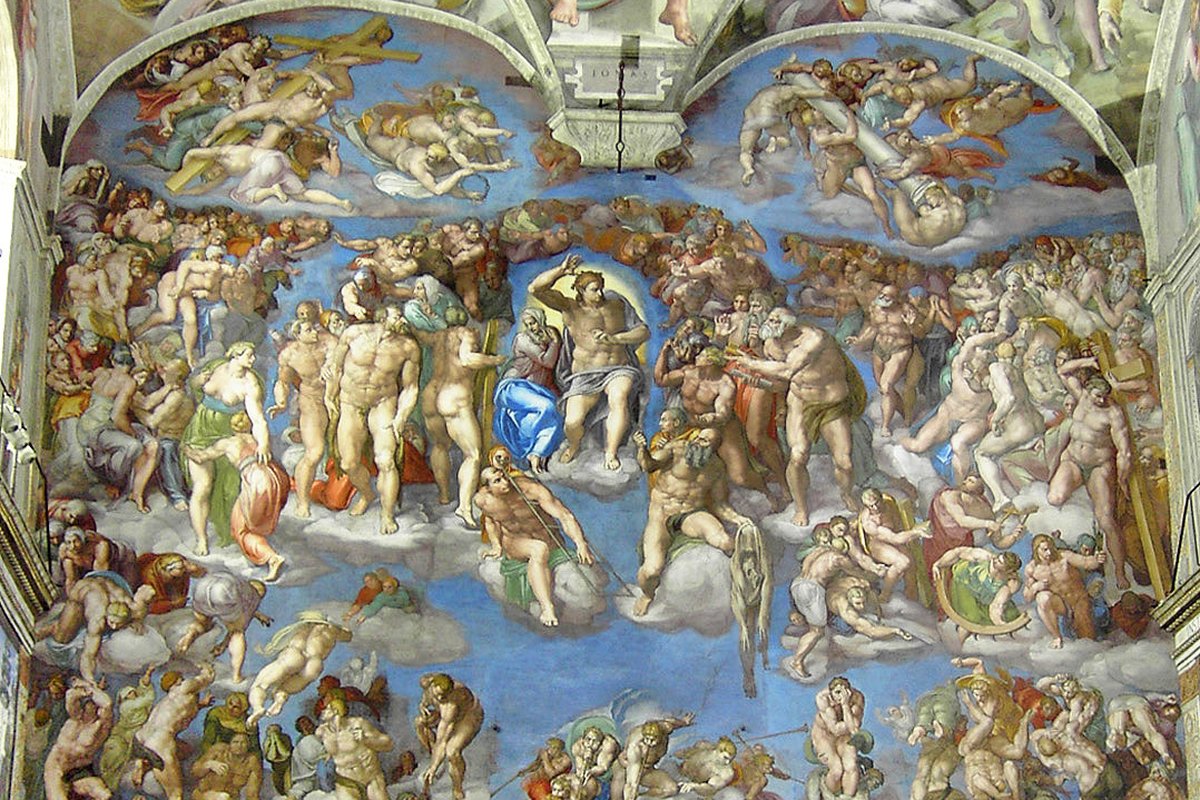
Michelangelo, "The Last Judgment," 1536-1541, altar wall, Sistine Chapel, Vatican City — public domain.
A radically different composition from the ceiling
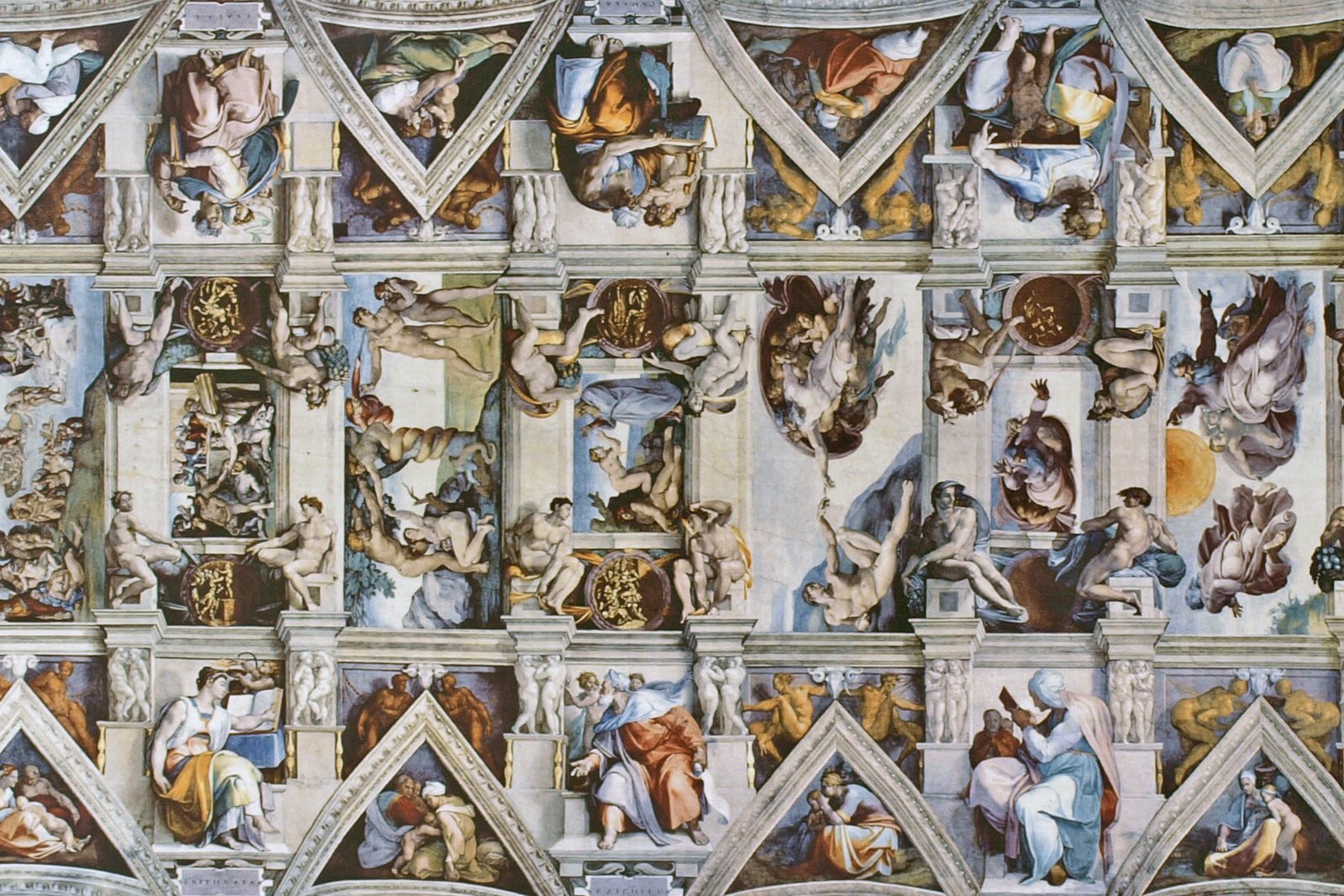
Where the Sistine ceiling organizes its narrative scenes into a structured architectural framework of painted panels and framing elements, the Last Judgment abandons any such compartmentalization entirely. Michelangelo painted a single, continuous, densely populated composition covering the full height and width of the altar wall, organizing roughly four hundred figures into loosely structured zones around a central, commanding figure of Christ, with the saved generally rising on the left and the damned generally descending toward hell on the right, though the boundaries between groups blur and swirl rather than following a rigid, clearly gridded arrangement. This unified, turbulent composition was itself a significant departure from earlier conventions for depicting the Last Judgment, which typically favored more clearly stratified, orderly arrangements of the saved and the damned.
Christ as judge, not gentle shepherd
Michelangelo's depiction of Christ at the center of the composition broke sharply from earlier artistic tradition, which had often shown the judging Christ as a more restrained, enthroned figure. Here, Christ appears as a youthful, powerfully muscled figure caught mid-gesture, one arm raised in a motion art historians have read as conveying the sheer overwhelming force of divine judgment rather than static enthroned authority. Surrounding him, saints and martyrs cluster close, several holding the specific instruments of their own martyrdom, including Saint Bartholomew holding his own flayed skin, a detail into which Michelangelo is widely believed to have painted a distorted self-portrait of his own face — a startling and poignant personal touch within such a vast, cosmic composition, generally read as an expression of the artist's own anxiety about mortality and divine judgment.
Nudity, controversy, and later censorship
The fresco's extensive nudity, applied even to saints and biblical figures traditionally shown clothed, provoked genuine controversy from the moment of its unveiling in 1541, intensifying in the following decades as the Counter-Reformation Church grew increasingly concerned with regulating religious imagery for propriety following the Council of Trent. Criticism grew serious enough that in 1564, shortly after Michelangelo's death, Pope Pius IV commissioned the painter Daniele da Volterra to add painted drapery over a number of the fresco's more exposed figures, earning Daniele the somewhat unfortunate nickname "il Braghettone," roughly "the breeches-maker." Some of these later additions remain visible today even after modern restoration, preserved as part of the fresco's own complex historical record rather than stripped away entirely.
A monumental restoration decades later
Centuries of candle smoke, incense, and atmospheric grime gradually darkened the fresco considerably, obscuring much of Michelangelo's original, more vivid color palette beneath layers of accumulated soot and old varnish. A major restoration campaign, running through the 1980s and into the 1990s alongside the parallel restoration of the ceiling, carefully removed this buildup, revealing brighter, more saturated colors than had been visible to viewers for generations and prompting renewed scholarly and public appreciation for aspects of Michelangelo's color sense that had simply been invisible under centuries of grime. Readers interested in the artist's earlier work in the same space may enjoy our companion article on Michelangelo's Sistine Chapel ceiling, completed a full generation before he returned to paint the altar wall.
A fitting, monumental close
The Last Judgment stands as one of the most ambitious single-wall fresco compositions ever attempted, a fitting, if turbulent, bookend to Michelangelo's earlier work on the same chapel's ceiling. Painted by an artist well into his sixties, wrestling openly with questions of mortality, judgment, and personal unworthiness even as he executed one of the most technically accomplished works of his career, it remains one of the single most visited and most intensely studied works of Christian art anywhere in the world.
For visitors to the Vatican today, the experience of standing in the Sistine Chapel and turning from the narrative calm of the ceiling overhead to the sheer physical force of the altar wall behind them offers a rare chance to trace one artist's evolving vision across an entire working lifetime, painted in the same room a full generation apart. Few other spaces anywhere preserve so direct and legible a record of how a single master's style, ambition, and theological preoccupations shifted with age, making the Last Judgment not only a masterwork in its own right but an essential final chapter in understanding everything Michelangelo had already accomplished in that same chapel decades before.
Trivia
What does Michelangelo's Last Judgment depict?
Where is the Last Judgment located?
Why was the Last Judgment controversial when it was unveiled?
Is Michelangelo himself depicted anywhere in the fresco?
Has the Last Judgment been restored?
Related Reading