Patron Saints for Travelers and Pilgrims


A patronage that grows out of necessity
Travel in the ancient and medieval world was genuinely dangerous — roads without reliable maps, seas without modern navigation, and long stretches between any kind of help if something went wrong. It's not surprising that some of Catholicism's oldest and most persistent devotions cluster around exactly this kind of vulnerability. What's notable about the saints most associated with travel is how differently their stories are anchored: some in verified biography, some in Scripture itself, and some almost entirely in legend that grew up centuries after the person supposedly lived. The Church has never required belief in the legendary details to make room for the devotion built on top of them.
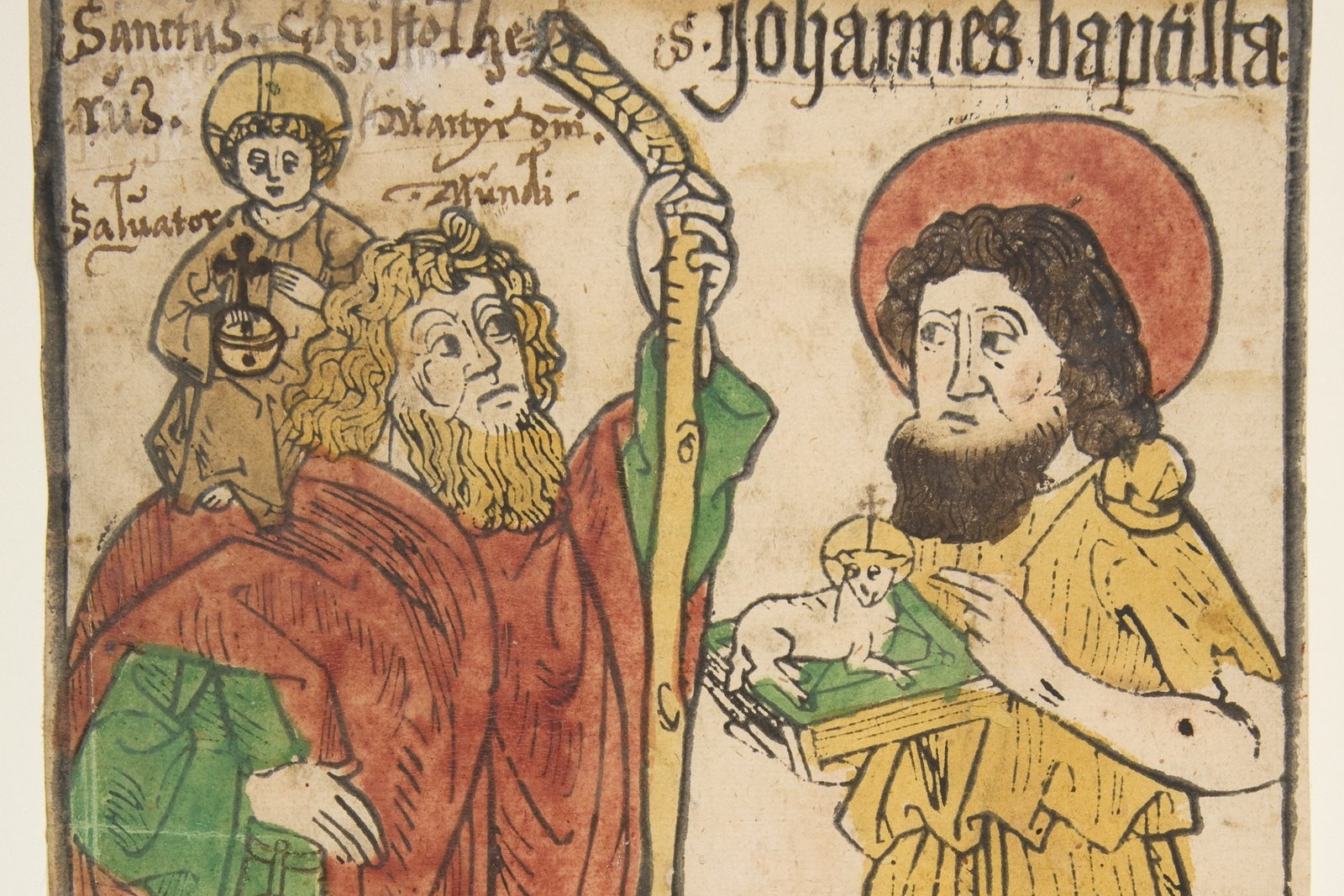
Jörg Glockendon, woodcut, circa 1480-90, The Metropolitan Museum of Art — public domain (CC0).
Saint Christopher, the "Christ-bearer"
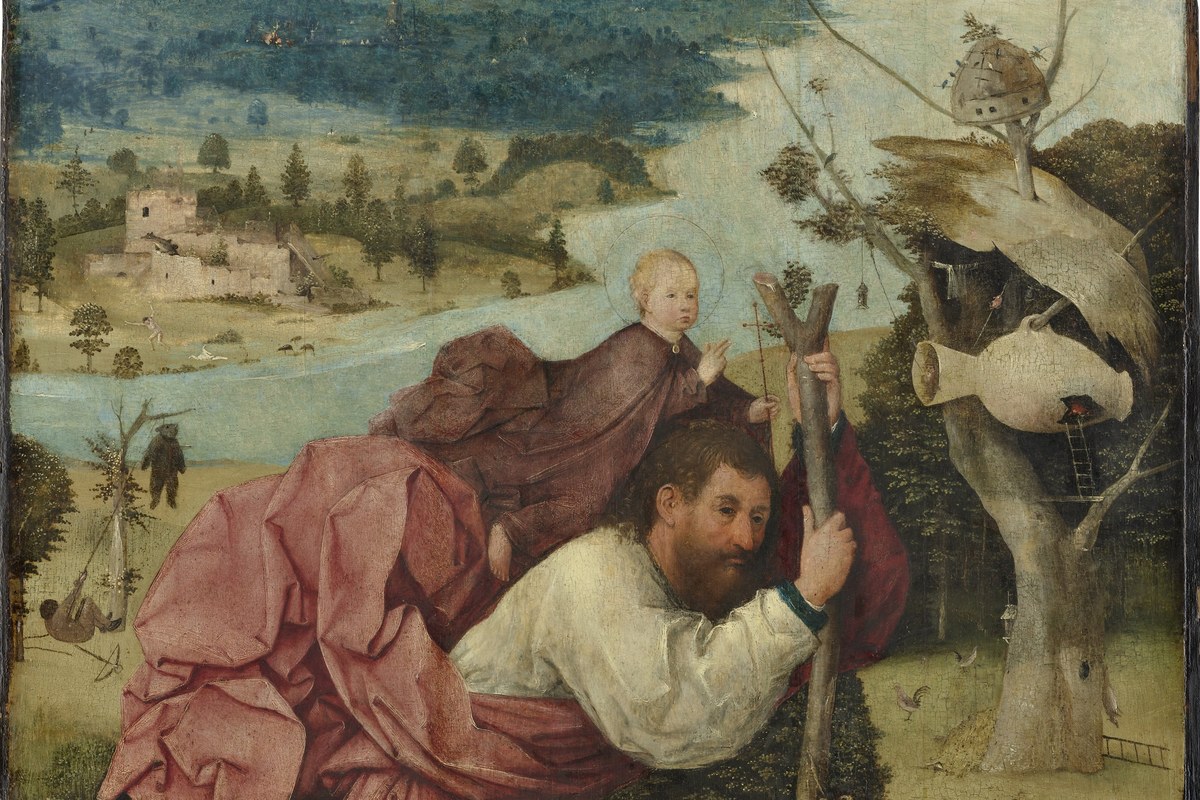
No patron of travel is more universally recognized than Saint Christopher. His name, from the Greek for "Christ-bearer," points directly to the legend that made him famous: a man of immense size who made his living carrying travelers across a dangerous river, until one day the child he carried across grew impossibly heavy — revealed, by the time they reached the far bank, to be Christ himself, bearing the weight of the whole world. Historically, very little about Christopher's actual life can be verified with confidence, and his cult was even removed from the universal Roman calendar of obligatory feasts in 1969 for exactly this reason, though local and devotional veneration continued uninterrupted. The Saint Christopher medal remains, to this day, one of the most recognizable Catholic travel sacramentals, clipped to keychains and mounted on dashboards well beyond strictly religious contexts.
Saint James the Greater and the road to Compostela
Saint James the Greater, one of the twelve apostles, is inseparable from one of Christianity's most enduring pilgrimage traditions: the Camino de Santiago, a network of routes across Europe converging on the cathedral of Santiago de Compostela in northwestern Spain, where James's remains are traditionally venerated. Unlike Christopher, James's identity as a historical figure is firmly grounded in the New Testament itself — he appears repeatedly among the inner circle of apostles closest to Jesus. The centuries-old tradition that his body was transported to Spain after his martyrdom, however, developed later, and it's this tradition rather than New Testament record that anchors the pilgrimage route bearing his name. Hundreds of thousands of pilgrims still walk some portion of the Camino each year, many carrying a scallop shell — Saint James's traditional symbol — as they go.
Saint Brendan the Navigator's improbable Atlantic voyage
Saint Brendan the Navigator was a real 6th-century Irish abbot, founder of several monasteries, whose documented life is fairly typical of early Irish monasticism. What makes him a patron of travelers specifically is a much later legendary account, written centuries after his death, describing a seven-year voyage across the Atlantic in a small boat made of wood and hide, searching for a fabled "Isle of the Blessed." Modern researchers have taken the legend seriously enough to test its plausibility — a 1976 expedition led by explorer Tim Severin successfully sailed a replica leather-hulled boat from Ireland to Newfoundland, demonstrating the voyage described was at least technically possible with early medieval technology, without proving Brendan actually made the trip himself.
Saint Raphael the Archangel, a guide drawn straight from Scripture
Unlike the largely legendary figures above, Saint Raphael the Archangel's association with travel comes directly from a biblical narrative. In the Book of Tobit, Raphael — disguised in human form as a companion named Azariah — accompanies the young Tobiah on a long and genuinely perilous journey, protecting him from danger and ultimately guiding him toward healing for his blind father, Tobit. The connection between angel and traveler in this story is explicit and sustained across several chapters, making Raphael's patronage of travelers one of the more directly scriptural patronages on this list, rather than one built primarily from later legend.
Regional and modern additions to the list
Devotion to travel patrons hasn't stayed frozen in the medieval period. Saint Frances Xavier Cabrini, an Italian-born religious sister who crossed the Atlantic dozens of times to build schools, hospitals, and orphanages for Italian immigrants in the Americas, is sometimes invoked by modern travelers and immigrants alike, and Pope Pius XII named her patroness of immigrants in 1950 in recognition of exactly that life spent in transit. Saint Anthony of Padua, though better known as the patron invoked for lost objects, is also traditionally petitioned by travelers hoping to find their way when a route goes wrong — a natural extension of his broader reputation for helping people (and things) that have gone astray. And Our Lady of Loreto, the Marian shrine in Italy associated with a house tradition holds was miraculously carried there from Nazareth, was formally declared patroness of aviators and air travelers by Pope Benedict XV in 1920 — proof that this category of patronage keeps expanding to match whatever new way people find to leave home.
What all of these figures share, old and new, is less a common biography than a common function: travelers have always wanted a specific name to call on rather than a vague hope of safety, and the Church's calendar of saints has never been short of candidates willing, according to centuries of devotion, to answer.
Carrying a saint along for the journey
What ties these figures together isn't a shared biography — one is a New Testament apostle, one an angel named in Scripture, and two are saints whose most famous stories rest largely on legend rather than documented fact. What they share is the specific role travelers have asked them to play across many centuries: watch over a journey whose outcome couldn't be guaranteed by any human effort alone. That impulse hasn't disappeared with modern transportation. It's just moved from a pilgrim's staff to a medal on a keychain.
Trivia
Who is the most widely recognized patron saint of travelers?
Why is Saint James the Greater associated with pilgrimage specifically?
What is Saint Brendan the Navigator legendary for?
Is Saint Raphael the Archangel connected to travel in Scripture itself?
Do Catholics still commonly carry Saint Christopher medals when traveling?
Related Reading