Saint Catherine Laboure

A farm girl who ran her family's household at nine
Catherine Laboure was born Zoe Laboure in 1806 in Fain-les-Moutiers, a village in rural Burgundy, the ninth of eleven children in a farming family. Her mother died when Catherine was only nine years old, and by most family accounts the young girl effectively took over running the household from that point on, managing the domestic work of a large farm family well before she reached adolescence — a responsibility that left her with little formal schooling but, by the accounts of those who knew her, a striking maturity and steadiness for her age.
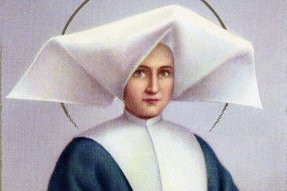
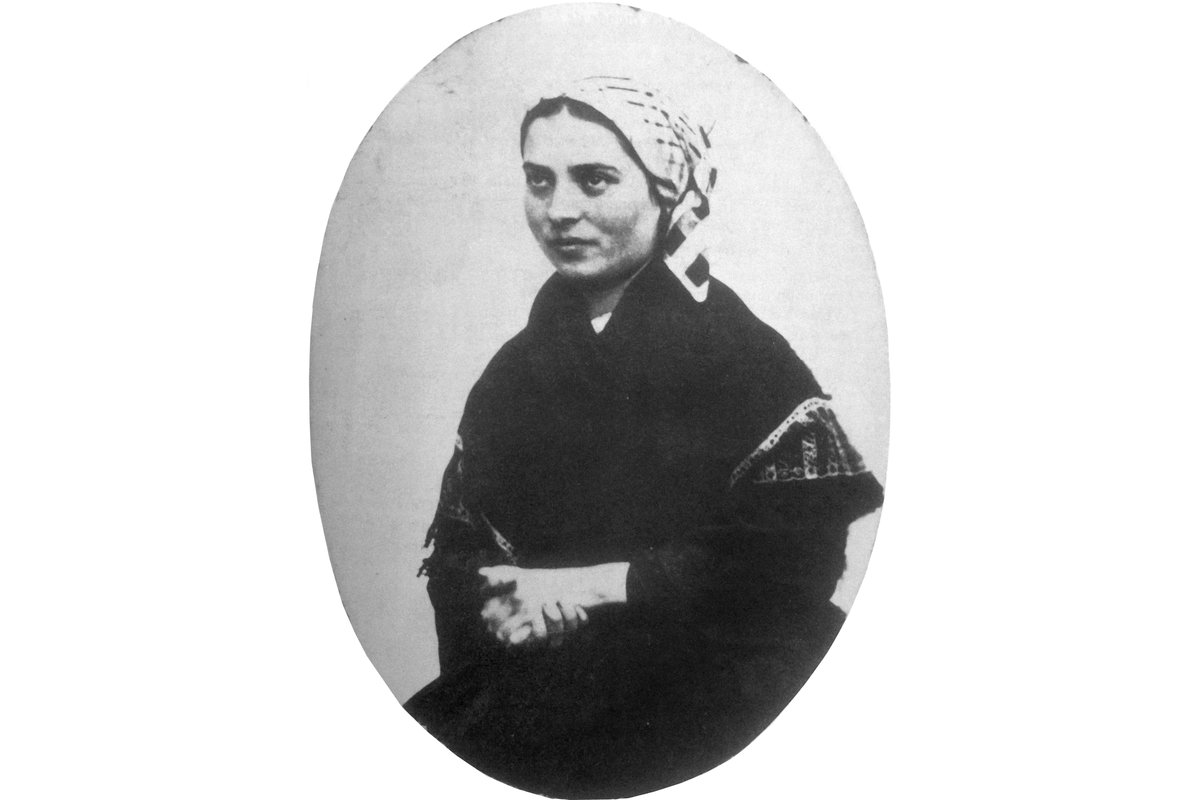
Portrait of Catherine Laboure in the habit of the Daughters of Charity, 19th century, Wikimedia Commons — public domain.
Catherine felt drawn to religious life from an early age but faced repeated delays, partly because her father resisted the idea and partly because of her domestic responsibilities at home. She eventually entered the Daughters of Charity, the community of religious sisters founded in the seventeenth century by Vincent de Paul and Louise de Marillac specifically to combine religious life with direct, hands-on service among the sick and poor rather than enclosed convent life — a practical, outward-facing spirituality that would frame the rest of Catherine's own life, both before and after the events that made her famous.
A night in the chapel on the Rue du Bac
Catherine entered the community's Paris novitiate on the Rue du Bac in early 1830. On the night of July 18 that same year, she later reported being woken by a child's voice calling her to the chapel, where she said she found the Virgin Mary seated, and spent a long period in conversation with her, receiving warnings about coming political and social upheaval in France — a prediction many later saw as fulfilled by the July Revolution that broke out in Paris only weeks later, and by further unrest across the following decades.
A second and more famous set of apparitions followed later that year, in November and December 1830. In these, Catherine reported seeing Mary standing on a globe, her hands lowered with rays of light streaming from her fingers toward the earth, framed within an oval bearing the words "O Mary, conceived without sin, pray for us who have recourse to thee." Catherine said she was instructed to have a medal struck to this exact design, with a promise that those who wore it with confidence and devotion would receive graces through it.
From a private vision to a worldwide devotion
Catherine reported all of this privately to her spiritual director, a Vincentian priest named Father Jean-Marie Aladel, who initially responded with considerable caution — a normal and, in fact, appropriate first response from Church authorities confronted with any reported private revelation, which the Church distinguishes carefully from public revelation and never requires the faithful to believe. Aladel eventually brought the matter to the Archbishop of Paris, and in 1832, less than two years after the reported apparitions, the first medals were struck to the design Catherine described.
What happened next surprised even the priests involved: the medal spread with extraordinary speed through Paris and beyond, carried along by a wave of popular reports of graces, conversions, and physical healings that Catholics attributed to it. Within a decade it had become known popularly, not through any formal Church declaration but simply through word of mouth, as the "Miraculous Medal" — a nickname that stuck so completely it eventually replaced any more formal title in common usage. It remains one of the most widely distributed religious objects in the world, worn by Catholics of every background as an expression of trust in Mary's intercession.
A hidden life behind a public devotion
What sets Catherine Laboure apart from many other visionaries in Church history is how completely she disappeared behind the devotion she had launched. She kept her role as the visionary a closely guarded secret, known only to Father Aladel, for the rest of her life — even as the medal she described became one of the most recognizable Catholic devotional objects on earth. She spent more than forty years afterward doing ordinary, largely unnoticed work as a Daughter of Charity, caring for the elderly and infirm at a hospice in the Paris suburb of Reuilly, entirely unrecognized by the residents she served as the woman behind the medal so many of them likely wore themselves.
She revealed her identity only in 1876, shortly before her death, to her religious superior, specifically so the full account of the apparitions could be preserved for the Church's records after she was gone. She died later that same year, on December 31, 1876. Pope Pius XII canonized her on July 27, 1947, and her body remains incorrupt and on public display in the same Rue du Bac chapel where the apparitions took place — the same chapel that continues to draw pilgrims from around the world to pray before the original setting of the Miraculous Medal.
Trivia
Who was Saint Catherine Laboure?
What did the Virgin Mary ask Catherine Laboure to do?
How did the Church verify Catherine Laboure's apparitions?
Why is it called the Miraculous Medal?
When was Catherine Laboure canonized?
You May Also Like
Related Reading