Saint Emmeram of Regensburg

A missionary bishop arrives in Bavaria
Details of Emmeram's early life are thin and inconsistently reported across the medieval sources that preserve his story, but the broad outline is generally accepted by historians: he was a bishop, likely from Poitiers in western Francia or from a nearby Frankish territory, who set out for Bavaria around the 680s or 690s with the intention of carrying Christianity further east, possibly all the way to the Avars, a nomadic people then settled in the Danube basin. He never reached that distant goal. Passing through Bavaria, he was persuaded — by whom, the sources disagree — to stay and work among the Bavarians themselves, whose Christianity at the time was patchy and in need of organized pastoral care.
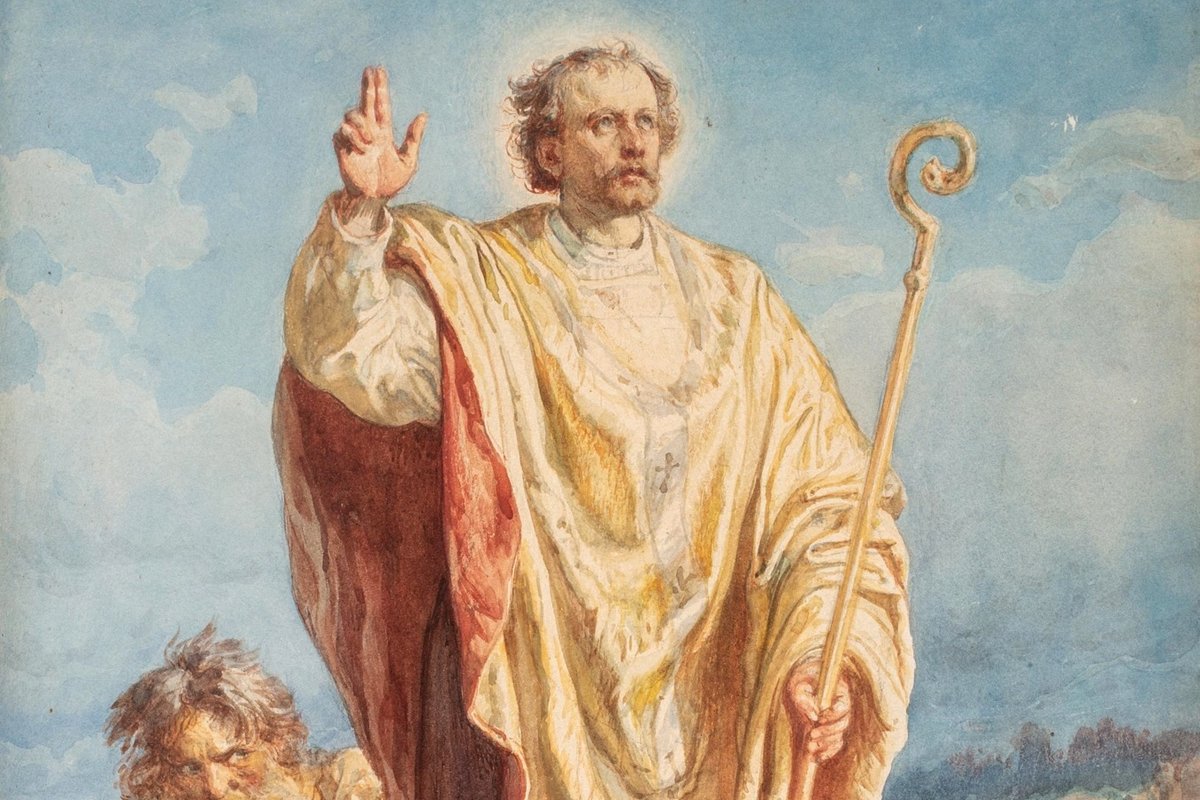
Anonymous, portrait of Saint Emmeram of Regensburg, traditional devotional image — public domain.
He settled for a time at the court of Theodo, the Bavarian duke whose territory Emmeram's near-contemporary Saint Rupert was also working to evangelize around the same general period, from a different direction. Emmeram is remembered as a capable, welcomed presence at court — which makes the story of his death, when it came, all the more jarring.
A lie meant to protect someone else
The traditional account, preserved in an early medieval Life written not long after his death, centers on Ota, Duke Theodo's daughter. When Ota became pregnant outside marriage, she and the man responsible — in some versions of the story, a young nobleman she hoped to eventually marry — feared what her father would do if the truth came out. Emmeram, according to this account, agreed to shield the real father by allowing blame to fall on himself instead, reportedly judging that as a bishop preparing to leave the region soon anyway, he could absorb a scandal that would have been ruinous, or worse, for a young nobleman with his whole future ahead of him.
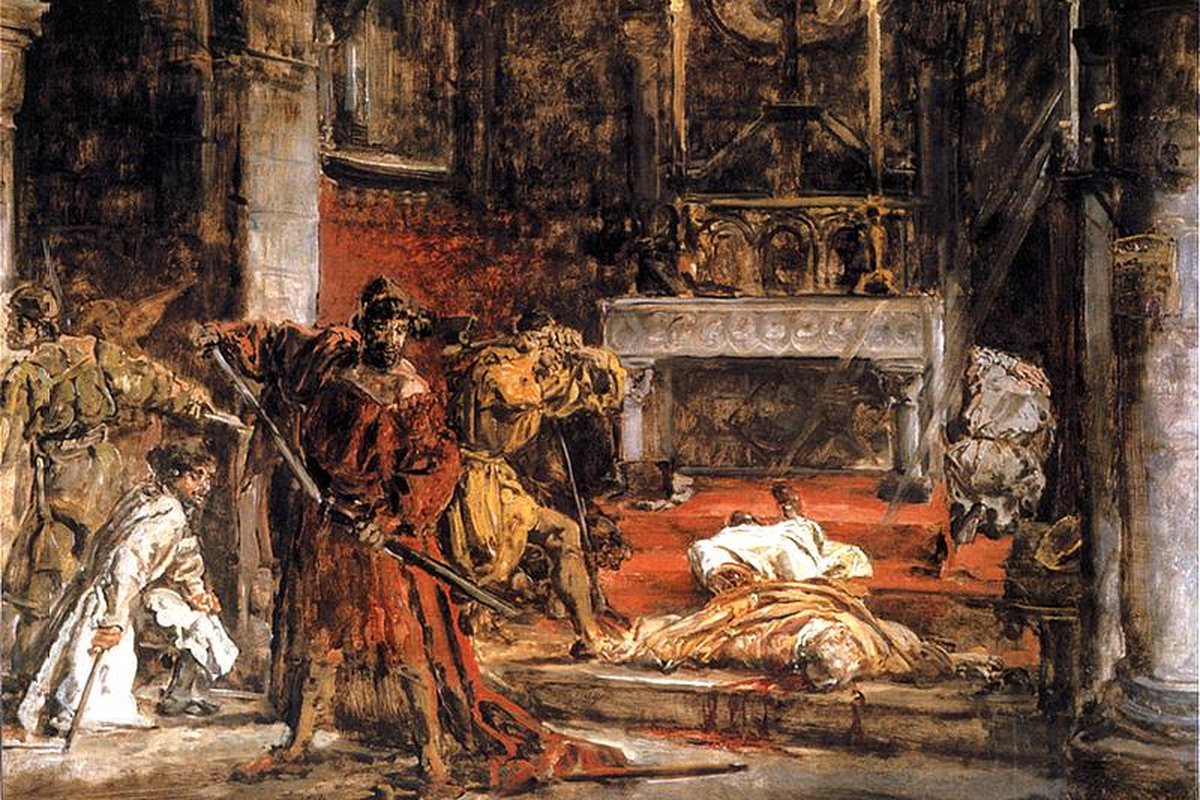
It was a decision that cost him everything. Ota's brother Lantpert, told only the false version of events, set out after Emmeram, who had by then already departed on the journey to Rome he'd been planning. Lantpert and his men caught up with the bishop on the road and, in an act of prolonged and deliberate cruelty that medieval accounts describe in graphic detail, mutilated him — cutting off his limbs, tongue, and extremities — before leaving him to die. He survived long enough to be found and carried to a nearby settlement, where he finally succumbed to his injuries.
From scandal to sainthood
What makes Emmeram's story theologically significant, rather than simply grim, is how the Church came to understand his sacrifice: not as a passive victim of a family dispute, but as a man who knowingly accepted suffering and death rather than expose someone else to ruin — an act read by later tradition as a form of self-sacrificial charity close to the heart of Christian martyrdom, even though his death wasn't directly for refusing to renounce his faith in the way earlier Roman martyrs' deaths were. The distinction matters: hagiographers and later theologians treated Emmeram's death as martyrdom in a broader sense, rooted in charity and truthfulness under pressure, a category the medieval Church recognized alongside more straightforward persecution narratives.
His body was brought to Regensburg, where it was enshrined, and a Benedictine monastery grew up around his tomb — St. Emmeram's Abbey, which developed over the following centuries into one of the great intellectual and artistic centers of medieval Bavaria, home to a renowned scriptorium and library. The abbey church, rebuilt and expanded many times since, still stands in Regensburg today, a direct physical legacy of the martyred bishop it was built to honor.
Feast day and iconography
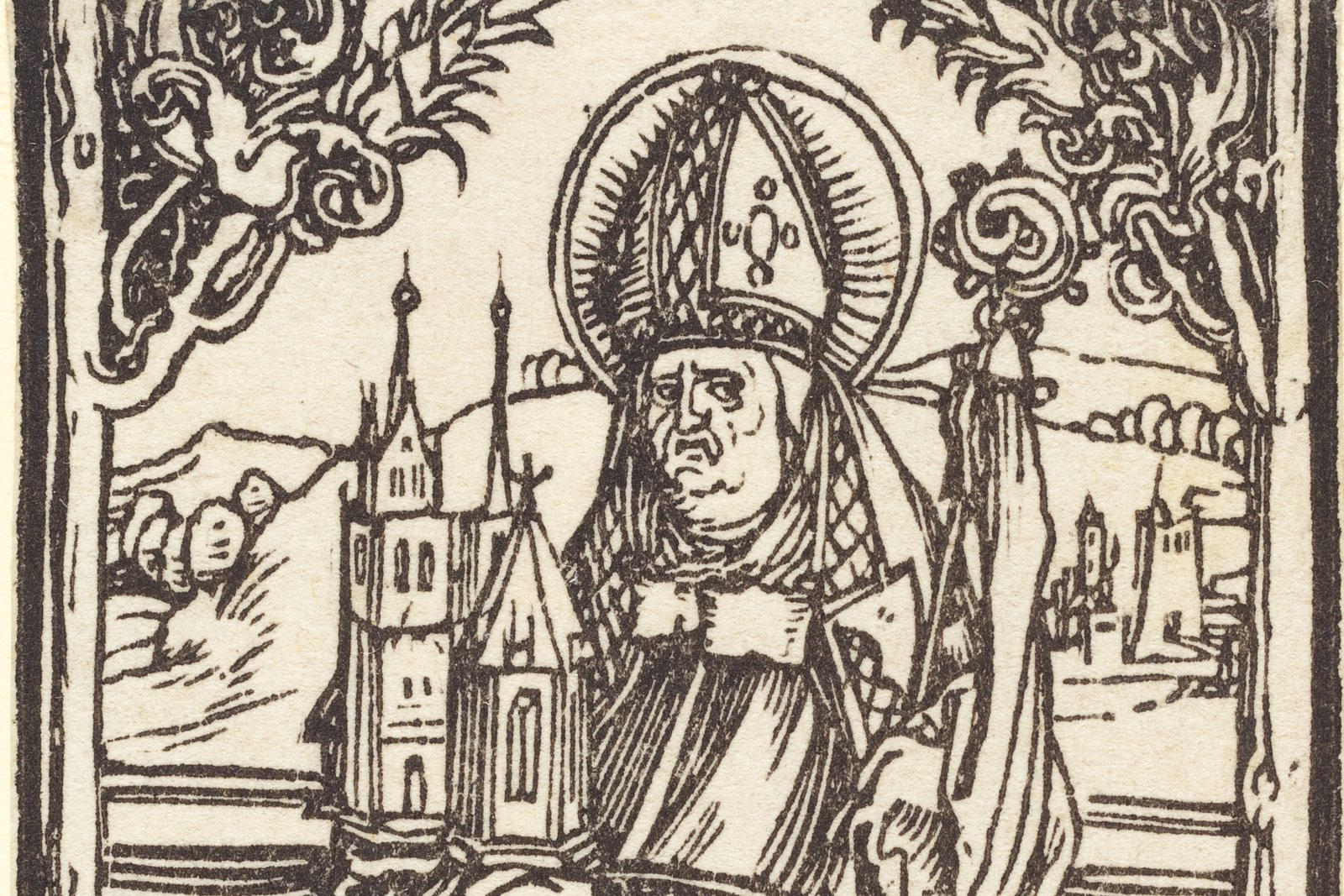
Emmeram's feast is observed on September 22. In art, he is typically shown as a bishop in full vestments, often holding a palm branch — the standard symbol of martyrdom across Christian iconography — sometimes alongside a small dagger or wounds referencing the manner of his death. Regensburg Cathedral and the former abbey church preserve much of the devotional tradition built around him across the centuries, including later medieval and Baroque depictions that emphasize his patience and self-sacrifice rather than the violence of his death itself.
A pattern among Bavaria's early bishops
Emmeram's story sits alongside those of several other bishops who worked to organize Christian life in Bavaria and neighboring regions during the same turbulent decades — a period when dioceses were still being formed, ducal politics could turn lethal quickly, and a missionary's fate often depended as much on court favor as on theology. Readers interested in this broader wave of early medieval missionary bishops may also want to read about Saint Boniface, whose later, more systematic reforms brought many of these scattered Bavarian and German dioceses — Regensburg among them — into a more stable and lasting ecclesiastical structure than the one Emmeram himself had known.
Trivia
Who was Saint Emmeram of Regensburg?
Why was Saint Emmeram killed?
Where is Saint Emmeram buried?
When is the feast of Saint Emmeram?
Is the story of Emmeram's martyrdom historically verified?
You May Also Like

Related Reading