Saint Hubert of Liège, Patron of Hunters

A nobleman who lived for the hunt
Hubert was born, most sources agree, sometime in the mid-7th century into a family of considerable Frankish nobility — some traditions connect him to Aquitaine, others place his origins closer to the Ardennes region itself, and the details here are genuinely uncertain, resting more on later tradition than contemporary documentation. What the sources agree on more consistently is his early reputation: a young nobleman consumed by hunting, to the point of neglecting religious observance in favor of pursuing game through the dense forest that covered much of the Ardennes in this period. Some accounts add that he'd lost his wife, or was grieving a personal loss, in the period leading up to his conversion, and had thrown himself into hunting partly as a way of avoiding grief — a detail that, if accurate, adds a genuinely human note of avoidance underneath what later became a dramatic conversion story.
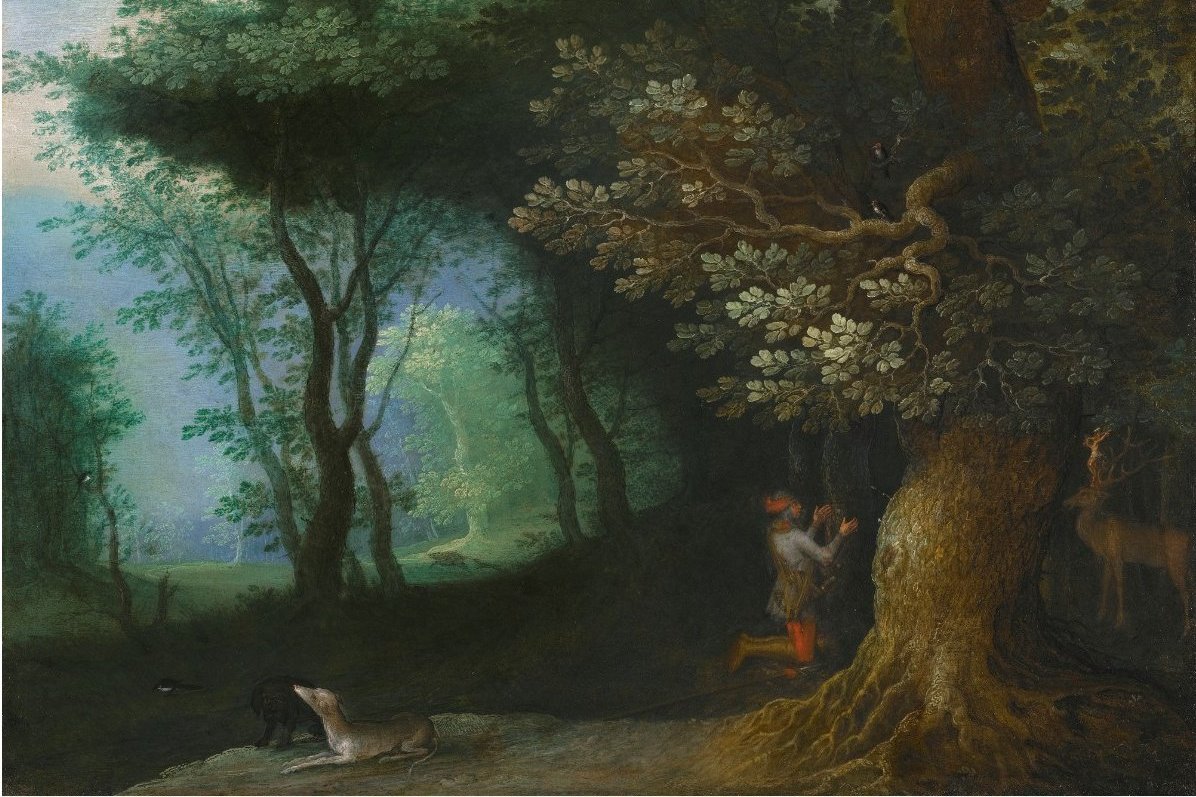
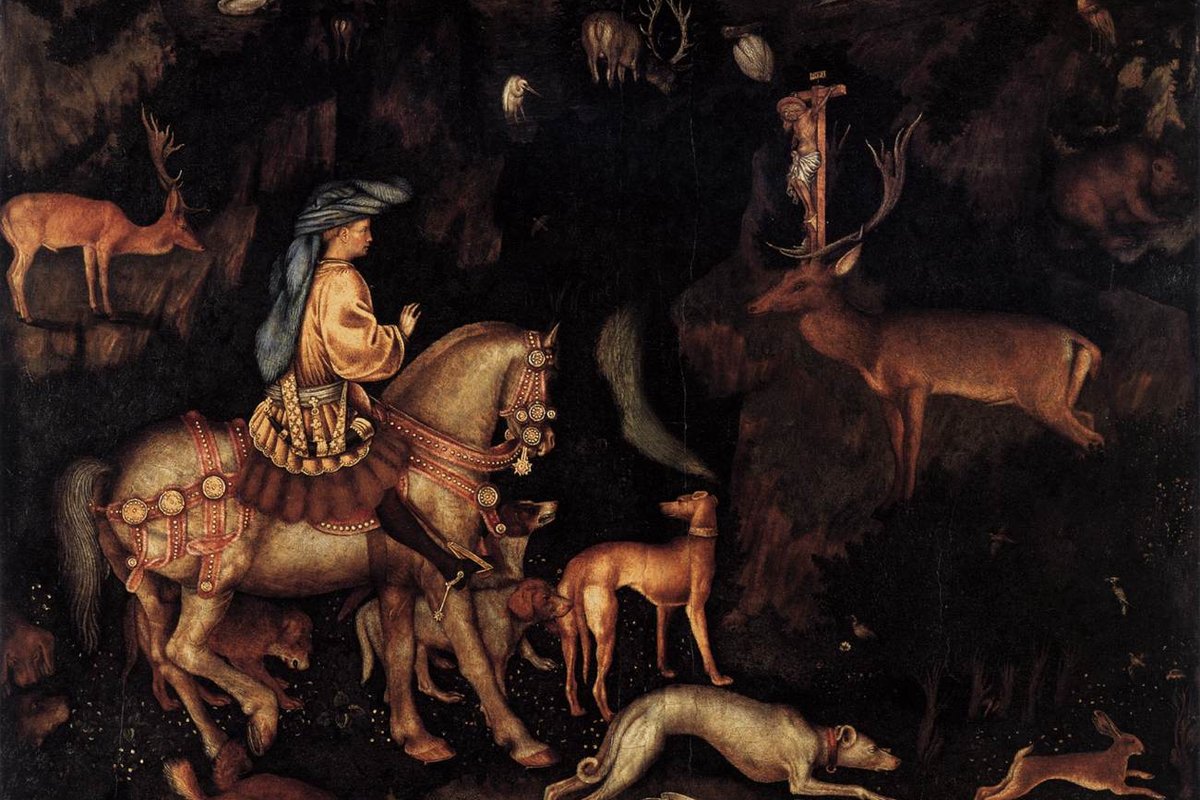
Jan Brueghel the Elder, The Vision of Saint Hubert, Metropolitan Museum of Art, New York — public domain.
Whatever the precise personal circumstances, the tradition is unambiguous about the central fact of his early life: hunting wasn't a hobby for Hubert, it was close to an obsession, pursued at the expense of the religious duties expected of a Christian nobleman of his rank and era.
The vision in the forest
The story that made Hubert's name centers on a single hunt, traditionally dated to Good Friday — the most solemn day of the Christian liturgical calendar, a day on which hunting, along with most ordinary worldly activity, would have been considered a serious breach of proper observance. Hubert went out anyway, pursuing a magnificent stag deep into the forest. At the moment he cornered it, the stag turned to face him directly, and Hubert saw, fixed between its antlers, a crucifix, glowing or shining with unnatural light depending on the version of the story. A voice — attributed in most tellings directly to the crucified Christ — warned him that unless he turned toward God, he would fall into damnation.
Hubert, by every account, was profoundly shaken. He abandoned hunting immediately, sought out religious instruction, and within a relatively short span of years had moved from nobleman to ordained clergy, eventually rising to the episcopate. It's a conversion story built on maximum dramatic contrast — the man most defined by pursuit of the hunt receiving his call to God through the very animal he was chasing — which is part of why it became one of the most frequently painted subjects in later Christian art, appearing in works by artists including Peter Paul Rubens, Jan Brueghel the Elder, and Albrecht Dürer, among many others across the centuries.
A legend borrowed from an older saint
Here's the detail that any honest telling of Hubert's story has to include: this exact narrative — a hunter, a stag, a crucifix glowing between its antlers, a voice calling the hunter to conversion — is also told, in essentially identical form, about Saint Eustace, a Roman general and martyr whose own legendary vita dates back centuries before Hubert's lifetime, and whose own historical existence is itself uncertain to scholars. Historians who study the development of medieval hagiography (writing about saints' lives, which regularly blends documented fact with inherited legendary material) generally believe the stag vision migrated onto Hubert's biography sometime well after his actual death, likely because his growing cultus as a hunters' patron made the borrowed story a natural, ready-made fit for an audience that already associated him with the sport.
This doesn't mean Hubert himself is a fabrication — unlike Eustace, whose entire historical existence is genuinely disputed, Hubert is a documented historical bishop of Maastricht and Liège with a verifiable episcopal career. What's legendary, specifically, is the vision story attached to his name, not the man himself. It's an important distinction, and one worth being upfront about rather than presenting the stag legend as settled biographical fact: the tradition around the hunt is pious legend, layered onto a real historical figure, not dogma or documented history.
From nobleman to missionary bishop
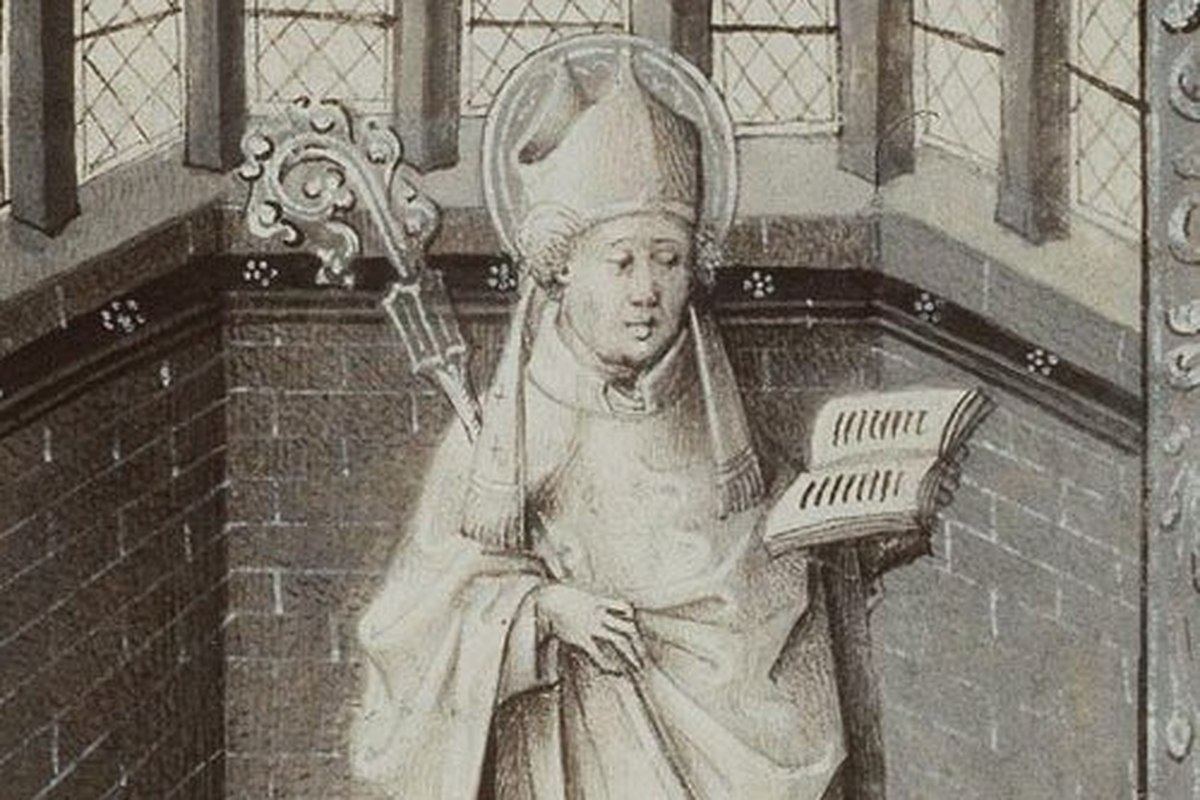
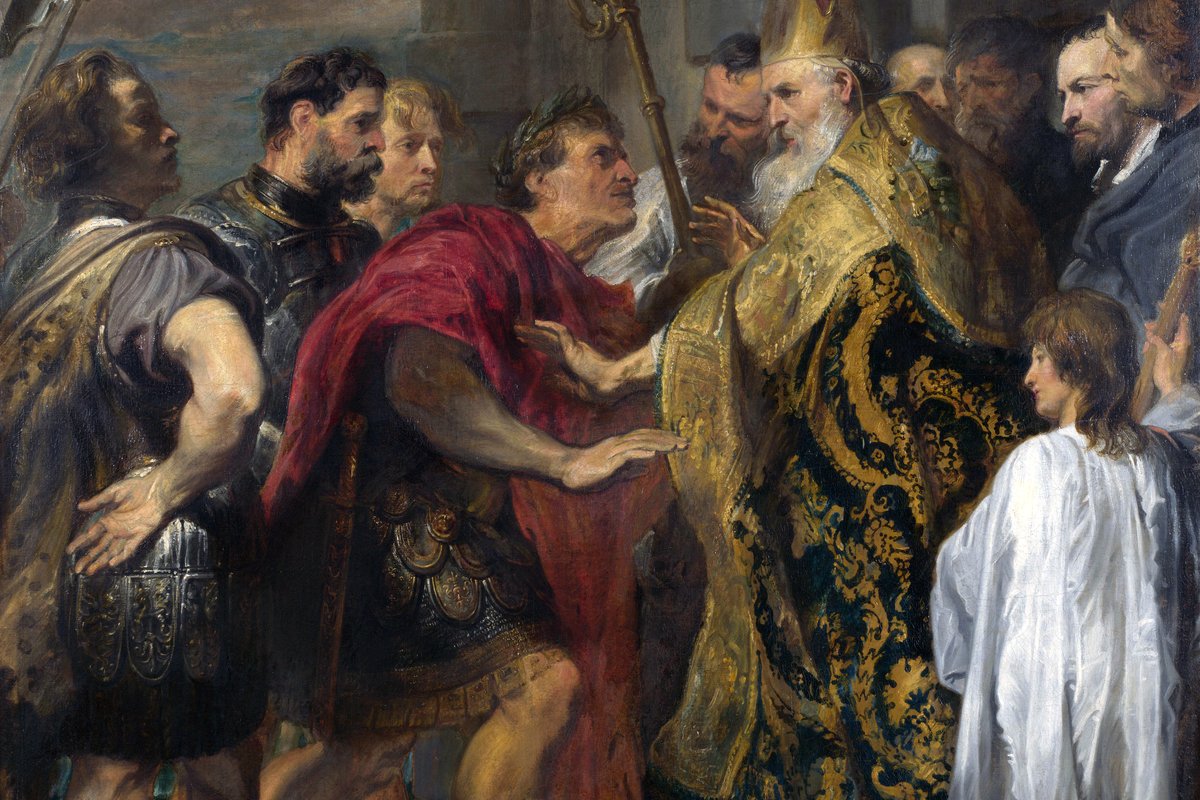
Whatever set his conversion in motion, Hubert's subsequent career is considerably better documented. He came under the mentorship of Lambert, bishop of Maastricht, and was ordained, eventually succeeding Lambert as bishop after Lambert's murder — traditionally dated around 705, a killing tied to Lambert's own outspoken criticism of local powerful figures. As bishop, Hubert devoted much of his episcopate to missionary work in the Ardennes, a heavily forested region where pre-Christian religious practice persisted more stubbornly among the rural population than in more urbanized parts of the Frankish kingdom.
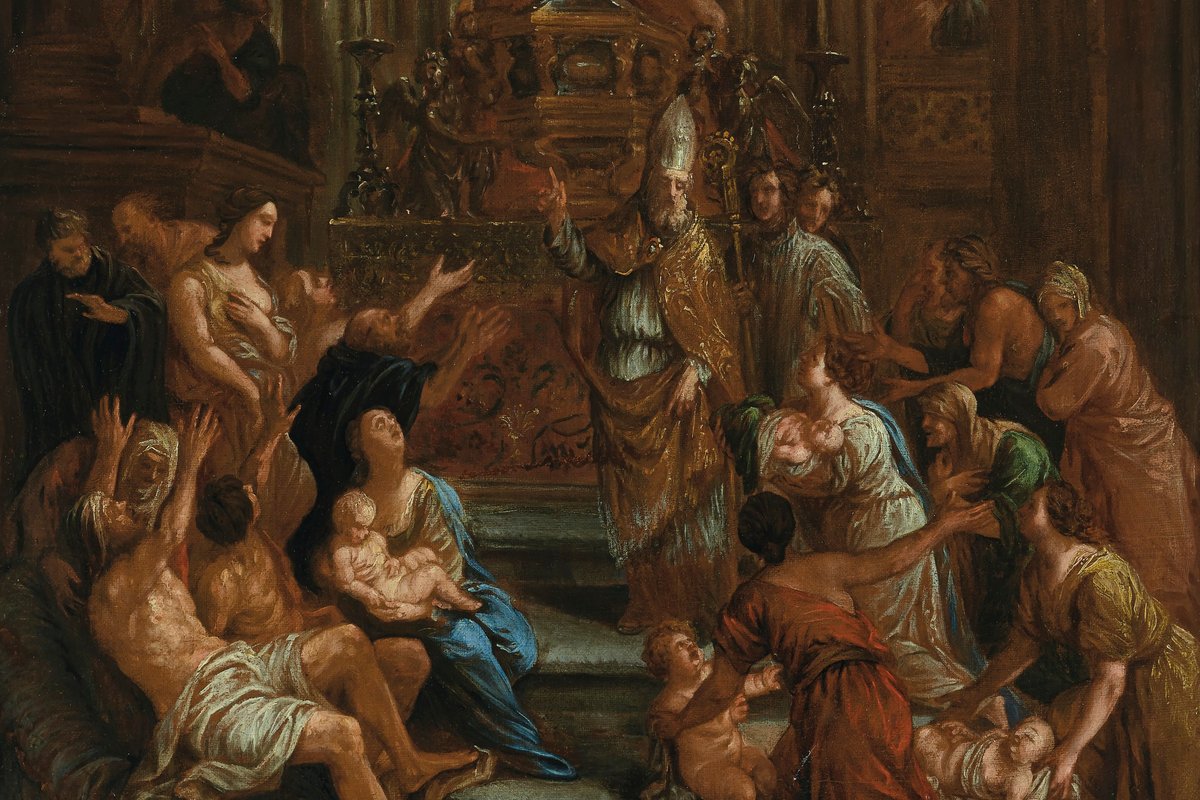
Around 717 or 718, Hubert moved the seat of his diocese from Maastricht to Liège, a shift significant enough that he's often described, in effect, as the first bishop of Liège proper — a city that would go on to become one of the more important ecclesiastical centers in the Low Countries for the rest of the medieval period and beyond. He also actively promoted devotion to his predecessor Lambert, seeing to the translation (formal, ceremonial relocation) of Lambert's relics to Liège, a move that helped establish the cultus of Lambert as a martyred bishop and, not incidentally, reinforced Hubert's own legitimacy as his chosen successor.
Death, relics, and the patronage that endures
Hubert died on May 30, 727 (the year is occasionally given slightly differently across sources), reportedly while on a missionary or pastoral journey away from Liège. His relics were later moved to the abbey of Andain in the Ardennes, which was subsequently renamed Saint-Hubert in his honor and became a major pilgrimage destination through the medieval period, particularly for those seeking protection connected to his patronage — hunters above all, but also, in later medieval and folk tradition, people bitten by rabid animals, an association that grew alongside his hunting patronage rather than from any documented episode in his own life.
His feast is kept on November 3, and hunting communities across Belgium, France, and other parts of Europe still mark it with blessing ceremonies for hunters, hounds, and horses — a living continuation of a patronage that, whatever the disputed origins of its founding legend, has genuinely outlasted the borrowed story that first attached it to his name.
Trivia
Who was Saint Hubert of Liège?
What is the legend of Saint Hubert's vision?
Is the stag-and-crucifix story original to Saint Hubert?
Why is Saint Hubert the patron saint of hunters?
What did Hubert do as bishop?
You May Also Like
Related Reading