Saint John Leonardi, Priest

From a pharmacy counter to the priesthood
John Leonardi was born around 1541 in the small Tuscan village of Diecimo, in the territory of the Republic of Lucca, one of the many small independent city-states that still dotted Italy in the sixteenth century. His early working life was spent as an apothecary's apprentice in Lucca itself, learning the trade of preparing medicines, weighing ingredients, and dealing directly with the sick and suffering people who came through the shop door. That early exposure to human need, and to the discipline of careful, deliberate work, left a lasting mark on him even after he set the trade aside.
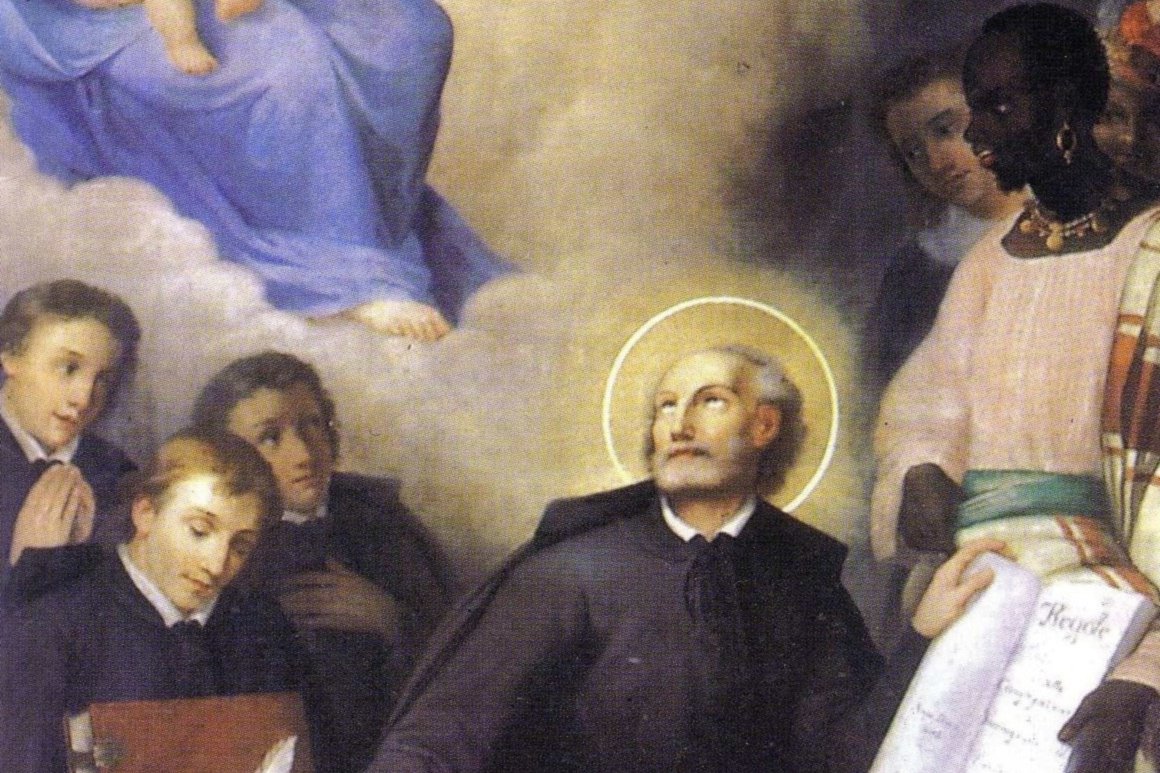
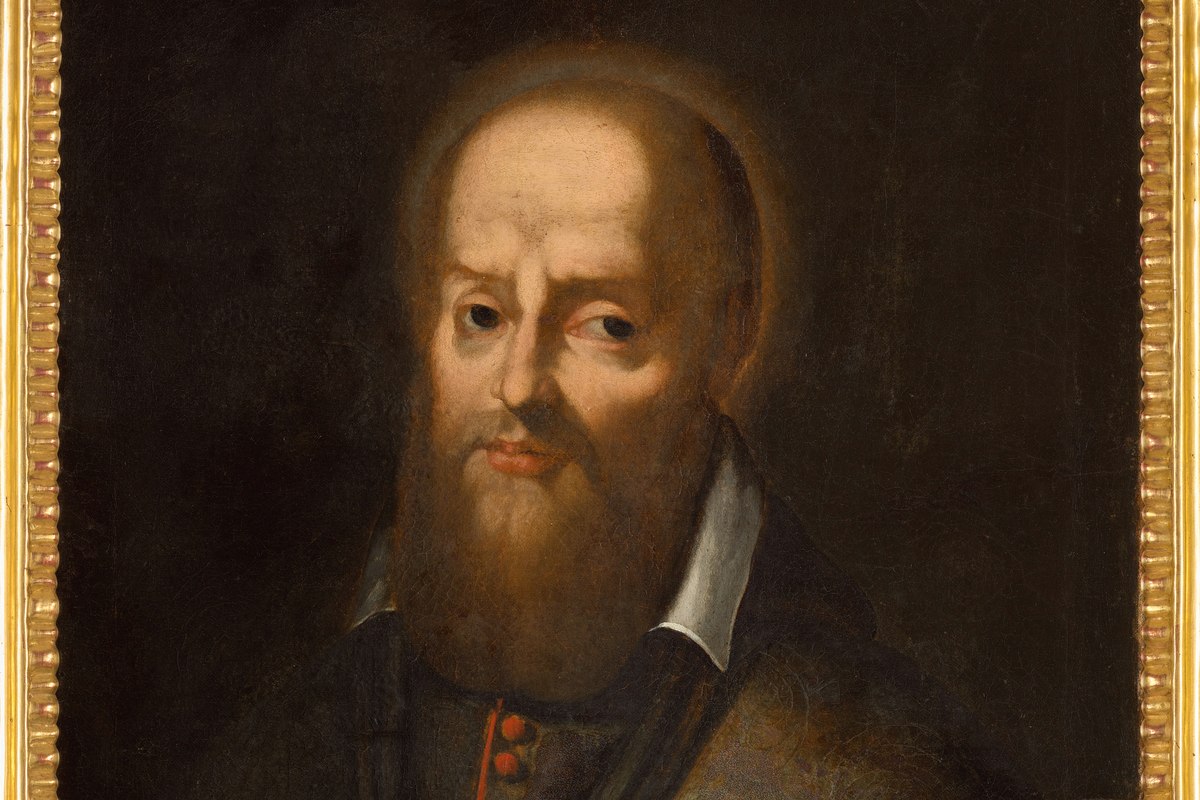
Emmanuel Laffon, devotional portrait of Saint John Leonardi — public domain.
He felt drawn instead toward the priesthood, and was ordained in 1572, during a period when the Catholic Church across Europe was still working to implement the sweeping reforms decreed by the Council of Trent, which had concluded less than a decade earlier. Trent had targeted, among other things, the poor education and lax discipline of parish clergy, problems that were hardly unique to Lucca but were nonetheless deeply entrenched there. Leonardi threw himself into exactly that reforming project, organizing catechism classes for children and young people and working directly to raise the moral and spiritual standards of local priests.
A reformer too sharp-edged for his own city
That reforming zeal did not make Leonardi popular with everyone. Lucca's clergy and civic authorities, many of whom had grown comfortable with the very laxity Leonardi was determined to root out, saw him as a troublesome outsider disturbing a settled order. His criticism of moral failures among the local clergy, delivered with the same bluntness he had once used to measure out medicine, provoked sustained local hostility, and he was formally exiled from Lucca more than once during his lifetime, forced to continue his work of reform and formation from a distance rather than from within the city that had shaped him.
Rather than retreating from this opposition, Leonardi used the setbacks to expand his ambitions. In 1574, together with a small group of like-minded companions, he founded a new community of priests initially called the Congregation of the Blessed Virgin, later renamed the Clerics Regular of the Mother of God. The community's purpose was specific and demanding: rigorous spiritual formation for its own members, serious catechetical instruction for the young, and a disciplined, visible model of priestly life meant to counter the very laxity Leonardi had spent years fighting in Lucca. The new congregation received formal papal approval in 1595, a hard-won validation after decades of local resistance.
Building the Church's missionary infrastructure
Leonardi's reforming instincts did not stop at clerical discipline. He became increasingly drawn to the wider question of how the Catholic Church could organize and sustain its missionary efforts across a rapidly expanding world, at a time when Catholic missionaries were active from the Americas to Japan but often operated with little central coordination, overlapping jurisdictions, and inconsistent support from Rome. Leonardi spent his later years advocating in Rome for a centralized office that could plan, fund, and oversee missionary activity in a more systematic way, and his proposals fed into a broader conversation among churchmen of his era who recognized the same problem.
He did not live to see the project realized. Leonardi died in Rome in 1609, having caught a fatal illness while tending to plague victims, an act consistent with the same instinct for direct, practical charity that had shaped his earlier work as an apothecary's apprentice. Thirteen years later, in 1622, Pope Gregory XV formally established the Congregation for the Propagation of the Faith, known as Propaganda Fide, the Vatican office that would coordinate Catholic missionary work worldwide for centuries afterward, and that would eventually oversee the training of missionary priests from every corner of the Catholic world. Leonardi's advocacy is widely credited among historians of the congregation as one of the direct contributing currents that led to its founding, even though the institution itself took shape after his death.
A legacy carried forward by his congregation
The religious community Leonardi founded continued its work of formation and catechesis long after his death, eventually becoming known simply as the Order of the Mother of God, still active today though modest in size compared to some of the larger religious orders born out of the Counter-Reformation. Its founding charism, insistence on solid theological formation, serious catechesis for children, and visible discipline among the clergy, remained closely tied to the same concerns that had first pushed Leonardi into open conflict with the authorities of his native Lucca.
Pope Pius XI canonized John Leonardi in 1938, formally recognizing a life that had combined stubborn local reform with a wider vision for how the universal Church might organize its missionary work. His feast day is celebrated on October 9, and he is remembered today less as a household name among the saints than as a quiet architect of two lasting institutions: a religious congregation built on strict formation, and, indirectly, the very office in Rome that would go on to coordinate Catholic missions across the globe for the next four centuries.
Trivia
Who was Saint John Leonardi and when did he live?
What congregation did John Leonardi found?
Why was John Leonardi exiled from Lucca?
What role did John Leonardi play in founding Propaganda Fide?
When was John Leonardi canonized and what is his feast day?
You May Also Like
Related Reading