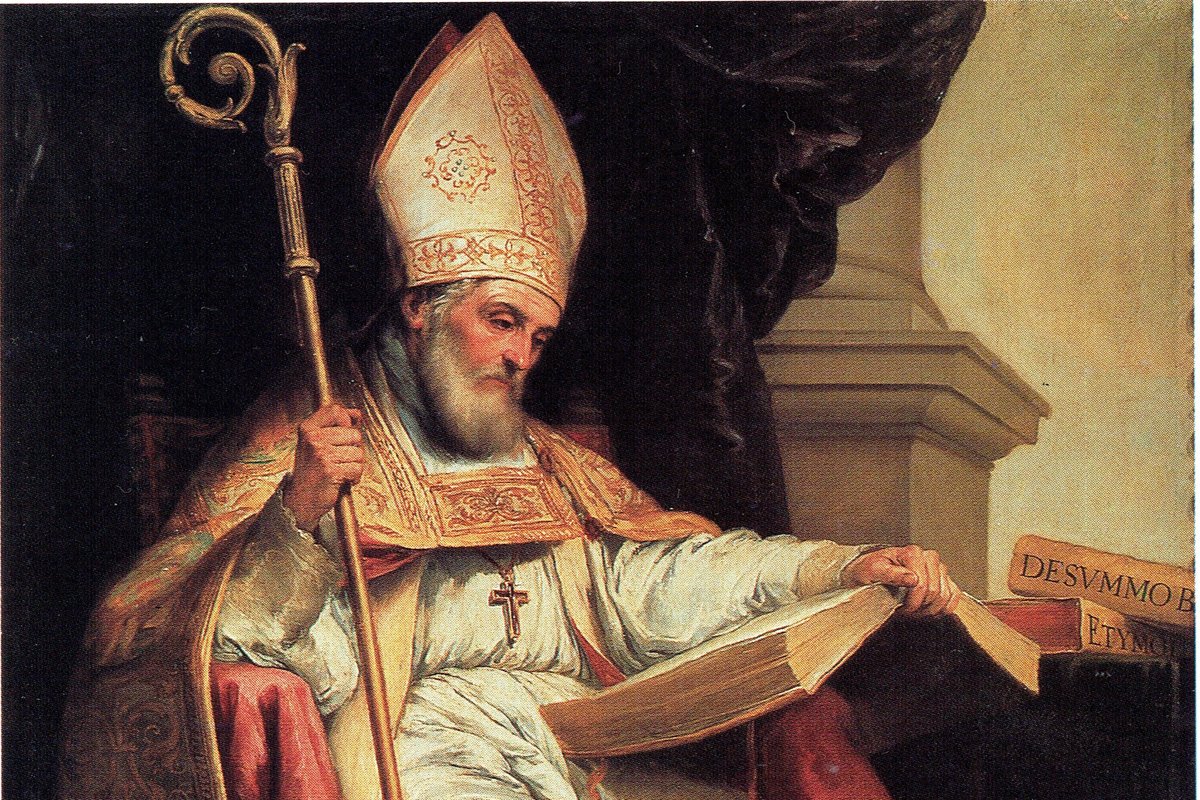
Saint Meinwerk of Paderborn

A courtier's path to the church
Meinwerk was born around 975 into a prominent Saxon noble family with close ties to the Ottonian imperial court, and he spent part of his early adulthood in that court environment, where he became personally acquainted with the future Emperor Henry II. Court life in this period was not without its hazards, even for the well-connected: tradition records that Meinwerk suffered a serious injury, an arm broken in an altercation with a jealous rival, an episode that later biographers treated as a turning point steering him more decisively toward church life rather than a purely secular court career.

Roger of Helmarshausen, portable altar of Bishop Meinwerk, c. 1100, Paderborn — public domain.
Whatever combination of personal conviction and circumstance shaped his path, Meinwerk was ordained and built a reputation within the church that, combined with his existing personal relationship with Henry II, positioned him well when Henry became emperor and needed to fill the important see of Paderborn.
Bishop of Paderborn
Henry II appointed Meinwerk bishop of Paderborn in 1009, and the relationship between emperor and bishop remained close and mutually supportive throughout Meinwerk's episcopate — a genuine advantage for a bishop whose diocese, like many in this period, depended heavily on imperial favor and protection to carry out ambitious building and reform projects.
What set Meinwerk apart from many of his episcopal contemporaries was the sheer scale of personal wealth he was willing to direct toward his diocese. As a member of a wealthy noble family, he had inherited substantial personal resources, and rather than using that fortune to advance family or dynastic interests in the ordinary manner of noble churchmen of his era, he poured a remarkable share of it directly into rebuilding and expanding the physical and institutional fabric of Paderborn itself.
Rebuilding a cathedral city
Meinwerk's building program transformed Paderborn. He undertook a substantial reconstruction of Paderborn Cathedral, founded Abdinghof Abbey as a new Benedictine monastic community within the city, and supported numerous other churches and religious buildings across his diocese — an extensive campaign of ecclesiastical construction that reshaped the city's skyline and its institutional capacity for generations to come.
This building activity fits within a broader pattern common among the wealthier and more capable bishops of the Ottonian and early Salian imperial church, in which prince-bishops used their combined spiritual authority and often substantial personal or diocesan wealth to transform provincial cathedral cities into significant regional centers of religious life, learning, and architecture — a pattern also visible in the career of Saint Bernward of Hildesheim, a contemporary bishop in a neighboring German see whose own building and artistic patronage left a comparably lasting mark on his own cathedral city.
A portable altar and lasting craftsmanship
Among the artistic commissions associated with Meinwerk's memory, though completed after his own death, is a gold and enamel portable altar created around 1100 by the renowned goldsmith and metalworker Roger of Helmarshausen — a striking example of the high level of craftsmanship the Paderborn diocese continued to attract in the decades following Meinwerk's episcopate, itself a testament to the lasting institutional and artistic foundation he had established there.
The imperial church system
Meinwerk's career only makes sense within the peculiar political structure of the Ottonian and early Salian empire, often called the Reichskirche, or "imperial church system." German emperors of this era relied on bishops and abbots, rather than hereditary secular lords, as their most dependable administrators, because church offices were not passed down within a single family and could be filled with men personally loyal to the crown. A bishop like Meinwerk was therefore not only a spiritual shepherd but also, in practice, an arm of imperial government — holding land, raising troops when required, and administering justice across a territory that could rival a secular duchy in size and importance. Henry II's decision to place a trusted former court acquaintance in Paderborn fits this pattern precisely: it was as much a political appointment as a religious one, and it explains why the emperor remained so invested in Meinwerk's building projects throughout his episcopate.
Paderborn itself held particular significance within this system. The city had been a key site since the reign of Charlemagne, who held an assembly there in 777 and again met Pope Leo III there in 799, and it had served as one of the early missionary bases for the Christianization of Saxony. A bishop rebuilding Paderborn in the early eleventh century was, in a real sense, renewing a city that already carried two centuries of significance for the Carolingian and Ottonian idea of a Christian empire in the German lands.
Veneration and memory
Meinwerk was never formally canonized in the medieval sense familiar from later centuries, but he was venerated locally in Paderborn from soon after his death, and he appears in regional calendars and diocesan tradition as a saint, a status common for founder-bishops of this period whose cults grew out of local gratitude and memory rather than a centralized Roman process. Much of what is known about his life comes from a near-contemporary biography, the Vita Meinwerci, written by a monk of Abdinghof Abbey within a few generations of his death — a source that mixes reliable administrative detail with the kind of edifying anecdote typical of medieval hagiography, which is part of why modern historians treat episodes like the broken arm as tradition rather than verified biographical fact.
Feast day and legacy
Meinwerk died on June 5, 1036, having governed the diocese of Paderborn for over a quarter century. His feast is celebrated on June 5. He is remembered above all as a builder-bishop, a figure whose personal wealth and close relationship with imperial power combined to leave a lasting physical and institutional mark on his diocese that outlasted the political circumstances of his own era.
Readers interested in the broader tradition of wealthy, well-connected German bishops who used their resources to transform their cathedral cities during the Ottonian and early Salian periods may also want to read about Saint Bernward of Hildesheim, whose own episcopate a generation earlier set much of the pattern that ambitious builder-bishops like Meinwerk would go on to follow.
Trivia
Who was Saint Meinwerk of Paderborn?
Why did Saint Meinwerk have so much money to spend on building projects?
What is Saint Meinwerk's connection to Emperor Henry II?
What did Saint Meinwerk build in Paderborn?
When is the feast of Saint Meinwerk?
You May Also Like

Related Reading