Saint Olga of Kiev

A princess, a murdered husband, and a debt owed in blood
Olga's early life is thin on verified detail — she was likely born around 890 in or near Pskov, in the northern reaches of what would become Rus, and by some accounts came from Varangian (Scandinavian) rather than Slavic stock, which would fit the broader pattern of Norse-descended rulers governing the early Rus principalities. What history remembers clearly is her marriage to Igor, Prince of Kiev, and the disaster that ended it. In 945, Igor rode out to the Drevlians, a neighboring Slavic tribe, to collect tribute a second time in the same season — a demand so far outside customary bounds that the Drevlians decided the only solution was to kill him, which they did, reportedly by tying him between two bent trees and tearing him apart when the trees were released.
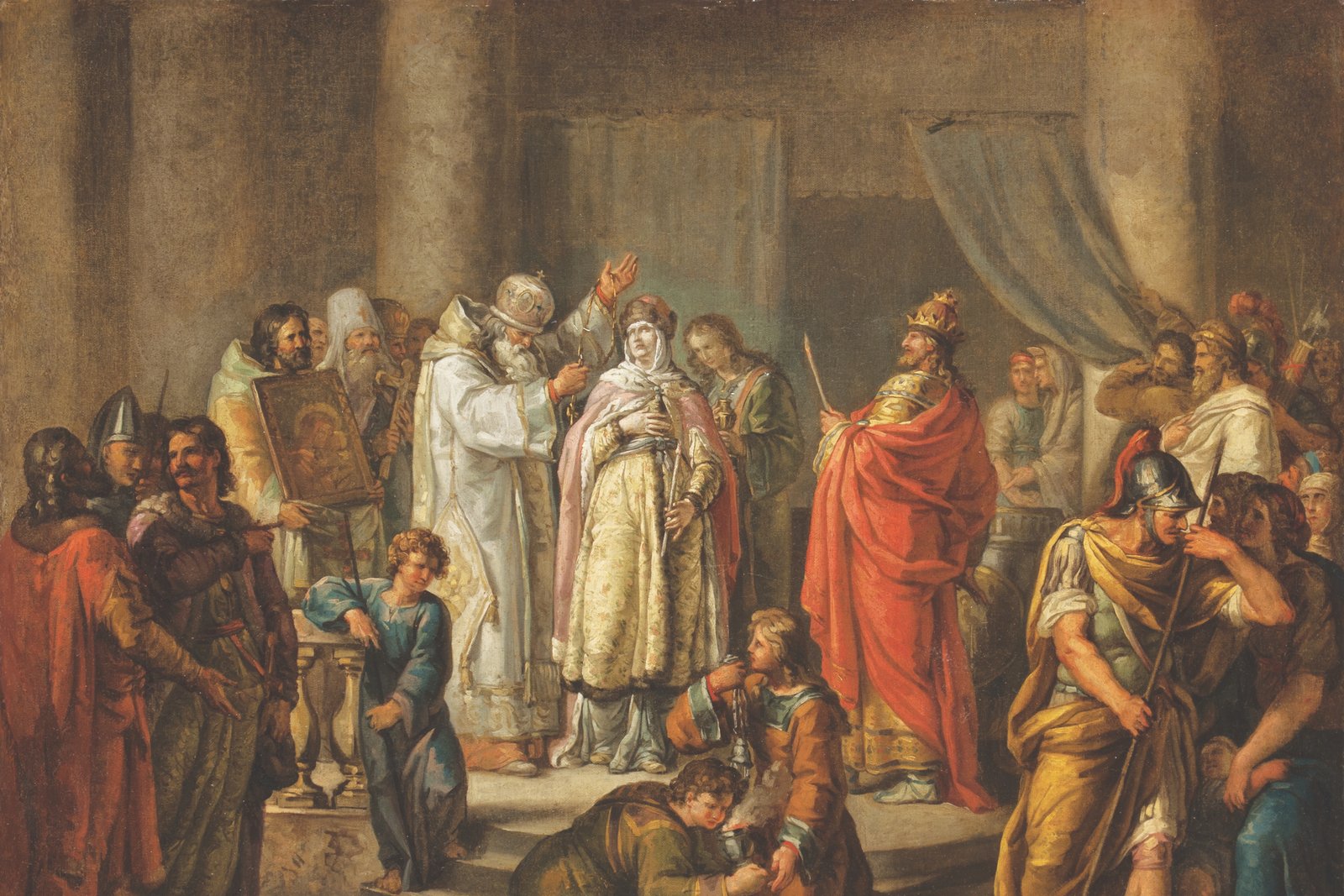
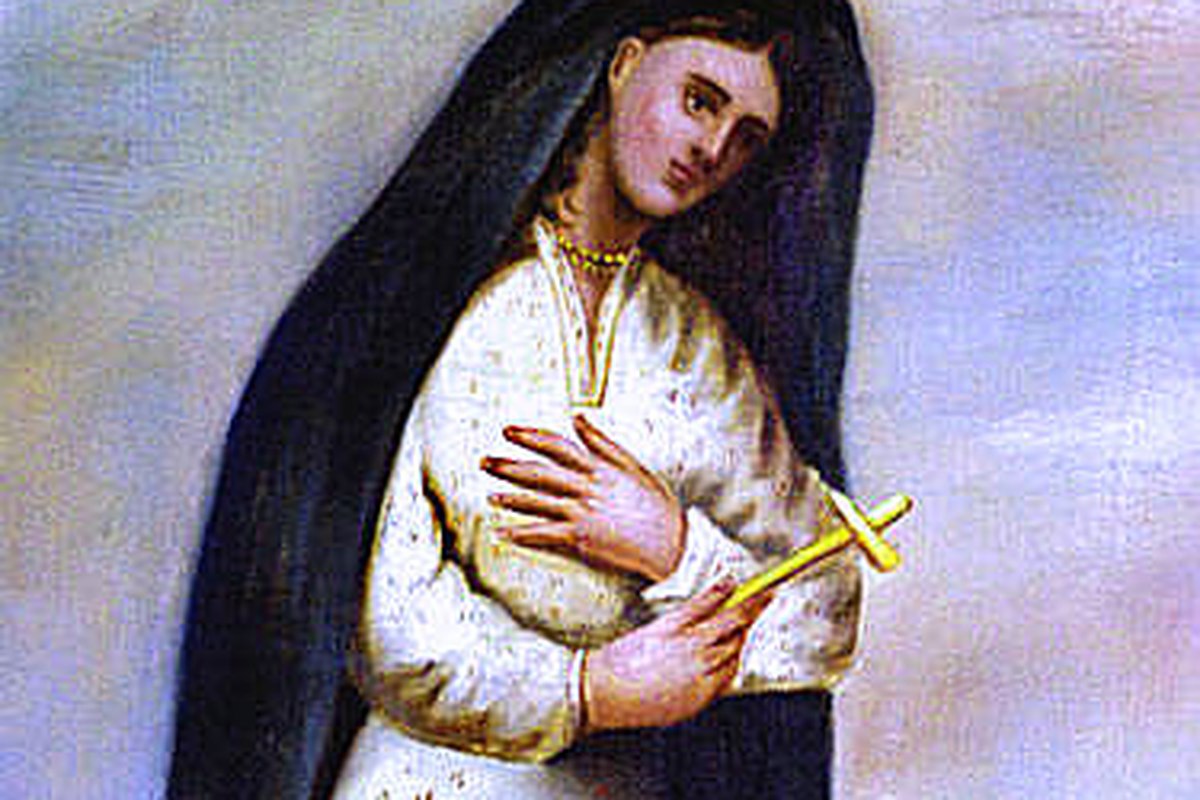
Ivan Akimov, "Grand Princess Olga," 1792 — public domain.
That left Olga a widow with a young son, Sviatoslav, still too small to rule, and a tribe of killers who had just demonstrated they were willing to murder a prince. The Drevlians, apparently believing they had the upper hand, sent an embassy proposing that Olga marry their own prince, Mal, and merge the two territories under his rule. What followed, according to the Russian Primary Chronicle — the principal medieval source for early Rus history, compiled by monks generations after the events it describes — was not diplomacy but a slow, deliberate campaign of revenge carried out in stages.
Three acts of vengeance
The Chronicle's account, treated by historians as saga-like legend rather than verified reportage, describes Olga accepting the Drevlian proposal with apparent grace, then having the first embassy's envoys carried in their own boat to a pit already dug for them and buried alive. She then asked the Drevlians to send a second, more distinguished delegation — and when they arrived, invited them to bathe before being received, then had the bathhouse set alight with the envoys locked inside. A third act followed at a memorial feast for Igor, held ostensibly to formalize the peace, where Olga's men killed thousands of Drevlians who had been plied with drink.
The final blow came during a siege of the Drevlian capital, Iskorosten. Unable to take the city by force, Olga is said to have asked for an unusual tribute instead of continued fighting — three pigeons and three sparrows from each household — and then had burning tinder tied to the birds' legs before releasing them to fly home to their nests under the town's thatched roofs, setting the entire city ablaze at once. Whatever the literal truth of these episodes, medieval audiences clearly valued them as a demonstration of a specific kind of virtue: a widow who repaid a murdered husband in full, on her own terms, without needing an army led by a man to do it.
From regent to reformer
Having settled accounts with the Drevlians, Olga governed as regent for Sviatoslav for over a decade, and this half of her story gets far less attention than the revenge narrative but arguably matters more for her later reputation as a saint. She's credited with reorganizing the tribute-collection system across Rus — replacing the arbitrary, escalating demands that had gotten Igor killed with fixed rates and designated collection points, a genuinely significant piece of early state-building rather than legend. She also expanded trade contacts with the Byzantine Empire, which set up the encounter that would define the second half of her life.
Baptism in Constantinople
Around 957, Olga traveled to Constantinople and was received by Emperor Constantine VII Porphyrogenitus, and it was there, according to tradition, that she was baptized into the Christian faith, taking the name Helena after the mother of Constantine the Great. A well-known, though not fully verified, detail of the visit has the emperor proposing marriage afterward, only for Olga to point out that as her godfather in baptism he had effectively become her spiritual father — making any marriage between them canonically impossible. Whether or not the exchange happened exactly as told, it fits a consistent thread running through every version of Olga's story: a woman repeatedly outmaneuvering powerful men who underestimated her.
Her conversion did not immediately transform Rus. Sviatoslav, her own son, remained committed to the old gods throughout his reign and reportedly refused his mother's urging to be baptized himself, worried it would cost him the loyalty of his pagan warband. Olga died in 969, decades before Christianity became the official religion of Rus under her grandson Vladimir in 988. But the Church has long credited her with laying the groundwork Vladimir built on — a domestic model of Christian conviction within the ruling family that outlasted one generation's resistance and took root in the next.
A saint remembered for both halves of her story
Olga's feast is kept on July 11, and she's venerated today as the patron of widows and converts, among the first women honored with the rare title "Equal to the Apostles." What makes her an unusually interesting figure among early medieval saints is that the Church never tried to erase or soften the revenge narrative that dominates the first half of her life — it simply sits alongside the conversion story as part of the same person's arc, a reminder that sanctity, in the tradition that produced Olga's cult, was understood less as a spotless resume and more as a genuine, sometimes late-arriving turn toward God.
Trivia
Who was Saint Olga of Kiev?
What did Olga do to avenge her husband's murder?
When and where was Olga baptized?
Did Olga succeed in converting Kievan Rus to Christianity?
Why is Olga called 'Equal to the Apostles'?
You May Also Like
Related Reading