Angel Wings in Christian Art

A search that comes up mostly empty
Ask most people to picture an angel, and wings appear automatically — folded behind the shoulders of a marble cemetery statue, spread wide above a Christmas nativity scene, printed on greeting cards without a second thought. It comes as a genuine surprise to many readers, then, to discover how rarely the Bible itself actually describes angels that way.
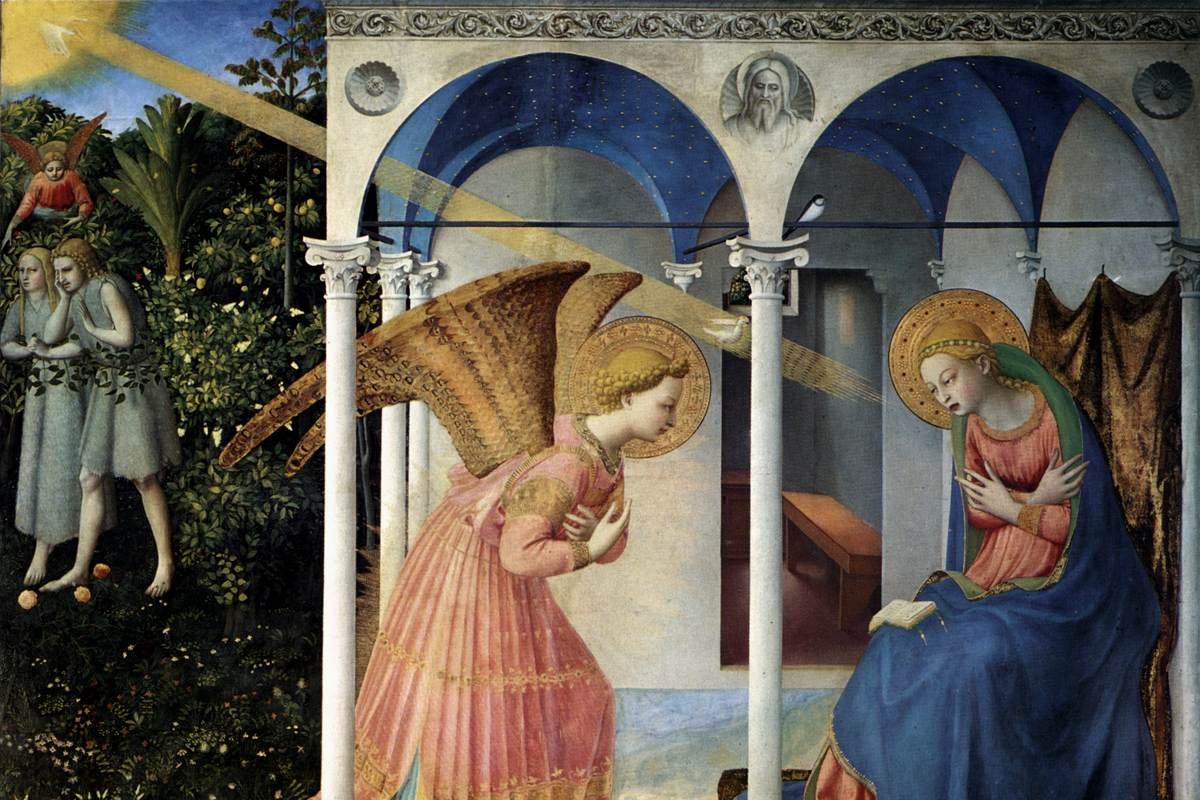
Fra Angelico, "The Annunciation," c. 1430-1432, Museo del Prado, Madrid — public domain.
The angel who wrestles with Jacob at the ford of the Jabbok is simply called "a man" (Genesis 32:25). The angel of the Lord who appears to Gideon under the oak at Ophrah, to Hagar in the wilderness, and to Manoah's wife in the field are all described in purely human terms — Manoah's wife even describes her visitor only as having "the appearance of an angel of God, fearsome indeed" (Judges 13:6, NABRE), without a single mention of wings. Even Gabriel, arguably Scripture's most famous angelic messenger, is never once described with wings in either his appearance to Zechariah or to Mary at the Annunciation. For a very large share of Scripture's angelic encounters, the visitor is indistinguishable from an ordinary human stranger until something about their words or actions reveals otherwise.
Where wings actually do appear in Scripture
This isn't to say wings are absent from the Bible altogether — they belong, quite specifically, to a smaller set of more exalted heavenly beings, distinct from the "messenger" angels who make up most angelic appearances. The cherubim guarding the entrance to Eden after the Fall, and later depicted in gold facing each other atop the Ark of the Covenant, are explicitly given "wings spread out above" (Exodus 25:20). The seraphim of Isaiah's Temple vision are described in striking detail: "each of them had six wings: with two they covered their faces, with two they covered their feet, and with two they hovered" (Isaiah 6:2, NABRE). Ezekiel's four living creatures and the four living creatures of the Book of Revelation likewise appear with multiple wings (Ezekiel 1:6, Revelation 4:8).
In other words, the Bible reserves wings largely for the highest orders in later Christian angelology's traditional hierarchy — the cherubim and seraphim closest to God's own throne — rather than granting them to angels as a class. Readers curious about these higher orders can find fuller treatments in Cherub, Seraph, and The Nine Choirs of Angels.
How wings became universal in art
If wings weren't the biblical norm, where did the now-standard winged angel come from? Art historians point to a clear turning point: Christian art of the third and early fourth centuries — the period of the catacomb paintings and earliest sarcophagi — depicted angels as wingless young men, dressed simply, distinguishable from other human figures mainly by context rather than physical attributes.
The shift toward winged angels happens gradually from the later fourth century onward, once Christianity had become the favored, then official, religion of the Roman Empire and its artists were drawing more freely on the existing visual vocabulary of Greco-Roman art. That vocabulary already included winged messenger and victory figures — most prominently Nike in Greek art and her Roman counterpart Victoria, routinely depicted with large, sweeping wings as they announced triumph or carried messages between gods and mortals. Christian artists adapted this familiar visual language to a new purpose, giving angels wings not because Scripture demanded it but because the symbol was already culturally legible as "swift heavenly messenger" to audiences across the late Roman world.
What the wings are meant to say
Once established, the winged form proved durable because it carried genuine theological meaning, even without being a literal claim about angelic anatomy. Wings communicate swiftness — the idea that God's messengers move instantly to fulfill his will, without the delay or resistance that marks earthly travel. They communicate a nature not bound to the ground, fitting for beings the Church has always taught are pure spirits rather than physical creatures at all. And they communicate constant readiness, a kind of perpetual motion toward service that a static human figure alone could not easily suggest.
The Catechism of the Catholic Church is direct about what angels actually are beneath all this visual tradition, describing them as "purely spiritual creatures" with "intelligence and will," personal and immortal, "surpassing in perfection all visible creatures" (CCC 328, 330). Every visual attribute given to angels in art — wings, flowing robes, haloes, even specific hair or skin color — is therefore understood by the Church as symbolic accommodation to human imagination, a way of making an entirely spiritual reality graspable to eyes that can only take in physical form. Wings are not wrong for depicting angels; they are, more precisely, not literally true, and holding both of those facts together is exactly what centuries of Christian art and theology have always intended.
Feathers, colors, and later developments
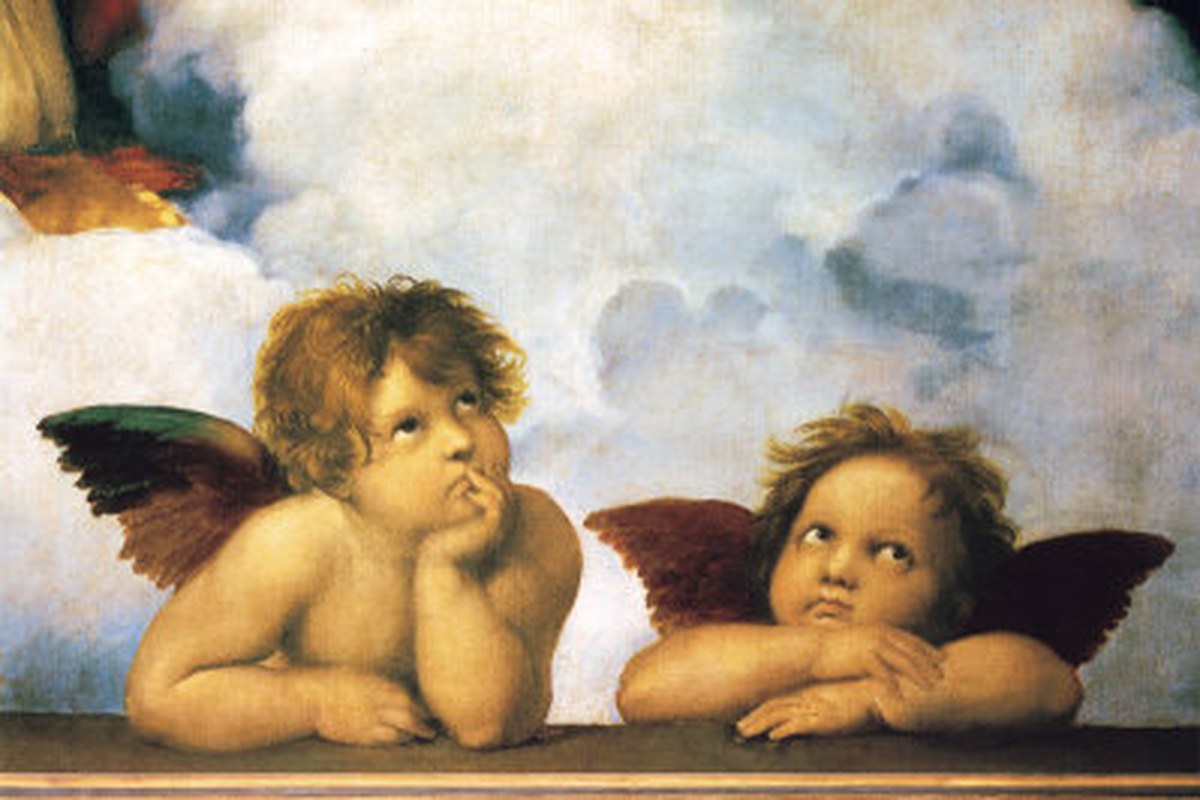
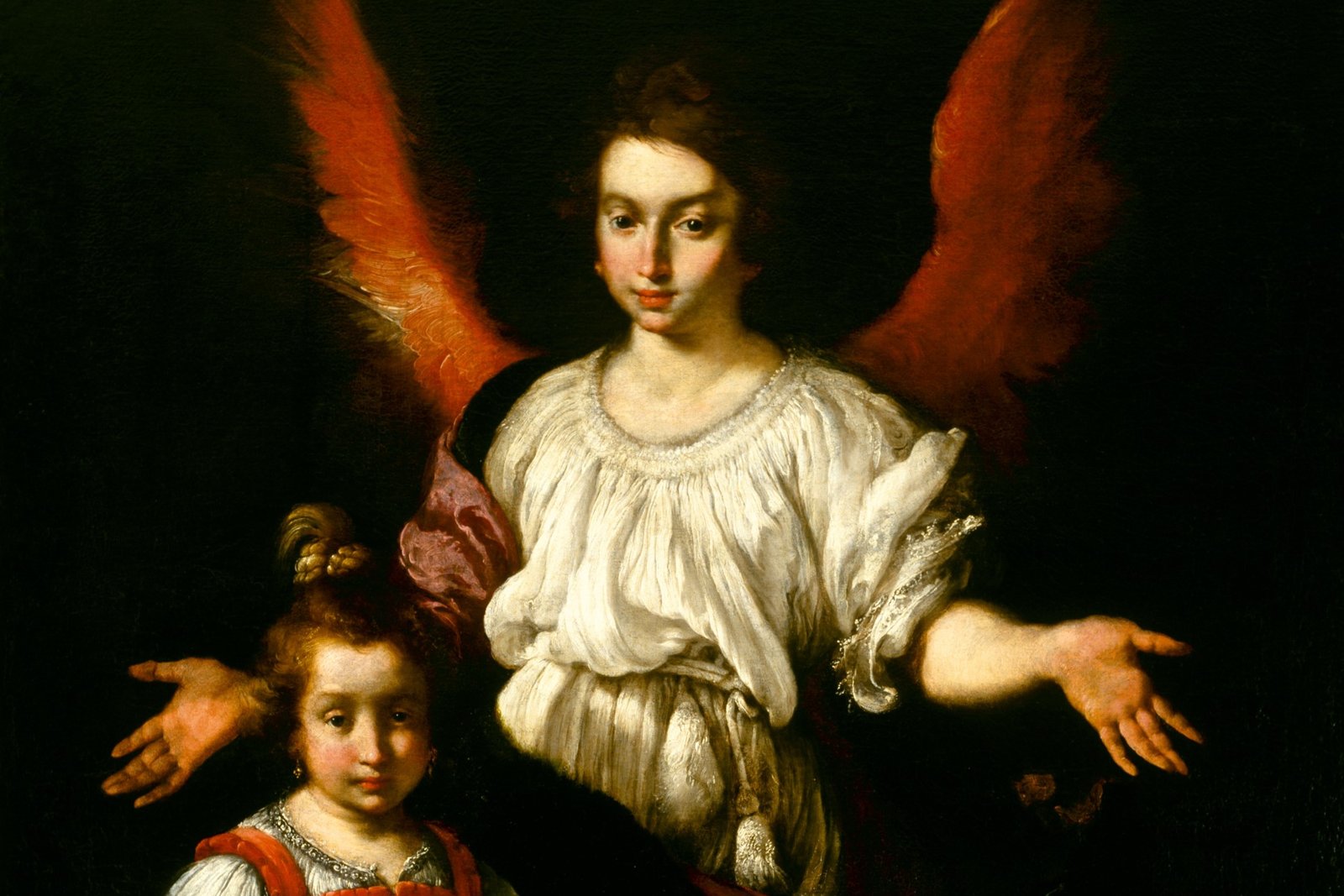
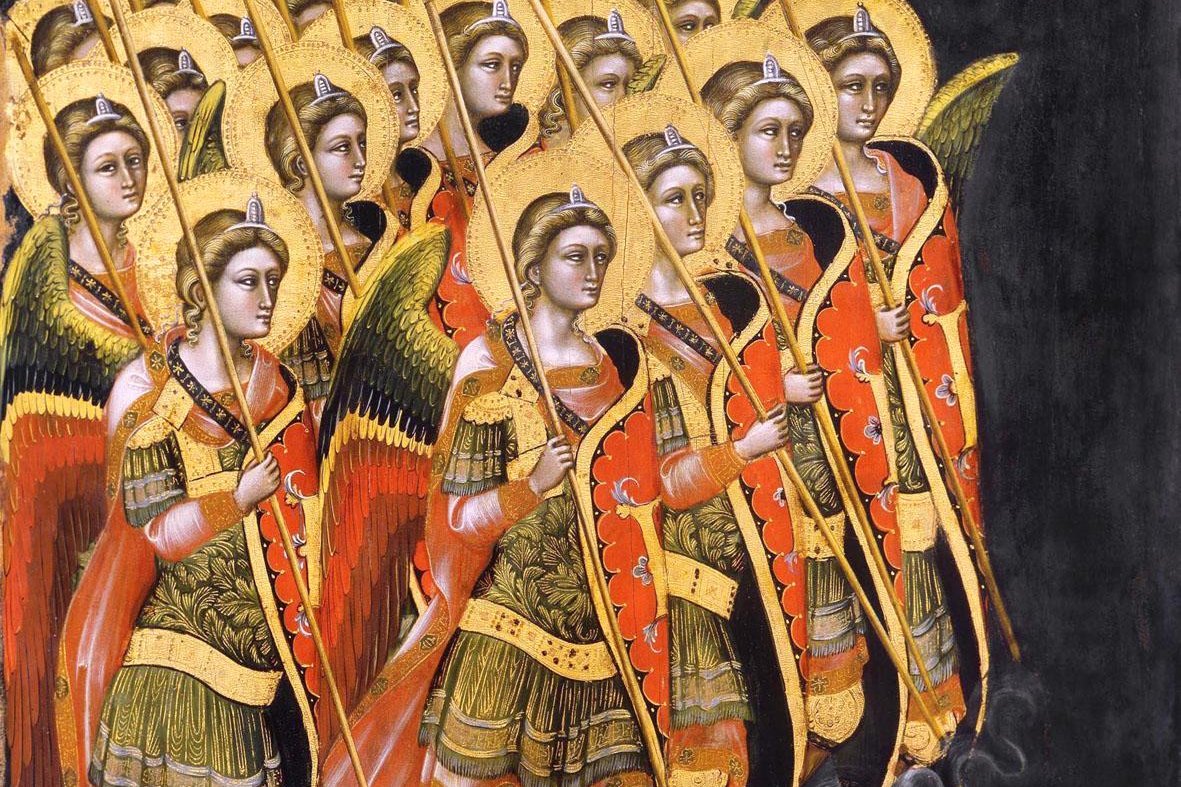
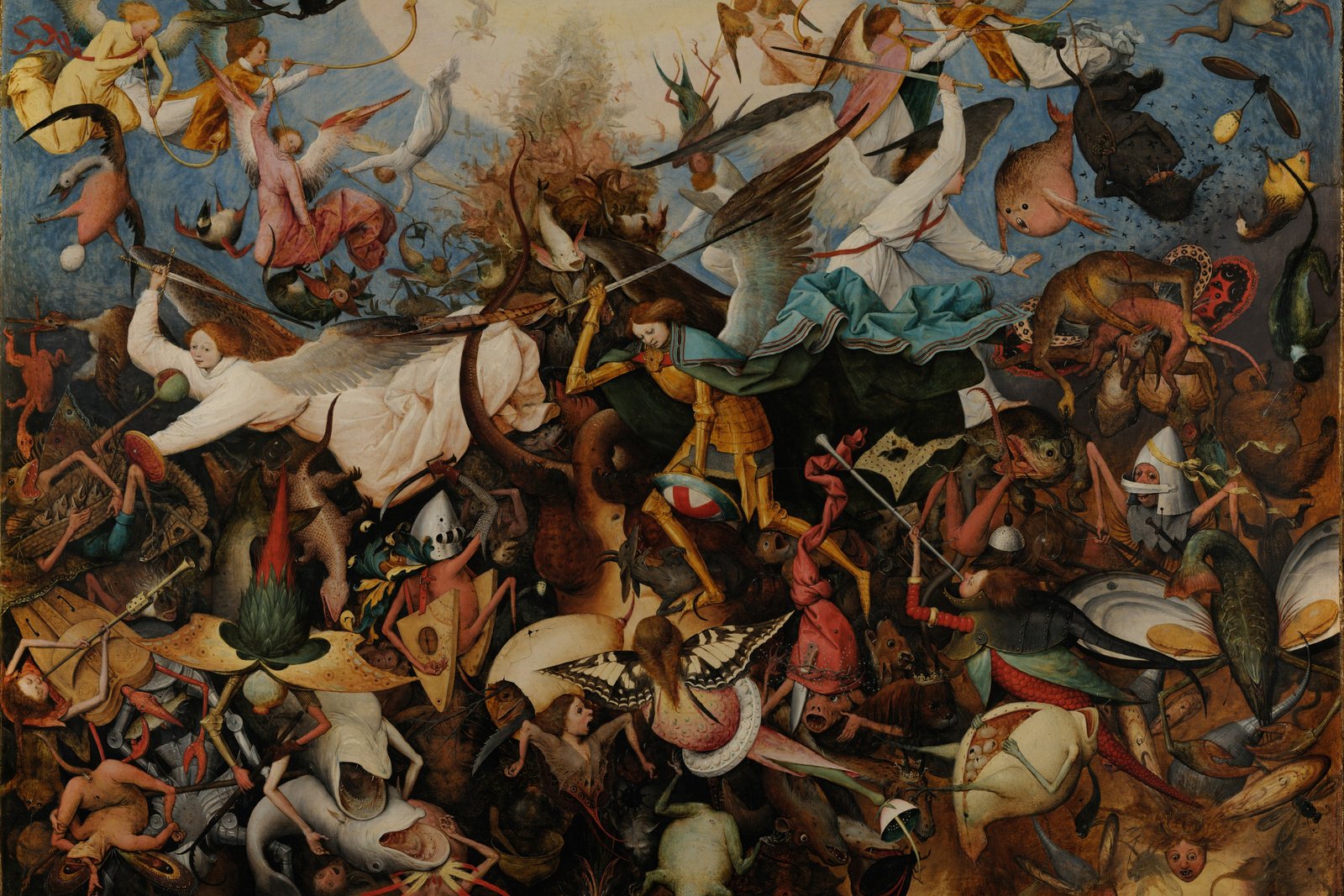
Later medieval and Renaissance art added still more refinement to angelic wings — feather patterns modeled increasingly on real birds (peacock feathers, prized for their iridescence, became especially popular for depicting the highest angelic orders), and color schemes that sometimes indicated angelic rank, with the fiery red traditionally associated with the seraphim (whose Hebrew name is linked to a root meaning "to burn") standing in visual contrast to the cooler blues and whites given to guardian angels and messengers. Fra Angelico's fifteenth-century Annunciation scenes are often singled out by art historians for the sheer intricacy of Gabriel's rendered plumage, each feather individually observed and colored — a level of naturalistic detail matched by very few other painters of angelic wings before or since.
Trivia
Do most angels in the Bible actually have wings, according to the text?
Which biblical beings are actually described with wings?
When did Christian art begin giving all angels wings?
What do wings symbolize theologically, even where Scripture doesn't require them?
Does the Catechism of the Catholic Church say anything about angels' physical appearance?
Related Reading