David Dancing Before the Ark of the Covenant

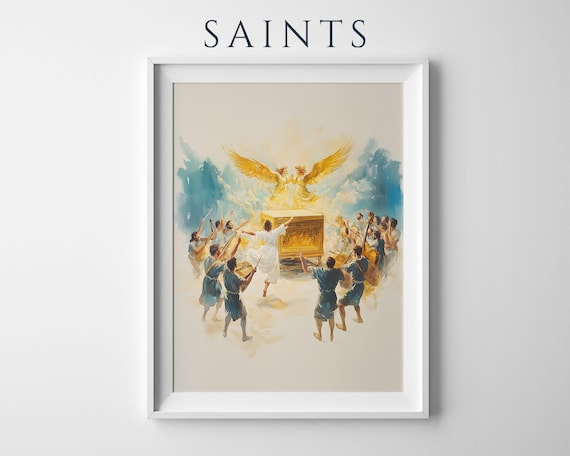
Bringing the Ark home
By the time David became king over a united Israel, the Ark of the Covenant — the gold-covered chest holding the tablets of the Law, understood as the visible sign of God's presence with his people — had been away from the nation's central worship for a generation. It had spent years at Kiriath-jearim after being recovered from the Philistines, essentially parked at the edge of national life while Israel fought its wars and settled its tribes.
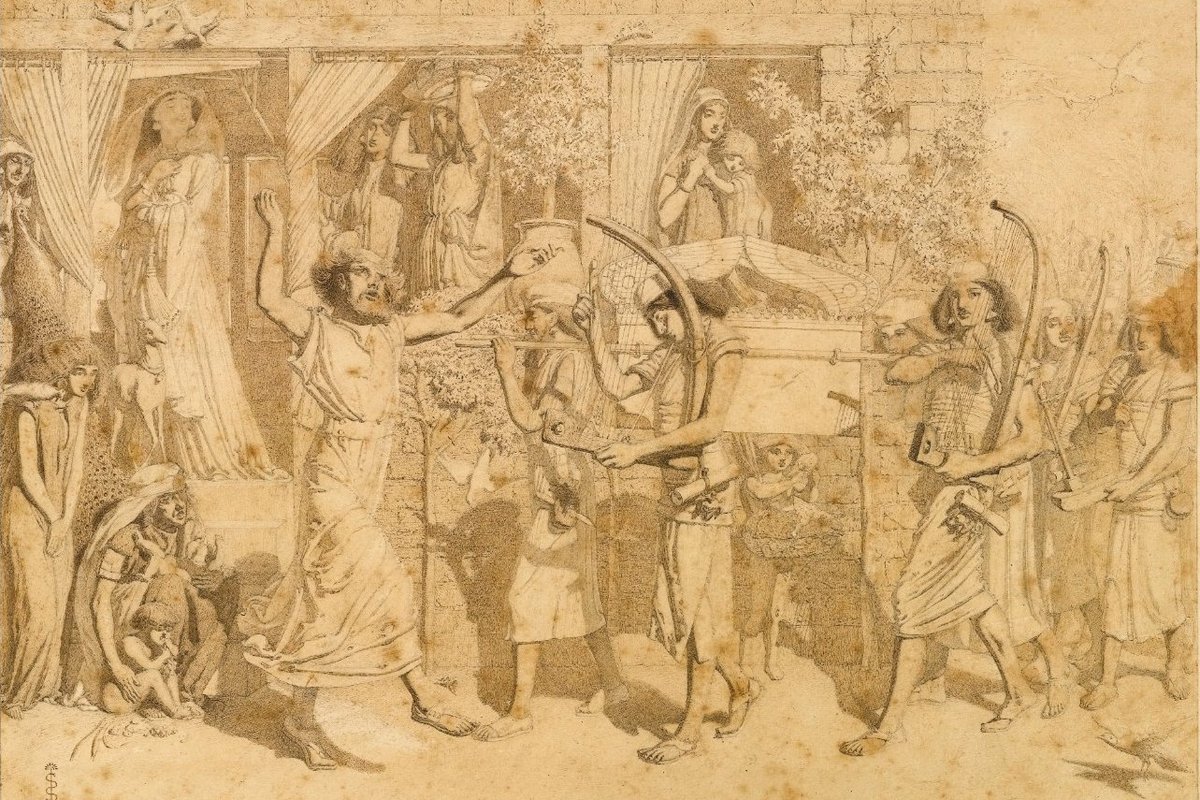
Simeon Solomon, "David Dancing before the Ark," 19th century, pen and ink — public domain.
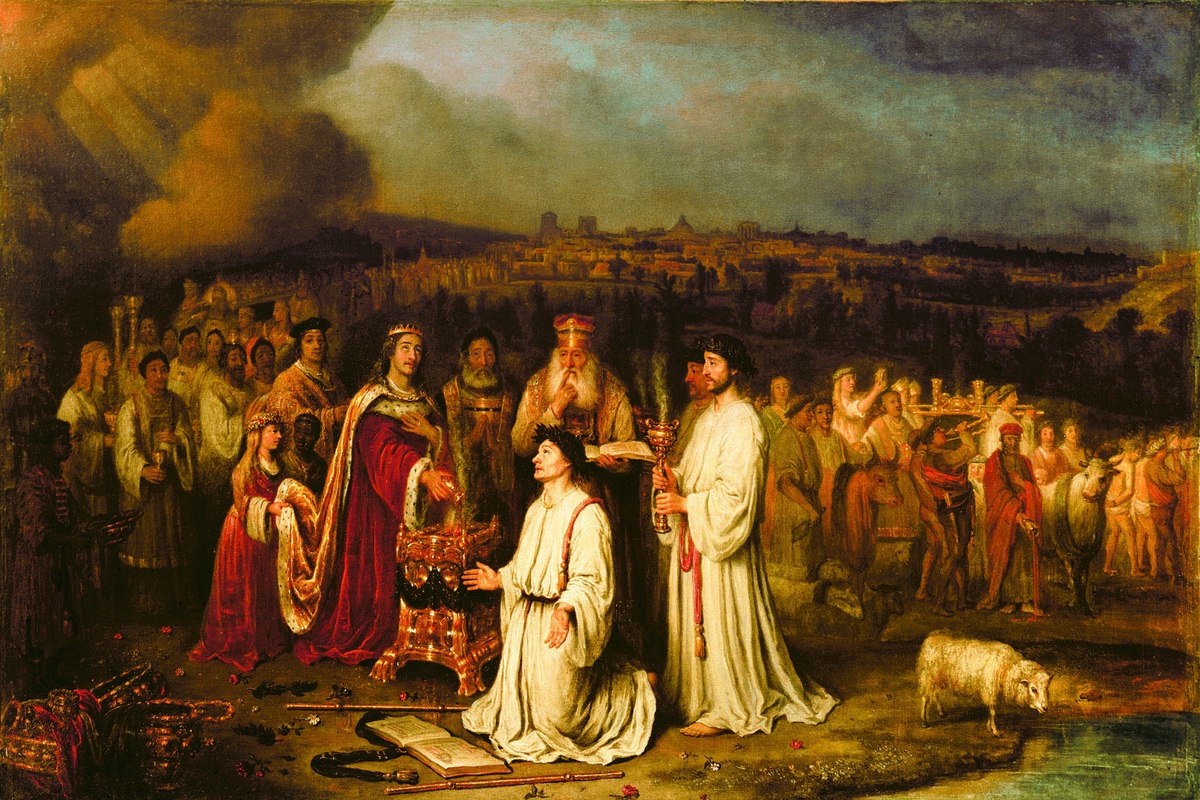
David, freshly established in his new capital at Jerusalem, decided to bring it home. The first attempt went badly: the Ark was loaded onto a new cart rather than carried by its consecrated bearers as the Law required, and when the oxen stumbled, a man named Uzzah reached out to steady it and died on the spot. Shaken and afraid, David abandoned the plan and left the Ark at the house of Obed-edom for three months. Only after seeing that Obed-edom's household had prospered under its presence did David try again — this time, according to the parallel account in 1 Chronicles 15, having the Ark carried properly by the Levites, as the Law commanded.
Why Uzzah's death casts a shadow over the whole procession
The Uzzah episode is easy to read past quickly on the way to the more colorful dancing scene, but it shapes everything that follows, including David's own emotional state during the second attempt. The Law was specific about how the Ark was to be handled: it was to be carried on poles by consecrated Levites, never touched directly, never transported on an ordinary cart the way the Philistines had once moved it (1 Samuel 6:7-8 describes that earlier, pagan-style transport). By loading it onto a cart pulled by oxen, David's first attempt had unintentionally repeated a pattern borrowed from Israel's neighbors rather than following the Law's own instructions. Uzzah's death is one of the more difficult passages in the historical books for modern readers, and different commentators have wrestled with it differently — but the text itself frames it as a consequence of treating something set apart as holy the way one might treat any ordinary object, not as an arbitrary punishment. David's fear afterward, and his three-month delay at Obed-edom's house, reflect exactly that lesson landing: whatever he did next, he needed to do properly.
The dance
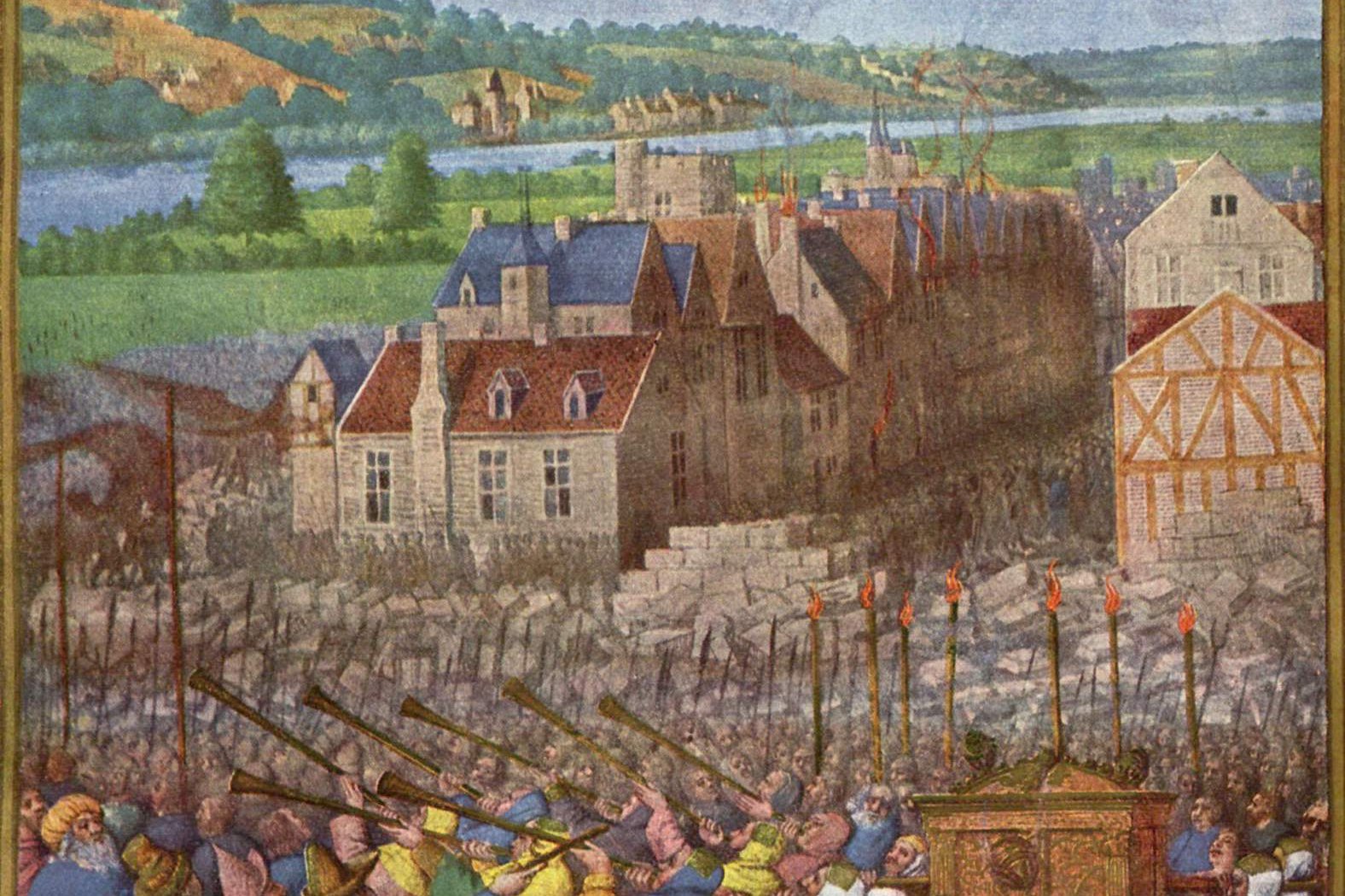
What happened next is one of the most vivid processions in the Old Testament. As the Ark finally entered Jerusalem, David danced before it with everything he had — leaping and whirling in the street, dressed in a simple linen ephod rather than royal robes, surrounded by shouting and the blast of the ram's horn. This wasn't a scripted royal appearance. It was a king making himself look, by his own wife's later account, undignified — and clearly not caring.
His wife Michal, daughter of the old king Saul, watched from a window and, according to 2 Samuel 6:16, felt only contempt for him. When David came home to bless his household, she met him with open scorn: "How well the king of Israel has honored himself today, exposing himself to the view of the slave girls of his followers, as a commoner might expose himself!" (NABRE, 2 Samuel 6:20). David's answer was unflinching: he was dancing before the Lord who had chosen him over Saul's whole house, and he would gladly make himself even more lowly if that was what honoring God required. It's a small, sharp exchange, and it cost Michal dearly — the text notes flatly that she remained childless for the rest of her life, read by most interpreters as a mark of the rift the moment opened between them.
Why the scene has stayed with readers
David's dance endures as one of Scripture's clearest pictures of unguarded devotion — worship stripped of protocol, dignity, and self-consciousness. Kings in the ancient world curated their public image carefully; David, in this one procession, let go of his entirely. Christian readers have long taken the scene as a kind of permission: that real worship sometimes looks foolish to onlookers who are measuring the wrong thing.
The episode also marks a turning point in salvation history that later biblical writers kept returning to. Jerusalem becomes, from this moment, the city where God's presence dwells among his people — the reason the Temple would eventually be built there by David's son Solomon, and why the city holds the meaning it does for Jews and Christians alike. For readers of the New Testament, David's unrestrained joy on the road into Jerusalem also echoes forward centuries later, when a very different king enters the same city to very different acclaim — a connection worth exploring alongside other scenes from David's life on this blog, like David and Goliath.
An ephod instead of a crown
One detail worth lingering on is exactly what David chose to wear. A linen ephod was a simple sleeveless garment associated with priestly and Levitical service, not with kingship — by putting one on for this procession, David wasn't just failing to dress formally, he was deliberately setting aside the trappings of royal office and dressing instead like one more worshiper among the crowd carrying the Ark home. That choice of clothing is part of what Michal found so objectionable: a king behaving, by appearance and by conduct, like an ordinary member of the procession rather than the man leading it. Read in context, David's response to her — that he would gladly demean himself further still, content to be thought lowly by her while being honored by the very slave girls she mentioned with such scorn (NABRE, 2 Samuel 6:22) — reads less as stubbornness than as a settled conviction about where true honor actually comes from.
A king remembered for more than a crown
David is remembered in Scripture as many things — shepherd, giant-slayer, poet, sinner, penitent, ancestor of the Messiah. But this scene, oddly, might be the most personally revealing of all of them: not the victories or the failures, but the moment a king danced in the street because he could not contain what he felt. It's an image sacred art has returned to again and again, precisely because it captures something rare — worship with nothing held back.
Trivia
Why did David dance before the Ark of the Covenant?
What is the Ark of the Covenant?
Why was Michal, David's wife, upset with him?
What happened to Uzzah on the way to Jerusalem?
Where is this scene in the Bible?
Related Reading