The Kings of Israel — Saul, David, and Solomon


A people who didn't want a king — until they did
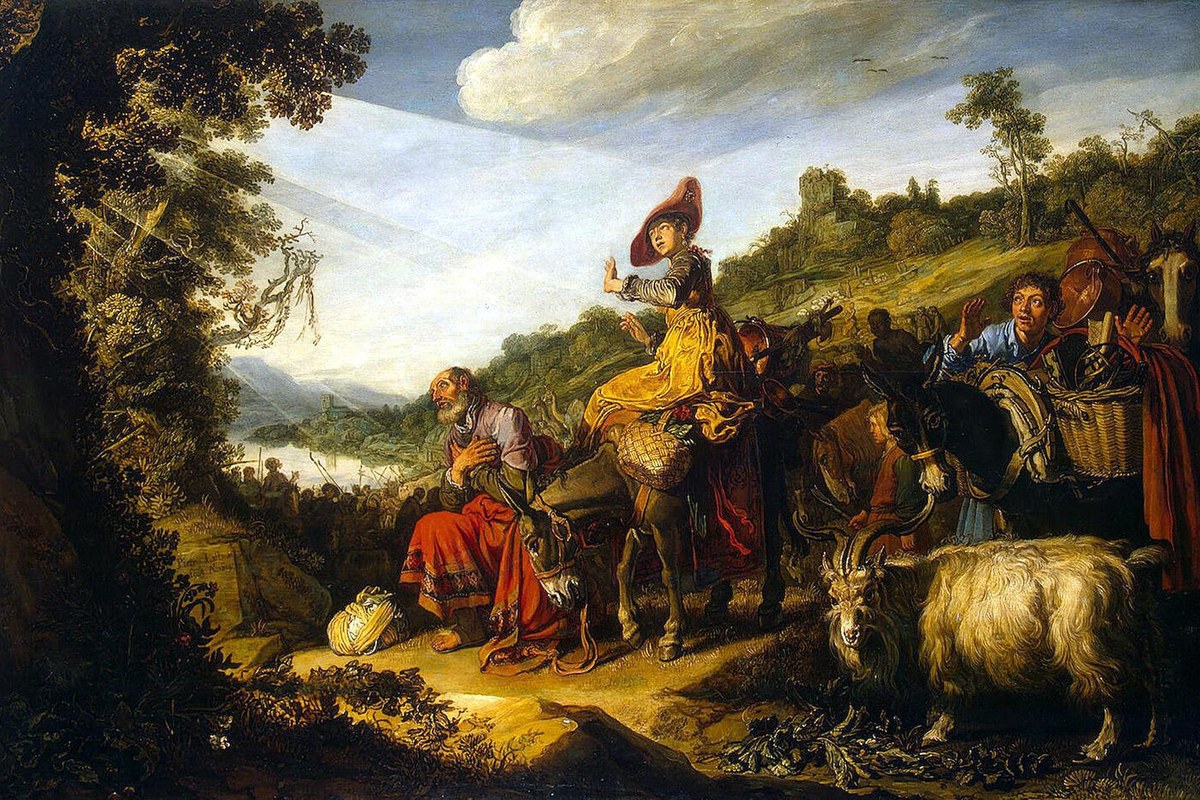
For generations after settling in Canaan, Israel had no monarchy at all. It was governed instead through a loose confederation of tribes, led in moments of crisis by charismatic figures called judges, with the underlying conviction that God himself was Israel's true king. That arrangement finally broke down in the days of the aging prophet Samuel, when the elders of Israel came to him with a blunt demand: "appoint a king over us, as other nations have, to rule us" (1 Samuel 8:5, NABRE). Samuel took it personally, and God told him plainly that the people were rejecting not Samuel but God's own kingship over them — yet God also told Samuel to give the people what they were asking for, after warning them at length what a king would eventually take from them in taxes, labor, and sons conscripted for war.
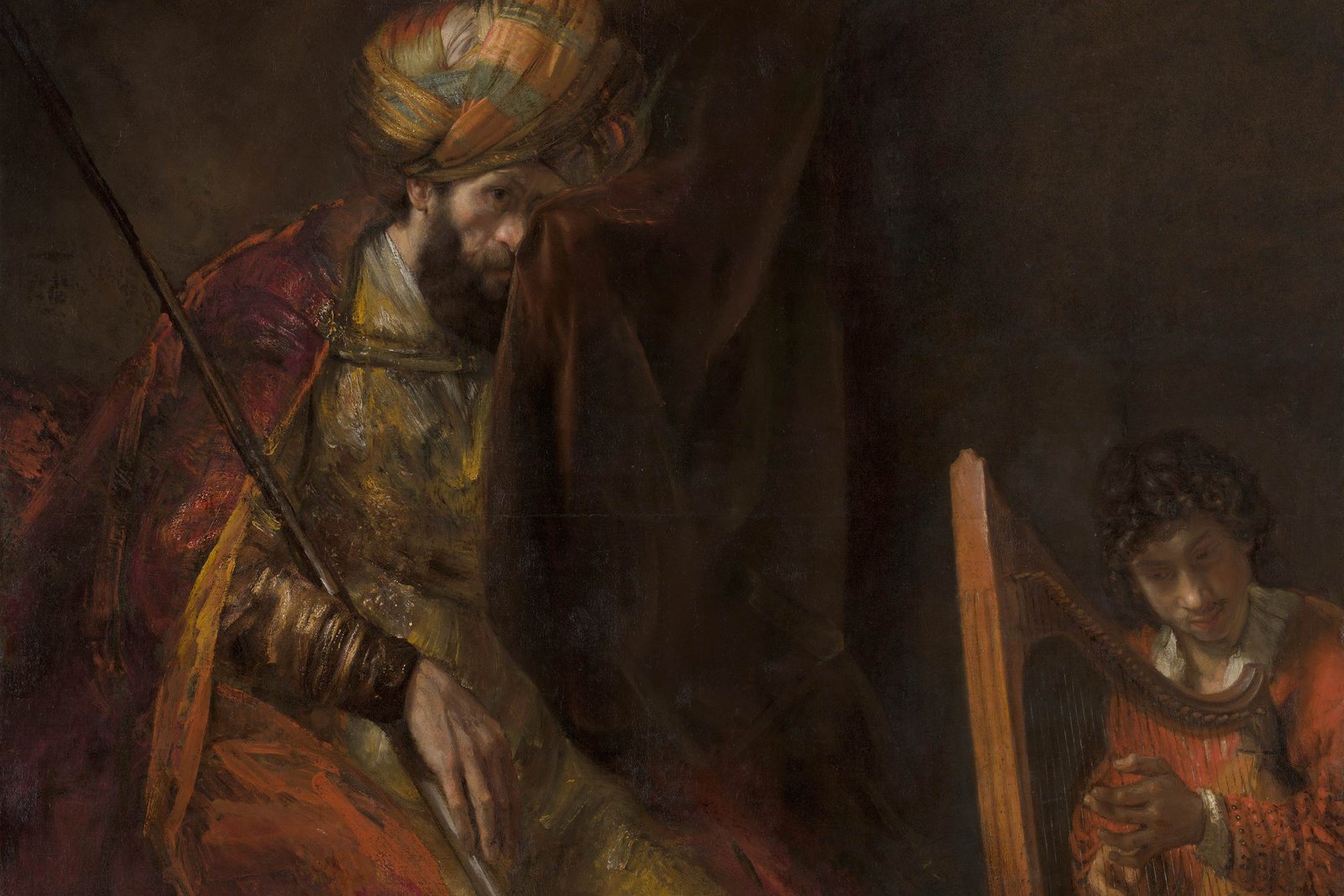
Rembrandt van Rijn, Saul and David, circa 1650-1670, Mauritshuis, The Hague — public domain.
Saul: a tall farmer's son, chosen by lot
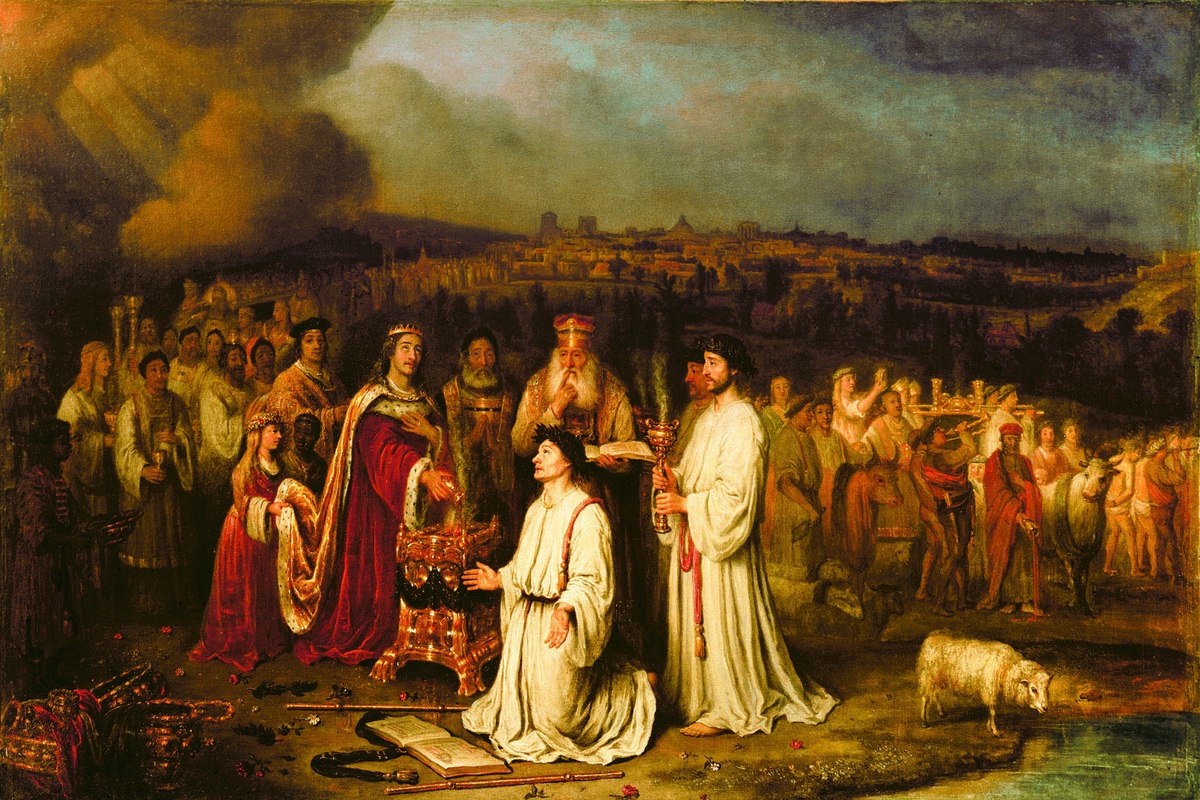
The man on whom the lot fell was Saul, from the small tribe of Benjamin, described in Scripture as standing head and shoulders above everyone else in Israel — a detail the text treats as fitting for a king in the eyes of a people who wanted to look impressive to their neighbors. Samuel anointed him privately first, then Saul was confirmed publicly before the assembled tribes, and his early reign brought real military successes against Israel's enemies, including the Ammonites and the Philistines.
But Saul's kingship unraveled through a pattern of disobedience rather than any single catastrophic failure. Twice Scripture records him overstepping the boundaries of his authority — offering a sacrifice himself rather than waiting for Samuel as instructed, and later failing to fully carry out a command delivered through the prophet regarding the destruction of the Amalekites and their possessions. When Samuel confronted him over the second failure, he delivered one of the Old Testament's most quoted rebukes: "Obedience is better than sacrifice, and submission than the fat of rams" (1 Samuel 15:22, NABRE). From that point, Scripture describes an evil spirit tormenting Saul, and it was to soothe that torment that a young shepherd and skilled harpist named David was first brought into the royal court.
Saul's reign ended on Mount Gilboa, where the Philistines routed the Israelite army, killing three of Saul's sons and leaving Saul himself mortally wounded; rather than be captured, he took his own life by falling on his sword. It is a bleak, sobering close to a reign that began with such public promise, and Scripture treats it less as tragedy for its own sake than as the direct consequence of a king who repeatedly placed his own judgment above the word delivered through the prophet.
David: shepherd, giant-slayer, king
David's own path to the throne began years before Saul's death, when Samuel anointed him secretly in Bethlehem as the youngest of Jesse's sons — the one nobody in the family had thought to bring in from watching the sheep. His rise to public fame is told in David and Goliath, where the shepherd boy's confrontation with the Philistine champion first announces him to all of Israel, and his complicated, often dangerous relationship with the increasingly jealous Saul — including years spent as a fugitive — fills much of the rest of 1 Samuel.
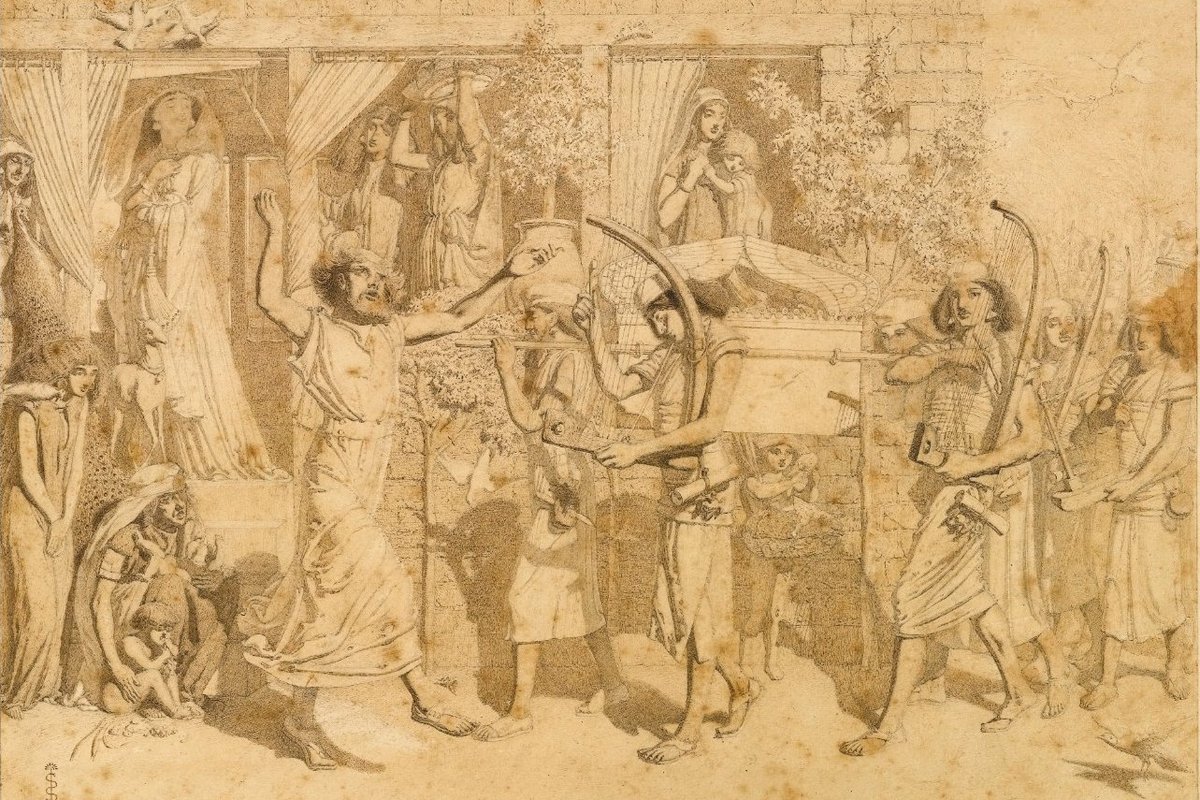
After Saul's death, David was crowned king first over his own tribe of Judah and, seven years later, over the whole of Israel, uniting the tribes under a single throne for the first time. His reign is remembered for military consolidation, the establishment of Jerusalem as Israel's capital, and a personal, often unguarded devotion expressed vividly in the moment covered in David Dancing Before the Ark, when David danced without royal restraint as the Ark of the Covenant was brought into the city. David's reign was not without serious moral failure — his affair with Bathsheba and the arrangement of her husband Uriah's death remain among the darkest episodes attributed to any biblical king — yet the covenant God made with him, promising that his throne would endure forever, became the foundation for the entire biblical hope in a coming Messiah "of the house of David," a title the New Testament applies directly to Jesus.
Solomon: wisdom, wealth, and a kingdom that couldn't hold
David's son Solomon inherited the throne after a contested succession and opened his reign with a request that has echoed through Jewish and Christian tradition ever since: rather than asking God for wealth, victory, or long life, Solomon asked for "an understanding heart to judge your people and to distinguish right from wrong" (1 Kings 3:9, NABRE). God granted the request and, according to Scripture, wisdom and riches besides.
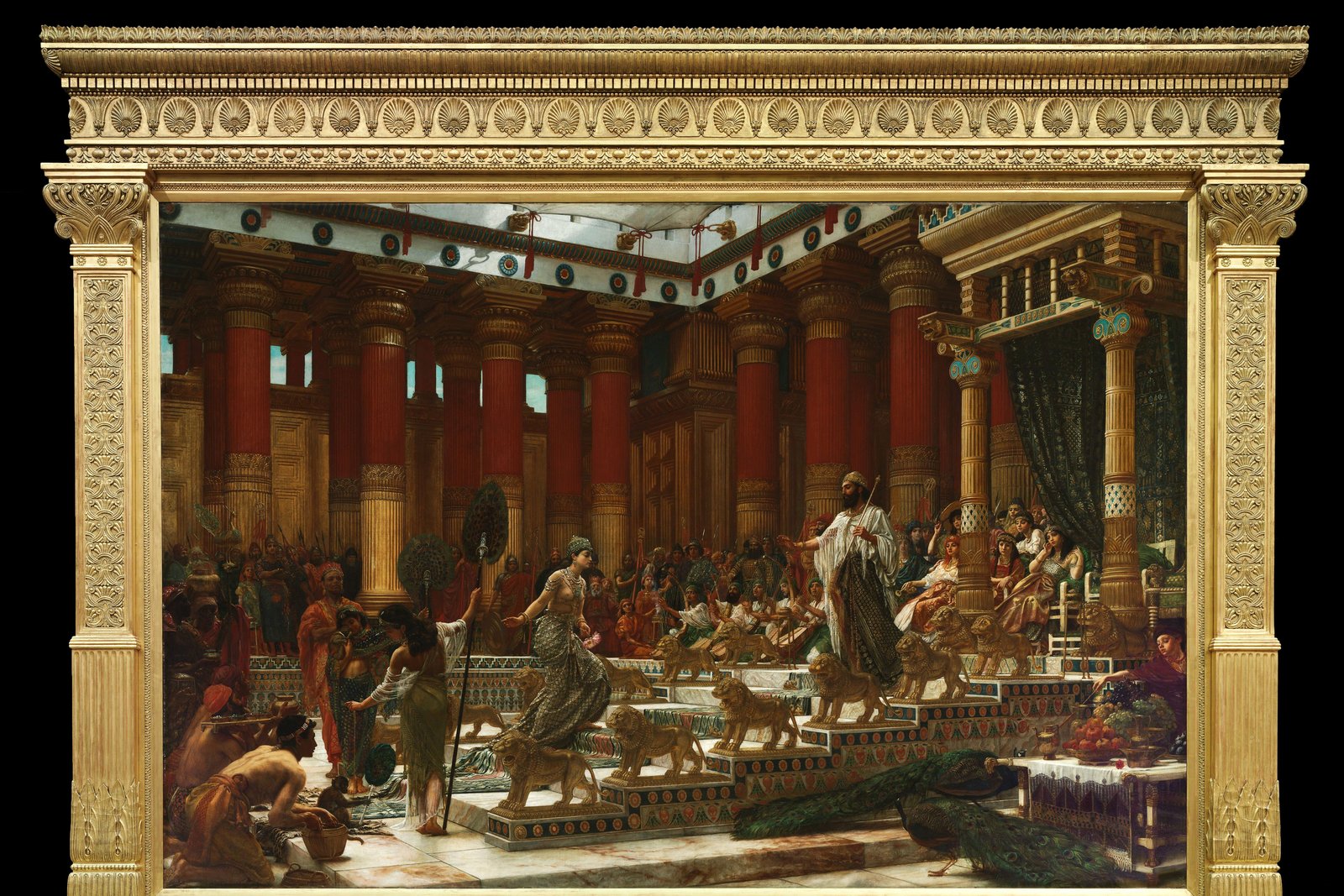
Solomon's reign became legendary for exactly those two things: a wisdom so renowned it drew the Queen of Sheba to visit him in person, and a wealth and building program that produced, among other projects, the First Temple in Jerusalem — the culmination of the plans his father David had drawn up but had been forbidden to build himself. Yet that same building program depended on heavy taxation and forced labor conscripted from Israel's own tribes, a burden that bred resentment even as the kingdom reached the height of its splendor.
When Solomon died, that resentment came due. His son Rehoboam, faced with a delegation asking him to lighten the load his father had imposed, chose instead to threaten even harsher treatment — and ten of the twelve tribes responded by breaking away entirely, forming a separate northern kingdom of Israel under a rival king, Jeroboam, and leaving Rehoboam with only Judah and Benjamin in the south. The united monarchy that had taken three reigns to build came apart within a single generation of Solomon's death, splitting the twelve tribes described in The Twelve Tribes of Israel into two rival kingdoms that would never be reunited.
Three reigns, one throne that outlasted them all
Read together, the reigns of Saul, David, and Solomon trace a single arc: a monarchy granted reluctantly, established through a deeply flawed but ultimately faithful king, and brought to its material peak — and its structural breaking point — under his even wealthier but less humble son. The Catechism notes that the kingdom of David and Solomon was itself "a sign of the eschatological Jerusalem" that later revelation would build upon (CCC 709) — meaning the biblical tradition never treated the united monarchy as an end in itself, but as a foreshadowing of a kingdom still to come. For deeper coverage of David's full life and Solomon's reign and legacy in their own right, see the dedicated articles on King David and Solomon.
Trivia
Who was Israel's first king?
Why did God reject Saul as king?
How did David become king after Saul?
What made Solomon famous?
Why did the united kingdom of Israel split apart after Solomon?
Related Reading