The Immaculate Heart of Mary

A heart that kept things rather than announced them
The Gospel of Luke gives us the phrase twice, in nearly identical words. After the shepherds arrive at the manger and repeat what the angels told them, Luke writes that Mary "And Mary kept all these things, reflecting on them in her heart." (Douay-Rheims, Luke 2:19). Twelve years later, after finding the boy Jesus in the Temple and hearing his puzzling answer about being about his Father's business, Luke tells us again that "He went down with them and came to Nazareth, and was obedient to them; and his mother kept all these things in her heart." (Douay-Rheims, Luke 2:51). Neither moment resolves into a tidy explanation. Mary does not receive understanding on the spot. She holds the mystery, unfinished, and lets it settle into her.
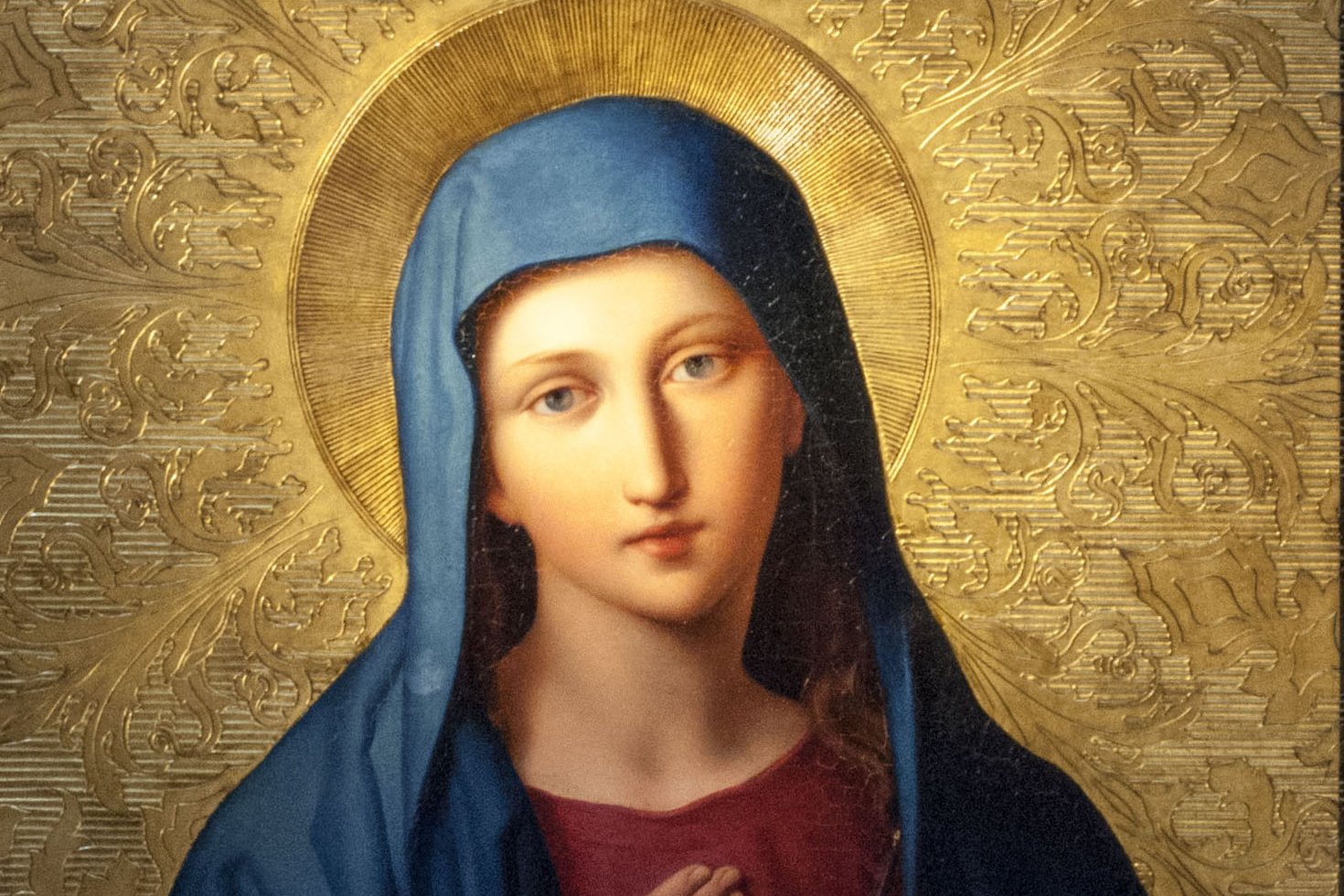
Diana Ringo, Immaculate Heart of Mary (devotional icon), Wikimedia Commons — CC BY-SA 4.0.
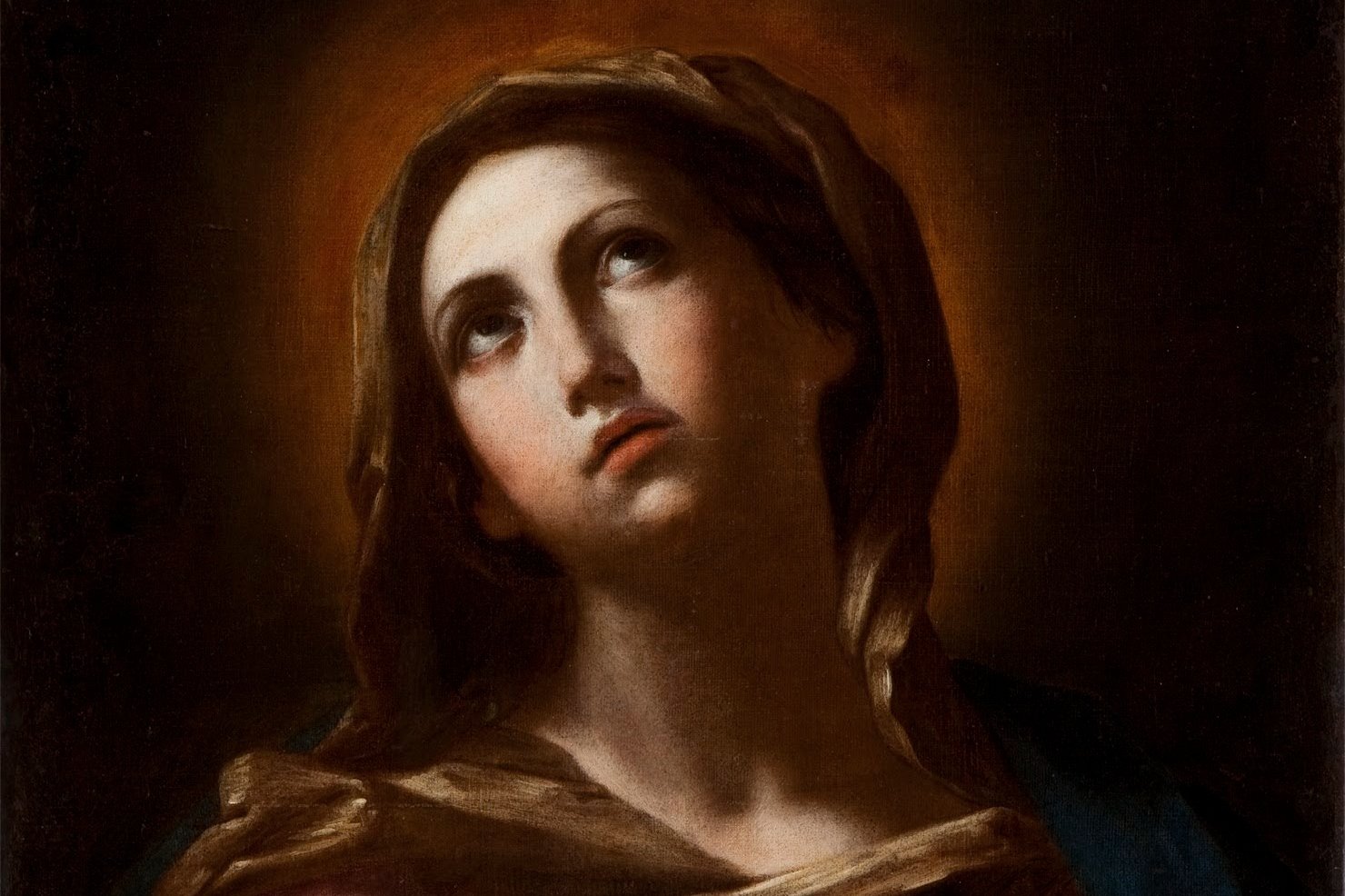
That recurring image, a heart that receives, holds, and does not rush to explain, is the seed of everything Catholic devotion later built around the phrase "Immaculate Heart of Mary." The word "immaculate" here means without stain, an interior life untouched by sin, entirely given over to God from the first moment of her existence, according to Catholic teaching on the Immaculate Conception. The "heart" in this devotion is not a physical organ so much as the biblical shorthand for the whole interior person: will, memory, and love together.
From private devotion to a feast of the universal Church
Devotion to Mary's heart has old roots, but it grew into something more structured relatively slowly. Seventeenth-century French mystics, particularly Saint John Eudes, did much to popularize the pairing of devotion to the Sacred Heart of Jesus with a parallel devotion to Mary's heart, treating the two together as a way of contemplating divine love and its perfect human response. For centuries the practice remained largely private and local, observed by individual religious communities and dioceses on dates of their own choosing.
The feast took its more universal shape in the twentieth century. In 1944, Pope Pius XII extended a feast of the Immaculate Heart of Mary to the entire Church, connecting it explicitly to a request associated with the Marian apparitions reported at Our Lady of Fatima in Portugal in 1917. Following the later liturgical reforms of the Second Vatican Council, the feast was fixed to August 22, the octave day of the Assumption, positioning Mary's heart in the calendar immediately after the Church celebrates her body and soul being taken into heaven.
Not the Sacred Heart, and not a rival to it
It helps to be precise about what this devotion is not. The Sacred Heart of Jesus, honored on its own feast in June, is understood in Catholic teaching as a wellspring: Christ's heart, pierced on the cross, is the literal source of grace poured out for the redemption of humanity. Mary's heart carries no such role. Catholic theology has always been careful to describe Mary as a creature, redeemed in advance by the merits of her son rather than a source of grace herself. Her Immaculate Heart is honored not as an origin point of salvation but as the most complete created example of what a heart wholly surrendered to God looks like: the perfect answer to grace, rather than grace's source.
That distinction matters because it is easy for outside observers, and sometimes for the devout themselves, to blur the line between honoring Mary and worshiping her. The Church's language is careful on this point: Mary receives veneration, a form of honor appropriate to the greatest of the saints, while worship in the full sense is reserved to God alone. The Immaculate Heart devotion, properly understood, is really a meditation on total human openness to God, using Mary as the model rather than the object of ultimate devotion.
The Fatima connection
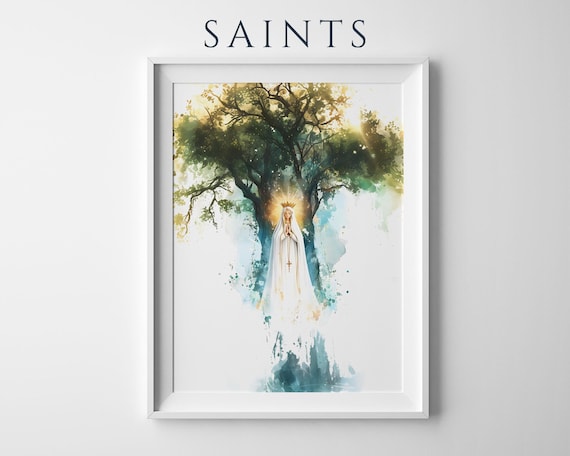
No modern development shaped this feast more than the reported apparitions at Fatima. Three shepherd children, Lúcia dos Santos and her cousins Francisco and Jacinta Marto, testified to a series of visions in 1917 in which a lady identifying herself with the rosary asked for prayer, penance, and, according to their account, devotion to her Immaculate Heart as a path to peace. The children also reported a request for the consecration of Russia to the Immaculate Heart, a request that shaped decades of subsequent papal action.
Several popes performed acts of consecration connected to these reported requests, most notably Pope Pius XII in 1942 and Pope John Paul II in 1984, who consecrated the world, and by extension Russia, to the Immaculate Heart of Mary in a ceremony at St. Peter's Basilica. These events, while significant in the devotional life of many Catholics, rest on the Church's approval of the apparitions as worthy of belief rather than on any binding doctrine; Catholics are not obligated to accept private revelation, even revelation the Church has approved, in the same way they accept revealed dogma.
How the feast is kept
Observance of the Immaculate Heart of Mary tends to be quiet rather than elaborate. Parishes may offer a Mass with readings drawn from the infancy narratives in Luke's Gospel, the very passages that first gave the devotion its scriptural anchor. Many Catholics mark the day, or the broader devotion connected to it, through the practice of the First Saturdays, a series of monthly observances tied to the Fatima requests involving confession, Communion, the rosary, and meditation on the mysteries of Christ's life, offered in reparation and in imitation of Mary's own contemplative heart.
Because the feast falls so close to the Assumption, many parishes treat the two celebrations as a single arc: first the triumph of Mary's body and soul taken into glory, and then, a week later, a quieter turn inward to the interior disposition that made that triumph possible. Read together, the pair suggests something simple at the center of Catholic Marian devotion: that the woman honored in glory is honored first and foremost for a heart that, from a stable in Bethlehem to a hillside outside a lost boy's Temple, and finally to the foot of a cross, never stopped holding what it could not yet understand.
Trivia
What is the feast of the Immaculate Heart of Mary?
How is the Immaculate Heart of Mary different from the Sacred Heart of Jesus?
Why is the Immaculate Heart associated with the apparitions at Fatima?
Is devotion to the Immaculate Heart of Mary a matter of Catholic dogma?
Related Reading