The Saturday Memorial of the Blessed Virgin Mary

A day without an obvious claimant
The Church's liturgical calendar assigns nearly every day of the year to something specific — a saint's death anniversary, a mystery of Christ's life, a solemnity tied to salvation history. Saturdays, though, presented an unusual problem for the medieval Church. Sunday belonged, without dispute, to the Resurrection; that ownership went back to the very earliest Christian communities, who gathered "on the first day of the week" (NABRE, Acts 20:7) specifically because it was the day Christ rose. But Saturday had no equivalent claim. It carried echoes of the Jewish Sabbath, and in Holy Week it marked the day Christ lay in the tomb — but as an ordinary, recurring day across the rest of the year, it had no fixed liturgical identity of its own.
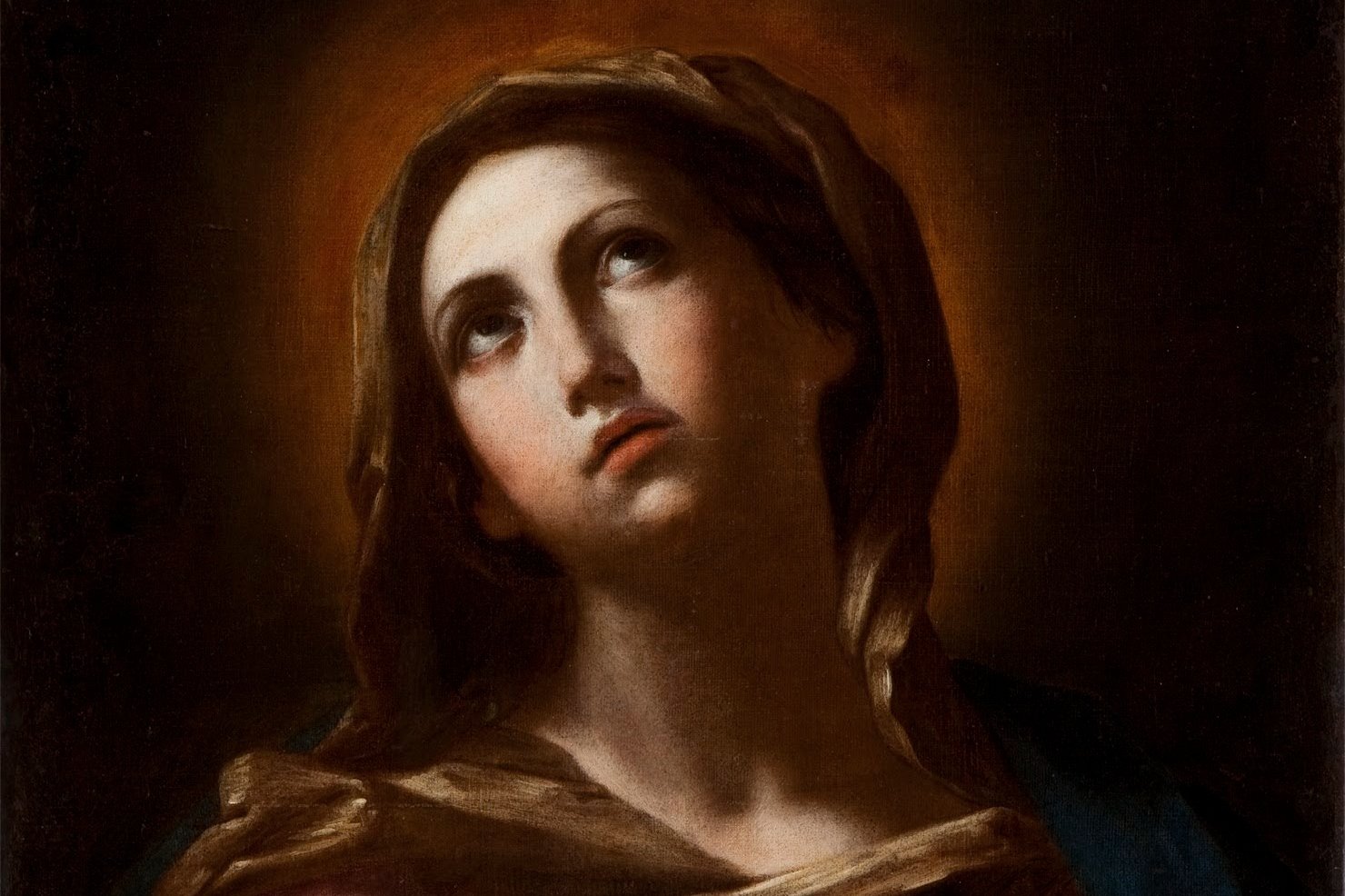
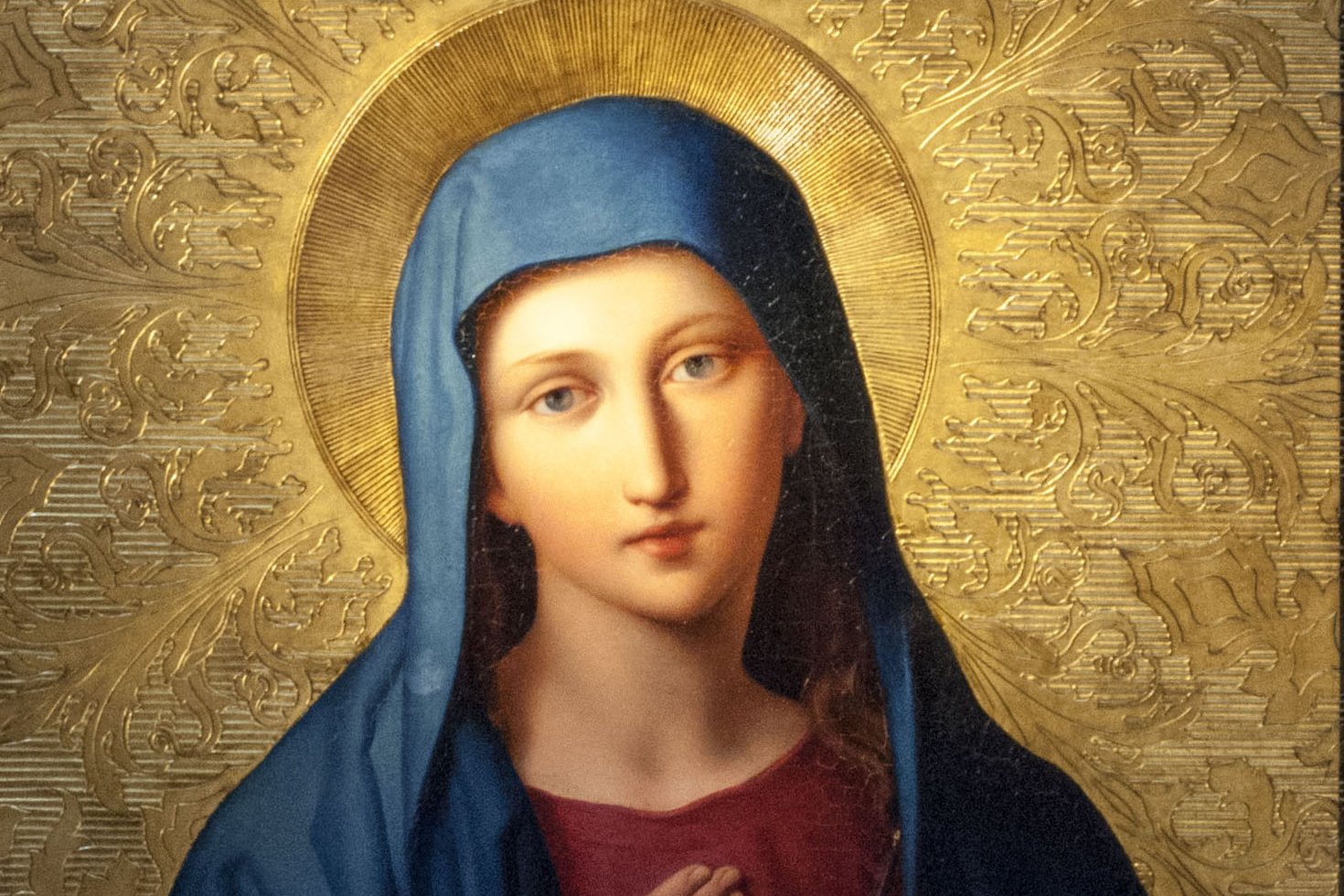
Carlo Dolci, Madonna (Virgin in Prayer), 17th century — public domain.
Medieval monastic communities, whose entire rhythm of life revolved around structured daily and weekly prayer, seem to have been the ones who filled that gap. By around the ninth century, references start appearing in Western European monastic sources to a practice of directing Saturday's votive prayers — that is, prayers offered for a particular devotional intention rather than tied to the assigned readings of the day — toward Mary. The custom wasn't imposed from Rome downward; it grew up organically among communities of monks looking for a fitting way to close out the week before Sunday's celebration of the Resurrection began.
Why Saturday, specifically
Medieval theologians and liturgical writers offered several explanations for the choice of Saturday, and it's worth being honest about which of these are grounded in solid historical reasoning and which are closer to pious tradition dressed up as explanation — the Church has never issued an authoritative single answer, and multiple explanations have circulated side by side for centuries.
The explanation with the deepest hold on popular devotion is this: on the first Holy Saturday, between the crucifixion on Friday and the resurrection on Easter morning, tradition holds that Mary alone among Christ's followers kept unwavering faith that he would rise, even as the apostles scattered and hid. Scripture doesn't record this directly — none of the Gospels describe Mary's state of mind on that particular day — but the tradition draws on the broader biblical portrait of Mary as the disciple whose faith never faltered, going back to her response at the Annunciation itself: "May it be done to me according to your word" (NABRE, Luke 1:38). Medieval writers reasoned that if the entire Church's faith in the Resurrection had, for one day, effectively rested in a single person, it made sense to give that person — Mary — her own weekly day, positioned right before the day that vindicated her faith.
A second, more practical explanation ties the custom to the structure of the monastic week itself. Medieval monasteries typically assigned different votive intentions to different days — prayers for the dead, for the Holy Trinity, for various causes — and by the time this system was well established, Saturday had become associated with Mary partly by process of elimination, since the other more theologically "obvious" days (Sunday for the Resurrection, Friday for the Passion) were already spoken for. Some scholars also point to earlier, pre-Christian associations between Saturday and the planet associated with it in ancient astrology, though the Church's own liturgical sources lean far more heavily on the Holy Saturday explanation than on any astrological one.
From monastery to universal calendar
What began as a localized monastic custom gradually spread into wider Church practice over the following centuries. By the eleventh and twelfth centuries, specific Mass texts for a Saturday votive Mass in honor of Mary — sometimes called the Missa de Sancta Maria in Sabbato — were being composed and circulated among religious communities and eventually parish clergy across Western Europe. Religious orders, particularly the Cistercians and later the Dominicans and Franciscans, helped popularize the custom further, weaving it into their own communal prayer life and, through their preaching, into the devotional habits of ordinary lay Catholics as well.
The custom was eventually incorporated into the official liturgical books of the Roman Rite as an optional observance available on Saturdays that were not already assigned to a specific saint's feast or a solemnity. The 1969 reform of the liturgical calendar, following the Second Vatican Council, retained this observance explicitly: the General Norms for the Liturgical Year and the Calendar names "the Saturday Memorial of the Blessed Virgin Mary" among the Church's recognized commemorations, describing it as a fitting way for the whole Church to honor Mary regularly, not only on her specific feast days scattered through the year.
What the memorial actually involves
In practice, the Saturday Marian memorial is one of the lowest-ranking observances on the Church's calendar — technically an optional memorial, meaning individual priests may choose to celebrate it or may instead use the weekday's regular assigned readings, and it is automatically bumped whenever a higher-ranking feast, solemnity, or a Sunday falls on that date. The Roman Missal provides a set of alternative Mass formularies specifically for this memorial, drawing on language and themes associated with various Marian titles and feasts throughout the year, which gives individual celebrations of it some variety rather than repeating identical prayers every week.
For ordinary Catholics, the memorial rarely draws the kind of attention major Marian feasts like the Assumption or the Annunciation receive — there's no procession, no special decoration, often no announcement at all beyond what appears in the missal. But that quiet, recurring character is arguably the whole point. Rather than marking a single dramatic event in Mary's life the way the major feasts do, the Saturday memorial simply builds a habit of turning toward her, briefly, every single week — a small, steady rhythm inherited from monks who, more than a thousand years ago, decided the week shouldn't end without one day set aside for her.
Trivia
What is the Saturday Memorial of the Blessed Virgin Mary?
Why is Saturday specifically associated with Mary?
Is the Saturday Marian memorial a holy day of obligation?
Which specific title of Mary is used on this memorial?
How old is the custom of a weekly Marian day?
Related Reading