All Saints

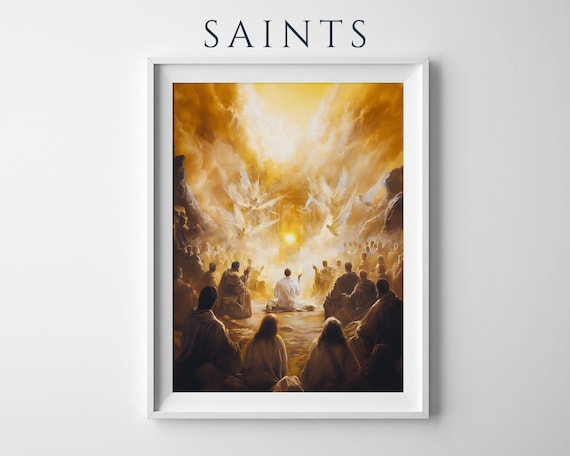
Honoring the saints who never made it onto a calendar
The theological premise behind All Saints Day rests on a simple but significant claim within Catholic teaching: the number of people who have lived holy lives and now share in the glory of heaven vastly exceeds the relatively small number the Church has ever formally recognized through the process of canonization. Canonization is a careful, evidence-based process requiring documented virtue and, in most cases, miracles attributed to the candidate's intercession, and by its nature it can only ever capture a fraction of those who genuinely lived and died in holiness, particularly those who left behind no writings, no witnesses willing or able to testify formally, or no religious community positioned to advocate for their cause centuries later.
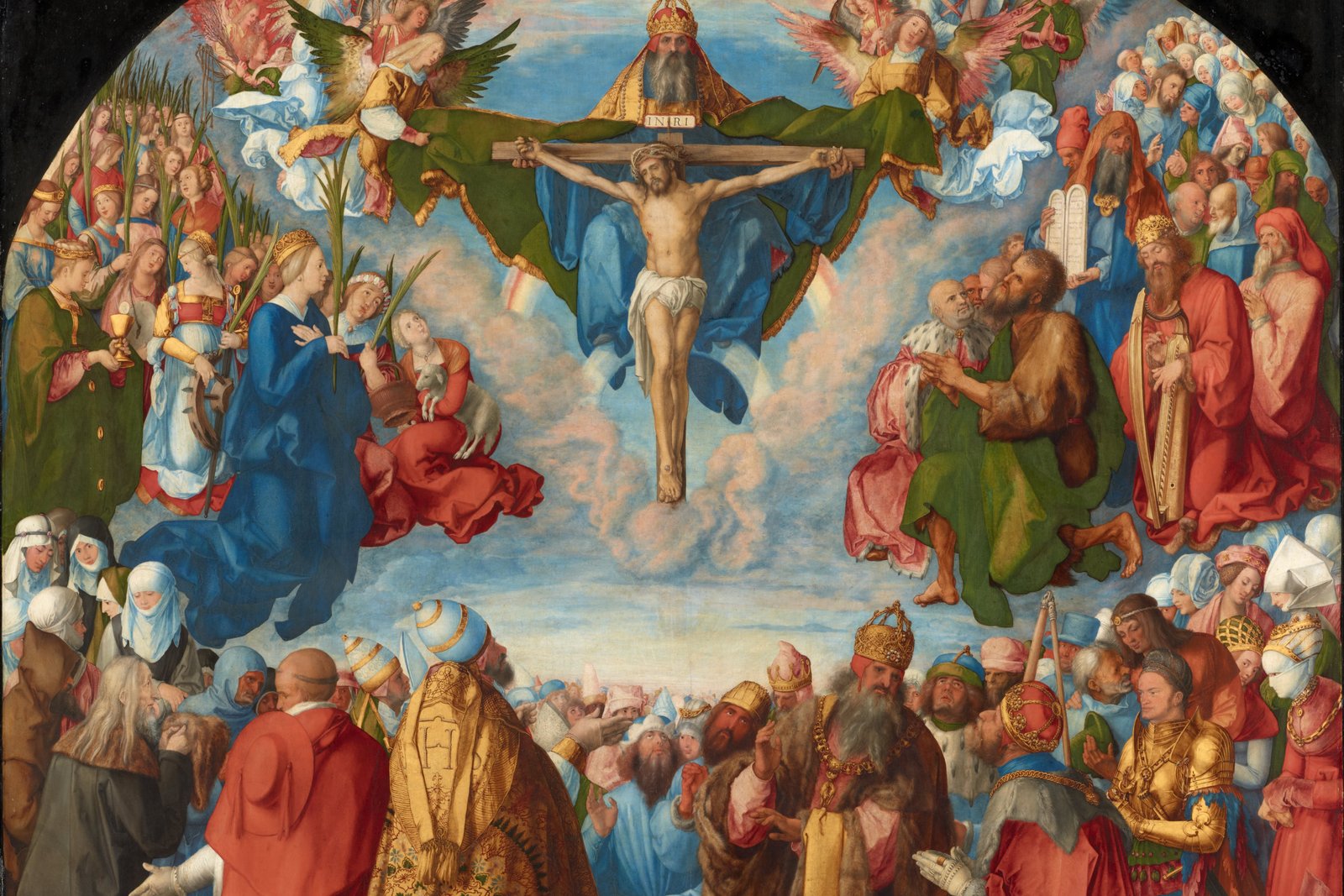
Albrecht Dürer, Adoration of the Trinity (Landauer Altarpiece), 1511 — public domain.
All Saints Day exists specifically to close that gap, offering the Church's collective liturgical honor to every soul in heaven regardless of whether their name survived in any historical record at all. The Book of Revelation's vision of "a great multitude which no man could number," drawn from every nation and tribe, standing before the throne of God, has long been understood by Catholic tradition as a fitting scriptural image for exactly this uncountable communion of the holy dead being honored on a single feast.
From martyr anniversaries to a single unified feast
The roots of the celebration trace back to the early Christian practice of commemorating martyrs individually, typically on the anniversary of their death, understood as their true "birthday" into eternal life. This practice worked well enough when the number of documented martyrs remained relatively small, but as persecution under various Roman emperors intensified, particularly during the third and early fourth centuries, the number of Christians killed for their faith grew far beyond what any individual commemoration calendar could accommodate. Many of these martyrs, especially those killed in large groups during periods of intense persecution, were never individually identified at all, their names lost even as their deaths were witnessed and mourned by surviving Christian communities.
By the early fourth century, some Eastern Christian communities had already begun observing a collective feast honoring all martyrs together, generally celebrated in the period around or shortly after Pentecost. This eastern tradition of a unified commemoration gradually made its way west, and Rome adopted its own version of the practice in the following centuries, at first similarly positioned near Pentecost in the liturgical calendar.
The move to November 1
The date most familiar today, November 1, emerged through a specific historical event in Rome during the eighth century. Pope Gregory III, who reigned from 731 to 741, dedicated a new chapel within Saint Peter's Basilica to all the saints, and the dedication itself took place on November 1, establishing that date as the occasion for Rome's observance of the feast going forward. Roughly a century later, Pope Gregory IV, reigning from 827 to 844, extended the November 1 observance from a purely Roman commemoration to a universal feast binding on the entire Western Church, a decision that cemented the date still observed today.
Some historians have also noted the proximity of November 1 to earlier pre-Christian seasonal observances marking the turn toward winter in parts of northern Europe, including Celtic traditions associated with the end of the harvest season, though the extent to which the Church's choice of date was influenced by, rather than simply coinciding with, these older observances remains a matter of ongoing historical debate rather than settled fact. What is clear is that the vigil of the feast, the evening before November 1, gave rise over time to the word "Halloween," a contraction of "All Hallows' Eve," "hallow" being an older English word for "saint" or "holy person."
The theology of the communion of saints
All Saints Day is closely tied to a broader doctrine central to Catholic belief: the communion of saints, the teaching that all members of the Church, those still living on earth, those undergoing purification after death, and those already enjoying the fullness of heaven, remain spiritually united with one another in a single ongoing communion, capable of praying for and interceding on behalf of one another across that boundary. All Saints Day gives concrete liturgical expression to one part of that doctrine, honoring collectively the members of the Church who have already reached heaven, and implicitly holding them up as models and intercessors for those still living.
The feast also carries a distinctly democratic theological undertone within Catholic spirituality: it insists that sanctity is not the exclusive property of the relatively small number of individuals the Church has formally canonized, but a real possibility, and in the Church's teaching a genuine calling, for every baptized Christian regardless of visible historical recognition. The Second Vatican Council's twentieth-century emphasis on the "universal call to holiness," addressed to laypeople and religious alike, echoes this same underlying conviction that the vast majority of the saints in heaven almost certainly lived and died in circumstances no different from the ordinary faithful still worshiping in parishes today.
How the feast is observed
All Saints Day is celebrated with a Mass proper to the solemnity, and in many countries it carries the weight of a holy day of obligation, requiring Catholic attendance at Mass in the same way Sundays do, although the specific obligation status varies by country and, in some cases, by whether the date falls near a weekend. In much of Latin Europe and Latin America, the feast is closely associated with visiting and tending family graves, a practice that often blends the observance of All Saints Day with the following day's commemoration, All Souls Day, into a single extended period of remembrance for both the canonized dead and one's own deceased relatives. In many parish communities, the feast is also marked by naming saints after whom children were baptized, or by readings and homilies drawing on the Beatitudes from the Gospel of Matthew, traditionally proclaimed as the Gospel reading for the day, framing the pattern of life that leads, according to Catholic teaching, toward the sainthood the feast celebrates.
Trivia
What is All Saints Day?
Why did the Church establish a single feast for all the saints?
How did All Saints Day come to be celebrated on November 1?
What is the difference between All Saints Day and All Souls Day?
Is All Saints Day a holy day of obligation?
Related Reading