Jesus Christ the High Priest

A priesthood built on both exaltation and solidarity
Of all the New Testament's writings, the Epistle to the Hebrews offers the most sustained argument for understanding Jesus specifically as a priest. It opens the case with a striking pairing: "Therefore, since we have a great high priest who has passed through the heavens, Jesus, the Son of God, let us hold fast to our confession." (Hebrews 4:14, RSV-CE). The priesthood being described here is unusual from the start — not a distant, ceremonial office, but grounds for the audience's own confidence and perseverance.
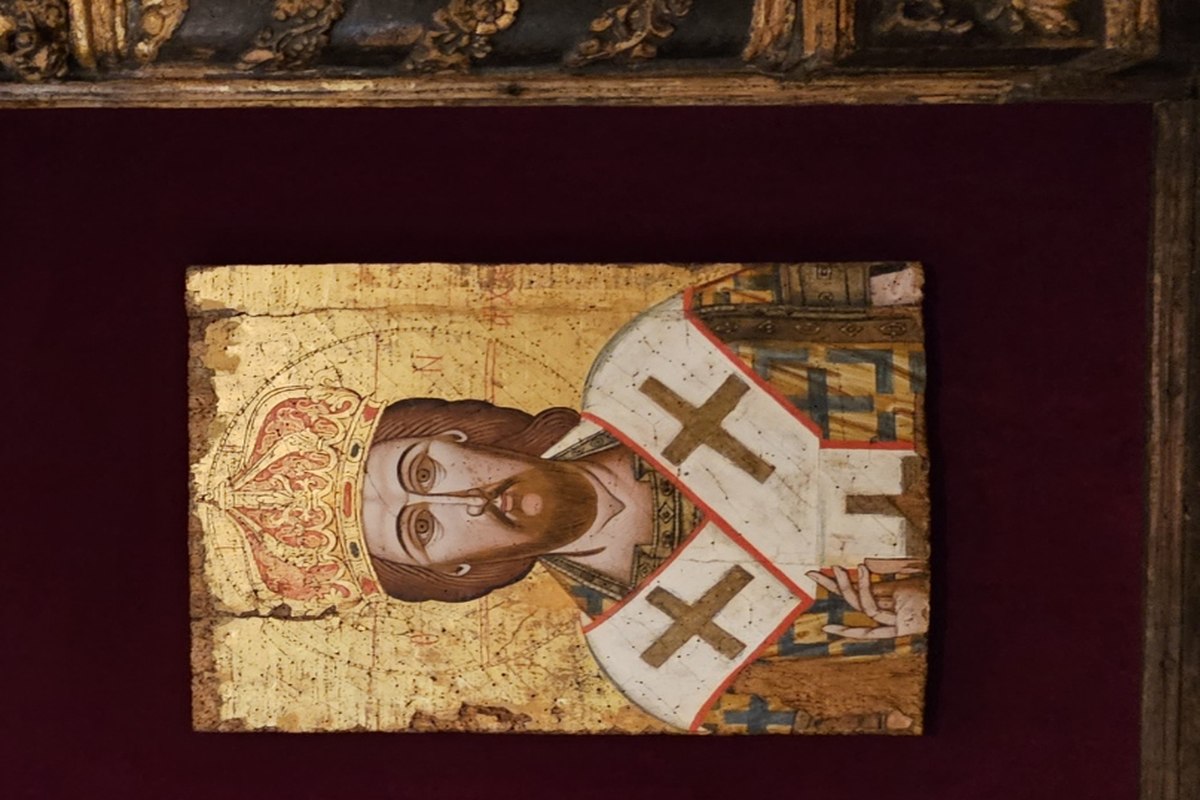
Russian icon, Christ the Great High Priest (Ushakov school) - Wikimedia Commons, public domain
A priest who has actually felt what he intercedes for
What sets this priesthood apart most sharply from the Levitical priesthood it succeeds is a claim of shared experience: "For we do not have a high priest who is unable to sympathize with our weaknesses, but one who has similarly been tested in every way, yet without sin." (Hebrews 4:15, RSV-CE). The argument isn't that Jesus observes human weakness from a distance. It's that he has been tested by the same pressures everyone else faces, without the outcome of sin that typically follows — a priest whose sympathy rests on direct experience, not detached authority.
The mysterious king-priest behind the argument
Melchizedek himself appears only briefly in the Old Testament, in Genesis 14, where he is introduced simply as "Melchizedek, king of Salem," who "was a priest of God Most High" and blessed Abram, after which "Abram gave him a tenth of everything" (Genesis 14:18-20, NABRE, as cited in Hebrews 7:1-2). Hebrews makes much of what the text does not say about him: no recorded father, mother, or genealogy, no stated beginning or end to his life — details the author reads typologically, "thus made to resemble the Son of God, he remains a priest forever" (Hebrews 7:3, NABRE). It's a case built as much on scriptural silence as on scriptural statement — Melchizedek's priesthood, unlike the Levitical one, isn't inherited by bloodline at all, which is precisely why Hebrews can use him to describe a priesthood that doesn't depend on descent from Aaron.
A priesthood older than Israel's own priestly line
To make its case for why this priesthood supersedes the traditional Levitical one, Hebrews draws on Psalm 110, arguing that the Messiah's priesthood follows "the order of Melchizedek" — a priest-king from Genesis who predates the entire Levitical system altogether. By tracing Christ's priesthood to a figure older than Israel's own priestly lineage, the epistle argues for a priesthood that supersedes rather than merely continues what came before it, offering, in the author's account, a definitive sacrifice rather than the repeated offerings the old system required.
An invitation, not just a title
The whole argument closes on a strikingly practical note: "So let us confidently approach the throne of grace to receive mercy and to find grace for timely help." (Hebrews 4:16, RSV-CE). The point of describing Christ's priesthood in such careful theological detail isn't abstract doctrine for its own sake — it's permission. A high priest who has personally faced temptation, the passage argues, is exactly the kind of priest someone in need should feel free to approach without hesitation.
Why the old priesthood needed replacing at all
To grasp why Hebrews spends so much effort making this case, it helps to remember what the Levitical priesthood actually required. Under the Law given through Moses, only descendants of Aaron's tribe could serve as priests, and the high priest himself had to offer sacrifices "for his own sins and then for those of the people" (Hebrews 7:27, RSV-CE) — an admission built into the office itself that these priests were as flawed as the people they served. The sacrifices were also repeated endlessly: year after year, the same offerings for the same recurring problem, never quite settling the debt for good. Hebrews argues that Christ's priesthood breaks this cycle by offering himself "once for all" (Hebrews 7:27, RSV-CE) — a single, sufficient sacrifice rather than an unending series of partial ones. This is also where the epistle connects to the Last Supper and the institution of the Eucharist, discussed in the article on that event, since the Church has long read the Eucharist as the ongoing memorial of that single, sufficient offering.
A living priesthood, not a finished transaction
Hebrews doesn't present Christ's priestly work as something completed and shelved. It describes him as continuing to intercede: "Therefore, he is always able to save those who approach God through him, since he lives forever to make intercession for them." (Hebrews 7:24-25, RSV-CE). The image is less like a judge who ruled once and moved on, and more like an advocate still actively present on behalf of the people he represents — which is part of why the epistle keeps circling back to confidence and access rather than fear, urging its readers toward the throne of grace rather than away from it.
Christ the King and Christ the High Priest
The title "high priest" sits alongside other titles the New Testament gives Jesus — shepherd, king, teacher — each highlighting a different facet of the same person rather than competing claims. Readers interested in how the Church has understood Christ's kingship specifically can find that theme explored in Jesus Christ the King. Byzantine iconography, including the icon that illustrates this article, often merged the priestly and royal images directly: Christ is shown wearing not simple priestly vestments but an ornate bishop's robes and a crown, visually asserting that his priesthood and his kingship are the same reality seen from two angles — a visual argument that predates, and runs parallel to, the written one Hebrews makes in words.
Trivia
What does it mean that Jesus is a 'great high priest'?
Why is Jesus's priesthood described as sympathetic to human weakness?
What is the 'order of Melchizedek' associated with Christ's priesthood?
What is the practical result of having this kind of high priest?
Related Reading