Old Testament Stories Every Catholic Should Know

Why these stories still matter
Catholics don't read the Old Testament the way a historian reads an old chronicle, filing it away as background. The Catechism is direct about this: the books of the Old Covenant remain permanently valuable Scripture, never revoked by the New (CCC 121). Jesus quoted these stories, prayed the Psalms built on them, and was, in the Gospels' own telling, recognized by his first followers as fulfilling what "Moses and all the prophets" had already said about him. Reading Genesis, Exodus, Judges, and Kings well is not optional background reading — it's the shared vocabulary the whole of Christian faith is written in.
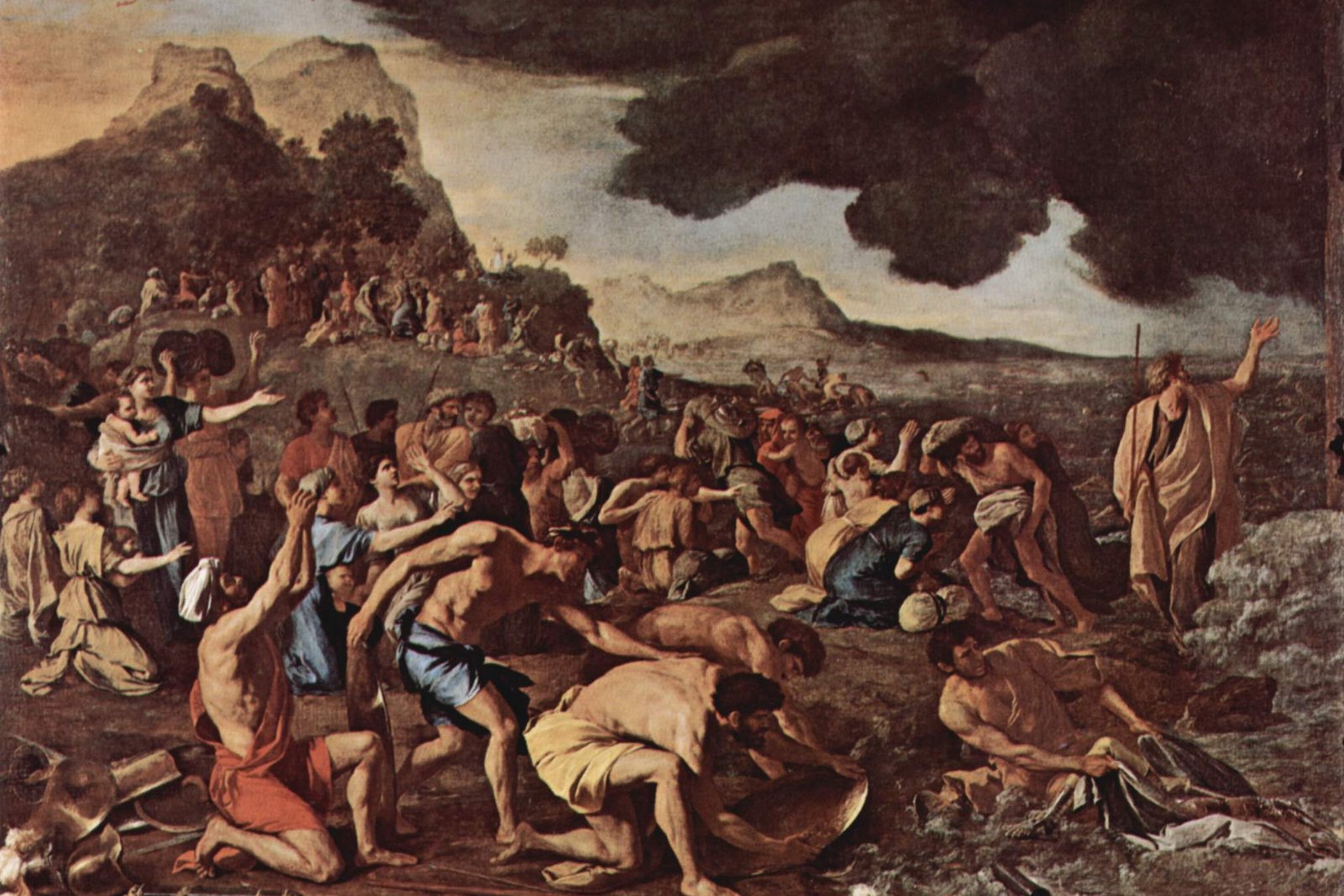
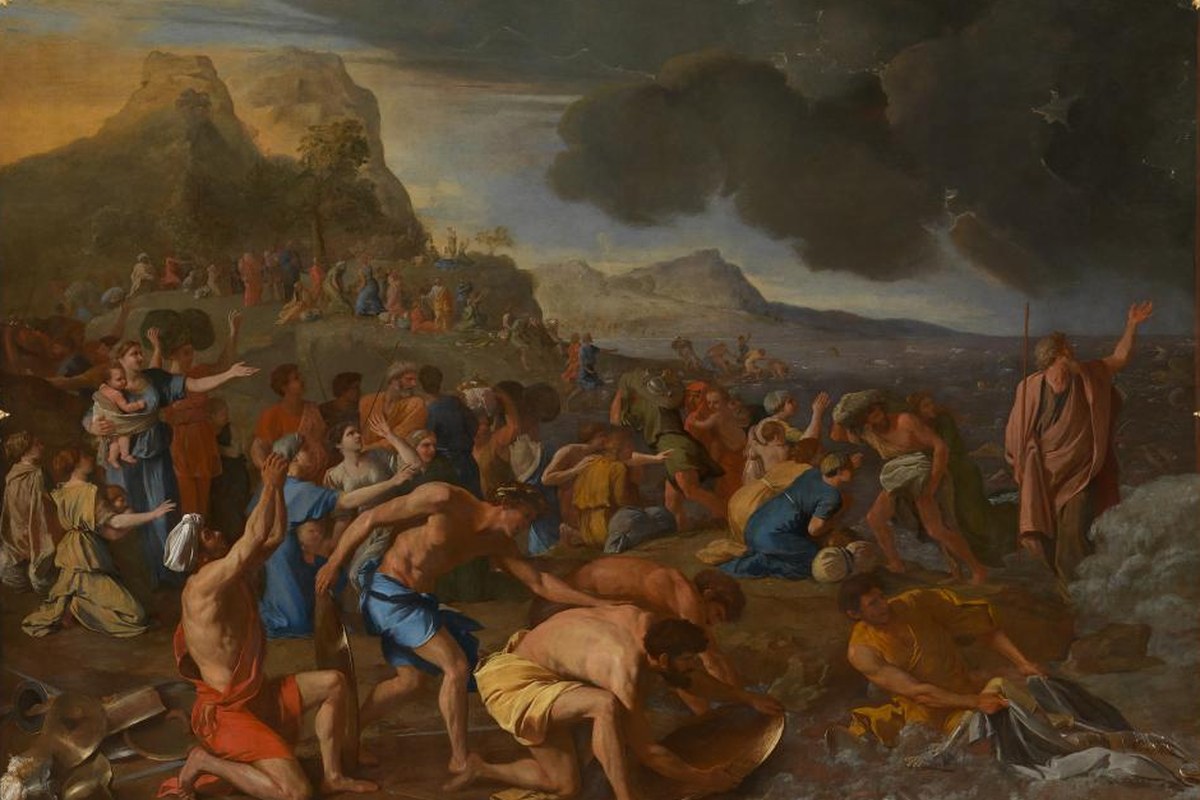
Nicolas Poussin, The Crossing of the Red Sea, c. 1633–1637 — public domain.
There's also a simpler reason these narratives endure: they're just good stories, full of family rivalry, unlikely reversals, moral tests, and characters who fail and are forgiven anyway. Below is a guided tour through the essential ones, grouped roughly by where they sit in salvation history.
Genesis: origins, family, and failure
Genesis opens with creation itself — including the creation of the stars and moon, the fourth day's work separating light from darkness and setting the heavenly bodies to mark seasons and years. But Genesis moves quickly from cosmic origins to a much smaller, messier scale: family.
- Adam and Eve: The Fall — the first sin and the first promise of redemption, read by the Church as the origin of humanity's fractured relationship with God that the rest of Scripture works to heal.
- Cain and Abel — the first murder, born from unchecked jealousy between brothers, and God's haunting question, "Where is your brother?"
- Jacob and Esau: The Stolen Birthright — twin brothers, a bowl of stew, and a deception that reshapes the entire covenant line descending from Abraham.
- Joseph Interprets Pharaoh's Dreams — the brother sold into slavery who rises to save Egypt, and eventually his own family, from famine — a story the Church has long read as prefiguring Christ's own betrayal turned to salvation.
Exodus and the Judges: a people set free, and slow to trust
Exodus is the hinge of the whole Old Testament — the story Israel would return to again and again as proof of who God is. It begins in captivity and ends with a law and a covenant.
- The First Passover — the night the angel of death "passed over" every house marked with the blood of a lamb, an event the Church reads as a direct foreshadowing of the Eucharist and Christ's own sacrifice.
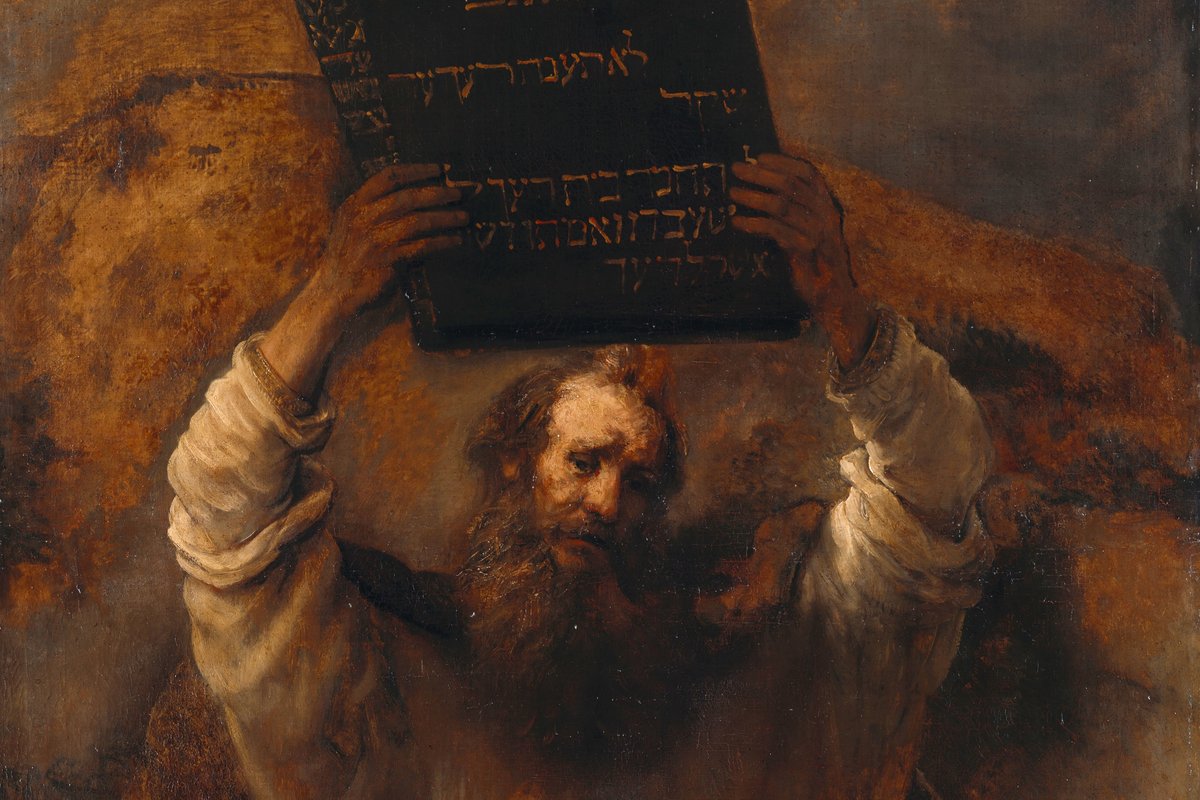
- The Ten Commandments at Sinai — the moral law given to a newly freed people, still the backbone of Catholic moral catechesis today.
After the Exodus comes the often-overlooked Book of Judges, where Israel repeatedly drifts from God and is rescued by flawed, unlikely leaders.
- Gideon and the Fleece — a reluctant judge who tests God's call not once but twice, using a wool fleece left out overnight, before leading a tiny army to an improbable victory.
- Balaam's Donkey — a foreign prophet hired to curse Israel, stopped in his tracks by his own donkey, who sees the angel blocking the road before Balaam does.
- Ruth and Naomi — a Moabite widow's loyalty to her Israelite mother-in-law, and a quiet story of faithfulness that places a foreign woman directly in the ancestral line of King David — and later, of Christ.
Kings, prophets, and wisdom
By the time Israel asks for a king, the story shifts from tribal survival to national rise and fall — and to some of Scripture's most vivid individual portraits.
- Samuel — the last of the judges and the prophet who anointed both Saul and David, called by God as a boy sleeping in the temple at Shiloh.
- Saul and the Witch of Endor — Israel's first king, abandoned by God's favor, resorting on the eve of his final battle to consulting a medium in direct violation of the very law he once enforced.
- Solomon — David's son, remembered for his God-given wisdom, his building of the Jerusalem Temple, and the later fall brought on by his own divided loyalties.
- Job — the man whose suffering became Scripture's most searching meditation on why the innocent suffer, and what it means to trust God without receiving an answer.
- Jonah — the prophet who fled his own calling, was swallowed by a great fish, and preached to Nineveh anyway — a story about mercy extended further than the prophet himself wanted it to go.
- Tobit and the Angel Raphael — a devout, blinded man, his son's journey guided by an angel in disguise, and a story about patience rewarded that has made Raphael a byword for healing and safe travel ever since.
These narrative books sit alongside the major prophetic voices — Isaiah, Jeremiah, Ezekiel, and others — who interpreted Israel's history as it happened and pointed forward to what God still intended to do. For a closer look at those figures specifically, see Old Testament Prophets Every Catholic Should Know.
Reading these stories as a Catholic today
None of this is meant to be read the way a novel is read once and shelved. The Sunday Lectionary deliberately pairs an Old Testament reading with the Gospel almost every week specifically because the Church wants worshippers to hear the pattern: promise and fulfillment, sin and mercy, exile and return. Recognizing Joseph's betrayal behind Christ's own, or the Passover lamb behind the altar, isn't a scholarly exercise reserved for theologians — it's simply what it means to read Scripture the way the Church has always read it, as one connected story rather than two separate books stitched together.
That doesn't mean flattening every genre into strict history. Genesis's early chapters, the poetic Book of Job, and the historical narratives of Kings aren't all doing the same literary work, and the Church has always read them according to what kind of writing each one actually is. What stays constant across all of them is the conviction that this library — family failures, unlikely rescues, kings who rise and fall, a donkey that sees an angel before its rider does — is still speaking, not just recording what once happened.
Trivia
Why do Catholics still read the Old Testament if the New Covenant supersedes it?
What does it mean to call an Old Testament figure a 'type' of Christ?
How much of the Old Testament actually appears in the Catholic Mass?
Are all these stories meant to be read as literal history?
Where should someone start if they want to read the Old Testament more seriously?
Related Reading