Feast of Our Lady of the Rosary: Its Lepanto Origin

A pope, a fleet, and a prayer request
By the autumn of 1571, the eastern Mediterranean had become the front line of a decades-long conflict between the Ottoman Empire and a shifting coalition of European Christian states. That summer, Pope Pius V worked to assemble the Holy League, an alliance of Spain, Venice, the Papal States, and several smaller Italian powers, pulling together a fleet meant to check continued Ottoman naval expansion into the western Mediterranean. Knowing the odds facing the assembled ships were far from certain — the Ottoman fleet was larger and, in several respects, more experienced — Pius V asked Catholics across Europe who could do nothing to affect the battle directly to pray the Rosary instead, specifically requesting the devotion be offered on the day the fleets were expected to meet.
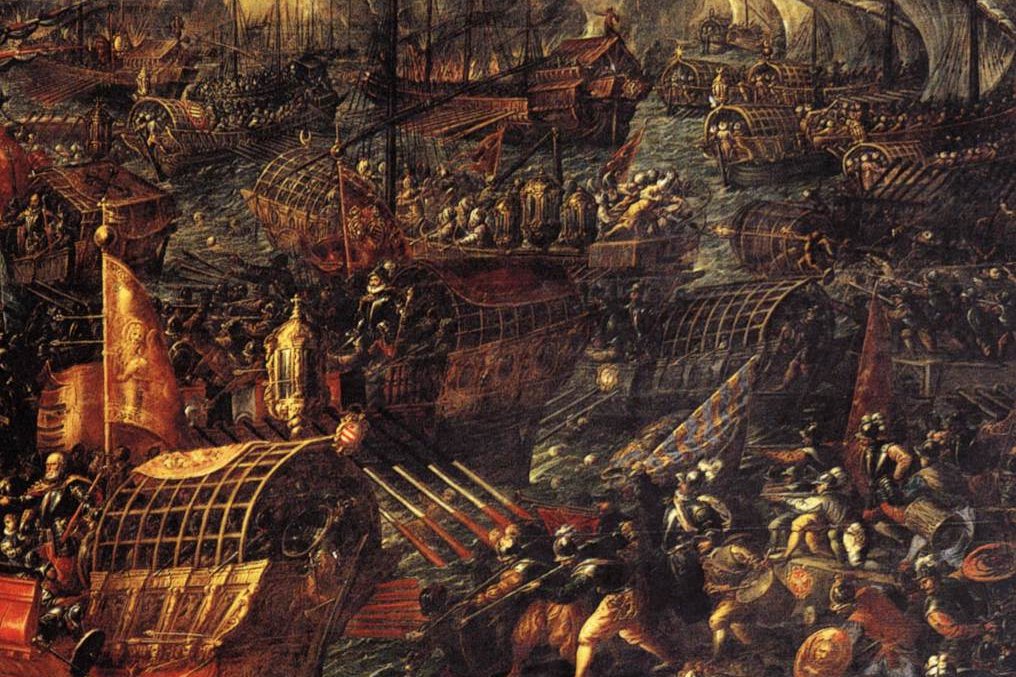
Andrea Vicentino, Battle of Lepanto (detail), c. 1603, Doge's Palace, Venice — public domain.
On October 7, 1571, in the Gulf of Patras near the Greek town of Lepanto, the Holy League fleet engaged the Ottoman navy in a battle that would become one of the largest naval engagements fought entirely by oar-powered galleys in Western history. Against expectations, the Holy League achieved a decisive victory, effectively halting the immediate westward advance of Ottoman naval power in the Mediterranean. When news reached Rome, Pius V did not credit naval strategy or the individual commanders. He attributed the outcome directly to the Rosary prayers offered that day across Christian Europe, framing the unexpected victory as a demonstration of Mary's intercessory power exercised through that specific form of prayer.
From battlefield gratitude to a permanent feast
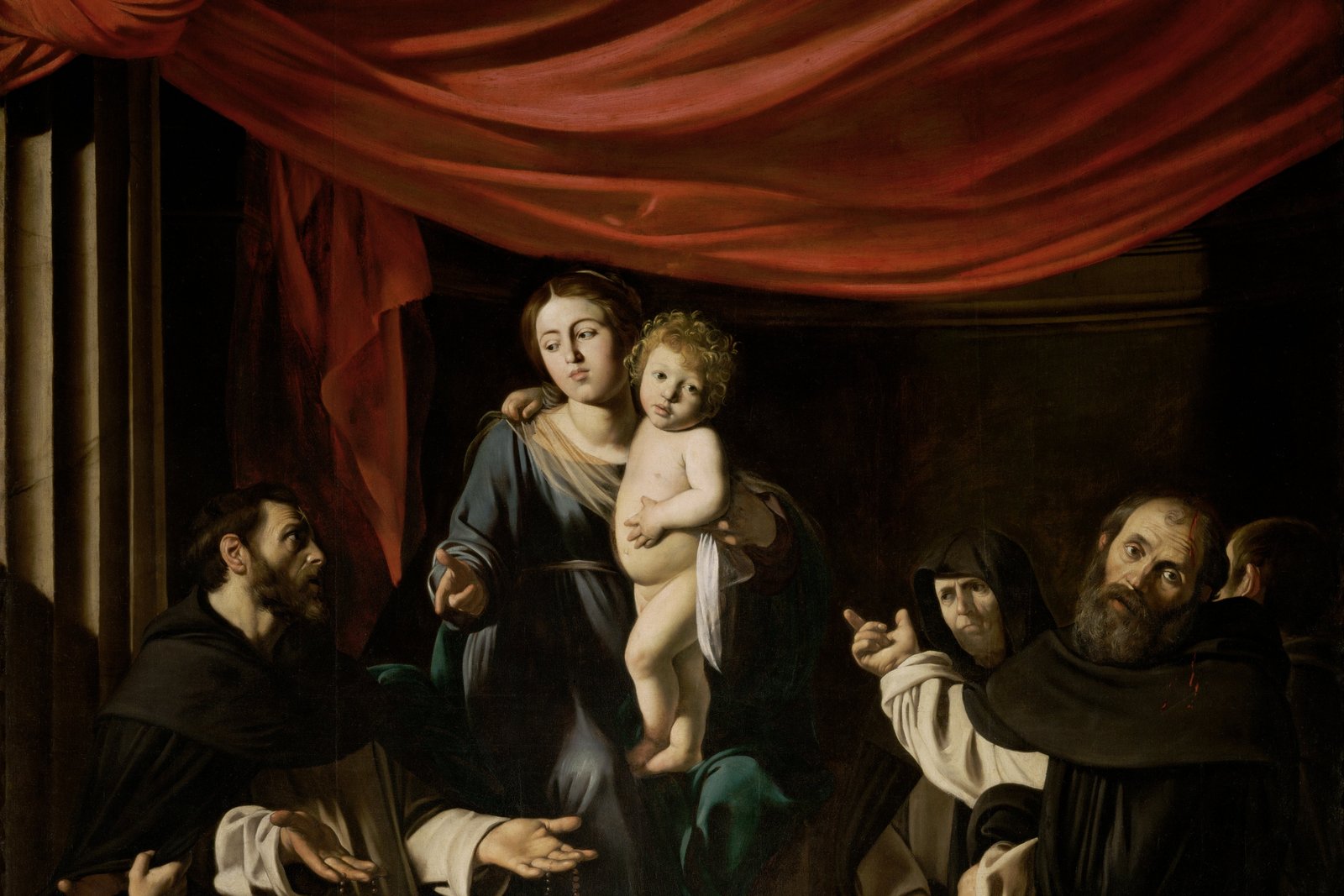
The following year, in 1572, Pius V established a liturgical feast to mark the anniversary of the battle, initially under the title Our Lady of Victory — a name that placed the military outcome front and center. His successor, Pope Gregory XIII, revised the feast shortly afterward, renaming it Our Lady of the Rosary and shifting its emphasis away from the battle itself and toward the prayer devotion the Church credited with the victory. This distinction matters: the feast as it has come down through the centuries is fundamentally about the Rosary as a spiritual practice, with Lepanto serving as the historical occasion that prompted its institution rather than as the ongoing focus of the observance.
The feast's date and precise framing shifted somewhat over the following centuries as the broader Catholic liturgical calendar was revised, but October 7 has remained its consistent anchor point since the late 16th century, tying the annual observance permanently to the anniversary of the 1571 battle even as the feast's spiritual meaning broadened well beyond that single military event.
The Rosary before and after Lepanto
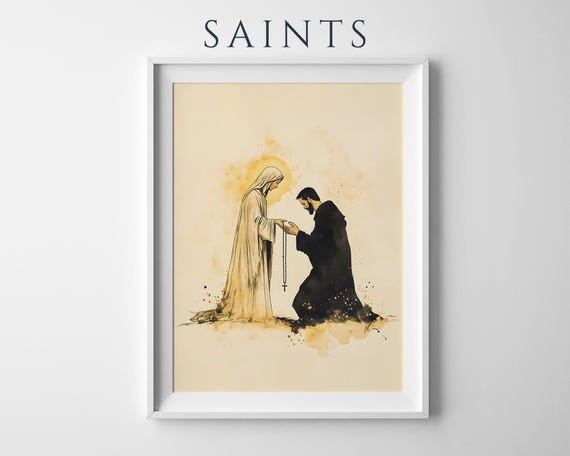
The Rosary devotion itself long predates the Battle of Lepanto — tradition, though not verified history, connects its origin to Saint Dominic in the 13th century, and the practice of praying repeated Hail Marys structured around meditative "mysteries" from the life of Christ and Mary had developed gradually across the medieval period, well before Pius V ever called on Catholics to pray it in 1571. What Lepanto did was give the existing devotion a dramatic, widely publicized moment of perceived efficacy — a single, datable event that the Church could point to as evidence, in the eyes of the faithful, that the prayer mattered.
That framing helped cement the Rosary's place at the center of ordinary Catholic devotional life for centuries afterward, reinforced repeatedly by later popes who continued to promote the practice and, at points, connected it to other moments of perceived crisis or deliverance. Readers wanting a full walkthrough of how the devotion itself works today — the beads, the prayer sequence, and the four sets of Mysteries prayed on different days of the week — can find that in the companion guide, How to Pray the Rosary, while The Rosary Mysteries covers the scriptural scenes meditated on during each decade.
How the feast is marked today
October 7 remains part of the universal Catholic liturgical calendar, observed with a Mass and readings tied to the feast, and many parishes mark the day with a special emphasis on communal or public Rosary recitation, sometimes including outdoor processions in areas with strong local Rosary devotion traditions. The month of October more broadly has come to be associated with the Rosary in Catholic practice, with many parishes encouraging daily Rosary prayer throughout the month, radiating outward from the specific October 7 feast day into a season-long emphasis on the devotion.
The feast also carries an important reminder about how the Catholic tradition frames the relationship between prayer and historical events: the Church does not present the Lepanto connection as a claim that can be scientifically proven, but as an article of pious belief — a conviction, expressed through the feast's continued observance nearly 500 years later, that intercessory prayer offered in community carries real spiritual weight, whatever else was also true about the ships, the winds, and the commanders on the water that October day.
Trivia
What is the Feast of Our Lady of the Rosary, and when is it celebrated?
What was the Battle of Lepanto, and why is it tied to this feast?
Did Pope Pius V establish the feast immediately after the battle?
How is this feast different from the Rosary devotion itself?
Is the Lepanto connection considered historical fact or pious tradition?
Related Reading