The Mysteries of the Rosary — Joyful, Sorrowful, Glorious, and Luminous

A prayer built to be repeated
The Hail Mary said on a single strand of beads can sound, to an outsider, like a prayer running on autopilot. But Catholic tradition has never treated the repetition as the point. The beads exist to free the mind from counting so it can rest somewhere else entirely — on a scene from the Gospel, held in the imagination for the length of ten Hail Marys, called a decade. String five decades together around a single theme and you get one of the four sets of Rosary "mysteries." Pray all four sets — twenty decades in total — and you've moved through the entire arc of the Christian story, from the angel's visit to Mary in Nazareth to her coronation in heaven.
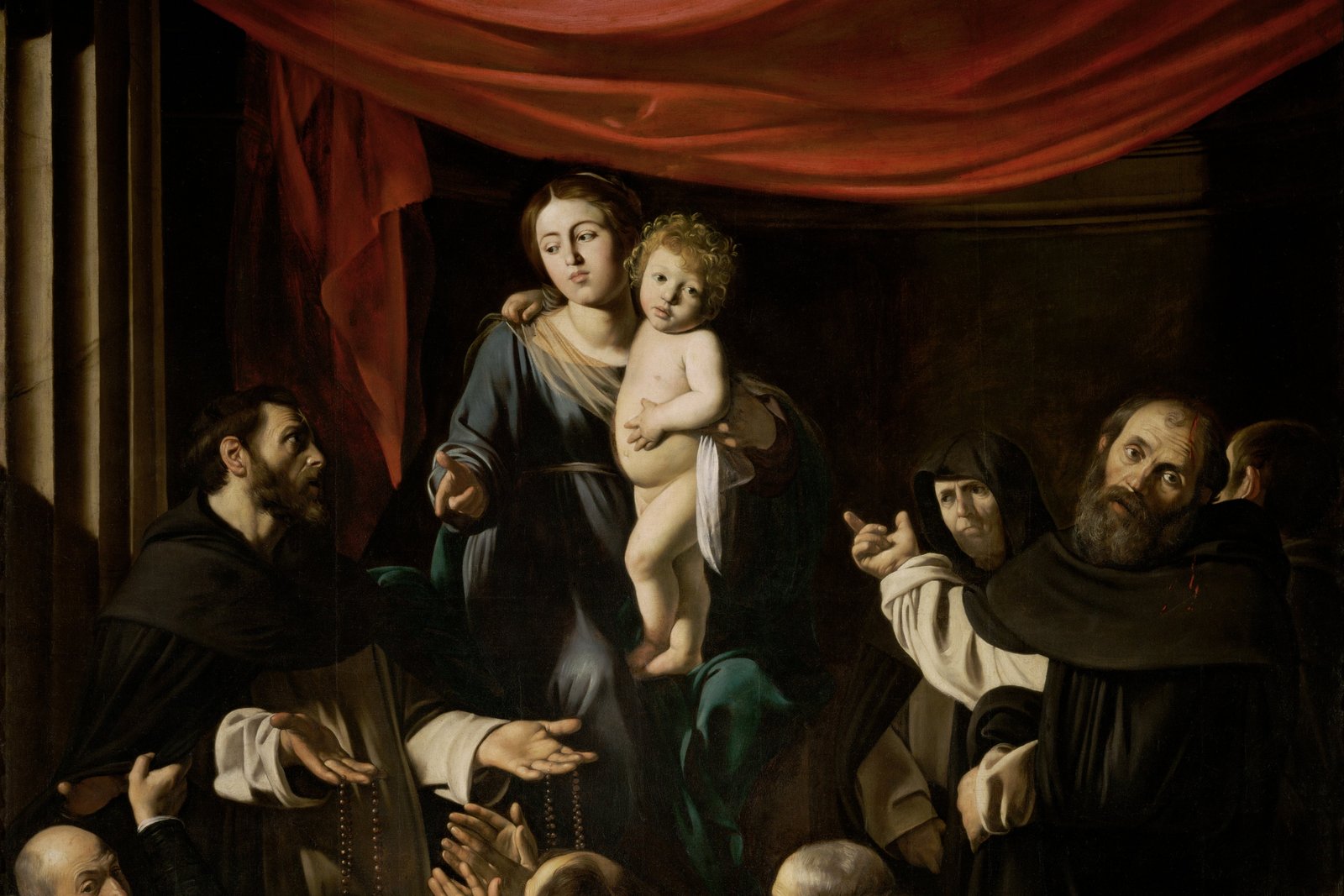
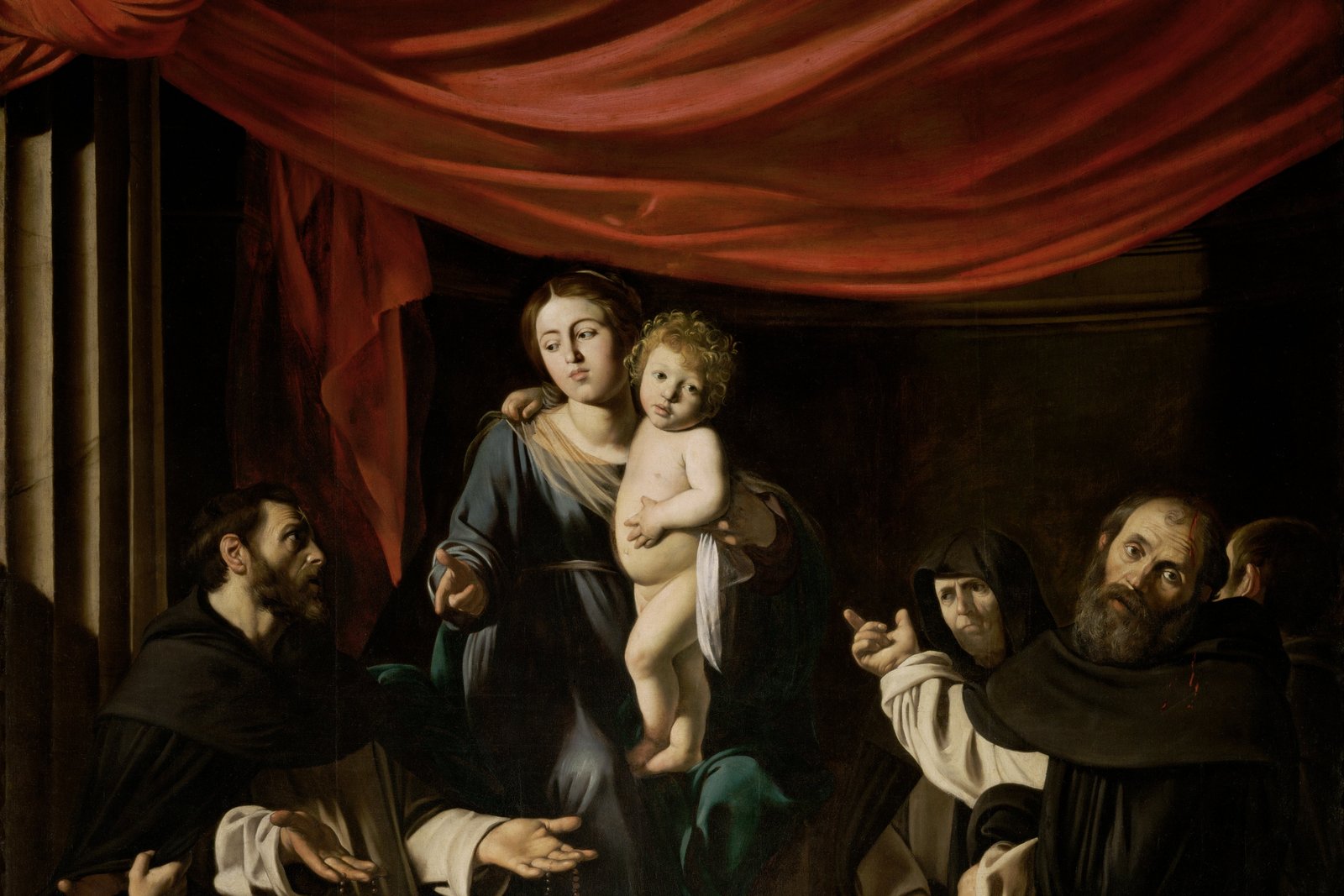
Caravaggio, Madonna of the Rosary, 1605–1607 (public domain)
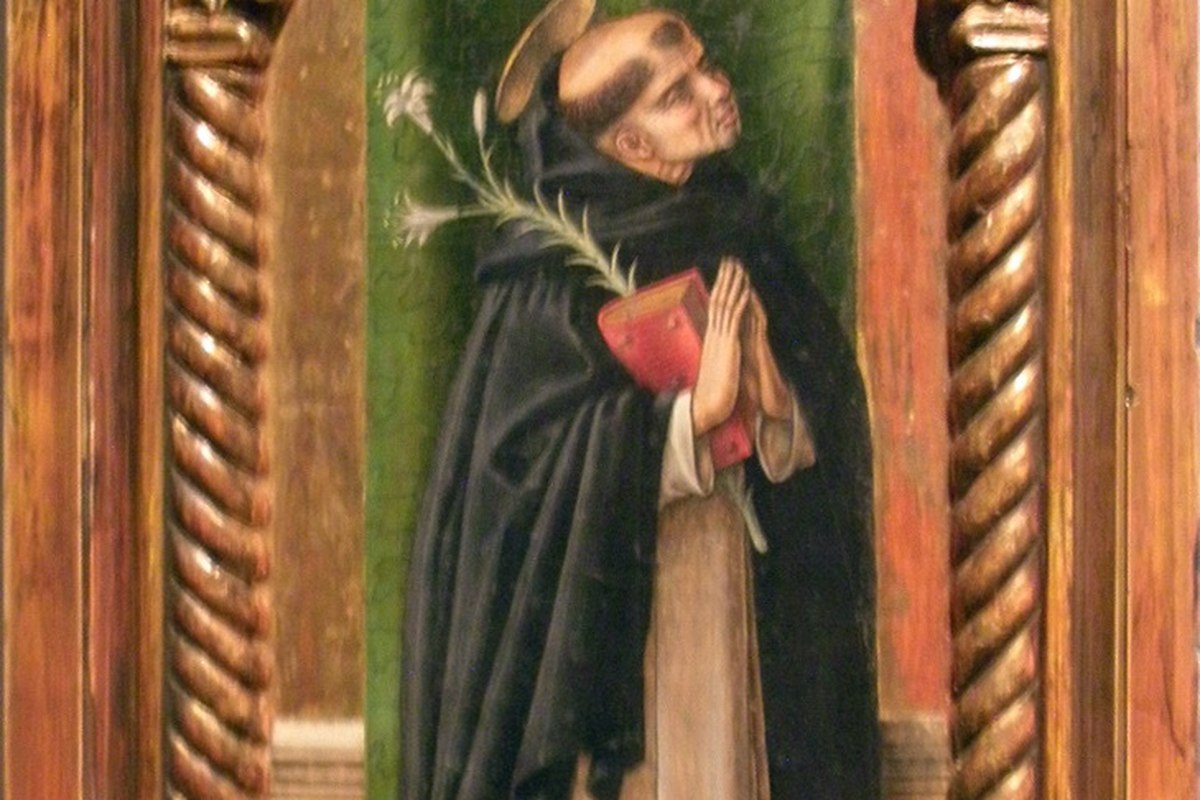
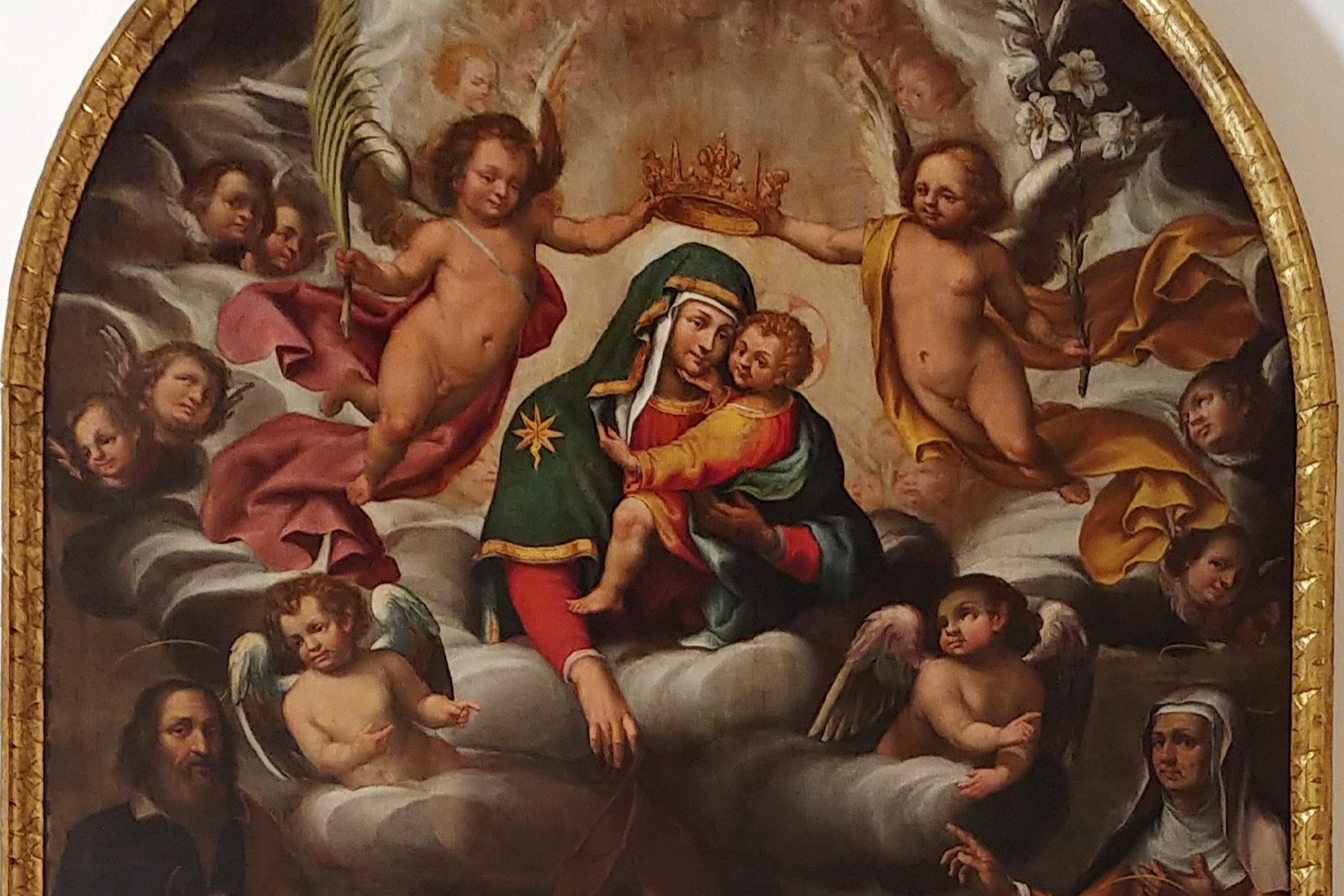
The devotion's popular origin story credits Our Lady herself with handing the Rosary to Saint Dominic in the thirteenth century, a scene told at length in Our Lady Gives the Rosary to Saint Dominic. Historians trace a more gradual development — knotted prayer cords, medieval "Marian psalters" of 150 Hail Marys mirroring the 150 psalms, and a slow settling into the fifteen-decade structure that held for centuries before Pope John Paul II added a sixteenth.
The Joyful Mysteries
Traditionally prayed on Mondays and Saturdays, the Joyful Mysteries follow the opening chapters of Luke's Gospel: the Annunciation, when the angel Gabriel tells Mary she will bear the Son of God; the Visitation, her journey to see her cousin Elizabeth; the Nativity of Jesus in Bethlehem; the Presentation of the child Jesus in the Temple; and the Finding of the Boy Jesus in the Temple after three days of searching.
The Sorrowful Mysteries
Prayed traditionally on Tuesdays and Fridays, these move through the Passion: the Agony in the Garden of Gethsemane, the Scourging at the Pillar, the Crowning with Thorns, Jesus Carrying the Cross, and the Crucifixion and Death of Jesus.
The Glorious Mysteries
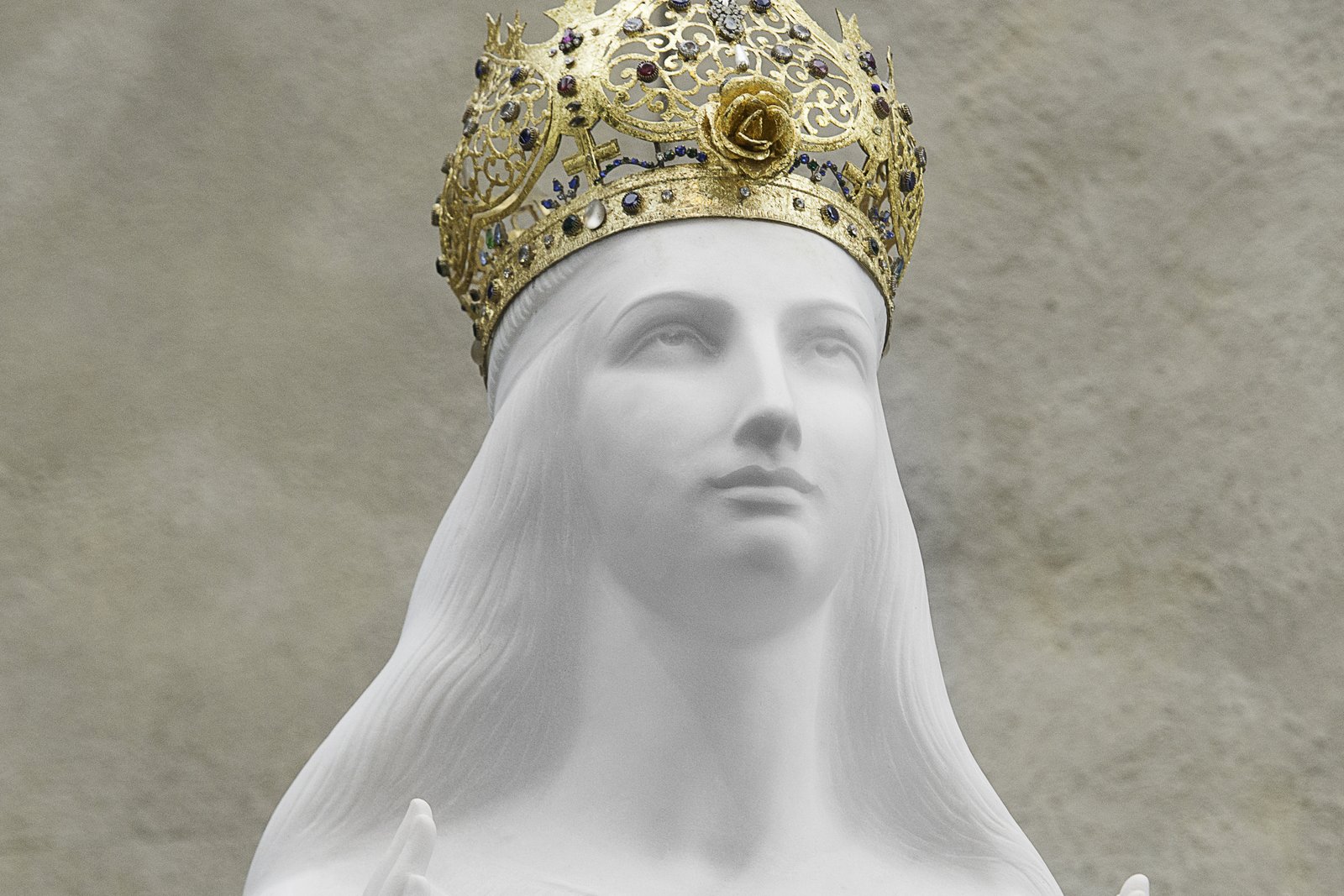
Prayed on Wednesdays and Sundays, the Glorious Mysteries look past the tomb: the Resurrection of Jesus, his Ascension into heaven, the Descent of the Holy Spirit upon the apostles at Pentecost, the Assumption of Mary body and soul into heaven, and her Coronation as Queen of Heaven and Earth.
The Luminous Mysteries — a twentieth-century addition
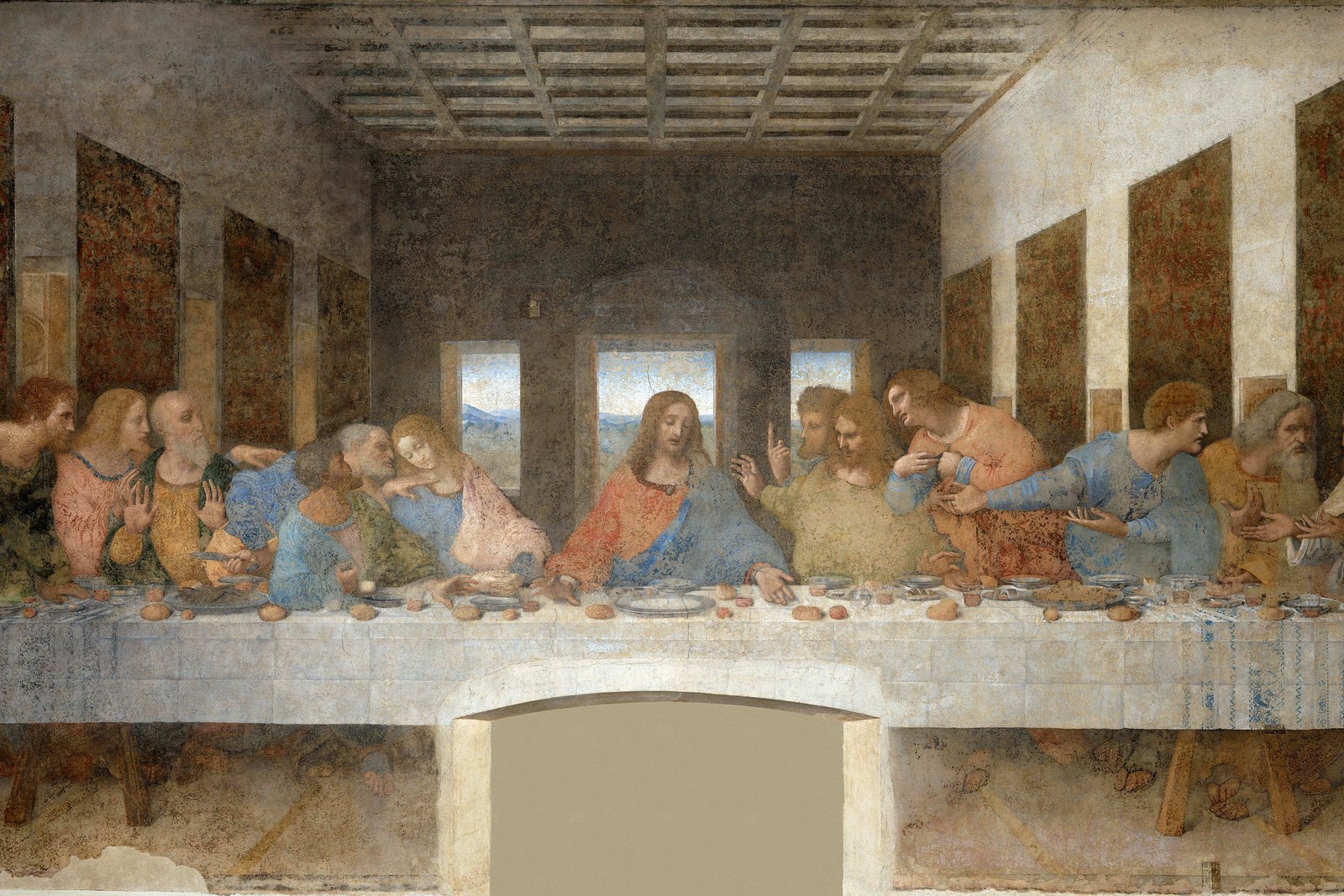
For centuries the Rosary had only fifteen decades. That changed in October 2002, when Pope John Paul II published the apostolic letter Rosarium Virginis Mariae and introduced a fourth set: the Luminous Mysteries, or Mysteries of Light, prayed traditionally on Thursdays. He noted a real gap in the existing sequence — the Joyful Mysteries end with Jesus as a boy in the Temple, and the Sorrowful Mysteries pick up decades later with his adult Passion, leaving his entire public ministry unrepresented in the Rosary's structure. The five Luminous Mysteries fill that gap: Christ's Baptism in the Jordan, his self-manifestation at the wedding at Cana, his proclamation of the Kingdom of God with the call to conversion, his Transfiguration on Mount Tabor, and his institution of the Eucharist at the Last Supper. It's the only one of the four sets with a documented modern origin rather than a centuries-old devotional pedigree, and John Paul II was explicit that he was proposing it, not mandating it — a genuinely new addition to a very old prayer.
What the beads themselves are for
A standard five-decade rosary starts at a small crucifix, followed by a short run of beads used for the Apostles' Creed, an Our Father, and three Hail Marys traditionally offered for an increase in faith, hope, and charity. From there, the prayer settles into its main rhythm: an Our Father on a single larger bead, ten Hail Marys on the smaller beads that follow, a Glory Be, and — in a practice popularized after the Marian apparitions at Fatima in the early twentieth century — a short prayer asking Christ to "lead all souls to heaven," often called the Fatima Prayer. That whole unit is a single decade, meditated on one mystery, and repeated five times to complete one full set. The physical repetition of the beads is what allows the mind to stay with a Gospel scene for several minutes at a stretch rather than constantly having to track a count, which is closer to the devotion's actual purpose than the simple repetition suggests at first glance.
An old devotion the Church kept endorsing
Popes across the centuries have returned to the Rosary again and again as a devotion worth actively promoting rather than merely tolerating. Leo XIII wrote a series of encyclicals on it in the late nineteenth century; Our Lady of Fatima is reported to have specifically asked, in each of her 1917 apparitions to three Portuguese children, that people pray the Rosary daily; and John Paul II's 2002 letter adding the Luminous Mysteries opened by calling the Rosary his own personal favorite prayer, one he said he had "always loved" since childhood. That sustained papal attention, across more than a century, is part of why the devotion never faded into a merely regional or old-fashioned practice the way some once-popular prayer forms have — it kept being renewed, decade after decade, by the very people leading the Church.
One prayer, four windows
Taken together, the twenty mysteries form something closer to a compressed Gospel than a simple prayer routine — infancy, ministry, Passion, and resurrection, each held for a few quiet minutes at a time. That's part of why the Rosary has remained one of the most widely prayed devotions in the Catholic world: it asks very little in the way of material (a set of beads will do) and offers, in return, a slow walk through the whole of Christ's life, again and again.
Trivia
How many mysteries of the Rosary are there?
What are the Luminous Mysteries and when were they added?
What are the Joyful, Sorrowful, and Glorious Mysteries?
Did Saint Dominic invent the Rosary?
Is praying the Rosary a form of worship of Mary?
You May Also Like
Related Reading