The Nicene Creed Explained, Line by Line

A crisis that needed an emperor's intervention
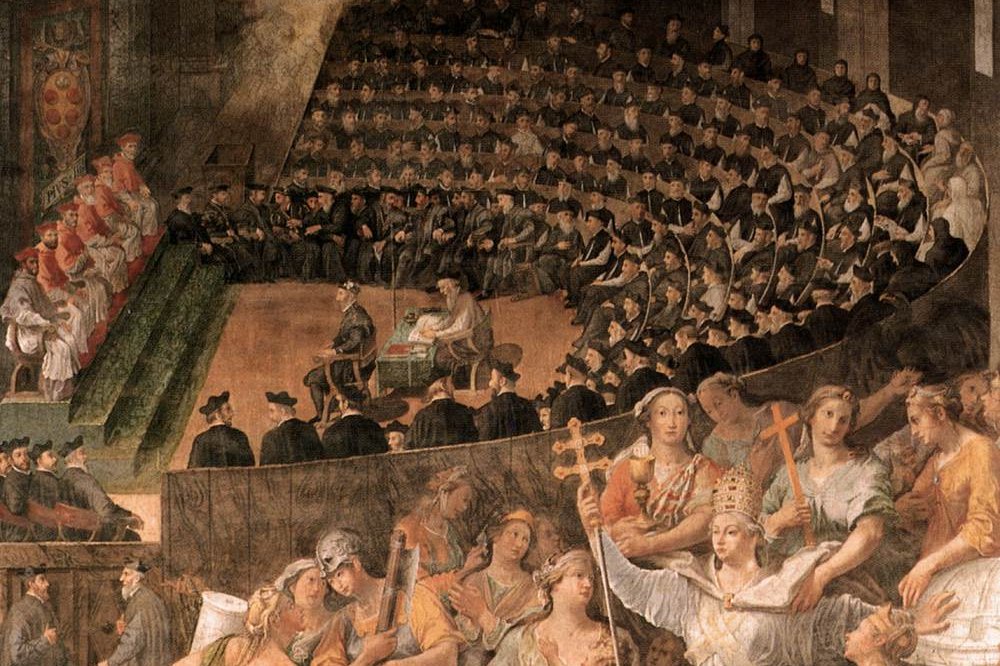
By the early 300s, Christianity had only recently become legal within the Roman Empire, and it was already fracturing over a question that could not be resolved by local bishops arguing in isolation. An Alexandrian priest named Arius had begun teaching that Jesus Christ, though exalted above all other creatures, was not eternally divine in the same sense as God the Father — that there had been a time, in Arius's view, when the Son did not yet exist. The dispute spread quickly and bitterly enough that the newly converted Emperor Constantine, more concerned with imperial unity than fine theological distinction, summoned bishops from across the empire to a council at Nicaea, near his own imperial residence, to settle the matter once and for all.
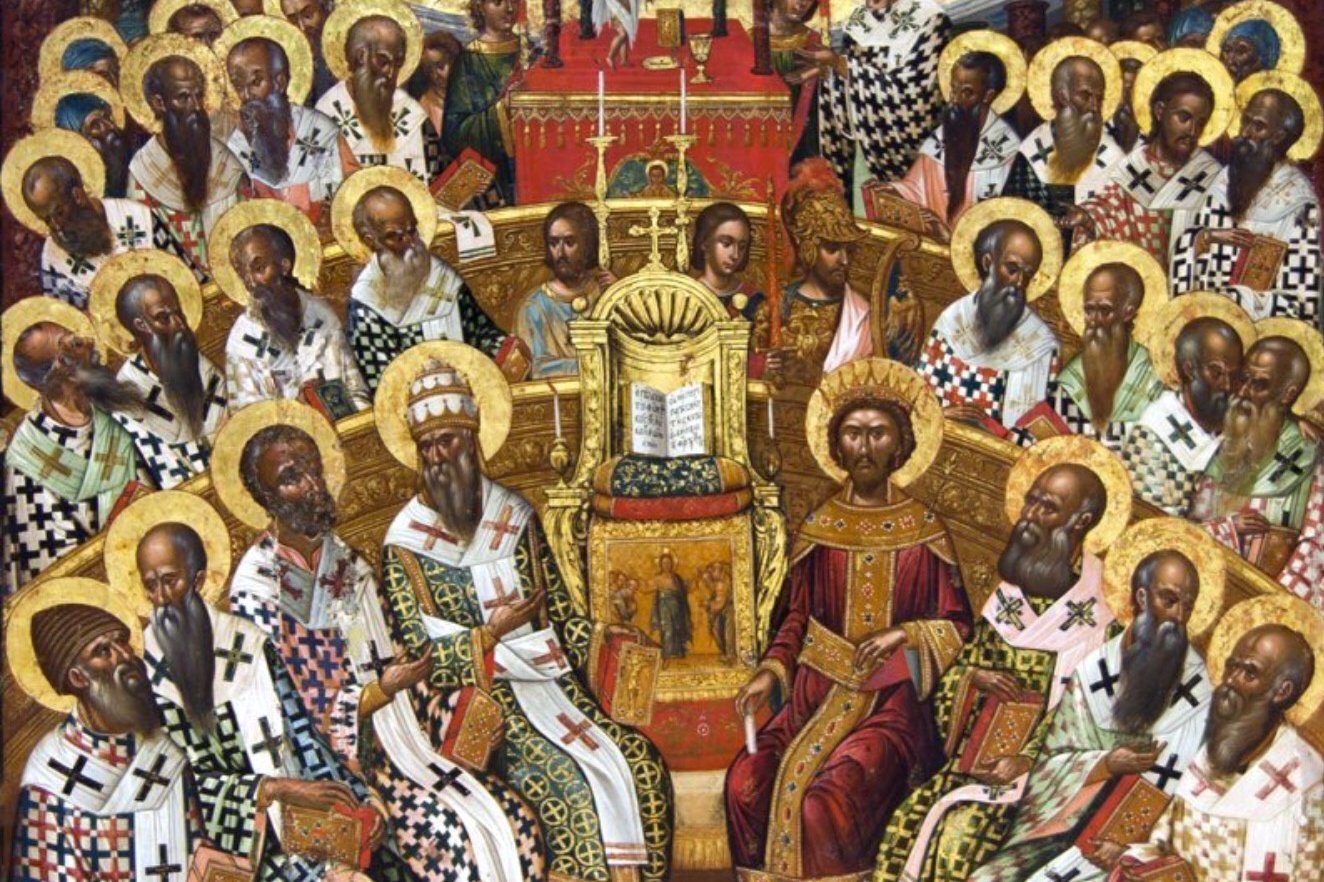
Michael Damaskinos, icon of the First Council of Nicaea, 1591 — public domain, Wikimedia Commons.
What resulted was the first ecumenical — meaning universal, empire-wide — council in Church history, and its central achievement was a formal creed: a short statement of belief the assembled bishops could point to as the standard of authentic Christian teaching, sharply rejecting Arius's position.
What the council actually decided
The bishops at Nicaea affirmed that the Son is "consubstantial with the Father" — translating the Greek homoousios, meaning of one and the same substance — deliberately closing off any reading that made Christ a lesser, created being. This single word became the theological hinge of the entire controversy; supporters and opponents of Arius's teaching organized themselves almost entirely around whether they accepted or rejected it.
The version of the creed produced in 325 was shorter than what Catholics recite today. It was expanded and clarified at the First Council of Constantinople in 381 AD, particularly in its treatment of the Holy Spirit, giving the creed its fuller, more theologically complete form — which is why the prayer used at Mass is sometimes called, more precisely, the Niceno-Constantinopolitan Creed.
Walking through the text
The creed moves through Catholic belief in a deliberate order, beginning with God the Father as "maker of heaven and earth, of all things visible and invisible" — an opening line meant to affirm that everything that exists, material and immaterial, has its origin in a single Creator, not in some remote, unknowable deity uninvolved with the world.
It then turns, at greater length, to Jesus Christ: "the Only Begotten Son of God, born of the Father before all ages," a phrase constructed specifically to rule out any sense that Christ was created in time, as Arius taught. The line "Light from Light, true God from true God, begotten, not made" pushes the same point further, using repetition almost like a hammer to close off ambiguity. The creed then moves through the essentials of the Gospel narrative — the Incarnation, the crucifixion "under Pontius Pilate," the Resurrection "on the third day in accordance with the Scriptures," and Christ's future return in glory — before addressing the Holy Spirit as "the Lord, the giver of life," proceeding from the Father, and closing with statements on the Church, baptism, and the resurrection of the dead.
One phrase, one lasting division
Not every word of the creed has stayed uncontroversial across the centuries. Centuries after Nicaea and Constantinople, Western churches began adding a phrase to the section on the Holy Spirit, stating that the Spirit proceeds from the Father "and the Son" — in Latin, Filioque. Eastern Orthodox churches rejected this addition, both on theological grounds and because it had been inserted without the authority of another ecumenical council, and the disagreement remains one of the enduring points of division between Catholic and Orthodox Christianity to this day, tied closely to the broader history of the split between Catholic and Orthodox traditions.
What happened to Arius
The council's verdict didn't end the controversy overnight. Arius himself was exiled after Nicaea, but Arian-leaning bishops regained significant influence in the decades that followed, and several Roman emperors after Constantine actively favored Arian teaching, at times pressuring orthodox bishops like Athanasius of Alexandria — one of Nicaea's staunchest defenders of the creed's wording — into repeated exile for refusing to compromise on it. The dispute dragged on for most of the fourth century before the Nicene position was definitively reaffirmed at the First Council of Constantinople in 381, the same council that expanded the creed's treatment of the Holy Spirit. It's a useful corrective to any impression that a single council settled a theological question cleanly and permanently — Nicaea set the standard, but defending it took another two generations of bishops willing to be exiled rather than abandon it.
The Church, baptism, and the world to come
The creed's closing lines, often passed over quickly in recitation, cover ground just as doctrinally dense as its opening statements about Christ. "I believe in one, holy, catholic and apostolic Church" packs four distinct claims into a single phrase: that the Church is one despite its visible divisions, holy in its source and mission even though its members are sinners, catholic — meaning universal, for all people and places — and apostolic, meaning traceable back to the apostles Christ himself commissioned. The creed then affirms "one baptism for the forgiveness of sins," naming baptism specifically rather than leaving it implied, before ending on "the resurrection of the dead and the life of the world to come" — a deliberately forward-looking close, refusing to let the creed's final word be about anything less than the ultimate hope Christian faith rests on.
How it differs from the Apostles' Creed
Catholics also recite another, older creed, the Apostles' Creed, particularly at Masses with children or during the renewal of baptismal promises. The two aren't competing statements of different beliefs — the Apostles' Creed predates the Arian controversy and never needed the Nicene Creed's precise, technical language because no one had yet challenged Christ's divinity in the way Arius did. Where the Apostles' Creed states plainly that Jesus is "the only Son of God," the Nicene Creed spells out exactly what that sonship means — "consubstantial with the Father," "begotten, not made" — specifically to close off the Arian reading. The shorter creed is older and simpler; the longer one is younger and more precise, written by bishops who had just spent a summer arguing over exactly how precise the Church's language about Christ needed to be.
Recited weekly, written once
What's striking about the Nicene Creed, set against most documents from late antiquity, is how directly it still functions exactly as intended: not as a historical artifact studied from a distance, but as a text recited aloud, together, at Mass most Sundays across the Catholic world, alongside prayers like the Apostles' Creed used on other occasions. A council convened to settle a fourth-century dispute over a single Greek word produced a statement of faith durable enough that thousands of congregations, in dozens of languages, still speak nearly the same words every single week, seventeen centuries later.
Trivia
What is the Nicene Creed?
Why was the Nicene Creed written?
What does 'consubstantial with the Father' mean?
Is the Nicene Creed used in every Catholic Mass?
Do other Christian denominations use the Nicene Creed?
Related Reading