Eastern Catholic Churches Explained

One Church, many traditions
Most Western Catholics have never set foot in an Eastern Catholic parish, and it shows: a common assumption is that "Catholic" is basically synonymous with the Latin Rite — the tradition of the Mass, vestments, and Church discipline familiar from most parishes in Europe and the Americas. In reality, the Catholic Church is made up of 24 self-governing churches total: the enormous Latin Church, and 23 distinct Eastern Catholic churches, each with its own liturgical tradition, spiritual heritage, and body of internal Church law, while all remaining fully united with the pope and sharing the same core Catholic faith.
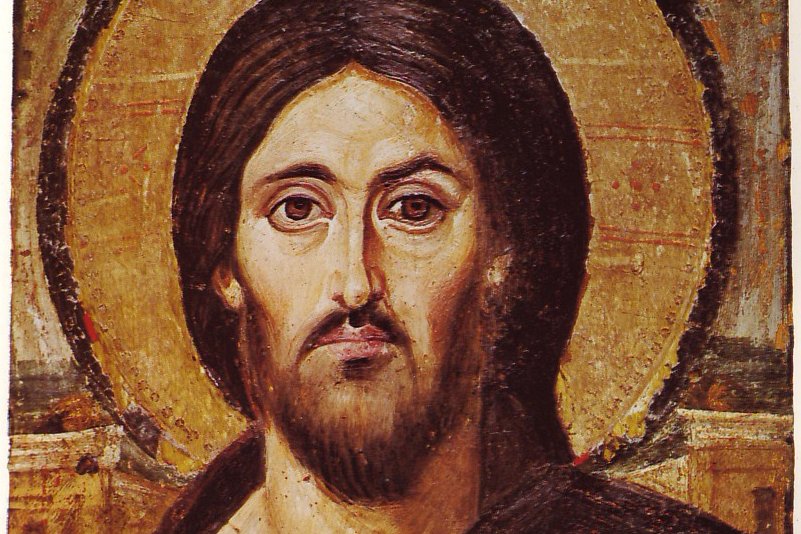
Christ Pantocrator icon, 6th century, Saint Catherine's Monastery, Mount Sinai — public domain.
The technical term for this self-governing status is sui iuris, Latin for "of its own right." An Eastern Catholic church isn't a diocese or a religious order operating under Latin Rite structures — it's a genuinely distinct church, with its own patriarch or major archbishop, its own canon law (the 1990 Code of Canons of the Eastern Churches, a parallel structure to the Latin Church's 1983 Code), and its own ancient liturgical inheritance, joined to Rome in full communion rather than absorbed into Latin Rite practice.
Where these traditions come from
Eastern Catholic churches trace their roots to several ancient liturgical families that developed across the early centers of Christianity outside Western Europe: the Byzantine tradition (centered historically in Constantinople), the Alexandrian tradition (Egypt and the Coptic and Ethiopian worlds), the Antiochian and West Syriac traditions (Syria and the Levant), the Armenian tradition, and the Chaldean and East Syriac tradition (Mesopotamia, with strong historical ties to the Church of the East). Each of these liturgical families gave rise to multiple Eastern Catholic churches — the Byzantine tradition alone accounts for churches as varied as the Ukrainian Greek Catholic Church, the Melkite Greek Catholic Church, and the Italo-Albanian Catholic Church.
The historical paths that brought these communities into full communion with Rome varied widely. Some, like the Maronite Church of Lebanon, maintain that they never formally separated from Rome at all. Others, like most of the Byzantine-tradition churches, trace their communion with Rome to specific historical unions — often called "unions" or reconciliations — that took place centuries after the broader 1054 split traditionally marking the beginning of estrangement between Rome and the churches of the Christian East that would become Eastern Orthodoxy.
Not the same as Eastern Orthodoxy
This is the single most common point of confusion, and it's worth stating plainly: Eastern Catholic and Eastern Orthodox are not the same thing, even though the liturgies, vestments, iconography, and much of the spiritual vocabulary can look nearly identical to an outside observer. The defining difference is communion with the pope. Eastern Orthodox churches are not in communion with Rome. Eastern Catholic churches are — fully, on matters of faith and morals — while retaining virtually everything else about their Eastern character: their liturgical calendar, their sacramental practices, their distinctive theological emphases, and, notably, their long-standing practice of ordaining married men to the priesthood (though, as in Orthodoxy, bishops are chosen only from celibate clergy).
What actually looks different at Mass
Step into a Byzantine Catholic Divine Liturgy and the differences from a Latin Rite Mass are immediate and striking: extensive use of icons rather than statues, a screen of icons called an iconostasis often separating the sanctuary from the nave, communion given under both bread and wine together from the start (including to infants, following the Eastern practice of baptizing, chrismating, and communing infants in a single continuous rite), and a liturgical structure built around continuous chant rather than spoken and sung sections alternating. The liturgical calendar can also differ — many Eastern Catholic churches that historically used the Julian calendar for their liturgical dating still celebrate certain feasts, including Christmas for some communities, on a different date than Latin Rite parishes nearby.
A minority with an outsized voice
Numerically, Eastern Catholics are a small fraction of the worldwide Catholic Church — tens of millions among the Church's roughly 1.3 billion members, with the Ukrainian Greek Catholic Church standing as by far the largest single Eastern Catholic community, alongside sizable communities such as the Syro-Malabar Church of India, the Melkite Greek Catholic Church, and the Maronite Church historically centered in Lebanon. But their presence carries significance well beyond their numbers: they stand as a living reminder that "Catholic" was never meant to describe one uniform culture or liturgical style, but a communion capacious enough to hold together married and celibate clergy, Latin chant and Byzantine chant, side by side, all recognizing the same pope and the same faith.
Where these communities live today
Many Eastern Catholic churches originated in specific regions of Eastern Europe, the Middle East, and South Asia, but war, persecution, and economic migration over the past century have scattered their members far beyond those historic homelands. Ukrainian Greek Catholic parishes now serve communities across North America, Western Europe, and Australia. Maronite and Melkite parishes anchor Lebanese and Syrian diaspora communities around the world. Syro-Malabar and Syro-Malankara parishes, rooted in the ancient Christian communities of Kerala, India, have grown rapidly in the United States and the Gulf states alongside Indian emigration. For many of these communities, the parish functions as more than a place of worship — it's often one of the last remaining threads connecting a diaspora population to a homeland shaped by war or displacement, which gives the liturgical continuity these churches guard so carefully an added layer of meaning.
A living witness to unity in diversity
Popes have repeatedly emphasized the importance of these churches precisely because of what they represent structurally: proof that full communion with Rome doesn't require liturgical or cultural uniformity. The Second Vatican Council's decree on the Eastern Catholic Churches, Orientalium Ecclesiarum (1964), explicitly affirmed their right and duty to preserve their own distinctive traditions rather than gradually converging toward Latin Rite practice — a notable reversal of centuries of earlier pressure, in some times and places, toward Latin-style assimilation. Today, that principle stands as one of the clearest practical expressions of what the Church means when it describes itself as one body expressed through many rites.
Trivia
What is an Eastern Catholic Church?
Are Eastern Catholics the same as Eastern Orthodox Christians?
Can Eastern Catholic priests be married?
Do Eastern Catholic Churches use a different Bible or believe different doctrines?
How many Eastern Catholic Churches are there, and how large are they?
Related Reading