What Is a Papal Bull

Named after the seal, not the content
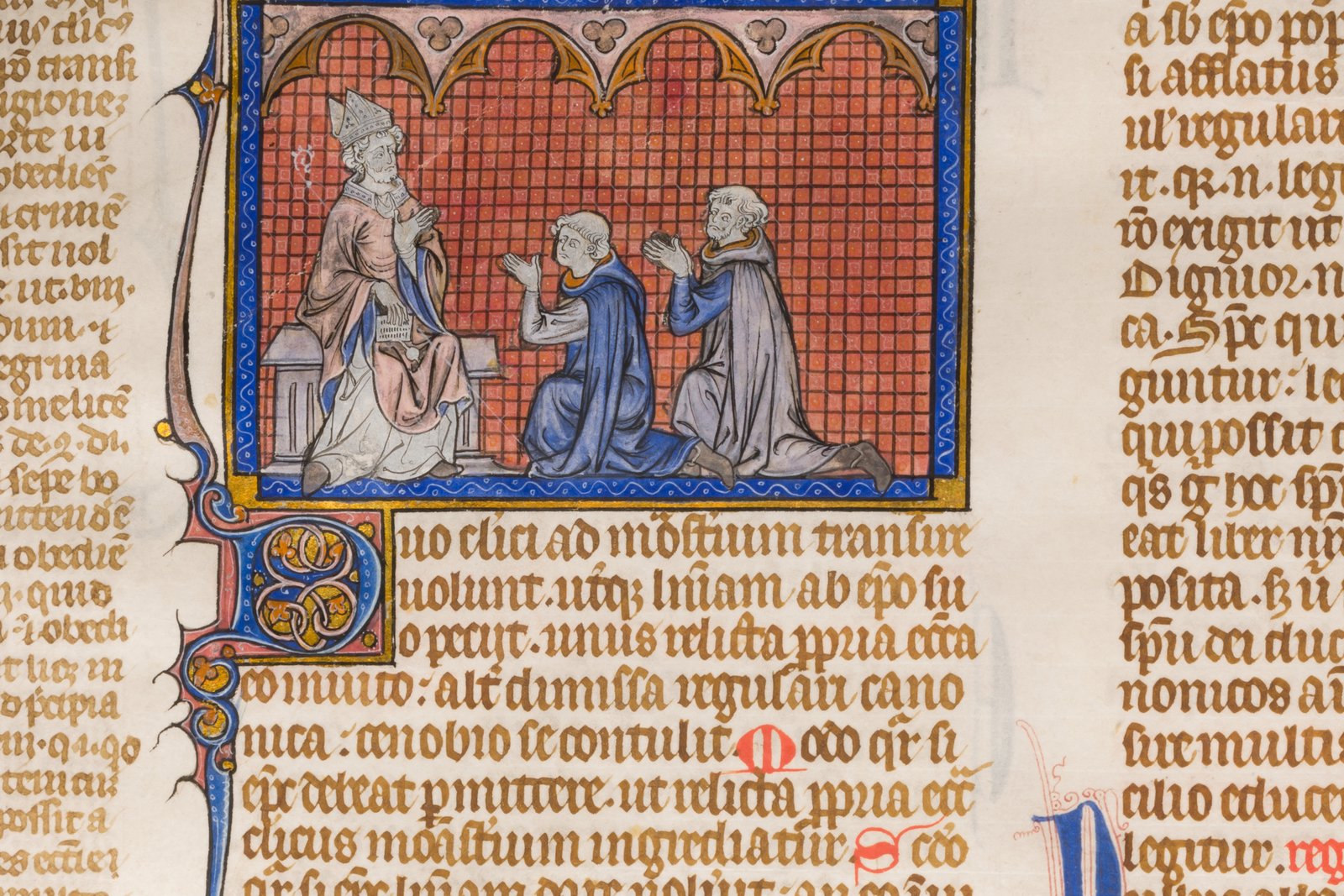
The term "papal bull" refers, in its strict original sense, not to a document's content or purpose but to the physical object attached to authenticate it: a round metal seal called a bulla, from the Latin word for a knob, boss, or seal. Ordinarily made of lead, and occasionally gold for especially solemn occasions like a treaty between the papacy and a major ruling power, this seal was stamped with an image of Saints Peter and Paul on one side and the reigning pope's name on the other, then attached to the document by cords running through the parchment itself.

Pinturicchio, Pope Alexander VI (detail from The Resurrection), c. 1492-1495, Borgia Apartments, Vatican — public domain.
Over centuries, the term drifted from describing just the seal to describing the whole document bearing it. By the medieval period, "bull" had become the standard word for the category of papal document formatted and sealed this way — regardless of what the document actually said.
What sets a bull apart from other papal writing
The papal chancery — the Vatican office historically responsible for drafting and issuing official documents — developed several distinct categories of papal writing over the centuries, each with its own format and level of solemnity. A bull is traditionally reserved for the Church's weightiest legal and administrative acts: canonizing a saint, establishing a new diocese, convening an ecumenical council, or declaring a Jubilee Year.
Bulls follow a recognizable formal opening, beginning with the pope's chosen name followed by the traditional Latin title episcopus servus servorum Dei — "bishop, servant of the servants of God," a title of deliberate humility popularized by Pope Gregory the Great in the 6th century and still used in the most formal papal documents today.
This contrasts with the encyclical, a category of papal letter that became standardized mainly from the 18th century onward, generally used for pastoral or doctrinal teaching addressed to bishops, clergy, and the faithful worldwide, and following a different format entirely, without the bull's traditional lead-seal apparatus.
Bulls that changed history
Some papal bulls carry weight well beyond Church administration. Inter Caetera, issued by Pope Alexander VI in 1493, granted the Spanish crown rights to lands in the Americas not already under Christian rule — a document historians widely identify as part of the theological and legal foundation later invoked to justify European colonization of the Americas, a framework historians now often call the "doctrine of discovery." The Vatican has since formally and publicly repudiated this framework: in March 2023, the Holy See's Dicasteries for Culture and Education and for Promoting Integral Human Development issued a joint statement explicitly rejecting the doctrine of discovery as never having been part of Catholic teaching and stating it does not reflect the equal dignity of all human beings.
Other historically significant bulls include Laudabiliter, attributed to Pope Adrian IV in the 12th century, concerning English involvement in Ireland, and Unam Sanctam, issued by Pope Boniface VIII in 1302, a document asserting papal authority that became a flash point in later medieval disputes between the papacy and secular rulers. Exsurge Domine, issued by Pope Leo X in 1520, condemned forty-one propositions drawn from Martin Luther's writings and gave him sixty days to recant, a document that stands as one of the opening salvos of the Reformation era. And Regnans in Excelsis, issued by Pope Pius V in 1570, excommunicated Queen Elizabeth I of England and declared her subjects released from allegiance to her — a bull with immediate and lasting political consequences for English Catholics, who found themselves suspected of divided loyalty for generations afterward.
Where bulls fit among other papal documents
The chancery's output was never limited to bulls alone, and understanding the wider family of papal documents helps clarify why the bull format was reserved for such weighty occasions. A papal brief (breve), which emerged as a faster, less ceremonially elaborate alternative starting in the 15th century, used a red wax seal stamped with the image of a fisherman casting a net (the Fisherman's Ring) rather than the bulla, and handled a much larger volume of routine administrative business — granting minor dispensations, addressing individual petitions, and other day-to-day governance that didn't call for the bull's full solemnity. A motu proprio ("on his own initiative") is a document a pope issues without a formal request from another party, often used for administrative reforms; Pope Francis's 2019 motu proprio Vos Estis Lux Mundi, establishing new Church-wide procedures for reporting clergy abuse, is a modern example. An apostolic constitution, the most solemn form of legislative document apart from the bull itself, is used for matters of the highest importance, such as establishing new dioceses or promulgating revisions to canon law itself. Together, these categories formed a graduated system, with the bull historically sitting at or near the top for acts the Church considered too consequential for anything less formal.
The modern practice
Bulls are still issued today, though far less frequently than during the medieval and early modern periods when the papacy handled a huge volume of legal, diplomatic, and administrative business through this format. Modern examples include the bulls formally proclaiming a Holy Year — such as Misericordiae Vultus, issued by Pope Francis in 2015 to declare the Extraordinary Jubilee of Mercy — and the bulls used for formal canonization of new saints, a process that follows its own detailed procedure before reaching this final, solemn stage. The physical lead seal is sometimes replaced today with a simplified stamped or printed version for practical reasons, but the document's traditional name, format, and level of solemnity remain intact.
Trivia
Why is a papal bull called a "bull" if it has nothing to do with animals?
What makes a papal bull different from other papal documents like an encyclical?
What is one of the most historically significant papal bulls?
Are papal bulls still issued today?
What is the difference between a papal bull and a papal encyclical?
Related Reading