Basilica vs. Cathedral: What's the Difference?

Two labels that measure different things
The confusion is understandable, because both words get used casually to mean "an important, impressive church." But in Catholic terminology, they answer two completely separate questions. "Cathedral" answers the question who governs from here? "Basilica" answers the question has Rome recognized this church as historically or spiritually significant? A building can answer yes to one, both, or neither.
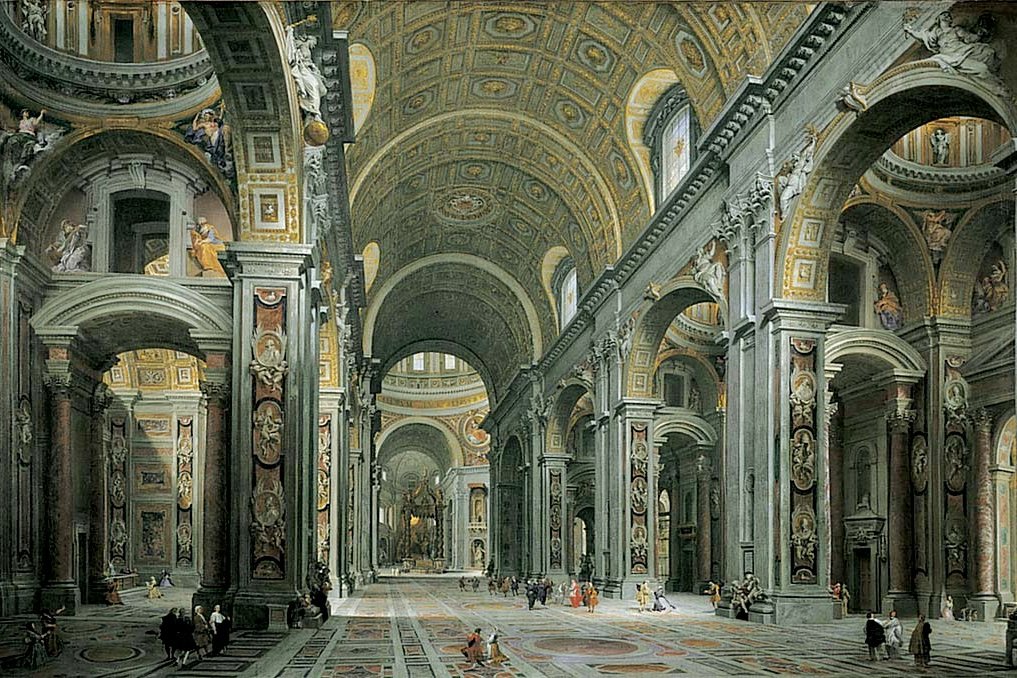
Giovanni Paolo Pannini, Interior of St. Peter's, Rome, 1731 — public domain.
What actually makes a church a cathedral
A cathedral takes its name from the Latin cathedra, meaning "chair." Specifically, it refers to the bishop's chair — the physical seat, usually placed near the altar, that symbolizes his teaching authority over the diocese. Wherever that chair sits, that building is the cathedral, full stop. It doesn't need to be large, ancient, or architecturally distinguished; a small diocese in a young missionary territory has a cathedral just as surely as an ancient European see does, even if the building itself is modest.
This is why the word is tied entirely to administrative geography. Every diocese has exactly one cathedral (occasionally two, in the rare case of a diocese with co-cathedrals), and that status moves if the diocese's headquarters ever relocates. There is no Vatican ceremony required to make a church a cathedral — a bishop simply designates it, typically when a diocese is first established or reorganized.
What actually makes a church a basilica
A basilica, by contrast, has nothing to do with diocesan structure. The title began as an architectural term — in ancient Rome, a basilica was a long rectangular public hall used for law courts and civic business, a floor plan early Christians adapted for their largest churches. Over time, "basilica" stopped describing a shape and started describing an honor.
Today, basilica status is granted in one of two ways: by long-standing historical right (the case for Rome's four great churches) or by formal decree from the pope, usually issued through the Congregation for Divine Worship at the request of a local bishop who believes a particular church merits the recognition — often because of its age, its connection to a major saint or relic, or its role as a longstanding pilgrimage destination.
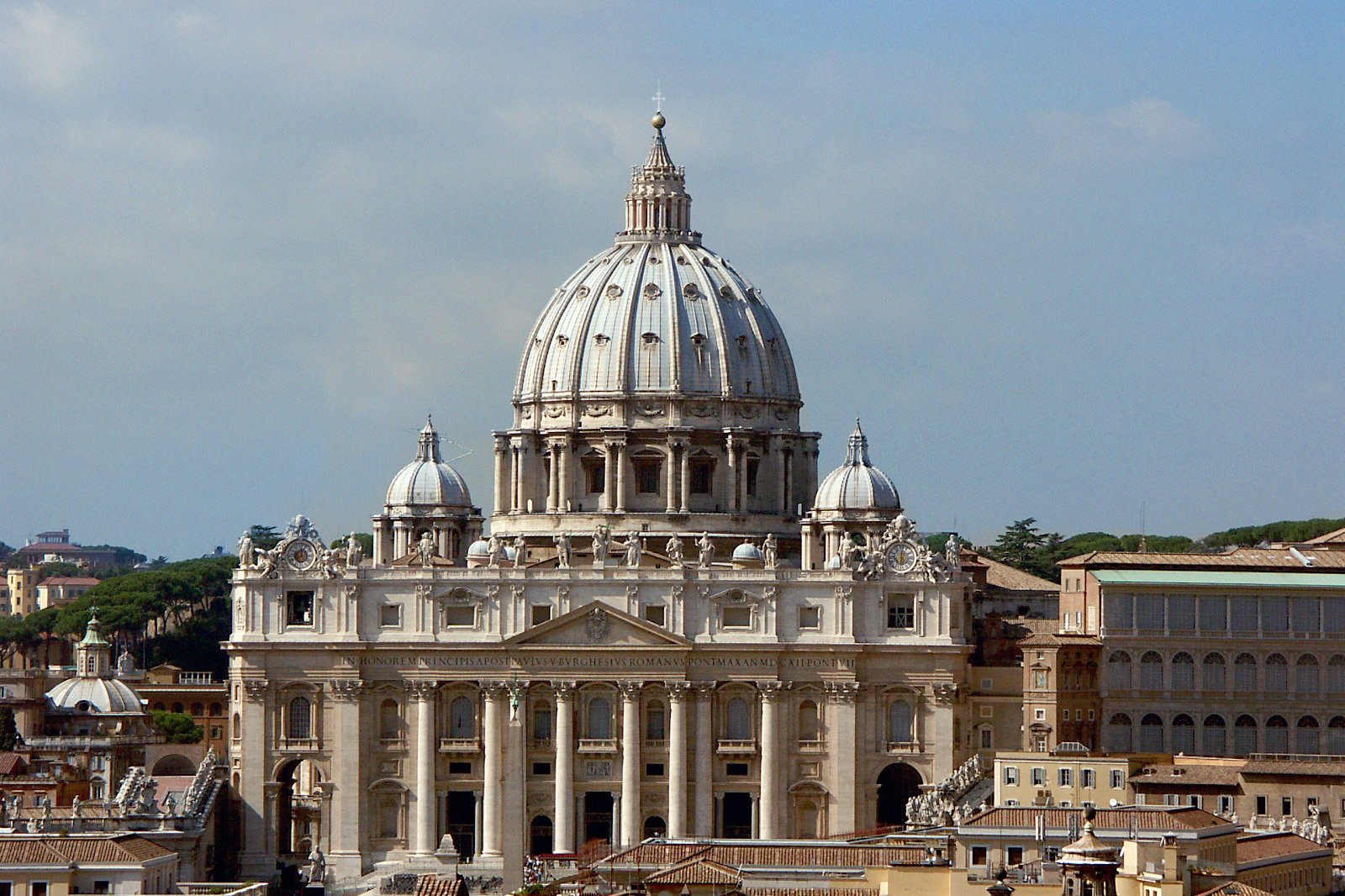
The major basilicas are an exclusive group of four, all in Rome, all with direct historical ties to the papacy: St. Peter's Basilica, built over the traditional site of St. Peter's tomb; St. John Lateran, the pope's own cathedral as Bishop of Rome; St. Paul Outside the Walls, built over the tomb of St. Paul; and St. Mary Major, the oldest church in the West dedicated to the Virgin Mary. Every other basilica in the world — more than 1,800 as of recent Vatican counts, scattered across nearly every country with a significant Catholic population — is a minor basilica.
Why the overlap happens
Because the two titles track completely different things, plenty of famous churches end up holding both. The Basilica Cathedral of Our Lady of the Angels in Los Angeles, the Cathedral Basilica of St. Louis, and St. Patrick's Cathedral in New York are all, technically, cathedral basilicas: each serves as the seat of a bishop and carries the pope's recognition of its broader significance. Neither title cancels the other out — a church earns "cathedral" through its administrative role and "basilica" through its history, and there's no rule saying a building can't have an important job and an honored past at the same time.
It's worth noting what basilica status is not: it isn't a ranking of architectural beauty, and it doesn't confer any governing authority the way a cathedral's status does. A parish church that receives minor basilica status doesn't suddenly outrank the cathedral of its own diocese in Church governance — the bishop's chair still carries the administrative weight. What changes is largely liturgical and symbolic: a minor basilica gains the right to display the crossed-keys papal symbol near its entrance, often under a small ceremonial canopy called the ombrellino, along with certain permissions for more solemn celebration of particular feast days.
Recognizing which is which
A helpful shortcut: if you're wondering whether a building described as a "basilica" is also a cathedral, check whether a bishop's chair is physically present in the sanctuary — that's the only test that matters for cathedral status. And if you're wondering whether a "cathedral" also carries basilica honors, that's simply a matter of Vatican record; it isn't something you can determine from size or grandeur alone. Rome has granted basilica status to buildings as different as vast medieval pilgrimage churches and small national shrines, always on the same underlying logic: this place has mattered enough, for long enough, that the universal Church wants to say so formally.
Among the world's most visited Catholic churches worth knowing, both labels show up constantly — which is exactly why it helps to know, walking into any of them, which honor you're actually standing inside.
Trivia
What is the actual difference between a basilica and a cathedral?
Can a church be both a basilica and a cathedral at the same time?
What is the difference between a major basilica and a minor basilica?
Does a basilica have to be a large or famous building?
What privileges come with basilica status?
Related Reading