Catholic Teaching on Cremation: What Is and Isn't Allowed

A practice once explicitly forbidden
For most of the 20th century, Catholic canon law treated cremation with genuine suspicion, reflecting a ban that had been in place since the late 19th century. That ban wasn't rooted in some abstract theological objection to the physical process of cremation itself, but in its specific historical context: cremation had become closely associated with certain anti-clerical, secularist, and explicitly anti-Christian movements in 19th-century Europe, who promoted the practice precisely as a public, symbolic rejection of Christian belief in the resurrection of the body. Catholics who chose cremation under those conditions could, under the older law, be denied a Catholic funeral rite entirely.
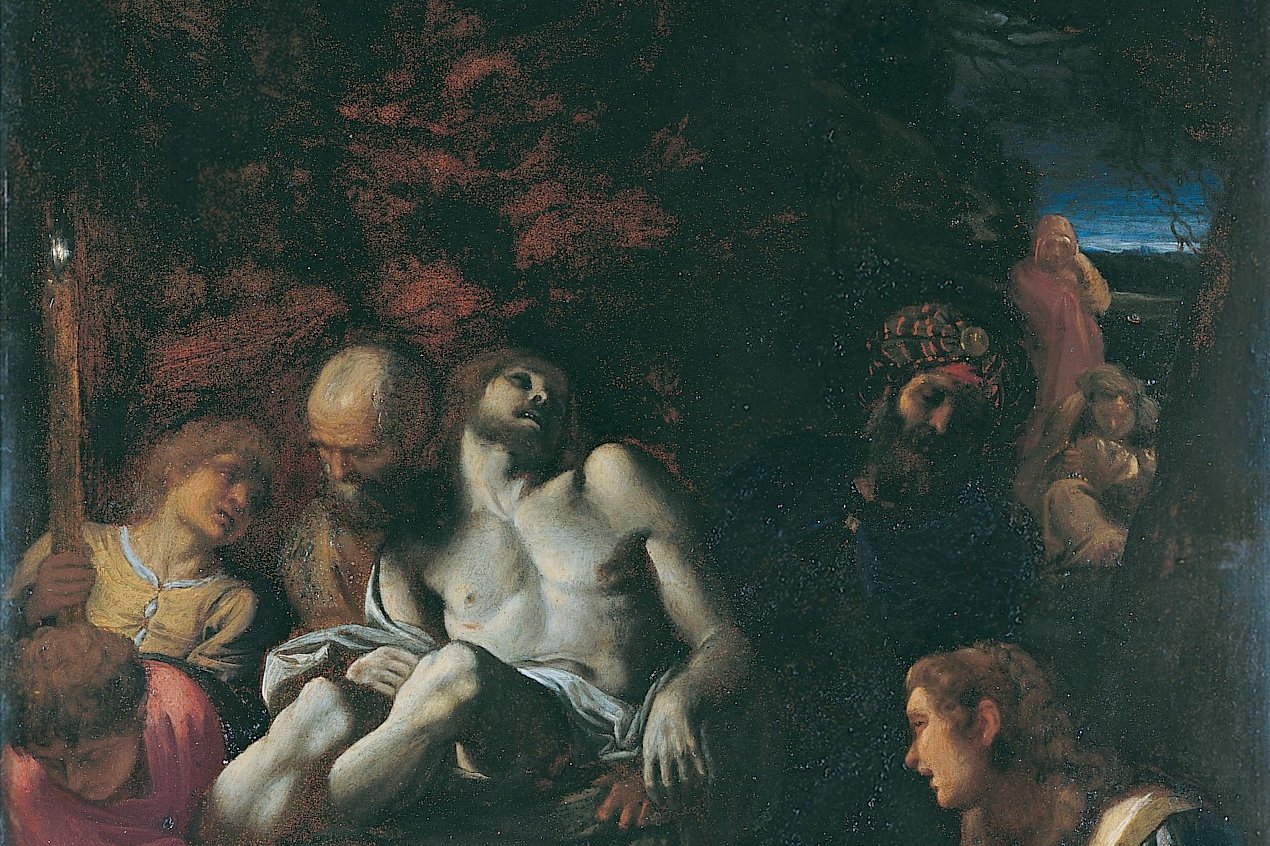
Annibale Carracci, The Burial of Christ, c. 1595 — public domain.
That changed in 1963, when the Holy Office (the predecessor to today's Congregation for the Doctrine of the Faith) formally lifted the general prohibition, permitting cremation as long as it was not chosen specifically as a denial of Christian doctrine about the resurrection of the body. The revised 1983 Code of Canon Law carried this permission forward, while still expressing the Church's clear preference for traditional burial as the practice that most fully and visibly expresses Christian belief and reverence for the human body.
Why the body matters in Catholic teaching
Understanding the Church's continuing preference for burial requires understanding why the body matters so much in Catholic theology in the first place. Catholic teaching holds that the human body is not a disposable container for an immaterial soul, but an integral part of the human person, made in God's image and, for the baptized, made a temple of the Holy Spirit. The Church professes belief, stated every time the Nicene or Apostles' Creed is prayed, in "the resurrection of the body" — not merely the immortality of the soul, but the eventual, definitive reuniting of body and soul at the final resurrection.
Traditional burial, treating the body with reverence and returning it to the earth intact, has long been understood by the Church as a vivid, physical expression of that belief — a practice deliberately distinct from those ancient and modern movements that used cremation to express exactly the opposite conviction. Cremation, chosen for practical, financial, or environmental reasons rather than as a statement against the resurrection, does not carry that same historical baggage in the Church's current judgment, which is precisely why the 1963 change was possible at all.
What Ad resurgendum cum Christo requires
In 2016, the Congregation for the Doctrine of the Faith, with Pope Francis's approval, issued a fuller instruction on the subject, Ad resurgendum cum Christo ("To Rise with Christ"), addressing new practices that had become increasingly common — scattering ashes, dividing them among family members, or keeping them at home — that the earlier, briefer permission hadn't directly addressed. The instruction sets out specific, concrete requirements:
- Cremated remains must be preserved in a sacred place — a cemetery, or a columbarium within a church — the same reverent treatment traditionally given to a buried body.
- Ashes may not be scattered in the air, on land, at sea, or in any other manner, nor may they be divided among family members or kept in multiple locations.
- Ashes may not be kept in the home of family members, except in genuinely extraordinary circumstances judged by the local bishop.
- Ashes may not be preserved in jewelry, keepsakes, or other objects, or otherwise incorporated into "mementoes, pieces of jewelry, or other objects," a practice the document explicitly rejects.
The reasoning behind these specific restrictions mirrors the reasoning behind permitting cremation in the first place: the Church wants to avoid practices that, even unintentionally, treat the body as something to be dispersed, privatized, or individualized after death, rather than something to be reverently preserved as a whole, in a place the wider Christian community — not just an individual family — can visit and remember, much as a traditional grave allows.
What the funeral itself looks like
The Church now permits a full Catholic funeral Mass to be celebrated with cremated remains present, following, as closely as local practice allows, the same structure and reverence given to a funeral with a casket present. Many dioceses continue to encourage families to have cremation take place after the funeral Mass rather than before, when circumstances reasonably permit it, specifically so the body itself can be present for the liturgy — though direct cremation followed by a memorial Mass with the urn present remains an accepted alternative where that isn't practical.
A permission, not an obligation, and never a limit on God
None of these conditions should be read as suggesting that cremation somehow endangers a person's resurrection, or that God's power to raise the dead depends in any way on how a body is disposed of. Catholic teaching is explicit that this isn't the concern motivating the Church's guidelines — God, in Catholic belief, can and will raise anyone on the last day regardless of what has physically happened to their remains, whether through cremation, decomposition, or destruction of any other kind. The Church's careful rules exist to safeguard the symbolism and communal reverence the Church wants Catholic funeral practice to consistently express, not to place any actual limit on what God is capable of doing with what remains.
Trivia
Does the Catholic Church allow cremation?
Can cremated remains be scattered or kept at home?
Why did the Catholic Church historically oppose cremation?
Can a Catholic have a funeral Mass with cremated remains present?
Does choosing cremation affect a Catholic's chance of resurrection?
Related Reading