The Raising of Lazarus: Jesus Wept, Then Called Him Out

Bad news, and a deliberate delay
The sisters Martha and Mary send Jesus an urgent but understated message about their brother: "Master, the one you love is ill" (John 11:3). They don't ask him outright to come — the request is implied, resting entirely on the fact that Jesus loved this family. John notes that explicitly: "Jesus loved Martha and her sister and Lazarus" (John 11:5). And then, in the very next verse, Jesus does something that seems to contradict that love completely: he stays where he is for two more days.
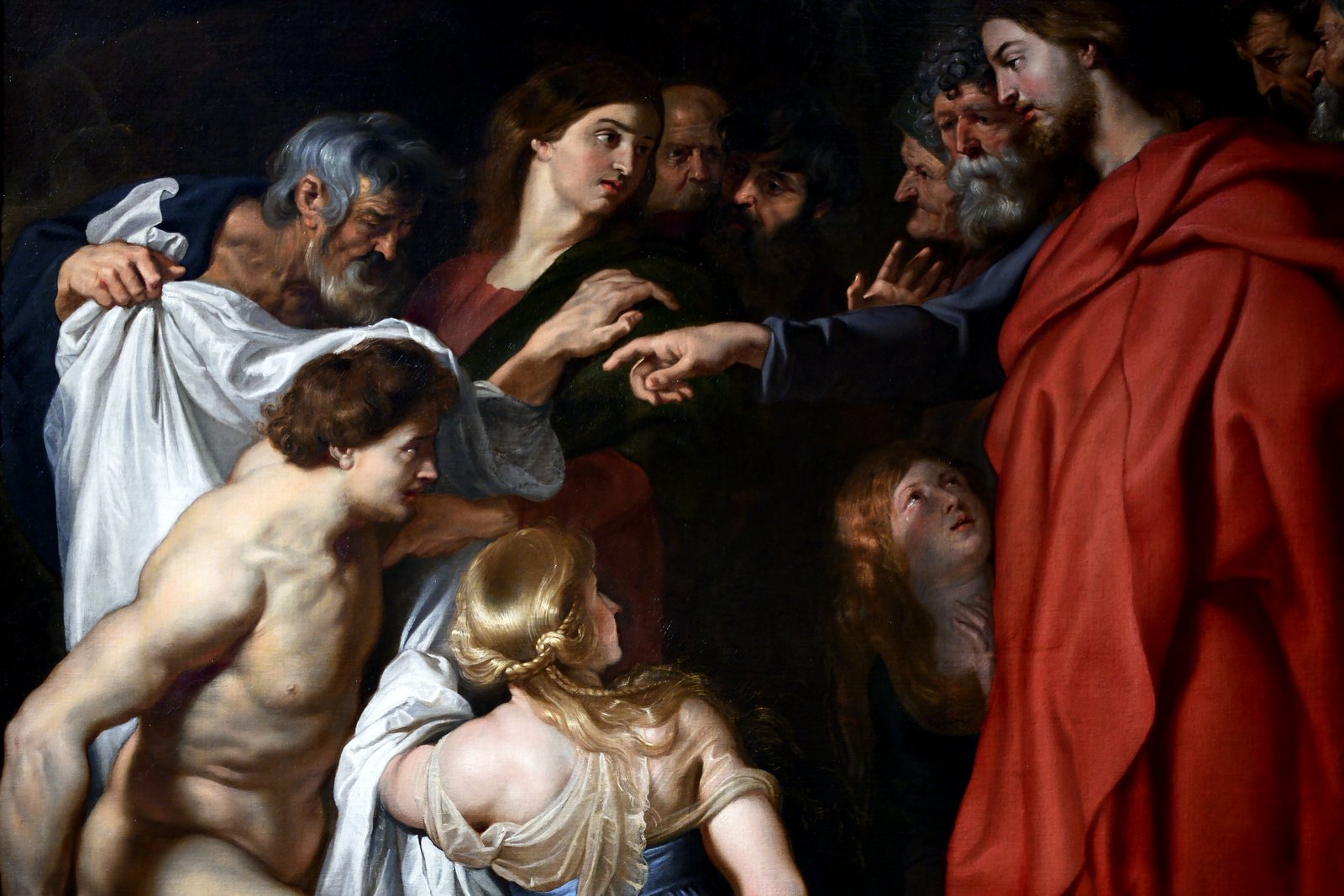
Attributed to Peter Paul Rubens, The Raising of Lazarus, c. 1625. Public domain, Wikimedia Commons.
John doesn't leave the delay unexplained or accidental. Jesus tells his disciples plainly that the illness is "for the glory of God, that the Son of God may be glorified through it" (John 11:4), and later, arriving at Bethany, he says he's glad he wasn't there earlier — "that you may believe" (John 11:15). The delay isn't indifference; in John's telling, it's the difference between a healing and a resurrection. A dying man revived is one kind of sign. A man four days in the tomb, walking out at Jesus's command, is another kind entirely.
"If you had been here"
By the time Jesus reaches Bethany, Lazarus has been in the tomb four days. Martha goes out to meet him on the road while Mary stays home, and Martha's words carry both grief and an edge of reproach: "Lord, if you had been here, my brother would not have died" (John 11:21). It's the same line Mary will say to him later, almost word for word (John 11:32) — the sisters clearly said this to each other in the days before, and both of them say it to Jesus's face.
What follows is one of the most direct theological exchanges in John's Gospel. Jesus tells Martha her brother will rise; she assumes he means the general resurrection on the last day, a belief held by many Jews of the period. Jesus corrects the timeframe entirely: "I am the resurrection and the life; whoever believes in me, even if he dies, will live, and everyone who lives and believes in me will never die. Do you believe this?" (John 11:25-26). Martha's answer is a full confession of faith: "Yes, Lord. I have come to believe that you are the Messiah, the Son of God" (John 11:27).
Two words
When Mary comes out and repeats her sister's line, falling at his feet in grief, and Jesus sees her weeping along with the mourners around her, John describes him as "perturbed and deeply troubled" (John 11:33). He asks where Lazarus has been laid. Then comes the shortest verse in the entire Bible: "And Jesus wept" (John 11:35).
It's a detail worth sitting with rather than rushing past. Jesus already knows, at this exact moment, that he's about to raise Lazarus from the dead — and he weeps anyway, moved by the grief around him and, by extension, by the reality of death itself entering a world God didn't design for it. The tears aren't performance and they aren't confusion about the outcome; they're presented as genuine sorrow, sitting right alongside genuine power.
"Lazarus, come out!"
At the tomb — a cave sealed with a stone — Jesus asks for the stone to be removed. Martha, ever practical, warns him of the smell: four days is long enough for decomposition to have set in (John 11:39). Jesus reminds her of what he'd already told her about believing and seeing God's glory, then prays aloud, not for himself but for the sake of the crowd, "that they may believe that you sent me" (John 11:41-42).
Then he cries out in a loud voice: "Lazarus, come out!" And John's account is almost matter-of-fact about what happens next: "The dead man came out, tied hand and foot with burial bands, and his face was wrapped in a cloth. So Jesus said to them, 'Untie him and let him go'" (John 11:44).
The sign that set the crucifixion in motion
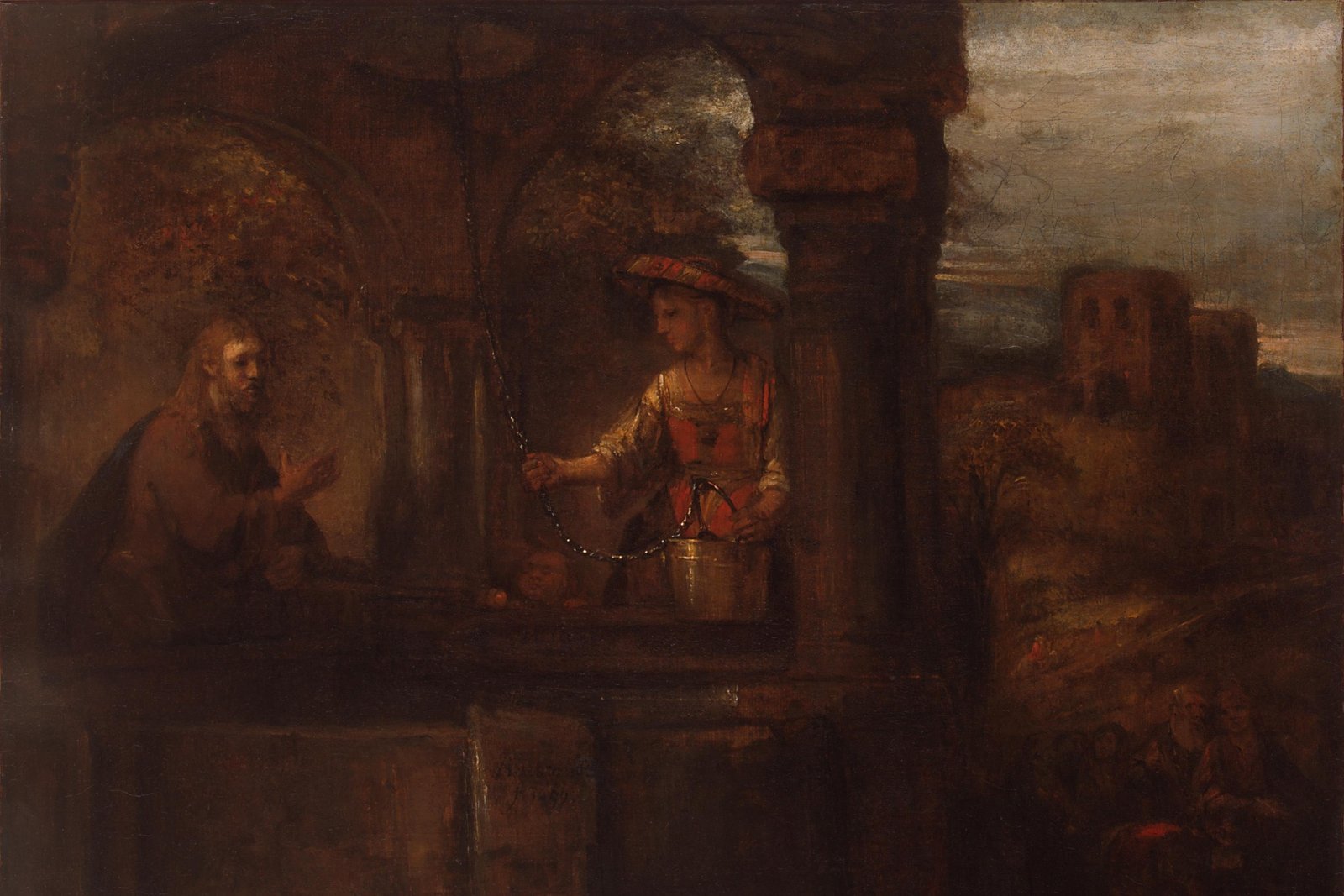
Much like Jesus's conversation with the Samaritan woman at the well, John presents this as the last and greatest of the "signs" that structure the first half of his Gospel — proof, for many witnesses, that Jesus held authority even over death. But John 11:46-53 records the other side of that reaction: some witnesses reported it to the Pharisees, who convened the Sanhedrin, worried that a growing following around Jesus could provoke Roman retaliation against the whole nation. It's in this council meeting that the high priest Caiaphas makes his infamous, unintentionally prophetic remark that it would be better for one man to die for the people than for the whole nation to perish (John 11:49-50). From that point on, John says, the religious leaders "planned to kill him" (John 11:53). The raising of Lazarus, in other words, is the miracle that directly precipitates the events of Holy Week — the greatest sign of life in John's Gospel becomes the trigger for Jesus's own march toward death.
Trivia
Why did Jesus wait two days before going to Lazarus?
What is the shortest verse in the Bible, and where does it appear in this story?
What did Jesus say to Martha before raising Lazarus?
How long had Lazarus been dead when Jesus arrived?
What happened as a direct result of Jesus raising Lazarus?
You May Also Like
Related Reading