Reims Cathedral: Where France Crowned Its Kings

A baptism that shaped a nation's coronation tradition
The story of Reims Cathedral's outsized role in French history begins over seven centuries before the current Gothic building was even conceived. In 496, Clovis I, king of the Franks, was baptized a Christian at Reims by Saint Remigius (Remi), the city's bishop — a conversion that historians regard as a pivotal moment in the Christianization of what would eventually become France, since Clovis's own conversion helped draw the wider Frankish nobility toward Christianity as well.
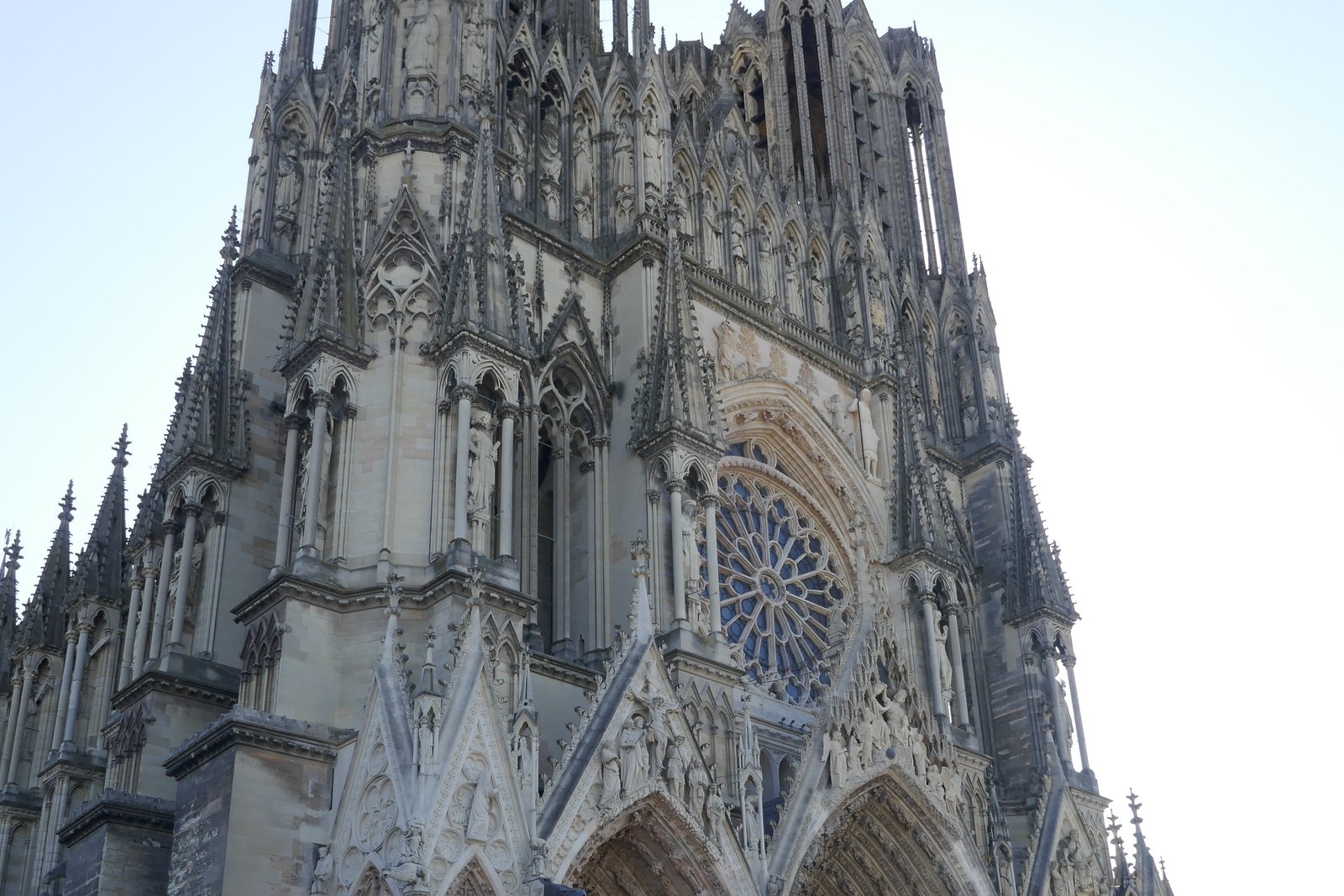
Photograph by The Crazy Tourist, west facade of Reims Cathedral, 2019 — CC BY-SA 4.0, Wikimedia Commons.
That baptism established a symbolic connection between Reims and the sacred legitimacy of Frankish, and later French, kingship that would persist for well over a millennium. Beginning formally with the coronation of Louis VIII in 1223, and continuing with only a handful of exceptions until Charles X in 1825, Reims became the traditional site where French kings were consecrated and crowned — not merely enthroned in a political ceremony, but anointed with holy oil in a rite that traced its symbolic authority all the way back to Clovis's original baptism.
Building a cathedral worthy of coronations
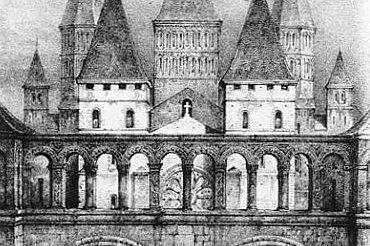
The Romanesque cathedral that had stood at Reims through the early medieval period was destroyed by fire in 1210, and construction of the Gothic cathedral that stands today began the following year, in 1211. Building proceeded with notable speed for a project of its scale and ambition, with the main structure substantially complete by 1275 — a pace reflecting both the city's wealth and the evident importance placed on having a suitably magnificent setting for royal coronations.
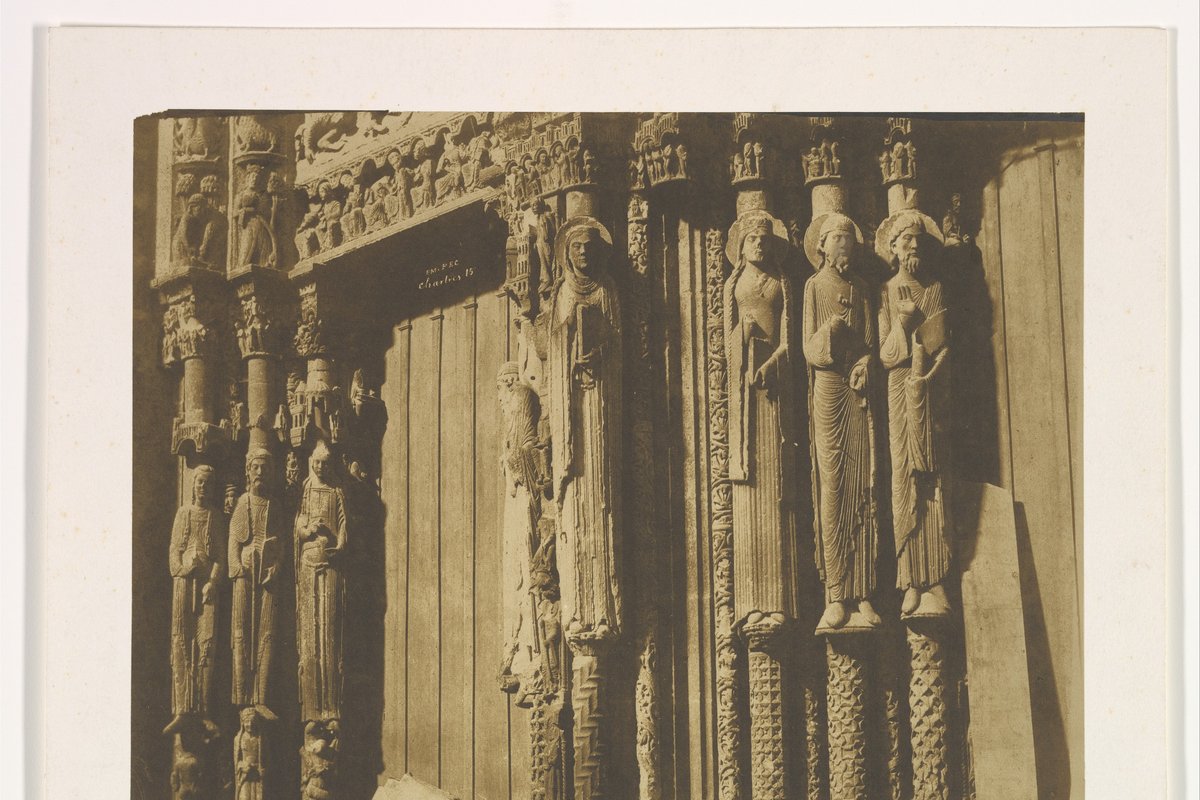
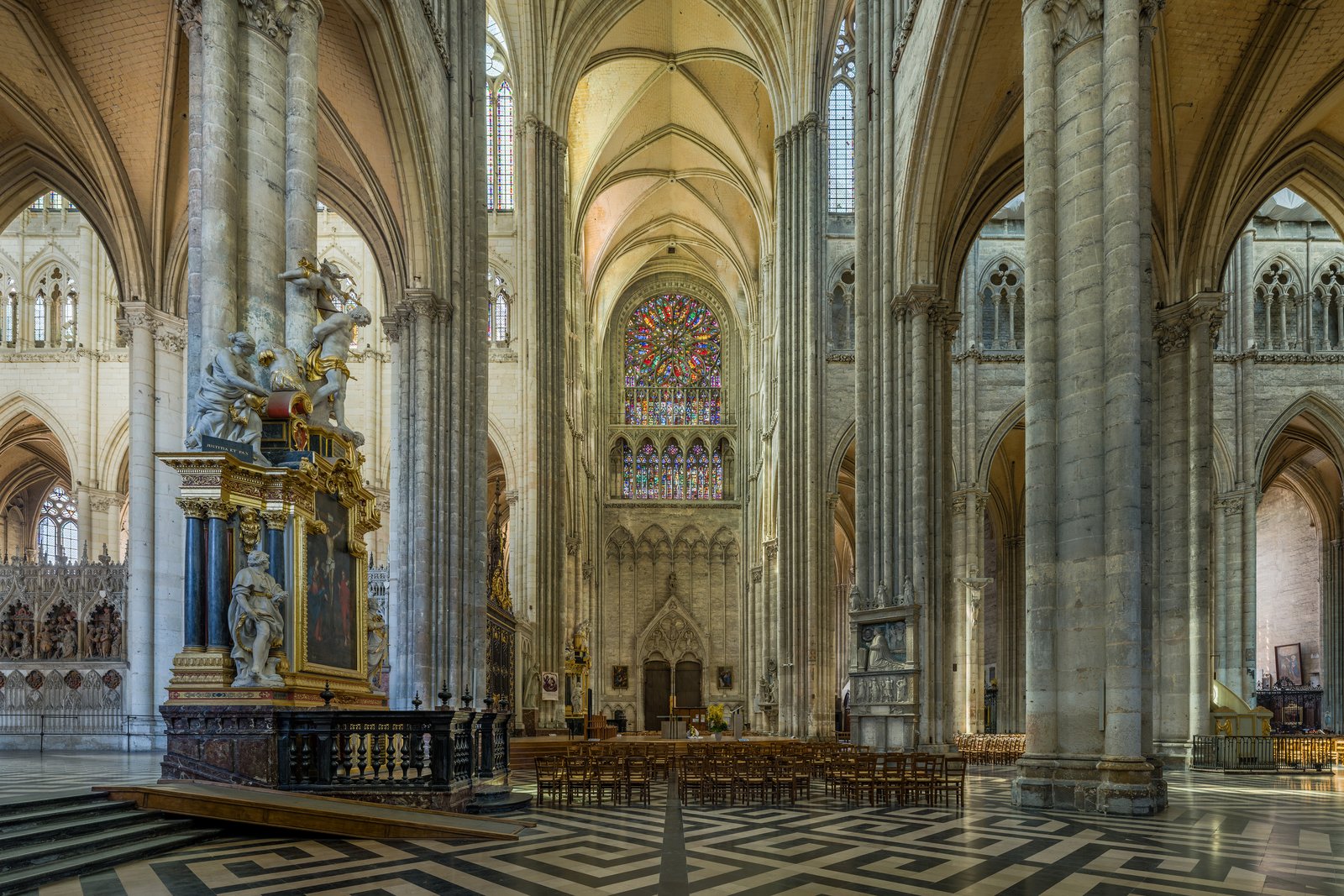
The result is widely regarded by architectural historians as one of the supreme achievements of High Gothic architecture in France, ranking alongside Chartres Cathedral and Amiens Cathedral among the era's most accomplished designs. Reims is particularly celebrated for the extraordinary quality and quantity of its sculptural decoration — the west facade alone contains over 2,300 carved figures, including the famous "Smiling Angel," a graceful, gently smiling sculpted figure that has become one of the most recognizable single works of medieval French sculpture, admired for an unusually warm, naturalistic expression rare in art of its period.
A peasant girl and a king's legitimacy
Reims's coronation tradition produced its most dramatic single episode in 1429, during the darkest period of the Hundred Years' War, when large portions of France — including Reims itself — remained under English or allied Burgundian control, and the uncrowned dauphin Charles VII's claim to the French throne remained seriously contested. Joan of Arc, the young peasant woman who claimed to be guided by divine visions, had already led French forces to a decisive victory at the Siege of Orléans that same year, and she insisted that Charles's legitimacy as king required something more than military success alone: a proper coronation at Reims, in keeping with unbroken royal tradition.
Joan led Charles and his army through contested territory to reach the city, and on July 17, 1429, Charles VII was crowned king of France in Reims Cathedral with Joan reportedly standing near him during the ceremony, holding her banner — an act widely understood at the time, and since, as a deliberate assertion that Charles's kingship carried the same sacred legitimacy as every French king crowned there before him, directly countering rival claims to the throne backed by England.
Destruction and restoration in the twentieth century
Reims Cathedral suffered catastrophic damage during the First World War. German artillery began shelling the city in September 1914, and the cathedral, though a civilian and religious building, was repeatedly struck over the following years; a major fire in 1914 melted lead from the roof, which poured down and damaged stonework and stained glass below, and further shelling throughout the war left much of the structure exposed to the elements. Images of the damaged cathedral circulated widely in Allied wartime propaganda as a symbol of German destruction of cultural heritage, drawing international attention and, eventually, international support for its recovery.
Restoration proceeded gradually over the following decades, significantly aided by a major donation from the American philanthropist John D. Rockefeller Jr., whose contribution helped fund the painstaking work of repairing stonework, replacing shattered stained glass, and rebuilding the roof. The cathedral was formally reconsecrated in 1937, though restoration work in various forms continued for years afterward, and further repairs followed damage sustained during the Second World War as well.
A landmark restored, a tradition remembered
Reims Cathedral was designated a UNESCO World Heritage Site in 1991, recognized for both its architectural and artistic achievement and its singular historical role in French national identity. Though France's monarchy ended with the Revolution and the coronation tradition ceased along with it, the cathedral remains an active place of worship and one of the most visited Gothic buildings in the country — a structure that carries, in its rebuilt stone, both the memory of thirteen centuries of French kingship and the more recent history of a building that survived, and was deliberately restored from, near total destruction.
Trivia
Why is Reims Cathedral historically significant to France?
When was the current Gothic cathedral built?
What is the connection between Reims Cathedral and Joan of Arc?
What happened to Reims Cathedral during World War I?
How many kings of France were crowned at Reims Cathedral?
Related Reading