What Catholic Art Is Trying to Tell You

A visual language built for people who couldn't read
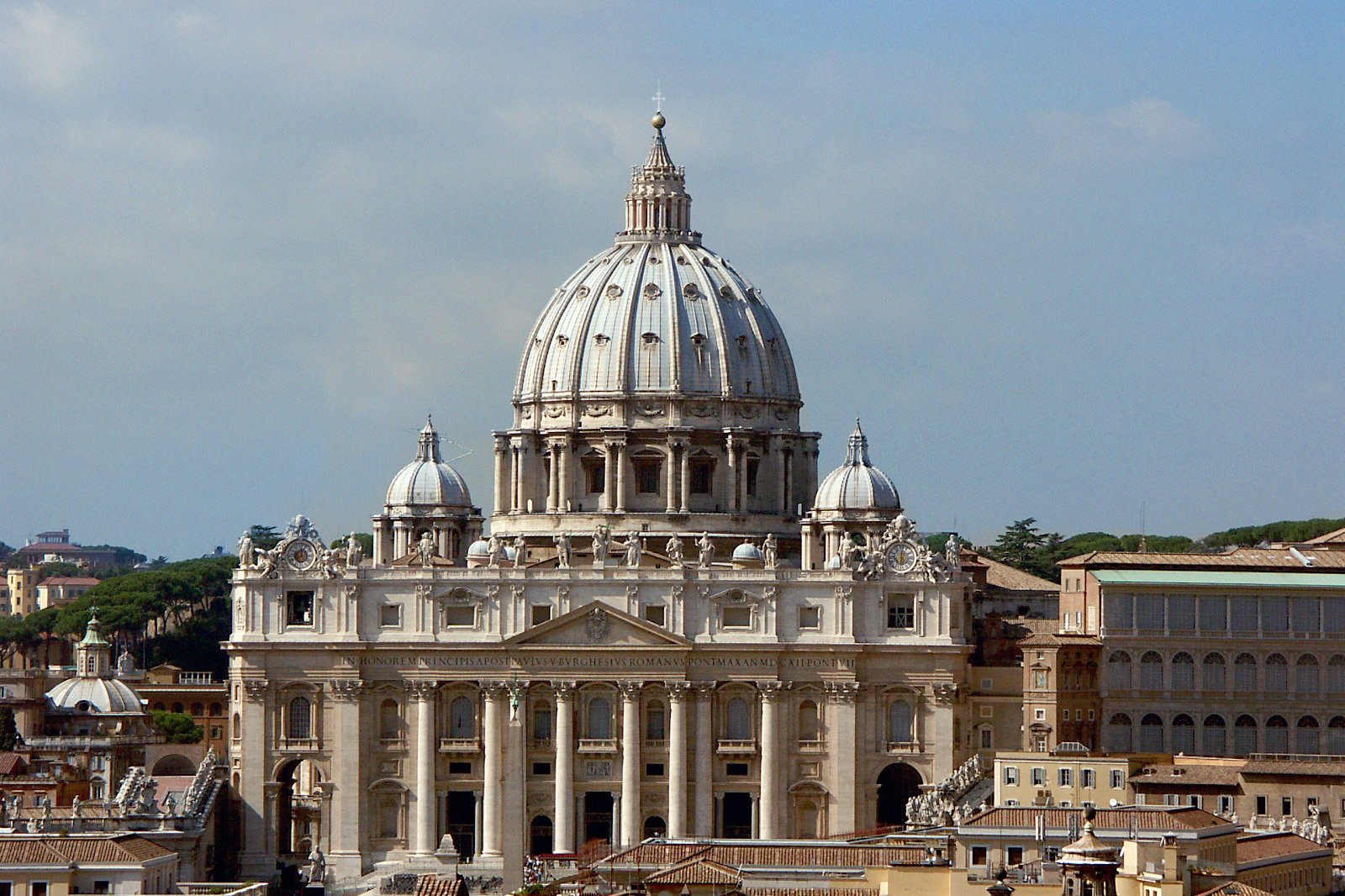
For most of Christian history, the majority of people who walked into a church could not read a word of the Latin inscribed on its walls. Sacred art existed, in large part, to close that gap — to teach Scripture, saints' lives, and doctrine to a congregation through images rather than text. Nothing in this system was accidental. A medieval or Renaissance viewer, unlike most of us today, would have known instantly what a particular object in a saint's hand meant, the way a modern viewer instantly reads a stop sign without needing the word "stop" written on it.
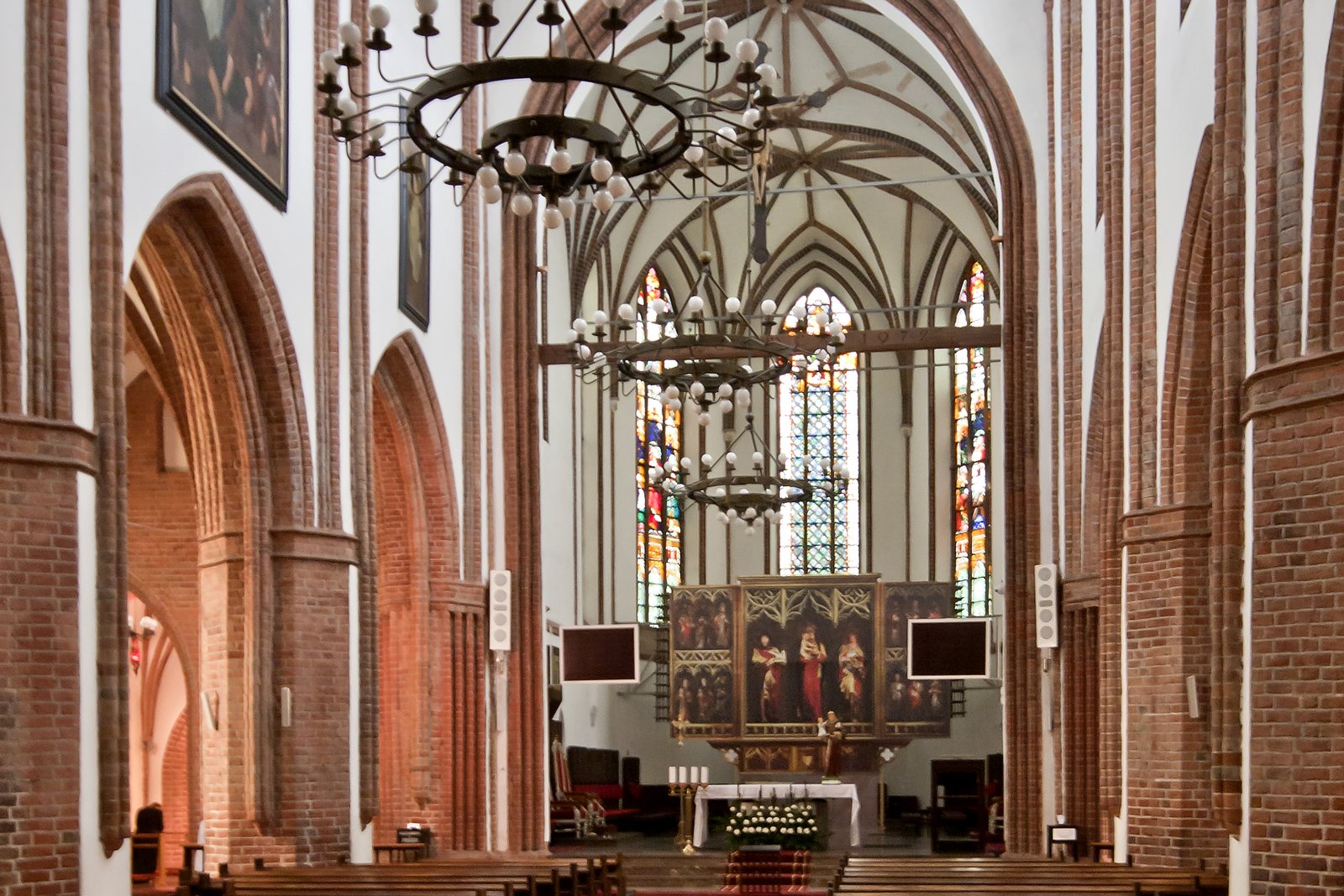
Photo of the interior of Koszalin Cathedral by David Castor, CC0.
The Church's own teaching backs this understanding of sacred images directly. Citing the Second Council of Nicaea in 787, the Catechism affirms that "the Christian veneration of images is not contrary to the first commandment which proscribes idols," and explains that "whoever venerates an image venerates the person portrayed in it" (CCC 1159-1162). That council was convened specifically to settle the Byzantine iconoclasm controversy, an intense, decades-long dispute over whether religious images were permissible at all or were forbidden as a form of idolatry. Nicaea II ruled decisively in favor of images, on the grounds that Christ's own Incarnation — God taking on a visible, human, paintable body — justified depicting him and the saints who share his life. Honor given to an image, the Catechism clarifies elsewhere, passes to the person it depicts; it doesn't terminate in the paint or stone itself (CCC 2132). This is the line, doctrinally, between veneration and the idolatry the commandments actually forbid.
Reading a saint's attributes
Once you know to look, most saints in Catholic art carry a small visual signature called an attribute — an object referencing how they died, what they're known for, or a legend attached to their life. A few of the most common:
- Keys — St. Peter, referencing Christ's words in Matthew 16:19 about the keys of the kingdom of heaven.
- A sword or set of scales — St. Michael the Archangel, tied to his role as defender against evil and, in some traditions, the weigher of souls.
- A wheel — St. Catherine of Alexandria, referencing the spiked wheel tradition says was used in an attempt to execute her.
- Arrows piercing the body — St. Sebastian, martyred (according to tradition) by archers before ultimately being killed by other means.
- A plate holding two eyes — St. Lucy, whose name means "light" and whose traditional martyrdom account involves the loss of her eyes.
- A lily — commonly St. Joseph or St. Anthony of Padua, symbolizing purity.
- A lamb — St. Agnes, both a play on her name's resemblance to the Latin agnus (lamb) and a reference to her innocence and martyrdom as a young girl.
None of these details are dogma — they're a mix of Scripture, longstanding tradition, and in some cases legends whose historical accuracy is uncertain even if their symbolic use is very old and consistent. Knowing the difference matters: the keys given to Peter come directly from the Gospel text; the wheel associated with Catherine comes from a hagiographical account (a genre of saints' biography that often blends verified history with pious legend) that can't be verified with the same confidence.
Why stained glass specifically
Stained glass did the same instructional work as statuary, but added something statues couldn't: light itself became part of the theology. A dark stone church interior, common in the Gothic period, transformed dramatically when sunlight passed through colored glass depicting biblical scenes, and this wasn't lost on the builders. Light entering a dark space and filling it with color was widely understood, in the medieval period, as a visual echo of divine light entering the world — the same imagery found throughout Scripture and Christian prayer. Chartres Cathedral's surviving medieval windows, largely intact since the 12th and 13th centuries, remain one of the best-preserved examples of this combined instructional and theological use of colored glass.
Icons: a different tradition entirely
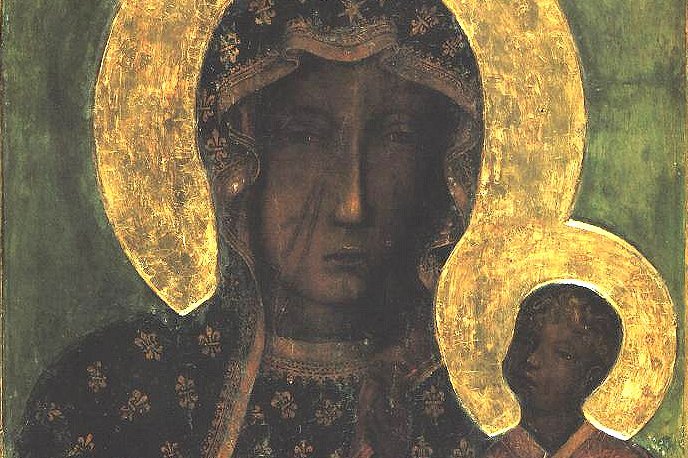
Eastern icons, found in Orthodox and Eastern Catholic churches, follow a visual grammar that looks deliberately different from Western devotional painting, and the difference is theological, not just stylistic. Western sacred art, especially from the Renaissance onward, generally pursues naturalism — real anatomy, real light, an emotionally expressive human face meant to move a viewer the way any skilled portrait might. Icons instead follow prescribed, formal conventions passed down across generations: flattened perspective, elongated features, gold backgrounds representing divine light rather than a physical sky. Icons are traditionally described as being "written" rather than painted, and Eastern Christian theology holds that a properly written icon serves as a genuine point of contact with the holy person it depicts — not a portrait attempting likeness, but a window (a common description in Orthodox theology) opening onto a sacred reality beyond the image itself.
Looking with more intention
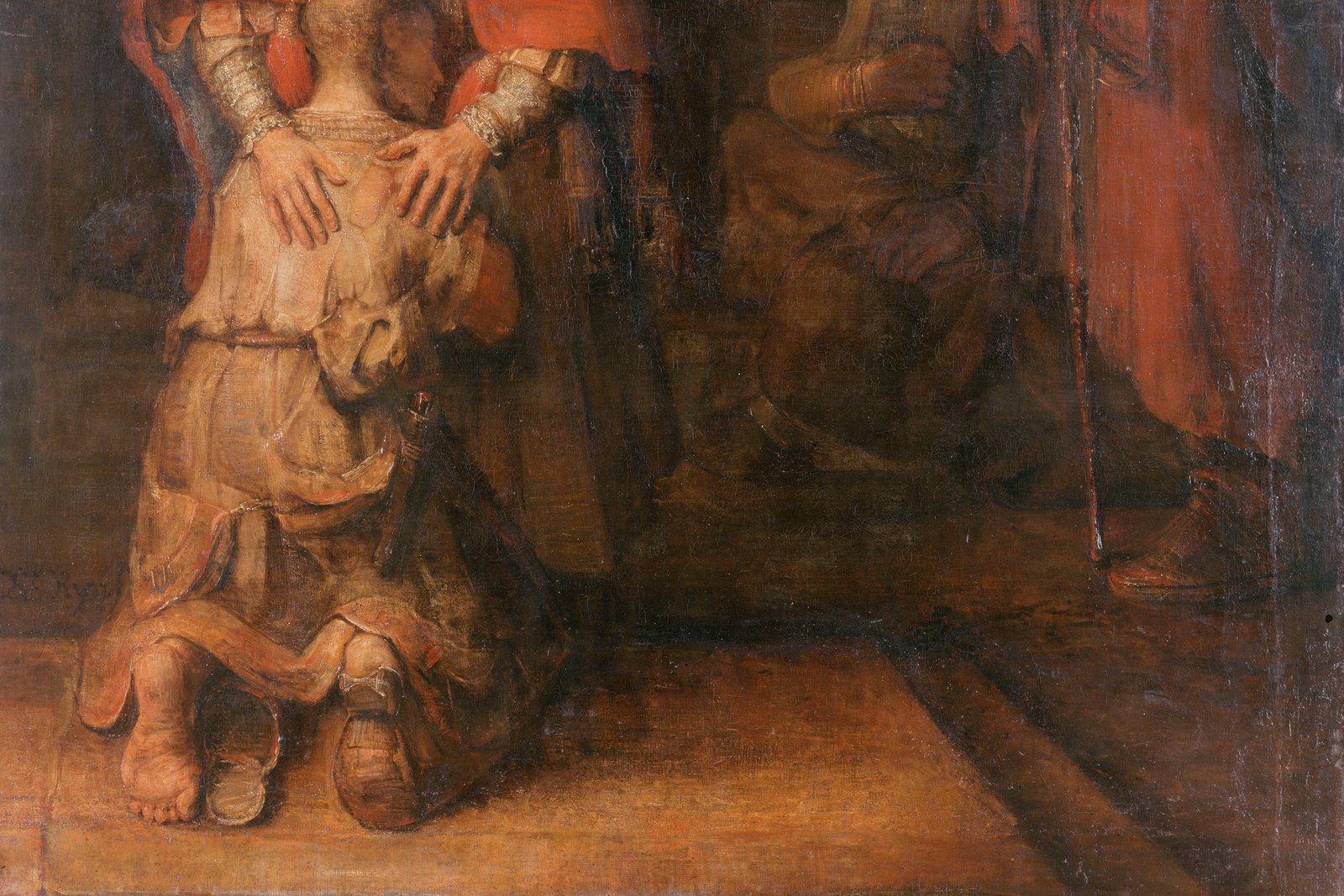
None of this requires an art history degree to put into practice. The next time you're in an older Catholic church, try identifying two or three figures purely from their attributes before checking a plaque or guidebook. Notice whether the light through the windows is doing something the architects intended, or whether a painting is asking for naturalistic emotional engagement versus the stylized stillness of an icon. Catholic sacred art was never meant to be admired passively as decoration. It was built, brick and glass and pigment, to teach — and it's still doing that job for anyone willing to actually look.
Trivia
Why do saints in Catholic art always hold specific objects?
Does the Catholic Church teach that people should worship statues or images?
What's the theological difference between a Western statue or painting and an Eastern icon?
Why do medieval and Renaissance churches have so much stained glass?
How can I start recognizing which saint a statue or painting depicts?
Related Reading