The Crown of Thorns in Christian Art: A Symbol of Mockery and Majesty

A mockery turned meditation
The crown of thorns began as a piece of theater, not devotion. According to the Gospel accounts, Roman soldiers occupying Jerusalem twisted together a ring of thorny branches and forced it onto Jesus' head as part of a cruel pageant — a purple robe, a reed as a mock scepter, and now a crown, all meant to lampoon the charge that this bound and beaten prisoner claimed to be a king (Matthew 27:29, Mark 15:17). It was improvised cruelty, not premeditated symbolism. But almost from the earliest centuries of Christian art, painters, sculptors, and manuscript illuminators recognized that the soldiers' joke contained an accidental theological truth: this was, in fact, a coronation, just not the kind anyone watching could have understood at the time.
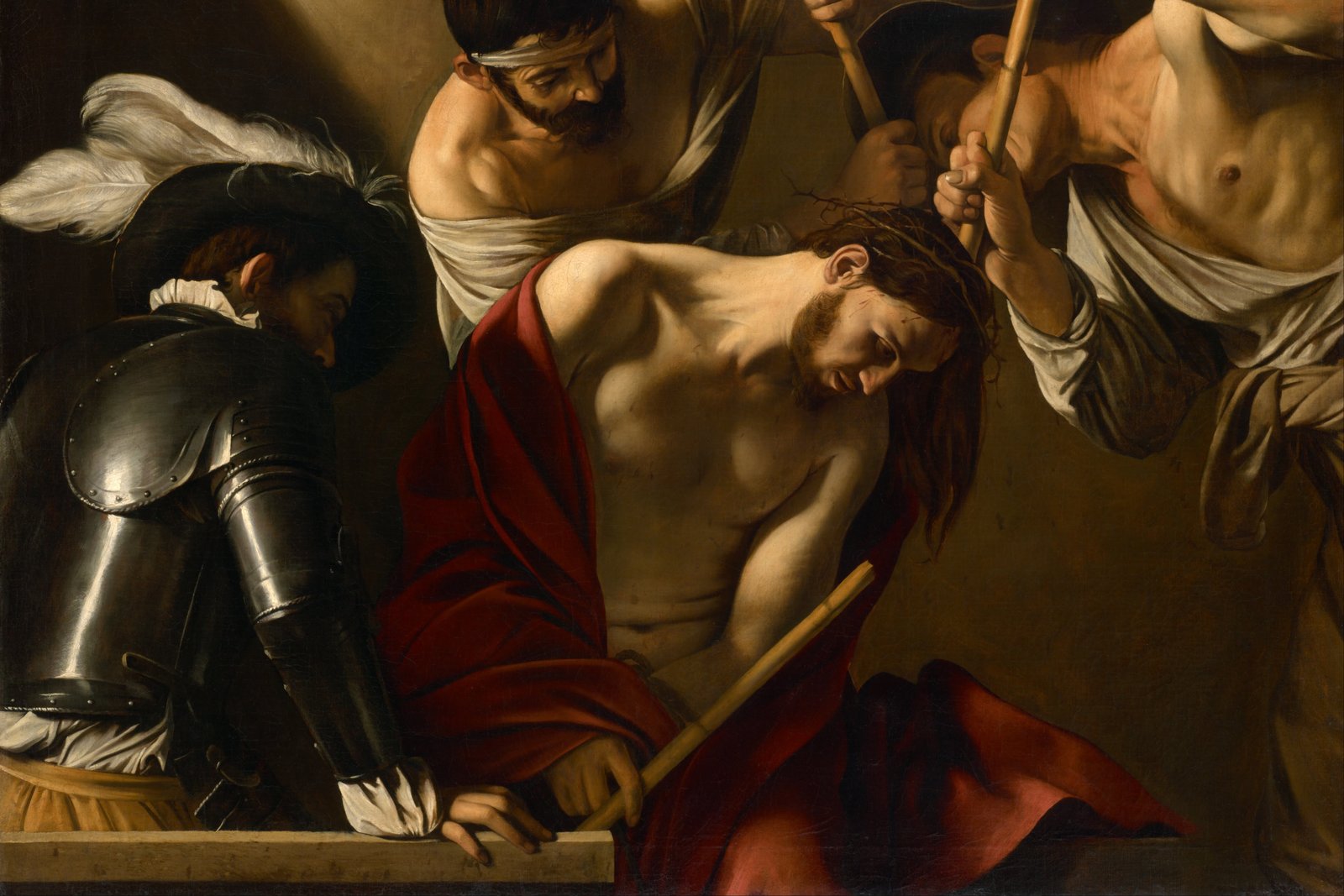
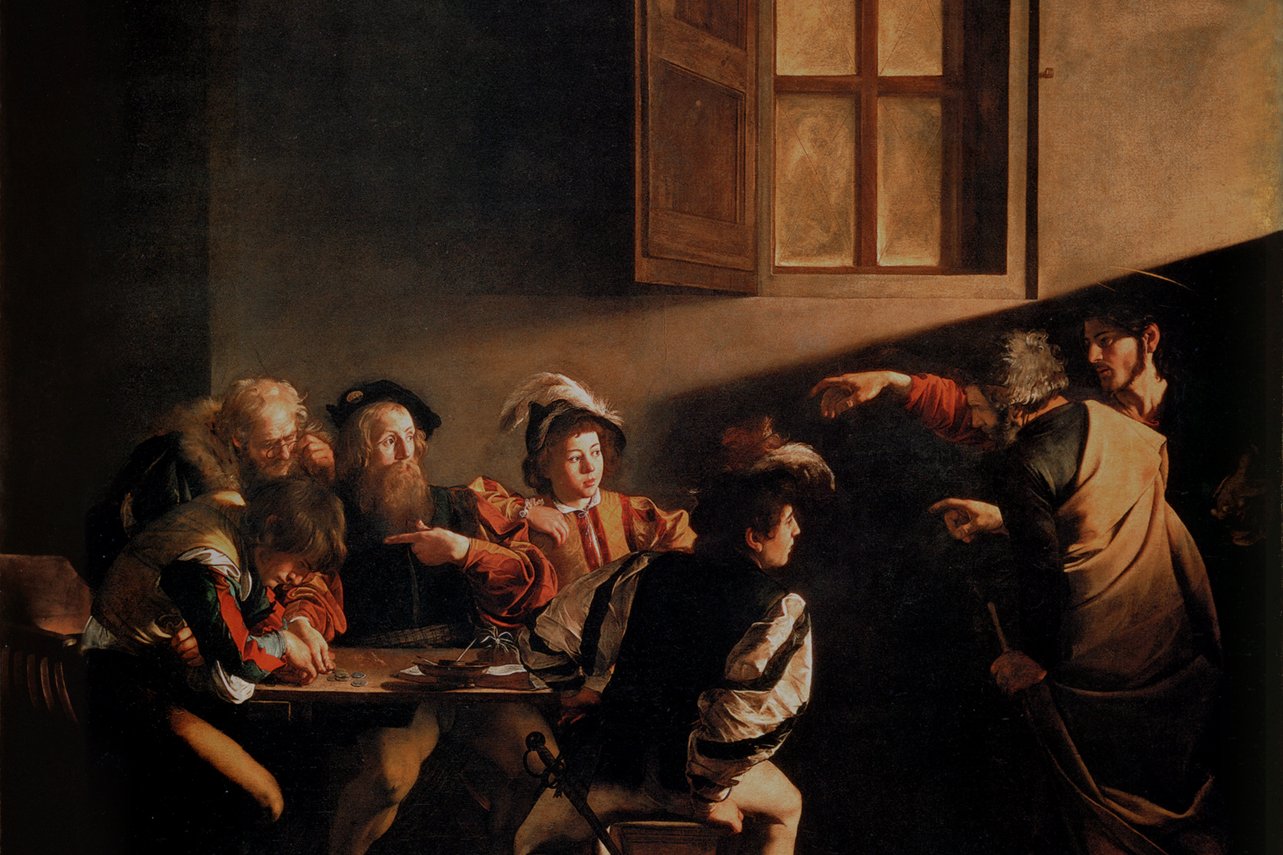
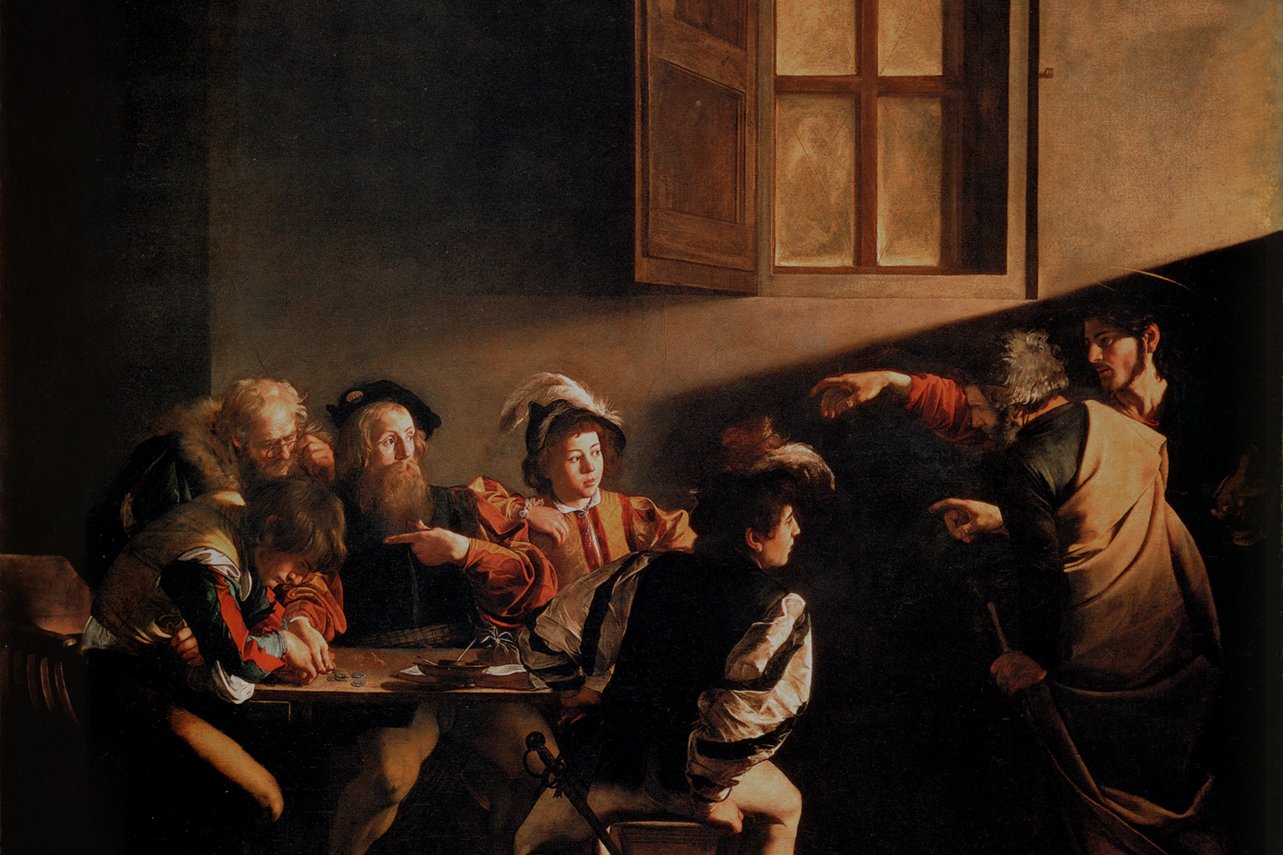
Caravaggio, "The Crowning with Thorns," c. 1602-1604, Kunsthistorisches Museum, Vienna — public domain.
From narrative detail to isolated symbol
In the earliest surviving depictions of the Passion, the crown of thorns appears as one detail within a larger narrative scene — soldiers gathered around a seated Christ, the crown being pressed down as part of the continuous story of his suffering. By the late medieval period, however, devotional art increasingly pulled individual instruments of the Passion out of their narrative context entirely, presenting them as standalone objects of meditation: the nails, the spear that pierced Christ's side, the sponge soaked in vinegar, the seamless robe divided by lot, and the crown of thorns among them. Collectively these became known as the Arma Christi, literally the "Weapons of Christ" — a slightly paradoxical name, since these were instruments used against him, not by him, though tradition read them as the weapons by which Christ triumphed over sin and death through his willing suffering.
This shift mattered because it changed how viewers were meant to engage with the image. A narrative Passion scene tells a story with a beginning and an end. An isolated crown of thorns, painted in careful, almost forensic detail — every thorn rendered sharp enough to feel — asks the viewer to sit with a single object and imagine its weight, its pain, its meaning, without the distraction of surrounding incident. It is a technique borrowed from relic veneration: focus intensely on one physical thing, and let that focus carry you toward a larger truth. Readers curious about how other objects and figures function this way across Catholic tradition can find a broader overview in our guide to Catholic sacred art.
Caravaggio and the physical reality of cruelty
No painter made the crown of thorns feel more physically immediate than Caravaggio. His Crowning with Thorns, painted in the early 1600s and now held at the Kunsthistorisches Museum in Vienna, abandons any sense of distant, staged tableau. Three men crowd in close around Christ in near-total darkness, lit only by a harsh, raking light that Caravaggio used throughout his career to heighten drama — a technique called tenebrism. One soldier grips a reed like a scepter, another forces the thorn crown down with his bare hands, and Christ's face, caught mid-motion, registers real pain rather than serene endurance. Where earlier artists often painted Christ as already transcending his suffering, Caravaggio painted the moment suffering was actually being inflicted — cruelty as an ongoing physical act, not a completed symbol.
This approach was part of a broader Baroque instinct toward emotionally direct, almost theatrical religious art, meant to pull viewers into feeling present at sacred events rather than observing them from a comfortable distance. Titian painted the same subject at least twice, in versions now held in Munich and the Louvre, using similarly harsh lighting and crowded, claustrophobic compositions to the same emotional end.
What kind of thorn?
Scripture never specifies which plant the soldiers used, and artists were rarely botanically precise — the point was cruelty, not species identification. Still, from at least the medieval period onward, a common identification circulated linking the crown to Ziziphus spina-christi, a thorny shrub native to the Holy Land sometimes called the Christ's thorn jujube, whose long, curved spines made it a plausible candidate for something a soldier could quickly twist into a circle. Painters typically exaggerated the thorns' length and sharpness well beyond what any real specimen would show, prioritizing visual and emotional impact — thorns that looked genuinely capable of drawing blood — over botanical accuracy.
A relic with its own history
Unlike some instruments of the Passion, which exist in Christian art purely as symbols, a relic venerated as the crown of thorns has a documented physical history. Byzantine sources place it in Constantinople by at least the ninth century, where it was kept among the imperial collection of relics. In 1239, the deeply pious French king Louis IX — later canonized as Saint Louis — acquired it from the financially desperate Latin Emperor of Constantinople and had the Sainte-Chapelle built in Paris specifically to house it, along with other Passion relics. The crown survived the French Revolution, when many church treasures were destroyed or dispersed, and was eventually transferred to Notre-Dame Cathedral. During the catastrophic 2019 fire at Notre-Dame, firefighters and clergy made a point of rescuing the relic before the roof collapsed; it is currently held at the Louvre while Notre-Dame's restoration continues.
Kingship redefined
What makes the crown of thorns such a durable subject for Christian artists is the irony built into its very origin. It was designed by people who intended total mockery — a fake crown for a fake king, as they saw it — and Christian tradition read it instead as the opposite: a real crown for a real king, whose kingdom, according to the Gospel of John, was "not of this world." Painters who isolated the crown as a standalone devotional image, or who staged its violent placement as Caravaggio did, were working with that same inversion — using an instrument of humiliation to depict a moment tradition holds as the paradoxical beginning of Christ's glorification. Few symbols in the entire visual vocabulary of Christian art manage to hold cruelty and majesty together so tightly in a single, unmistakable object.
Trivia
Where does the crown of thorns first appear in the Bible?
What plant did artists usually depict as the crown of thorns?
Is the crown of thorns considered a relic today?
Why do some paintings show the crown of thorns without any other Passion scene?
How did Caravaggio's version of the Crowning with Thorns differ from earlier depictions?
Related Reading