Fra Filippo Lippi's Madonnas: A Monk Who Painted Real Women

An unlikely painter of tenderness
Fra Filippo Lippi's own life reads almost like a cautionary tale rather than the biography of one of the fifteenth century's most sought-after religious painters. Orphaned as a child, he was placed with the Carmelite friars of Santa Maria del Carmine in Florence around the age of eight, took religious vows, and was eventually ordained a priest. Yet his life as a friar was, by most historical accounts, unconventional at best — he struggled financially throughout his career, was involved in at least one documented forgery scandal, and, most famously, persuaded a young nun named Lucrezia Buti to leave her convent around 1456, beginning a relationship that produced children, including his son, the future painter Filippino Lippi. Pope Pius II eventually granted Lippi and Lucrezia a formal dispensation allowing their union to be regularized. It's an unusual background for an artist whose religious paintings would go on to be celebrated precisely for their warmth and humanity, but perhaps not entirely coincidental — Lippi painted the Virgin Mary less as a distant devotional icon and more as a real, recognizable woman.
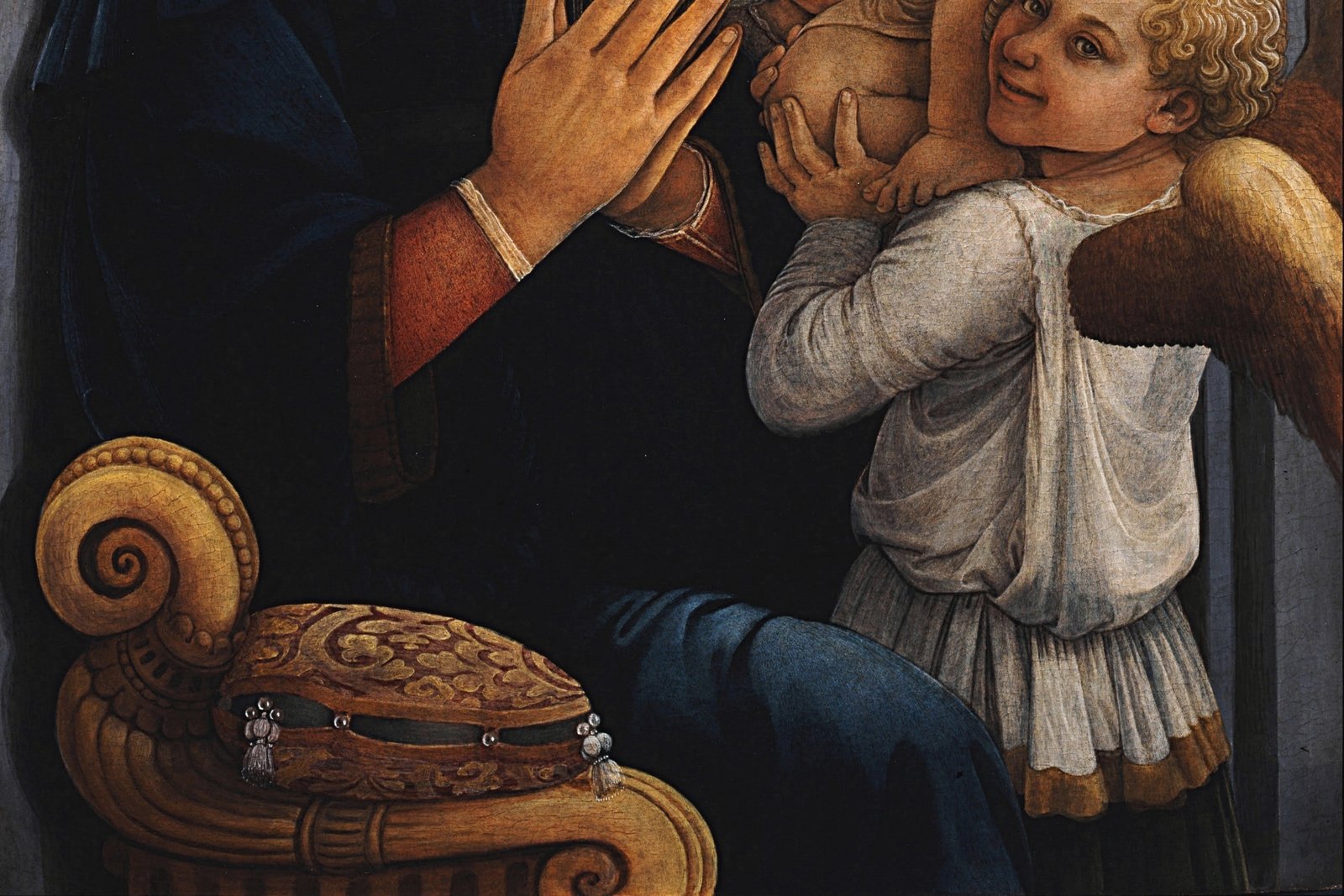
Fra Filippo Lippi, "Madonna and Child with Two Angels," c. 1465, Uffizi Gallery, Florence — public domain.
From symbol to real woman
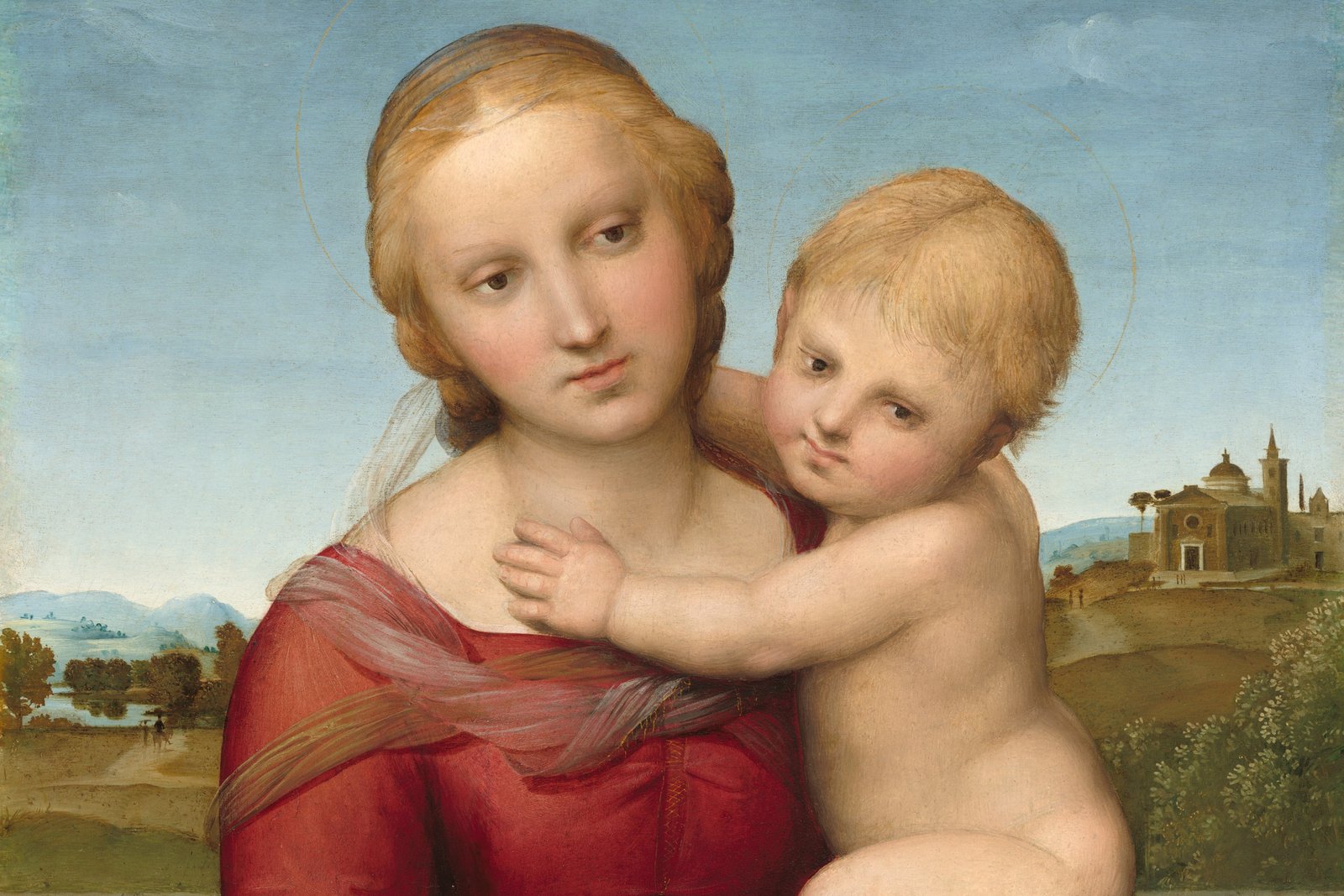
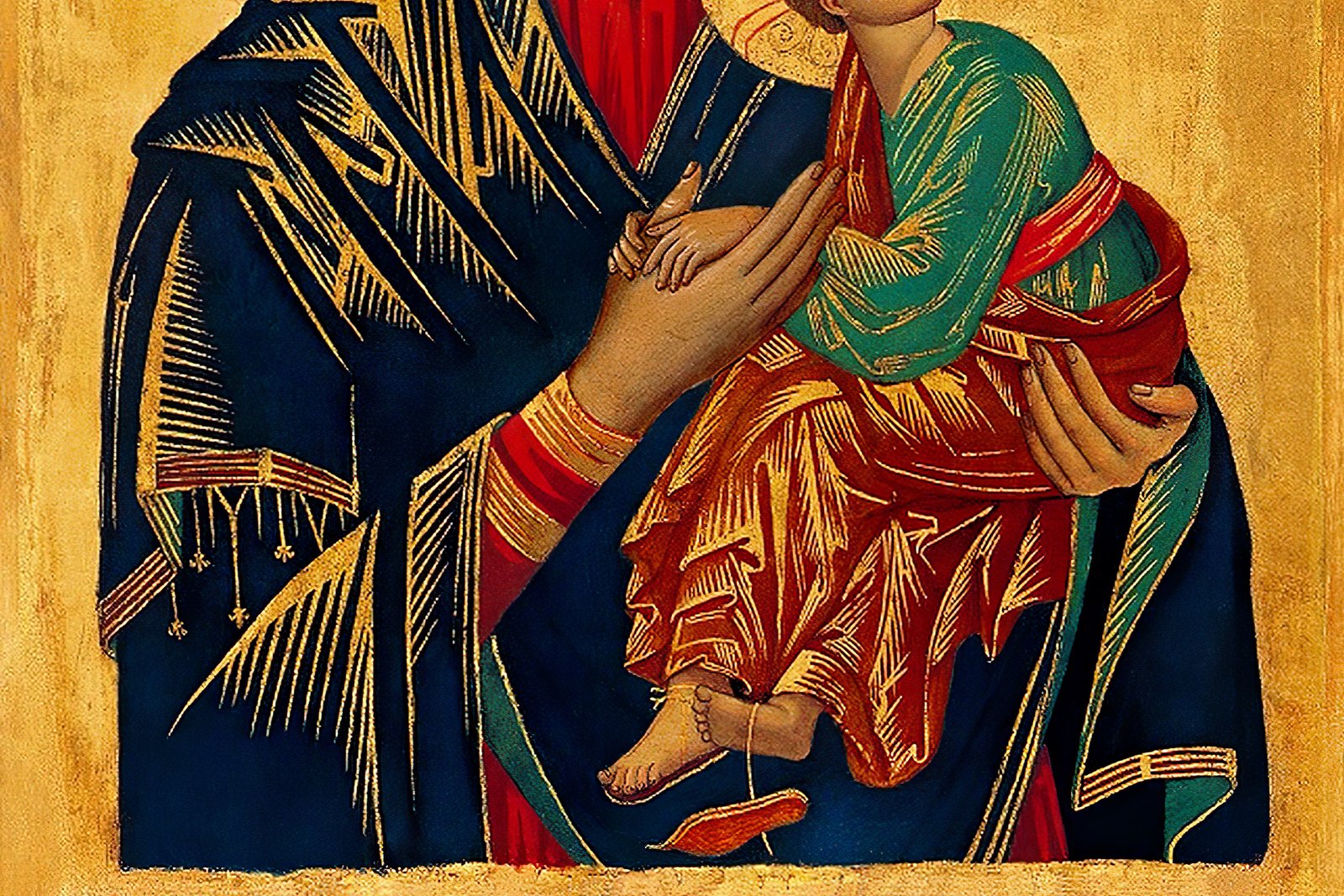
Earlier Florentine and broader Italian traditions of painting the Madonna, still carrying visible influence from Byzantine icon conventions, tended toward formal frontal poses, generalized idealized features, and a deliberate visual distance between the holy figure and the ordinary viewer — Mary presented as a symbol to be venerated rather than a person to be recognized. Lippi's Madonnas broke decisively from that convention. His Mary has individualized, often quite specific facial features, elaborately but naturalistically arranged contemporary hairstyles, and clothing that echoes actual fifteenth-century Florentine fashion rather than generic, timeless holy drapery. Most strikingly, she interacts with the infant Christ the way an attentive real mother would — gazing at him directly, supporting him with visibly careful hands, her posture suggesting genuine physical and emotional engagement rather than static, formal presentation.
The Madonna and Child with Two Angels
Among Lippi's many treatments of the subject, the Madonna and Child with Two Angels, held today in the Uffizi Gallery in Florence, is generally considered his masterpiece of the type. Mary is shown in profile, her hands folded in a gesture of prayer and tenderness, gazing down at the Christ Child, who is held up toward her by two mischievous-looking angels in the foreground, one of whom turns to look directly out at the viewer with an unmistakably playful, knowing expression rare in devotional painting of the period. Behind Mary, a carefully observed landscape recedes into soft atmospheric distance, using techniques of aerial perspective that were still relatively new to Florentine painting at the time. The painting's combination of devotional subject and genuinely charming, almost domestic-feeling detail — the mischievous angels especially — exemplifies exactly what made Lippi's religious art feel distinct from his contemporaries.
An influence that outlived him
Lippi's graceful, linear approach to the human figure, his flowing treatment of drapery, and his gift for combining devotional gravity with genuine warmth had a direct and traceable influence on the next generation of Florentine painters, most importantly through his own workshop. Sandro Botticelli trained under Lippi as a young man, and art historians can trace a clear stylistic lineage from Lippi's graceful, flowing figures directly into Botticelli's own mature work, including the elegant, linear treatment of hair and drapery visible in paintings like Primavera. Lippi's son Filippino Lippi likewise became a significant painter in his own right, continuing and developing his father's approach to religious subjects across the following decades. For readers interested in how these Florentine workshop traditions connect to the broader development of religious painting, our guide to Catholic sacred art offers additional context.
Patronage despite scandal
Remarkably, Lippi's personal reputation for irregular and scandalous behavior never seriously damaged his professional standing, and he continued to receive major commissions from Florence's most powerful patrons throughout his career, including the Medici family, who valued his talent highly enough to intervene on his behalf during at least one financial or legal difficulty. Cosimo de' Medici in particular is recorded as having taken a personal interest in securing Lippi's work and protecting him from the consequences of his own poor financial management, a level of patronal tolerance that speaks to just how highly Lippi's artistic gifts were regarded even by contemporaries fully aware of his unconventional personal life.
A distinctly human Mary
What makes Fra Filippo Lippi's Madonnas endure, beyond the colorful biographical footnote of the artist who painted them, is that they still read today exactly as they were intended to nearly six centuries ago: images of unmistakably real, warm, human affection, dressed in the language of devotional art. Where so much religious painting of the period aimed at conveying distance, formality, and transcendence, Lippi consistently chose closeness instead — a mother's hand, a child's reaching arm, a face turned in genuine tenderness rather than formal presentation. It remains one of the more quietly radical contributions any single Renaissance painter made to how Christian art imagined the Holy Family.
Trivia
Was Fra Filippo Lippi actually a monk?
Who was the model for many of Lippi's Madonnas?
What makes Lippi's Madonnas different from earlier Byzantine-influenced images of Mary?
Did Lippi have famous students?
Where can Fra Filippo Lippi's Madonnas be seen today?
Related Reading