Georges de La Tour's Penitent Magdalene

A painter who worked almost entirely by candlelight
Georges de La Tour spent his career in the Duchy of Lorraine, in what is now northeastern France, working largely outside the major artistic centers of Paris and Rome, yet he achieved real recognition in his own lifetime, eventually earning the title "Painter to the King" under Louis XIII. His reputation, however, did not survive the centuries that followed. By the eighteenth century his name had nearly vanished from art history, his paintings variously misattributed to other artists or simply forgotten, until a substantial rediscovery in the early twentieth century restored him to his current standing as one of the great painters of the French Baroque.
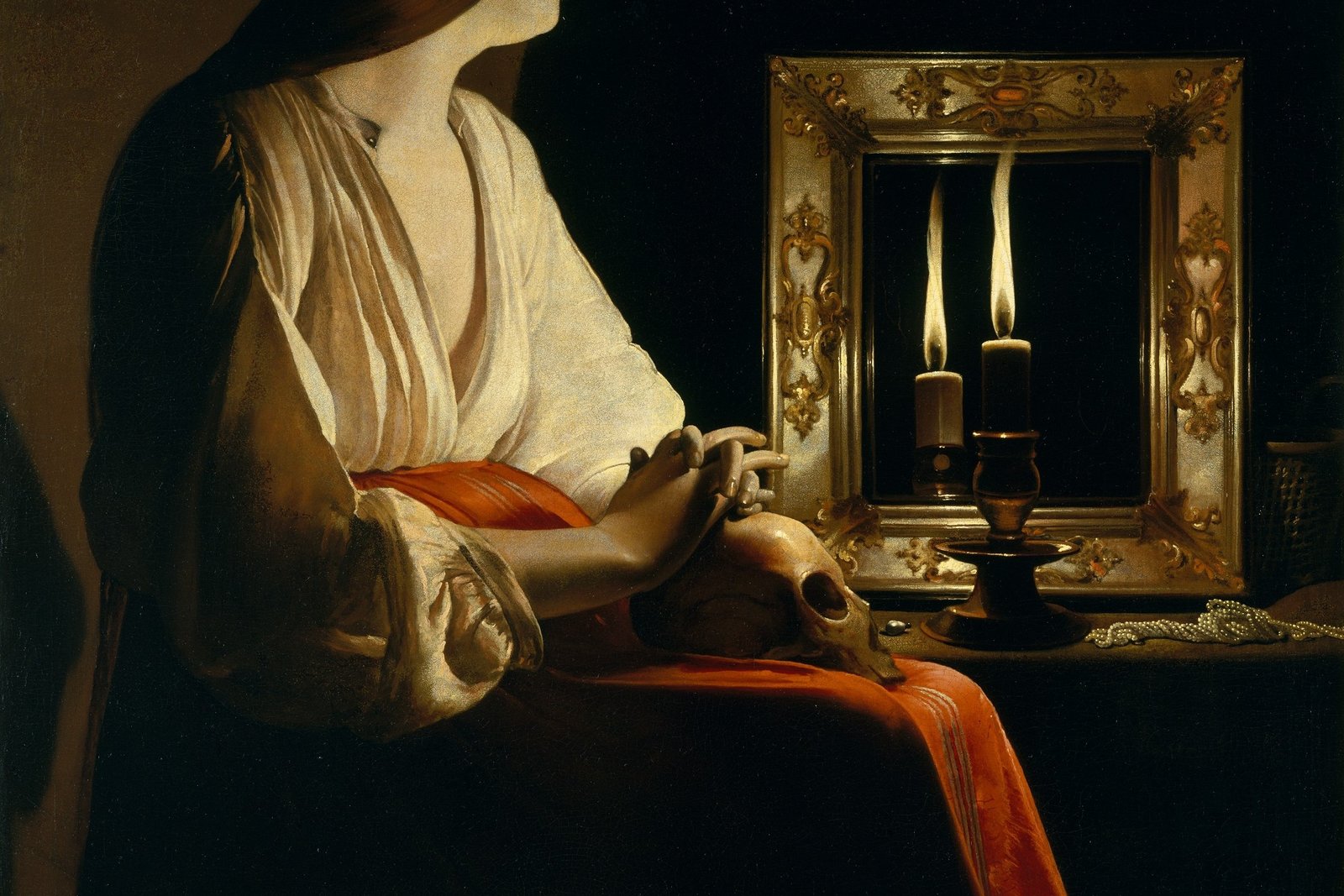
Georges de La Tour, Magdalene with Two Flames (The Penitent Magdalen), c. 1638-1643, Metropolitan Museum of Art, New York — public domain.
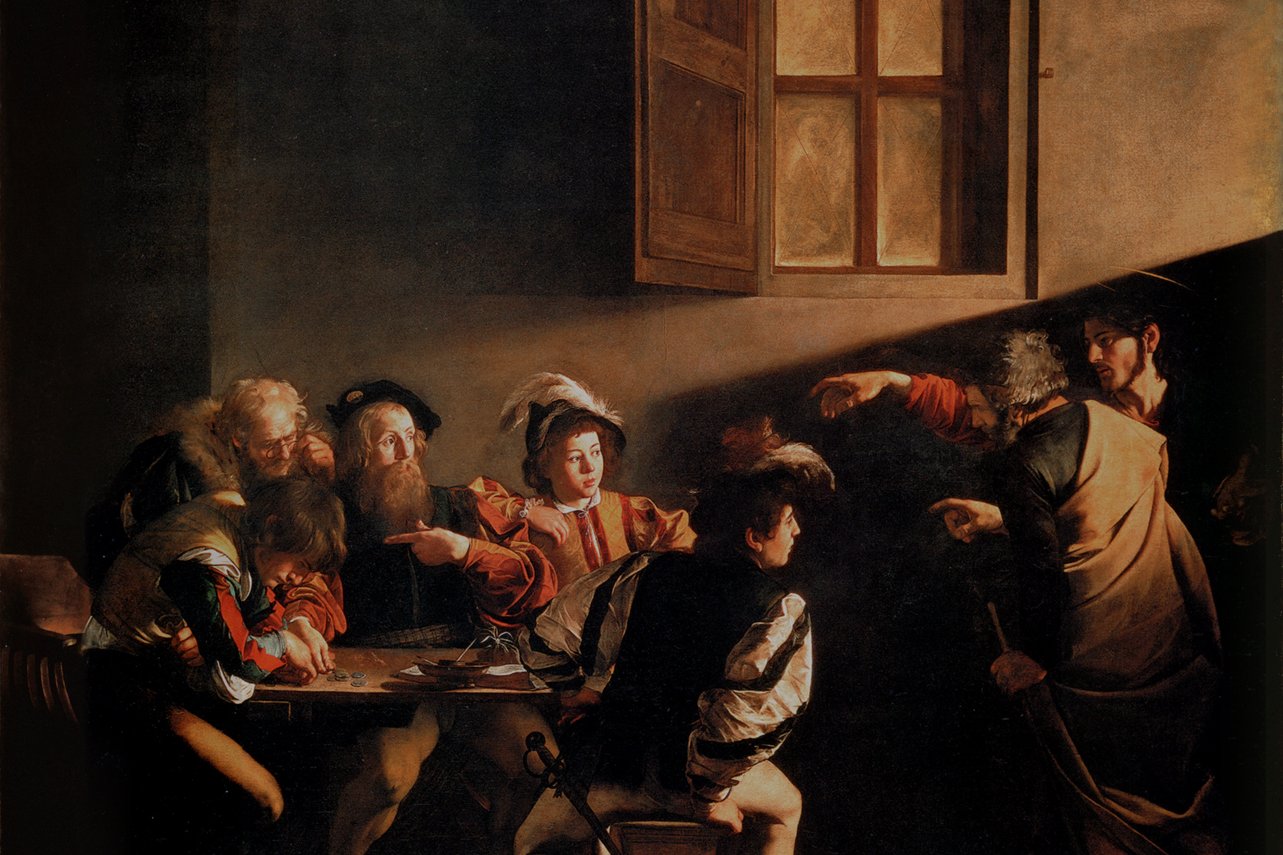
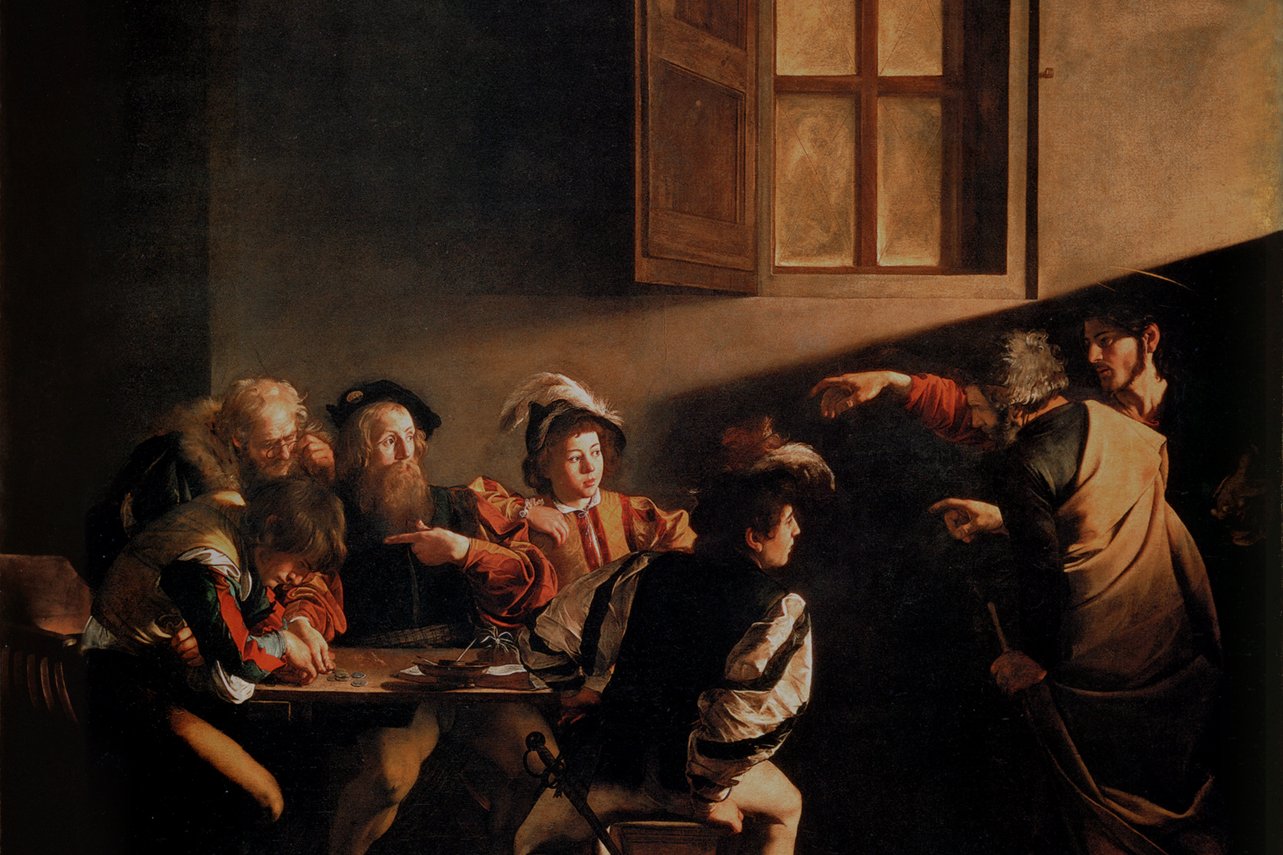
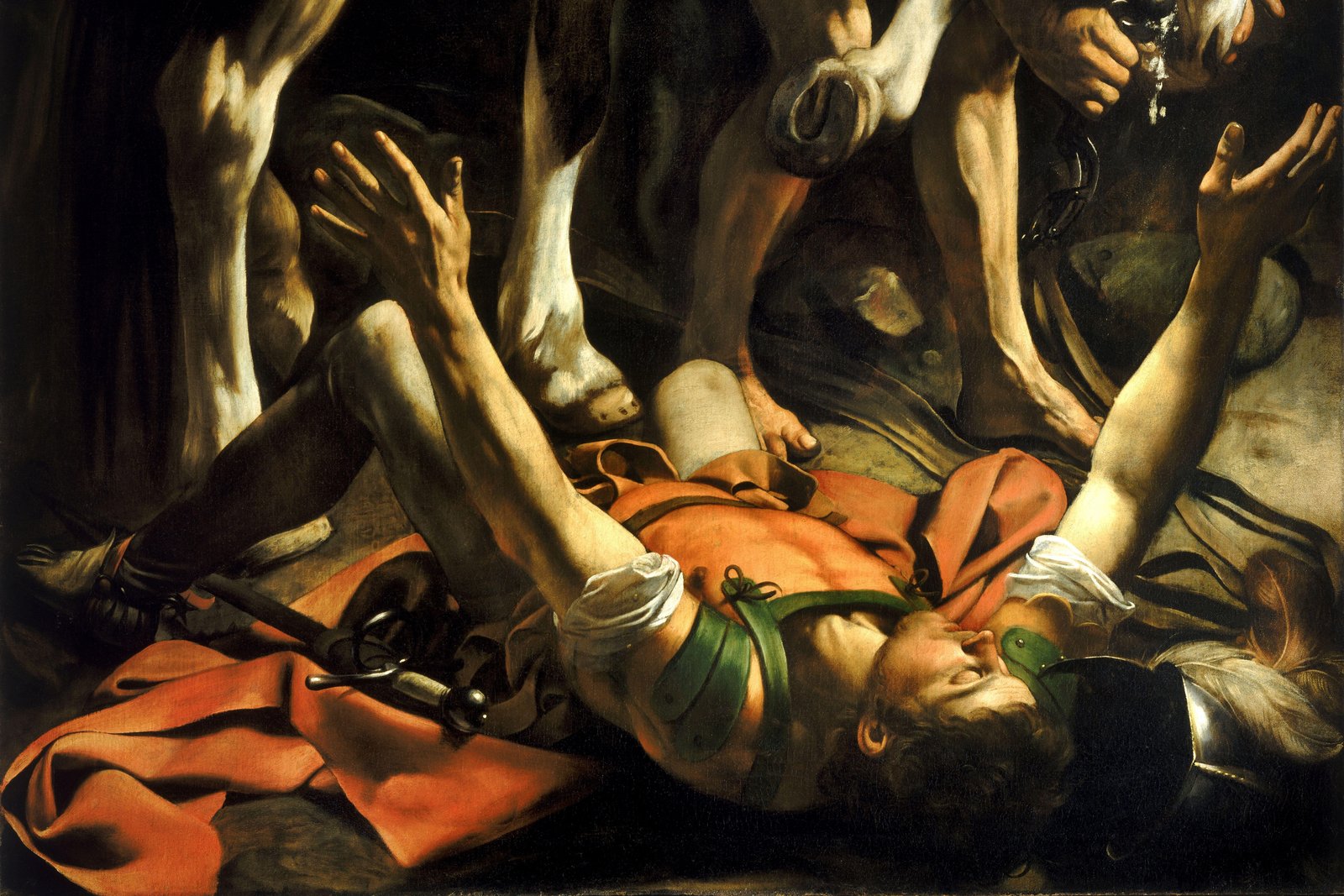
What sets La Tour apart, and what modern viewers respond to most immediately, is his almost obsessive use of a single visible light source — typically one candle or torch — to construct an entire composition. Unlike Caravaggio, whose dramatic light-and-shadow technique influenced an entire generation of European painters including, likely indirectly, La Tour himself, La Tour's light sources are usually visible within the frame rather than implied from outside it. The candle isn't just illuminating the scene; it is, in a very literal sense, the subject the figures in the painting are looking at, and the device that determines everything the viewer can and cannot see.
Mary Magdalene, returned to again and again
Among the subjects La Tour returned to repeatedly across his career, Mary Magdalene in solitary, candlelit penitence stands out as one of his most sustained preoccupations. At least four surviving paintings treat this same essential subject with variations in detail: a woman seated alone at night, illuminated only by a candle, often with a skull resting in her lap or on a table before her, sometimes with a mirror positioned to reflect the flame back into the composition. These paintings are now dispersed across major collections, including the Louvre in Paris, the Metropolitan Museum of Art in New York, and the Los Angeles County Museum of Art.
Western Christian art has depicted Mary Magdalene as a penitent figure for centuries, following a long-standing tradition, dating back at least to the sixth century and associated with a homily by Pope Gregory the Great, that conflated the Magdalene named in the Gospels with the unnamed "sinful woman" described in the Gospel of Luke who washed Christ's feet with her tears. Modern biblical scholarship has largely separated these figures again, but the conflated tradition shaped an enormous body of devotional art across the medieval and early modern periods, of which La Tour's paintings represent a particularly restrained, psychologically interior late example.
Reading the symbols in the shadows
The skull that appears in nearly every version of La Tour's Magdalene belongs to a well-established genre of symbolism known as vanitas, common throughout seventeenth-century European art, in which objects like skulls, extinguished candles, hourglasses, and wilting flowers reminded viewers of life's brevity and the ultimate futility of worldly vanity. Placed in Mary Magdalene's lap or beneath her folded hands, the skull transforms a moment of quiet candlelit stillness into a meditation on mortality — appropriate for a figure whose traditional story is one of turning away from a worldly life toward spiritual devotion.
The mirror, present in some versions of the composition, adds another traditional layer of meaning. Mirrors in vanitas imagery often carried associations with vanity and self-regard, but here the mirror reflects not Mary Magdalene's face but the candle flame itself — a visual pun that has invited many interpretations, most commonly read as suggesting that her gaze has turned away from herself and toward something higher, the flame standing in for spiritual illumination or divine truth. The extinguished or nearly-extinguished quality of some of the candles in different versions has likewise been read as marking the passage from an old, worldly life toward a new, contemplative one.
An intimacy built from restraint
What distinguishes La Tour's treatment of this subject from the many dramatic, tearful Magdalenes painted by his contemporaries is its extraordinary restraint. There is no visible weeping, no theatrical gesture of grief, no crowd of onlookers. Mary Magdalene sits essentially alone with her thoughts, her face often turned away from the viewer entirely, her attention absorbed by the candle flame rather than directed outward for a viewer's benefit. This quality of private, almost meditative stillness is part of what has made these paintings feel so strikingly modern to later audiences, centuries removed from the specific devotional context in which they were made — less a public statement of religious drama than an intimate, quiet study of a single mind turning inward, lit by nothing more than a single flame in an otherwise dark room.
Modern museums have generally embraced that same quality of stillness in how they display these works, often hanging La Tour's Magdalene paintings in dimly lit galleries designed to approximate something closer to candlelight than standard museum lighting, letting the single painted flame remain, as it was always meant to be, the brightest thing in the room. Visitors who encounter one of these canvases this way often describe an experience closer to happening upon someone in private prayer than to viewing a painting in the ordinary sense — precisely the kind of quiet intrusion La Tour's candlelit compositions seem built to invite.
Trivia
How many versions of the Penitent Magdalene did Georges de La Tour paint?
What do the objects in the painting symbolize?
Why is Georges de La Tour known for painting by candlelight?
What does the Gospel tradition say about Mary Magdalene's association with penitence?
Was Georges de La Tour well known during his own lifetime?
Related Reading