Michelangelo's Faith and Religious Work

A career built almost entirely on sacred commissions
Michelangelo di Lodovico Buonarroti Simoni, born in 1475 in the Republic of Florence, produced an artistic output that reads, subject by subject, almost like a survey of Catholic devotional themes: the Madonna and dead Christ, the Creation and Fall in Genesis, the Last Judgment, the crucified and risen Christ, Moses, and numerous studies for tombs, chapels, and papal commissions across a career spanning nearly seven decades. Unlike many Renaissance artists who divided their output fairly evenly between religious and secular or mythological subjects, Michelangelo's major surviving works are overwhelmingly religious in content — not because he lacked interest in classical or secular subjects, which clearly fascinated him throughout his life, but because his most significant patrons, chiefly a series of popes, repeatedly commissioned him for the Church's largest and most prestigious projects.
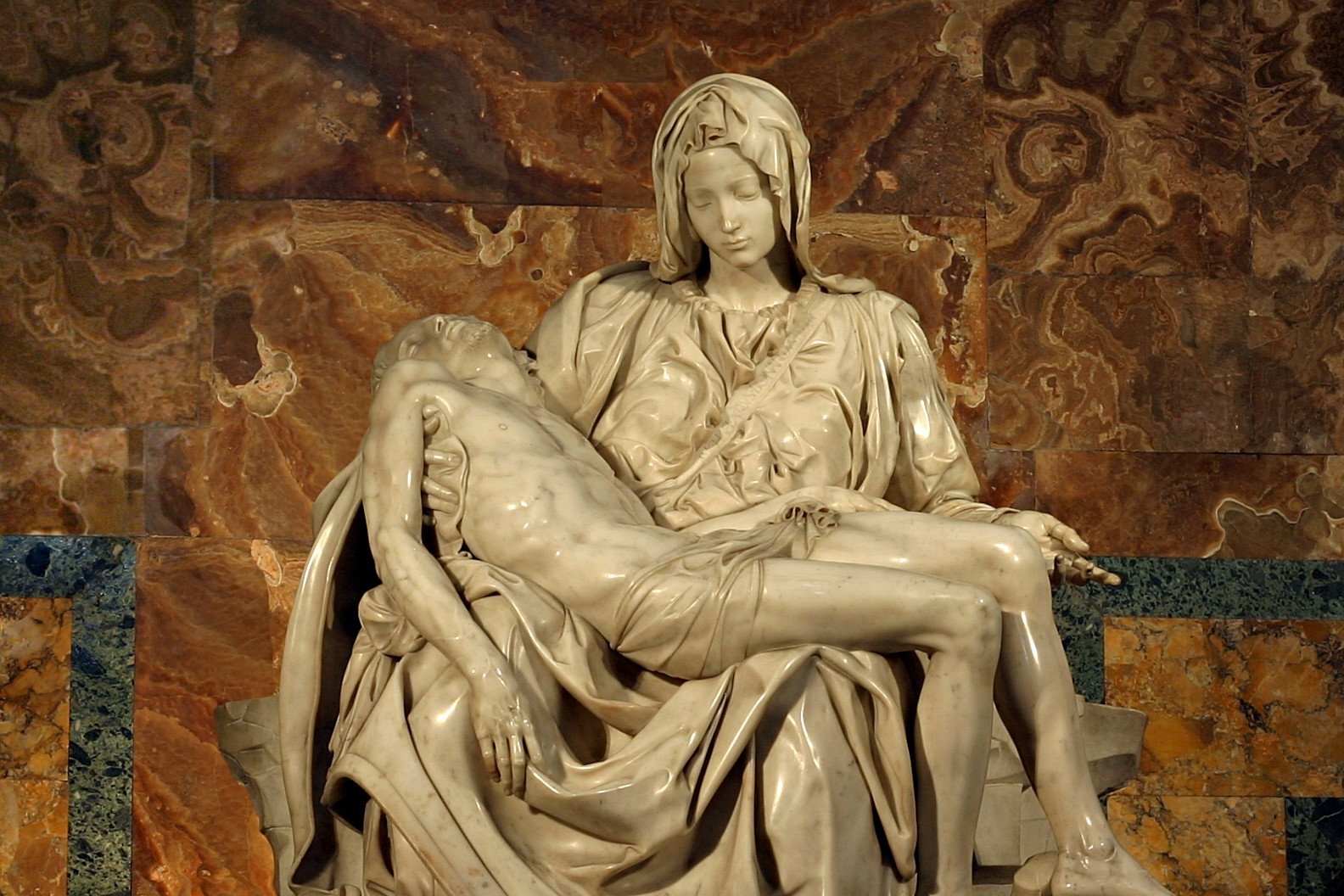
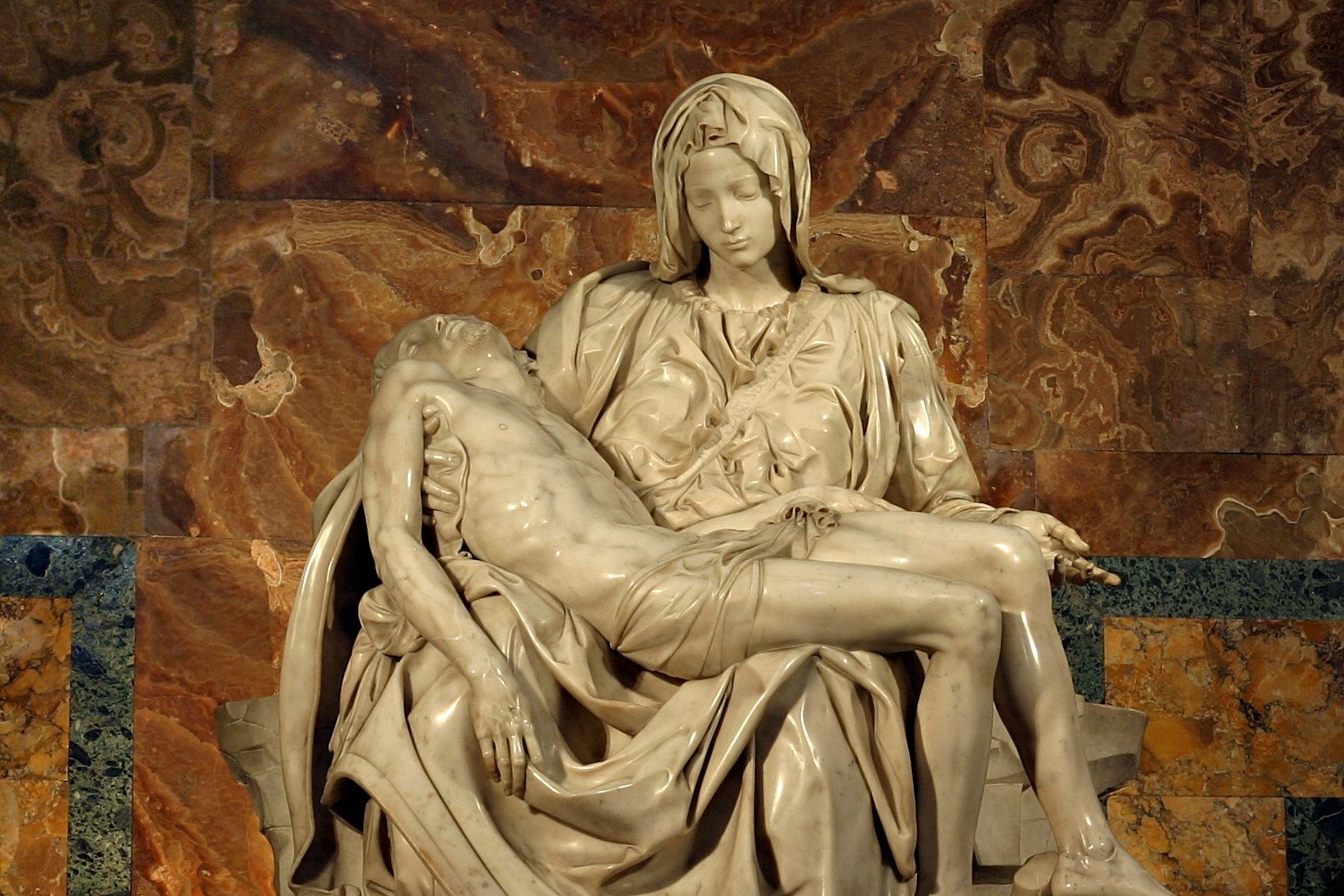
Michelangelo, "Pietà," 1498-1499, St. Peter's Basilica, Vatican City — photo by Stanislav Traykov, CC BY 2.5.
The Pietà: astonishing tenderness at twenty-four
Michelangelo's Pietà, completed around 1499 when he was roughly twenty-four years old, remains one of the most technically extraordinary works of his entire career, and it was religious in subject from its very commission — a French cardinal, Jean de Bilhères, ordered it for his own tomb in Rome. The sculpture shows Mary seated, cradling the dead body of Christ across her lap after the Crucifixion, her face rendered with a youthfulness some later critics found puzzling given that she would have been considerably older at the time of Christ's death. Michelangelo reportedly explained the choice, according to later biographical tradition recorded by Ascanio Condivi, as reflecting Mary's perpetual purity rather than literal chronological age — an artistic decision serving theological meaning rather than strict biological realism.
The work was so admired, and so unexpected from a sculptor still in his twenties, that according to Giorgio Vasari's account, Michelangelo overheard visitors attributing it to another, better-established sculptor and, in response, secretly returned at night to carve his name into the sash crossing Mary's chest — the only work he is known to have signed. It remains, to this day, the only piece he ever signed in this way.
The Sistine Chapel: Genesis on a ceiling
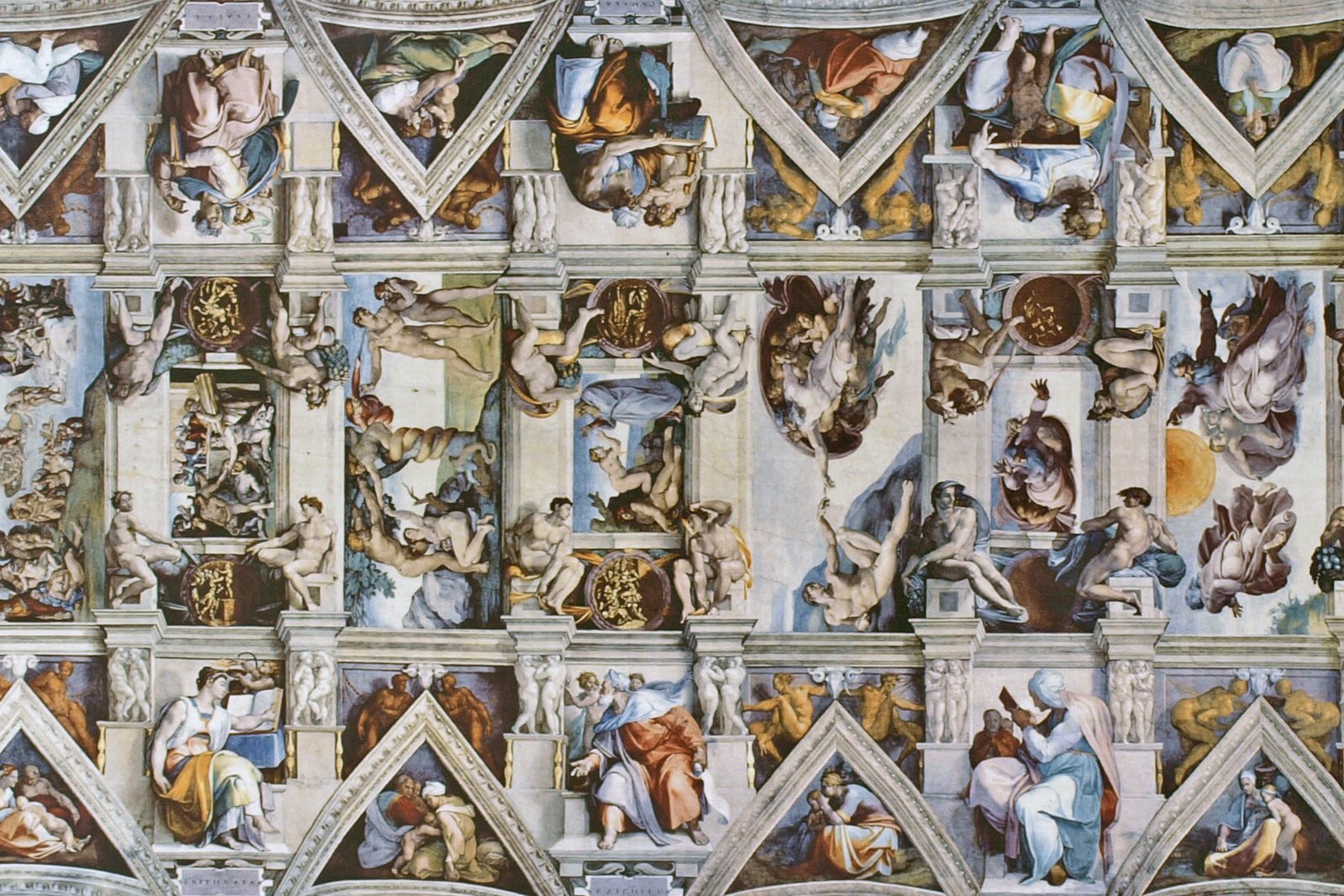
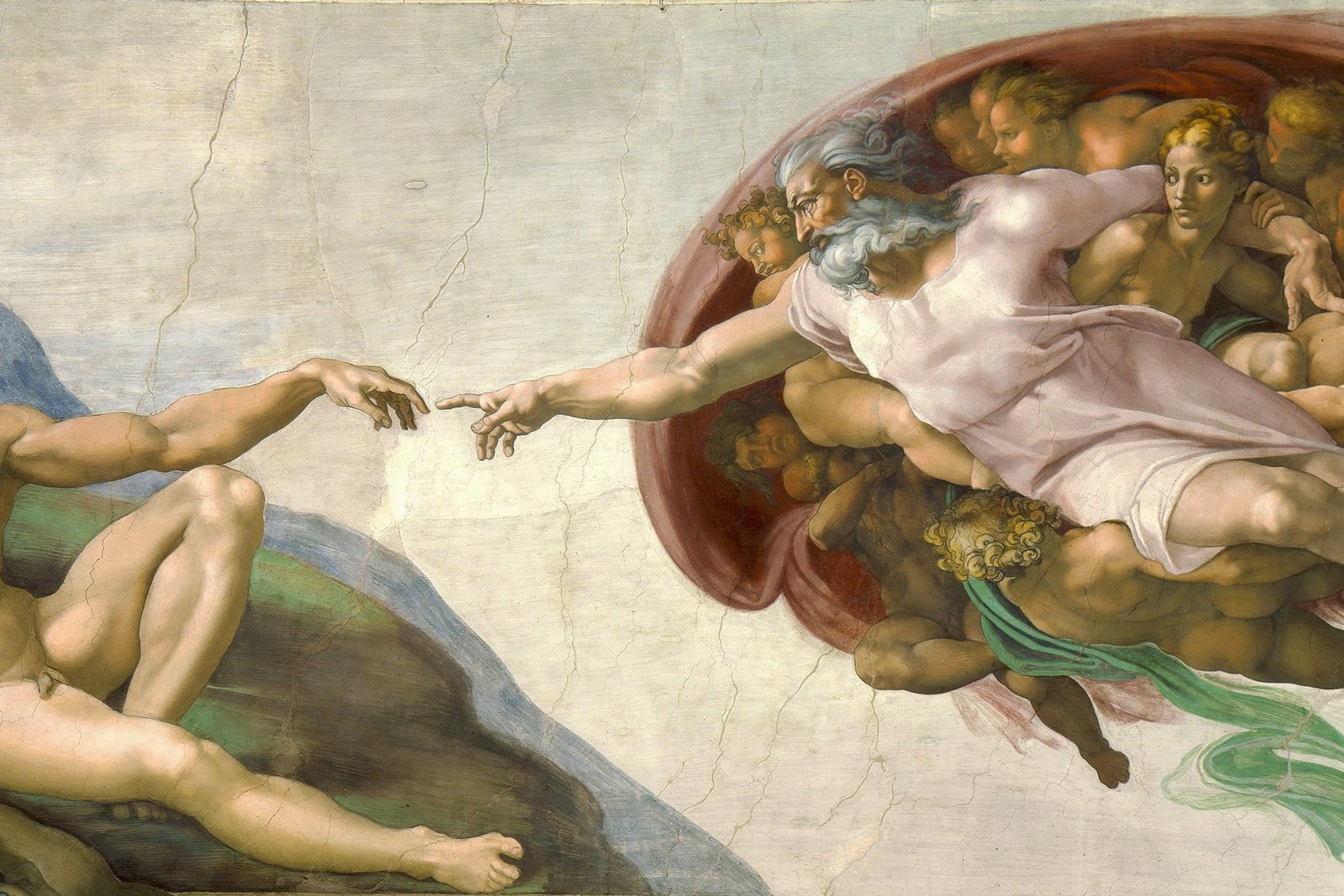
Pope Julius II commissioned Michelangelo to paint the ceiling of the Sistine Chapel starting in 1508, a project Michelangelo reportedly resisted at first, considering himself primarily a sculptor rather than a painter and suspecting the commission had been engineered by rivals hoping he would fail publicly. Over four physically grueling years, working largely alone on scaffolding of his own design, he covered the ceiling with an enormous fresco cycle depicting scenes from Genesis, from the Creation of Adam through the story of Noah, framed by prophets, sibyls, and numerous subsidiary figures.
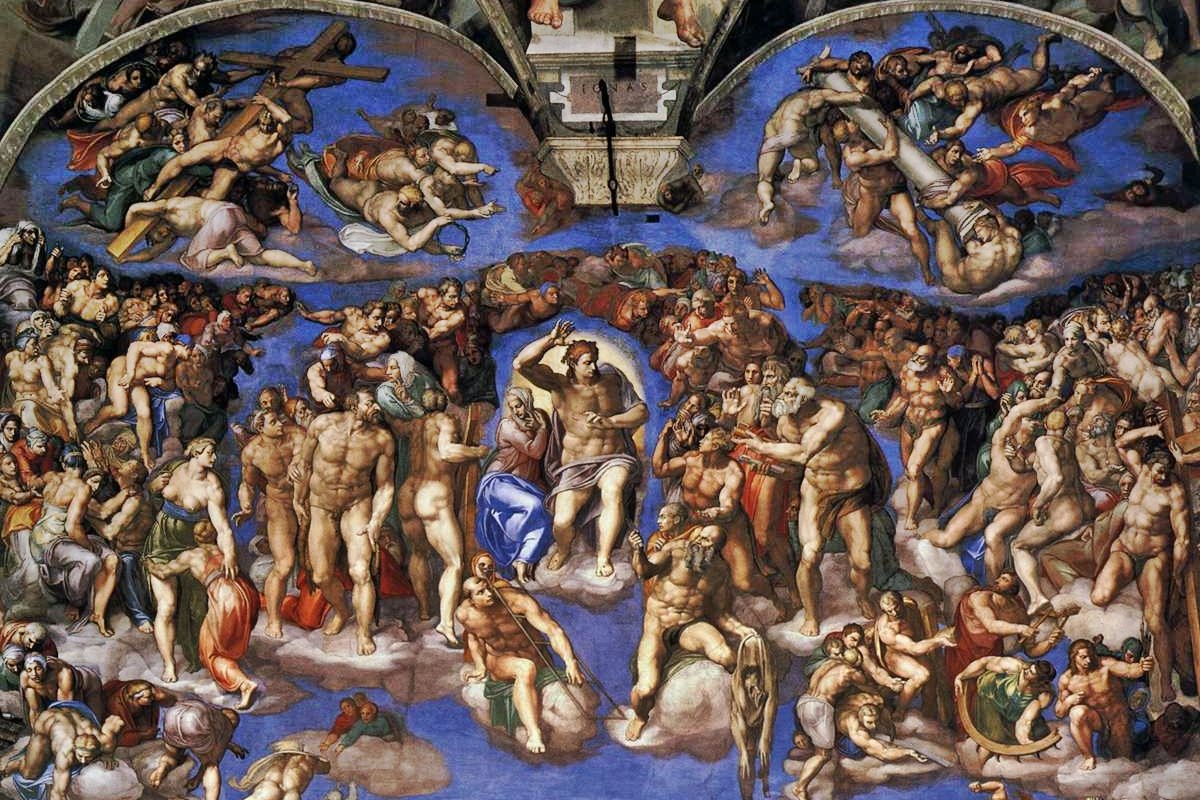
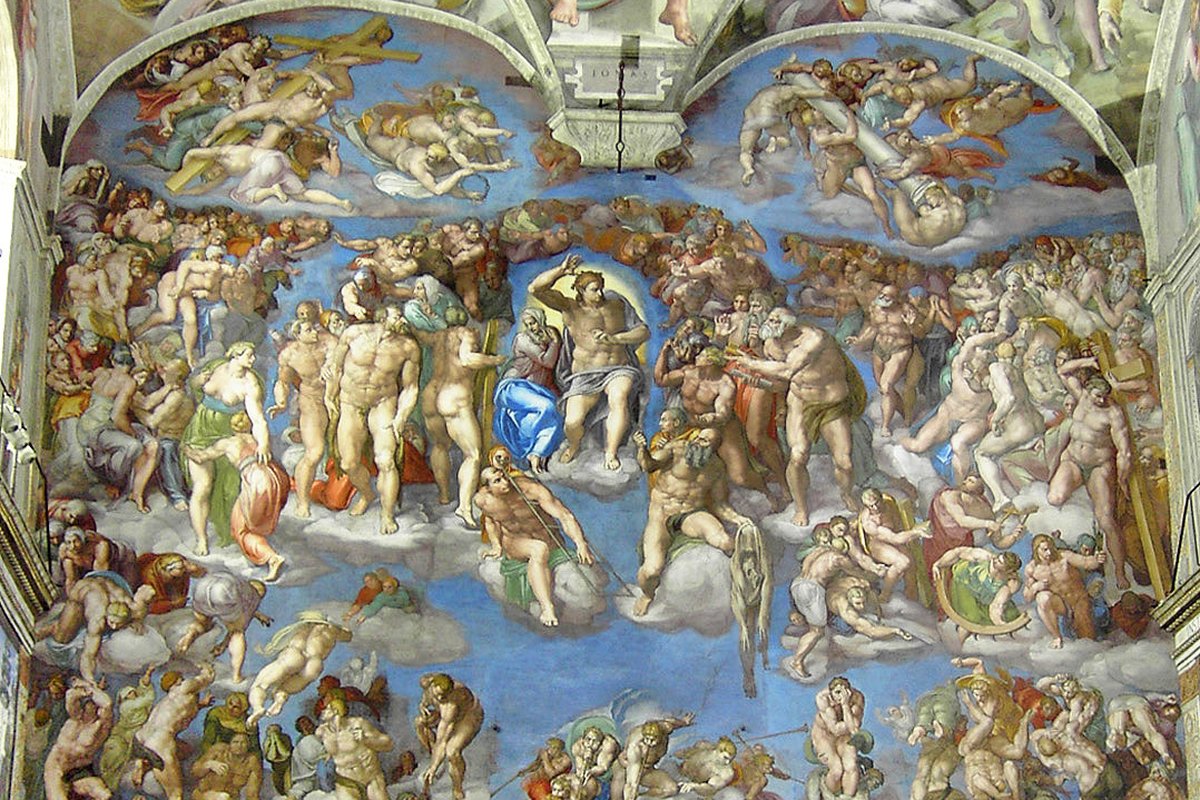
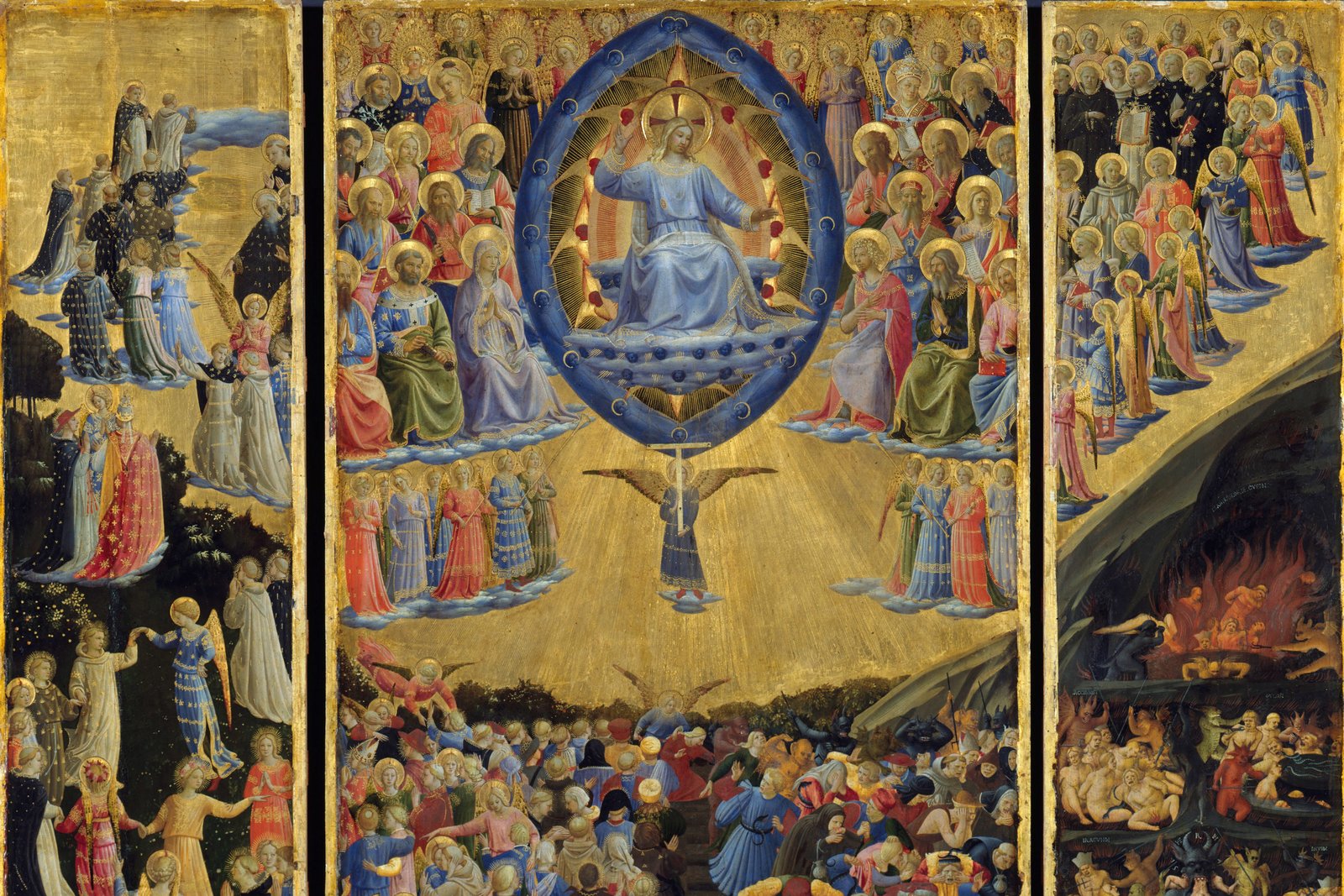
Decades later, between 1536 and 1541, Michelangelo returned to the same chapel under Pope Paul III to paint The Last Judgment on the altar wall — a vast, turbulent composition of Christ as judge surrounded by the saved ascending and the damned descending, rendered with an intensity of muscular, twisting bodies quite different from the calmer, more classically balanced ceiling frescoes painted decades earlier. The fresco drew criticism even in its own time for its abundance of nude figures in a sacred space; after Michelangelo's death, in the more restrictive climate following the Council of Trent, Pope Pius IV commissioned the painter Daniele da Volterra to add draperies over some of the more exposed figures, earning Volterra the lasting, somewhat unflattering nickname "il Braghettone" — "the breeches-maker."
A faith that deepened with age
Contemporary letters and Michelangelo's own late poetry point to a religious life that grew more overtly devout as he aged, particularly through his close friendship with Vittoria Colonna, a noblewoman, poet, and figure associated with currents of Catholic reform in mid-sixteenth-century Italy. Their correspondence and shared theological interests during the 1530s and 1540s appear to have shaped some of Michelangelo's later religious poetry and possibly his late devotional drawings of the Crucifixion, which are notably more spare and inward than his earlier, more physically dramatic religious works.
His late sonnets return repeatedly to themes of mortality, judgment, and regret over artistic ambition. One frequently cited late poem describes the "fond fancy which made art my idol" as having led his soul astray — language that has led some scholars to read Michelangelo's final years as marked by real spiritual anxiety about whether a lifetime devoted to art, however sacred its subject matter, had ultimately served God or distracted from him. Whether this reflects settled theological conviction or the ordinary anxieties of an aging man contemplating death is difficult to say with certainty, but the poems are unambiguous in their emotional content.
Faith expressed through the body
One consistent thread across Michelangelo's religious career, distinguishing his work from many contemporaries, is his insistence on expressing spiritual and theological meaning through intense, often strained physical form — muscular, twisting bodies rather than serene, static compositions. This differs sharply from the gentler, more tender pictorial tradition of painters like Raphael working in the same period, and from the flattened, symbolic language of Byzantine icon painting that had shaped centuries of Christian art before him. For Michelangelo, the human body itself — carved, painted, strained toward or slumped away from the divine — was consistently the primary vehicle through which he explored questions of sin, judgment, redemption, and grace, a lifelong artistic and spiritual project that never really separated the sculptor from the believer.
Trivia
Was Michelangelo a devoutly religious person?
What are Michelangelo's most famous religious works?
Did the Catholic Church ever object to Michelangelo's religious art?
How old was Michelangelo when he carved the Pietà?
Did Michelangelo write about his own religious struggles?
Related Reading