Saint Catherine of Siena's Head: A Relic Divided Between Two Cities

A saint who belonged to two cities
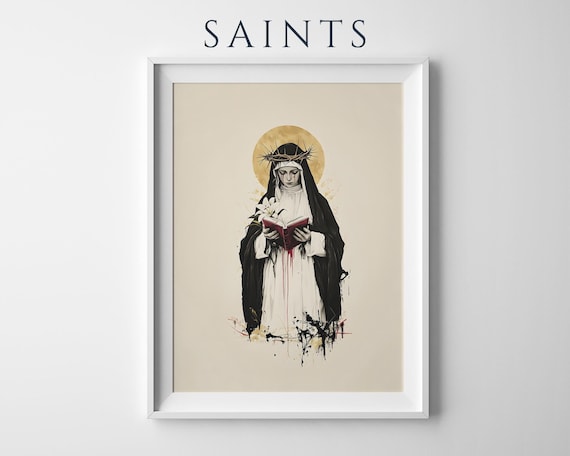
Catherine Benincasa was born in Siena in 1347, the daughter of a wool dyer, and grew into one of the fourteenth century's most unlikely figures of influence — a laywoman with no formal education or ecclesiastical office who nevertheless corresponded with popes, helped persuade Pope Gregory XI to move the papacy back to Rome from Avignon, and was declared a Doctor of the Church six centuries later. Her fuller life story is told in our article on Saint Catherine of Siena, and the house where she grew up, now a devotional sanctuary, is covered in our piece on Siena's Sanctuary of Saint Catherine. This article looks at something narrower: the strange, specific history of how one part of her — her head — came to rest permanently apart from the rest of her.
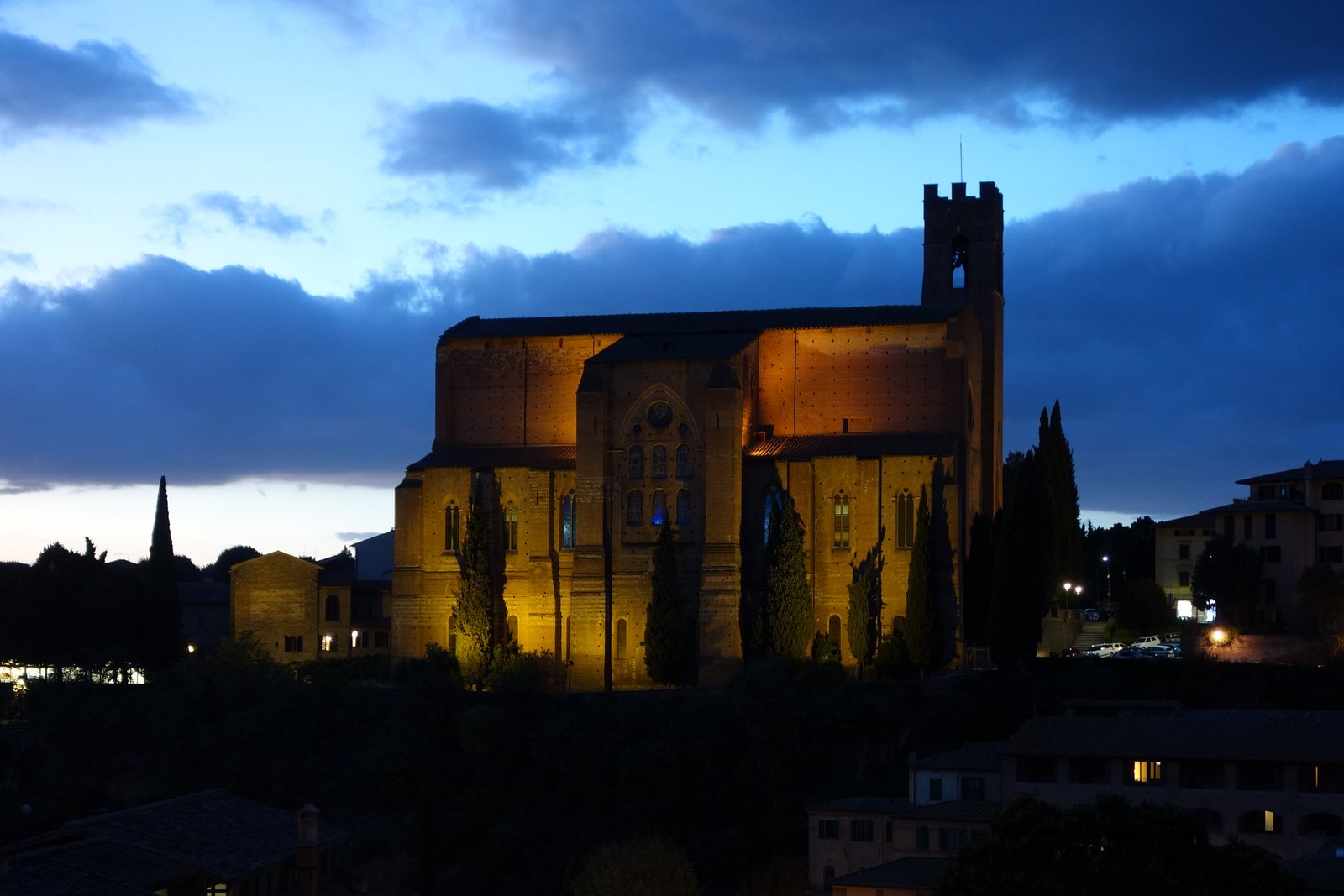
Photograph by Spike, Siena Basilica of San Domenico at dusk (2019). CC BY-SA 4.0, via Wikimedia Commons.
Catherine spent her final months in Rome at the urging of Pope Urban VI, working from what was effectively a deathbed to help hold together a Church fracturing under the early stages of the Western Schism. She died there on April 29, 1380, at only thirty-three, and was buried in the church now known as the Basilica of Santa Maria sopra Minerva, near the Pantheon — where her body remains today, beneath the high altar.
A city that wanted its saint back
Siena never stopped claiming Catherine as its own. She had been one of the city's most visible religious figures in life, tending plague victims and the poor in its streets long before her letters reached a papal court, and devotion to her among Sienese Dominicans and laypeople only grew after her death. Catherine was canonized by Pope Pius II in 1461, himself a Sienese native, and the push to bring some physical trace of her back to her home city followed not long after.
The obstacle was practical: Rome had no interest in giving up a saint who was already drawing pilgrims to Santa Maria sopra Minerva, and moving an entire body across Italy without permission was not something that could be done openly. Tradition holds that a delegation of Sienese citizens, unable to secure the whole body, resolved to take only the head — small enough to carry concealed, significant enough to still count, in the devotional logic of the age, as a true and venerable relic of the saint herself.
The bag of rose petals
The story of how the head actually left Rome is where documented history gives way to a legend repeated for centuries in Siena, and it's worth being direct about that distinction. According to the pious tradition, the group carrying Catherine's head out of the city was stopped and searched at a checkpoint along the road. When the guards opened the bag expecting to find whatever was inside, they reportedly found nothing but a quantity of rose petals — no head, no relic, nothing to confiscate or object to. Only once the travelers had reached Siena safely, the story goes, did the petals become Catherine's head again.
It is exactly the kind of transformation miracle that medieval and early-modern hagiography attached to relic translations more broadly — a sign, in the tradition's own terms, that the saint herself wanted to go home and intervened to make sure she got there. No contemporary fourteenth- or fifteenth-century document records the episode as eyewitness testimony; it survives instead as devotional retelling, the kind of detail guidebooks and pilgrim accounts repeat because it has always been part of how Sienese tell the story, not because a notarized record of the journey exists. Readers are better served treating it exactly as what it is: a legend expressing a community's devotion, not a verified historical event.
What is actually displayed today
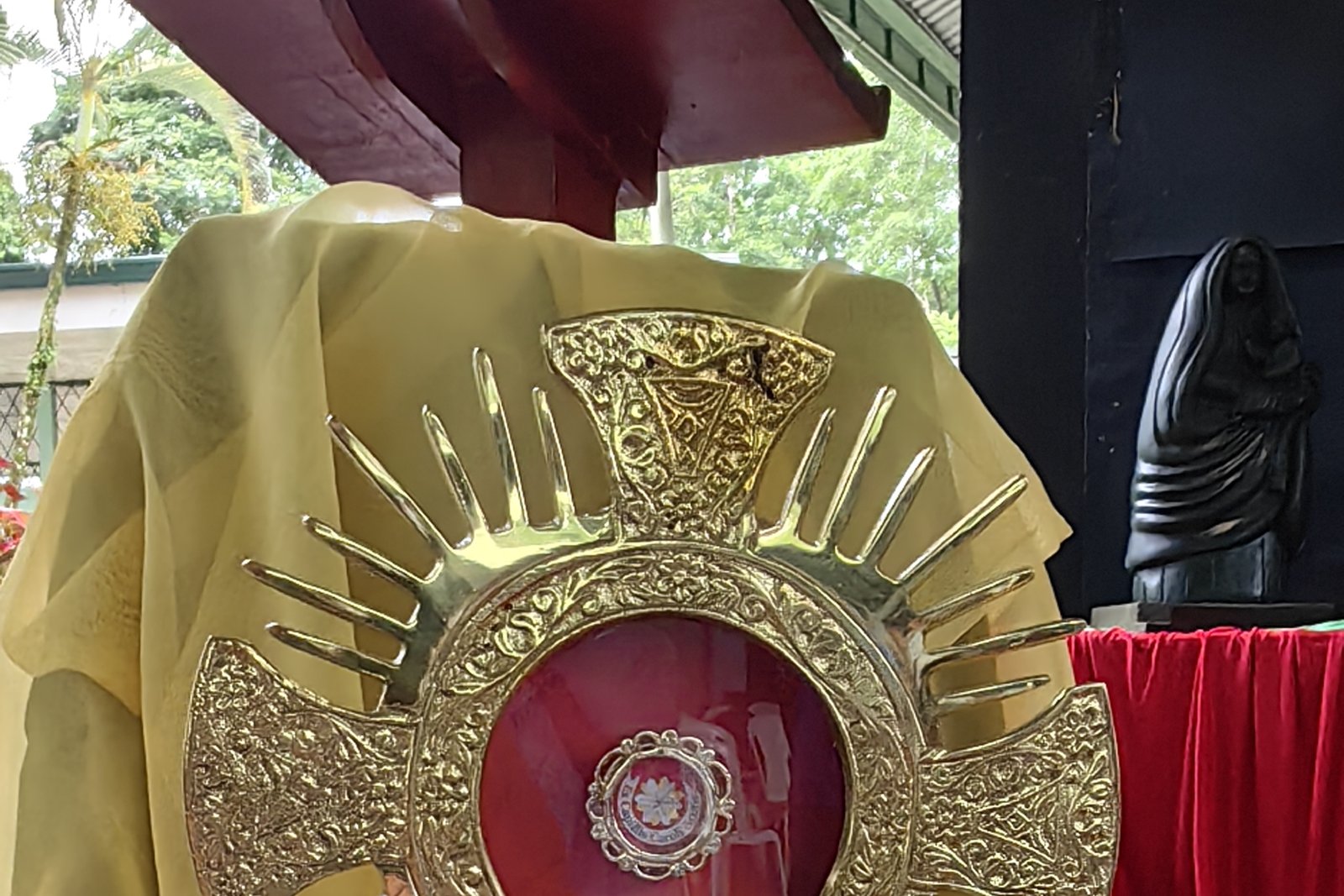
Set that legend aside, and what's left is more modest but still remarkable: Catherine's head, preserved in a mummified and largely skeletal state after more than six centuries, is displayed in a silver reliquary bust inside a chapel dedicated to her within the Basilica of San Domenico in Siena. A separate, smaller reliquary nearby holds one of her thumbs, also kept apart from the rest of her remains. The chapel itself, decorated with frescoes depicting scenes from Catherine's life by the Sienese painter Giovanni Antonio Bazzi — known as Il Sodoma — and by Andrea Vanni, has functioned as a pilgrimage destination in its own right since at least the fifteenth century, independent of the Sanctuary built around her family's house elsewhere in the city.
Visitors to San Domenico today can see the reliquary bust through glass, usually in a chapel quieter and less crowded than the grand civic monuments Siena is better known for — the Duomo, the Piazza del Campo — but no less central to how the city understands its own religious identity. Catherine is honored, alongside the Virgin Mary, as a patron of Siena itself.
A body divided, not an unusual story
It can feel jarring, to a modern reader, that a saint's remains would be deliberately split apart across different cities rather than kept whole in one tomb. In the medieval and early-modern Church, though, this kind of division was common practice rather than an exception made for Catherine alone. Major relics were routinely parceled out among multiple churches, each custodian able to offer pilgrims direct physical contact with sanctity without requiring a journey to a single distant site. Catherine's own case extends even beyond Rome and Siena: tradition also identifies one of her feet as a preserved relic at the Basilica of Santi Giovanni e Paolo in Venice, where many of the depositions used in her later canonization process were originally gathered in the early fifteenth century.
The Catholic Church's teaching on relics doesn't rest on certifying the precise physical history of any one fragment. The Catechism of the Catholic Church lists the veneration of relics among the Church's recognized forms of popular piety, built on a much older theological principle — articulated at the Second Council of Nicaea — that honor paid to a relic passes through to the person it represents, not to the object as something miraculous on its own terms. In that light, it matters less whether a given skull fragment in Siena can be forensically traced to a fourteenth-century dyer's daughter than that the devotion it has sustained for six hundred years points, consistently, toward the same woman: a tertiary with no office or title who argued a pope back to Rome, and whose own city, centuries later, still wanted enough of her to keep close.
Trivia
Where is Saint Catherine of Siena's head kept?
Why is Catherine's head separate from the rest of her body?
What is the legend about rose petals and Catherine's head?
Is Catherine of Siena's head the only relic of hers kept outside Rome?
Is the head relic in Siena scientifically confirmed to be Catherine's?
Related Reading