Holy Week Explained: From Palm Sunday to Easter

The week that carries the whole story
Every other week of the liturgical year builds toward this one. Holy Week begins with a parade and ends at an empty tomb, and in between it holds the most consequential days of the Christian calendar — a meal, a betrayal, a trial, a death, and a waiting silence that only makes sense once you know what comes after it. Understanding Holy Week means walking through it roughly in the order the Gospels give it, day by day.
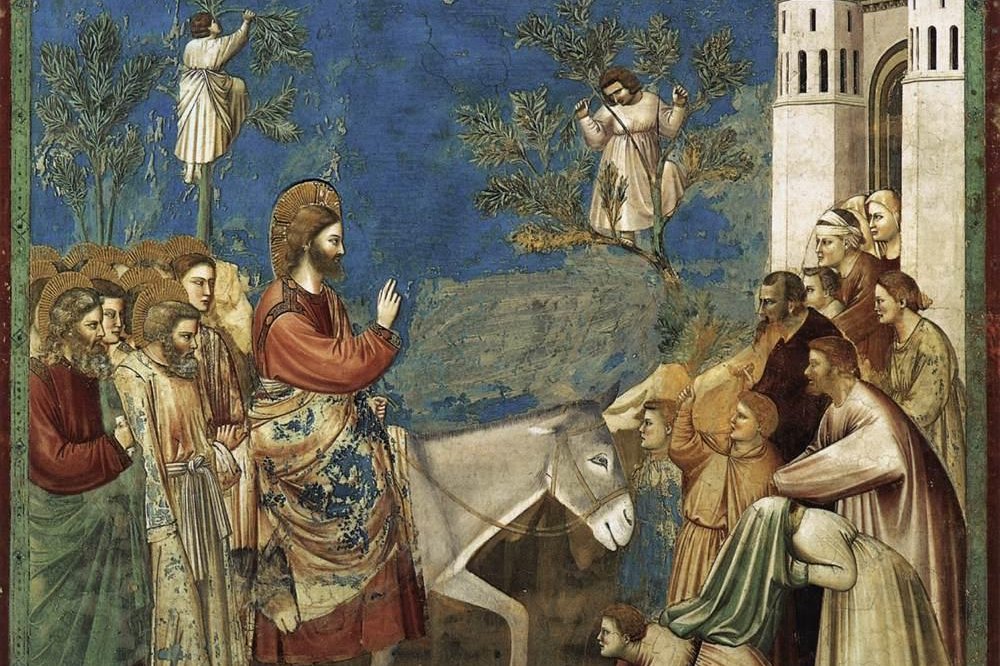
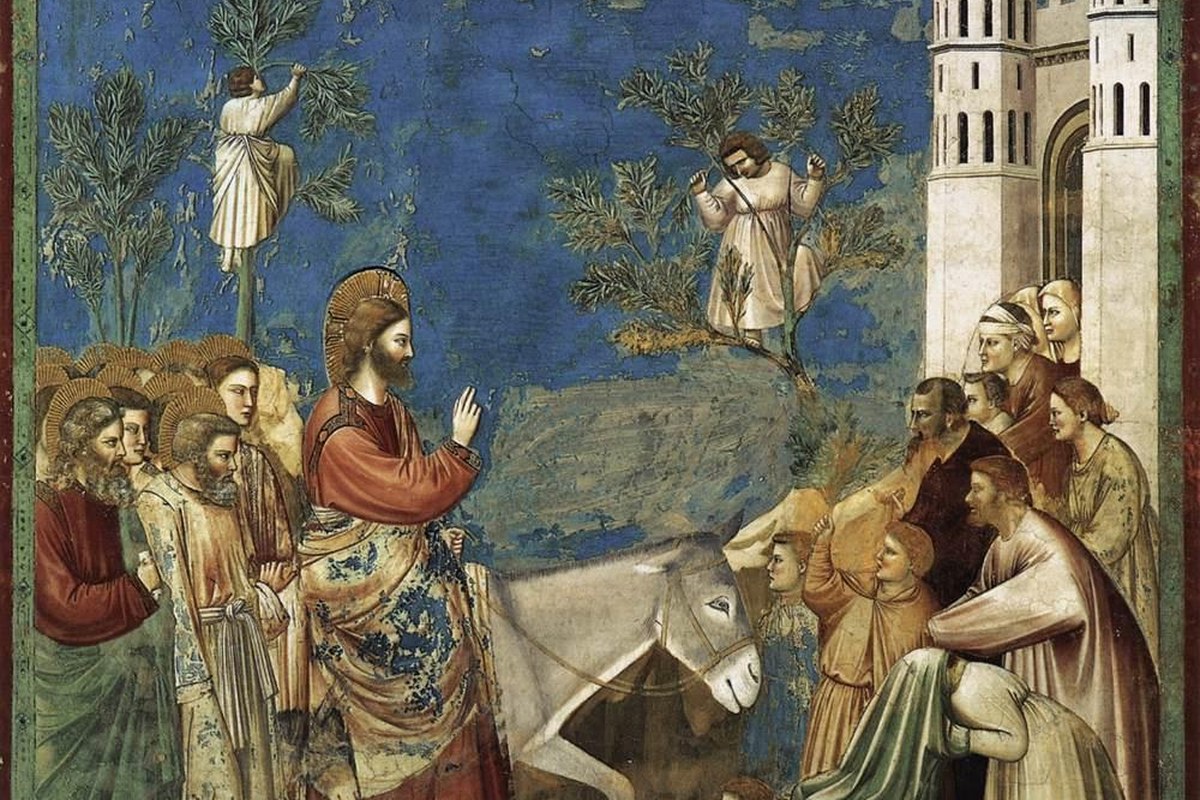
Giotto di Bondone, Entry into Jerusalem (c. 1304-1306), Scrovegni Chapel, Padua. Public domain, via Wikimedia Commons.
Palm Sunday: a king on a borrowed donkey
Holy Week opens with Palm Sunday, commemorating Jesus's entry into Jerusalem shortly before Passover. According to the Gospel of John, the crowd "took palm branches and went out to meet him, and cried out: 'Hosanna! Blessed is he who comes in the name of the Lord, [even] the king of Israel'" (NABRE, John 12:13). It has all the shape of a royal welcome — except the king arrives on a borrowed donkey, not a warhorse, a detail the Gospels present as a deliberate fulfillment of prophecy rather than an oversight.
Mass on Palm Sunday captures this whiplash deliberately. It opens with the blessing of palms and a joyful procession, then pivots, often within the same liturgy, to a full reading of the Passion narrative. The crowd that shouted "Hosanna" is the same city that will soon call for Jesus's execution. The Church places both moments side by side on purpose — nothing about Holy Week lets you stay comfortably in the celebration for long. For more on the scene itself, see The Entry into Jerusalem.
Holy Thursday: a meal, a washing, a new commandment
The days between Palm Sunday and Thursday are relatively quiet in the Gospel accounts, but Holy Thursday changes the pace entirely. In the evening, the Church celebrates the Mass of the Lord's Supper, commemorating the night Jesus gathered his disciples for what would become the Last Supper. There he took bread and, as Luke records it, "said the blessing, broke it, and gave it to them, saying, 'This is my body, which will be given for you; do this in memory of me'" (NABRE, Luke 22:19) — the institution of the Eucharist, the meal that the Church has repeated at every Mass since.
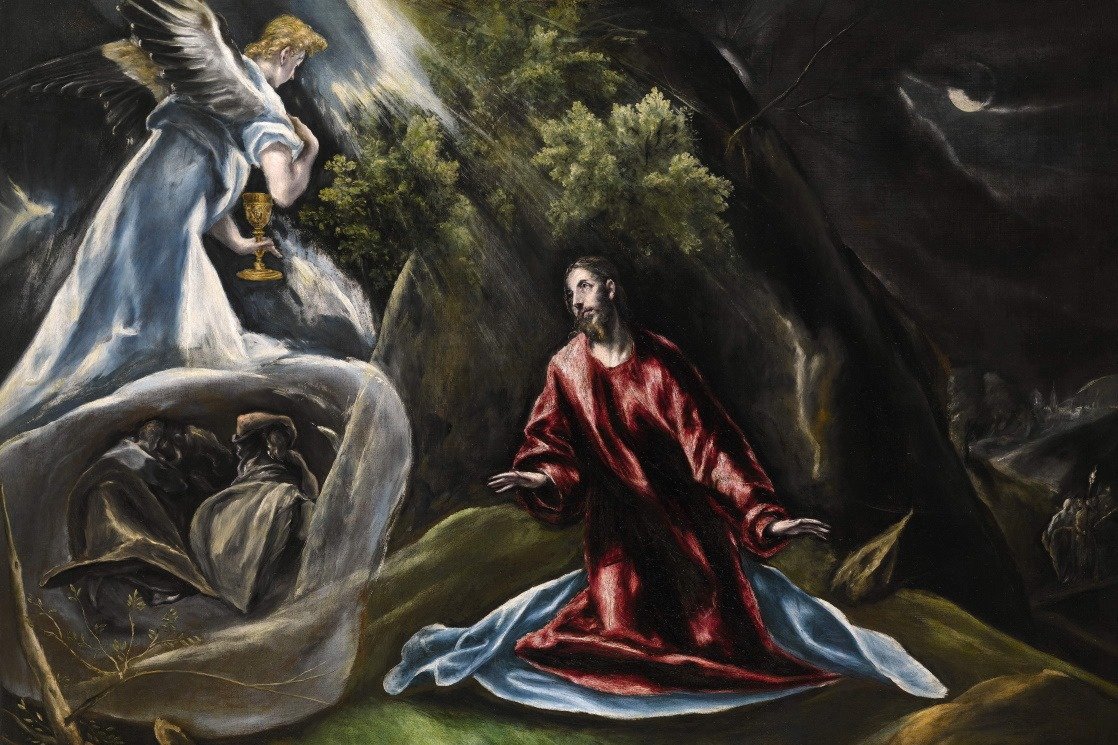
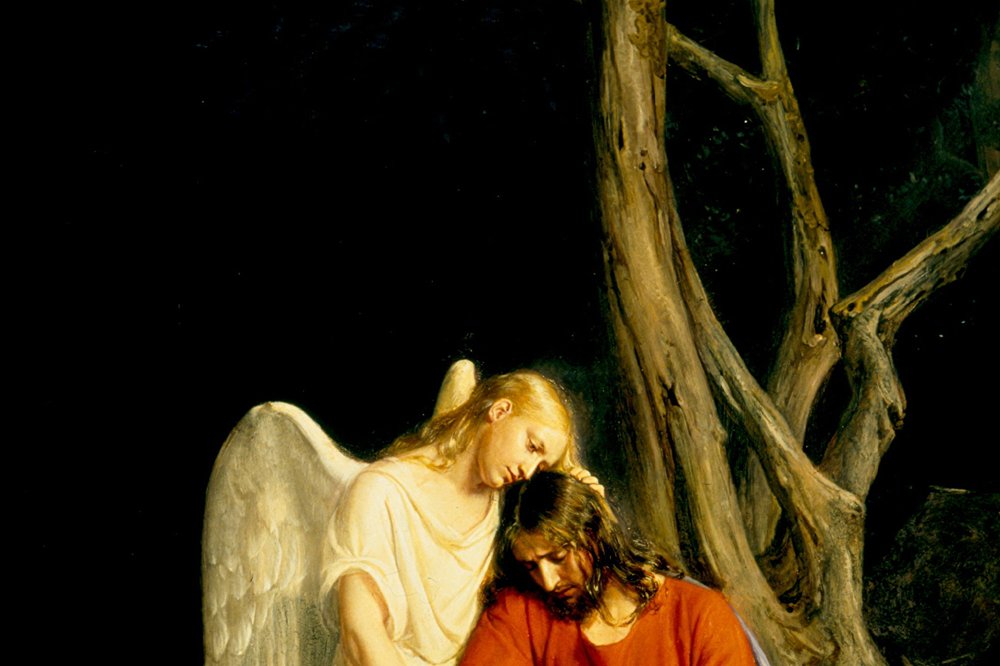
That same night, Jesus knelt and washed his disciples' feet, an act of servant-leadership so countercultural that many parishes still reenact it during the Holy Thursday liturgy. Afterward, according to all four Gospels, Jesus withdrew with his disciples to the Garden of Gethsemane to pray, where he asked, "Father, if you are willing, take this cup away from me; still, not my will but yours be done" (NABRE, Luke 22:42), before his arrest later that night. That anguished prayer is explored further in The Agony in the Garden.
Holy Thursday's evening Mass opens the Easter Triduum — the three sacred days (Thursday evening through Easter Sunday evening) that the Church treats liturgically as a single, continuous celebration rather than three separate ones.
Good Friday: the Passion and the cross
Good Friday commemorates Jesus's trial, crucifixion, and death. No Mass is celebrated on this day anywhere in the Latin Church; instead, the liturgy centers on a reading of the Passion (traditionally from the Gospel of John), the veneration of the cross, and the reception of Communion consecrated the previous evening. It is a day marked by fasting and stark simplicity — altars stripped bare, no bells, no flowers.
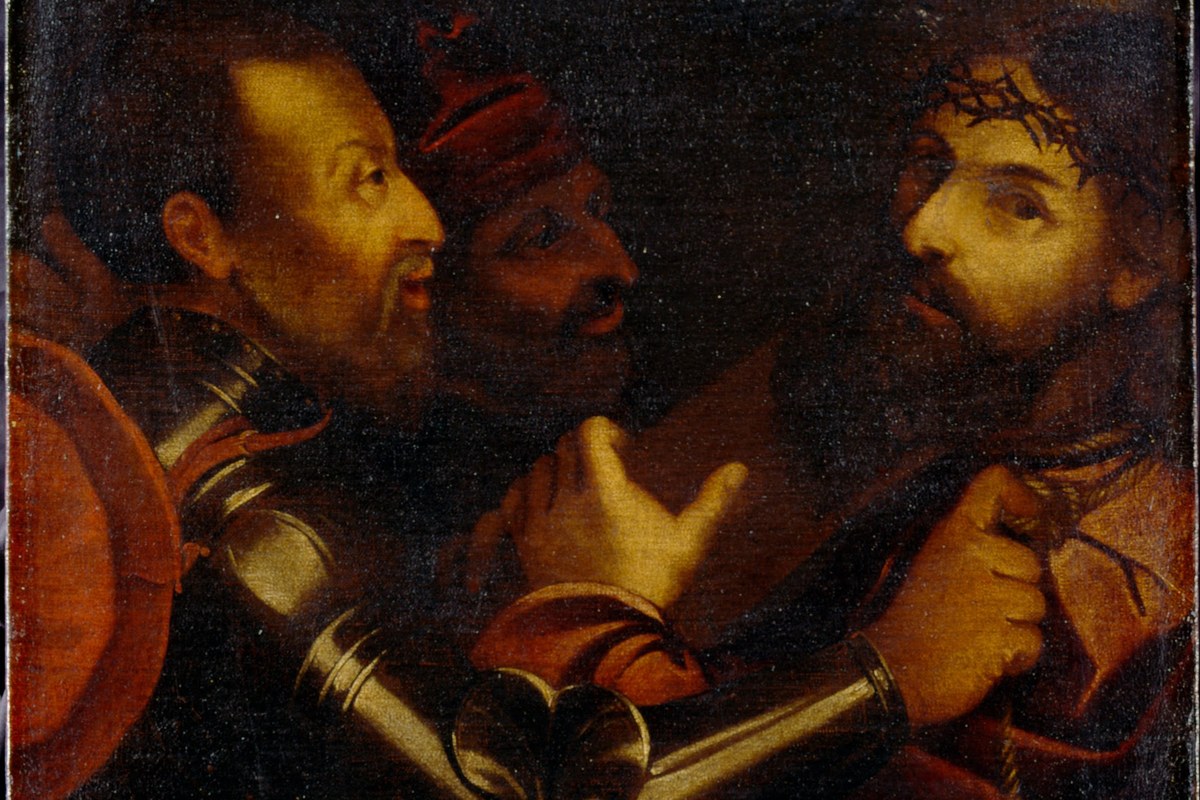
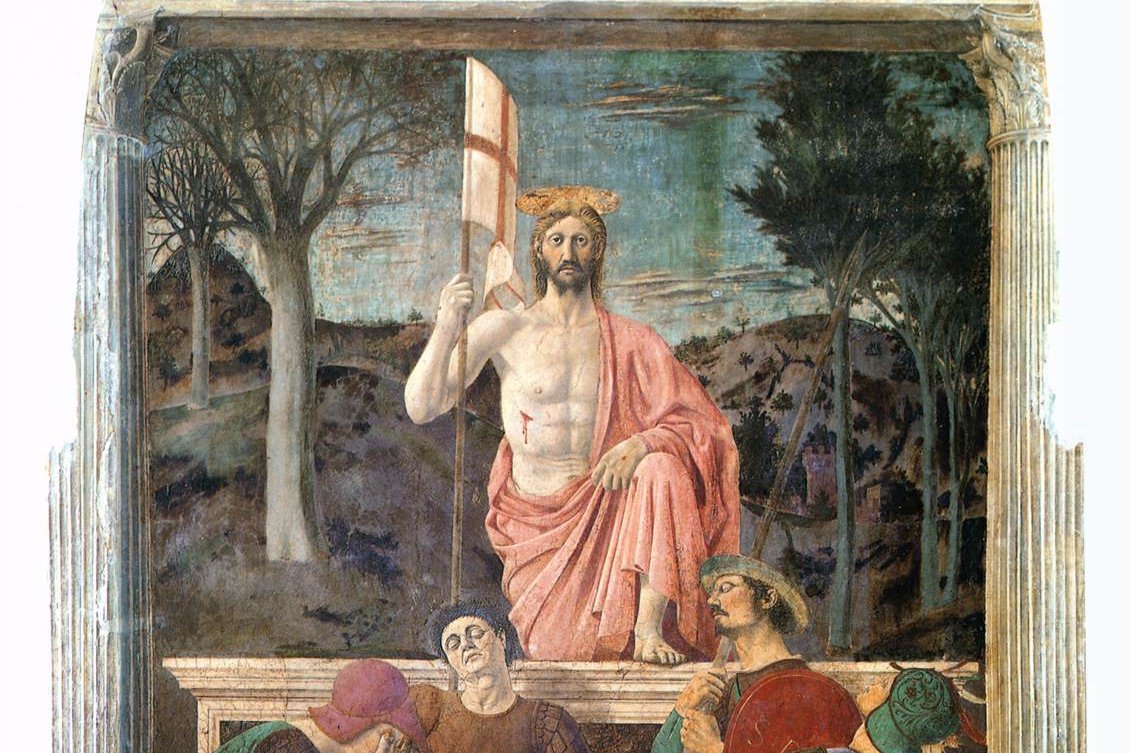
The name itself has puzzled people for centuries: why call the day of Christ's execution "good"? The most widely accepted explanation is linguistic rather than theological — an older usage of "good" meant something closer to "holy" or "pious," the same root sense preserved in phrases like "good book." Theologically, the Church holds the day as good because it understands Christ's suffering and death as the very act that opened the path to redemption, even though the day's tone remains solemn and grief-laden rather than celebratory. The physical journey to Calvary is covered in The Carrying of the Cross, and Christ's final hours are the center of The Risen Christ, which picks up the story past the point Good Friday leaves it.
On the cross, according to the Gospel of John, Jesus's final words before his death were, "It is finished." And bowing his head, he handed over the spirit (NABRE, John 19:30).
Holy Saturday: the day of silence
Holy Saturday is unlike any other day on the calendar. There is no Mass during daylight hours. The Church keeps vigil at the Lord's tomb, meditating on his suffering and death, while withholding any liturgical celebration until nightfall. It is a day defined by absence — the tabernacle empty, statues sometimes still veiled, a kind of holy limbo between death and what the Church already knows is coming.
That silence breaks after sundown with the Easter Vigil, traditionally the most elaborate liturgy of the entire year: a new fire is kindled, the Paschal candle is lit and carried into a darkened church, and the Exsultet is sung proclaiming the Resurrection. The Vigil functions as the hinge of the whole week — the moment Holy Saturday's silence gives way to Easter's proclamation that Christ is risen.
Why the week is structured this way
It would be simpler, in a sense, for the Church to jump straight from Palm Sunday's celebration to Easter's joy. Holy Week refuses that shortcut deliberately. Each day insists on being lived in its own right — the welcome, the meal, the agony, the death, the silence — because the Resurrection means something different to someone who has actually sat with Friday's loss and Saturday's emptiness than to someone who skipped ahead. Holy Week asks for the whole week, not just the ending, because the ending only makes sense in light of everything that came before it.
Trivia
What is Holy Week?
What happens on Palm Sunday?
What is Holy Thursday and why does it matter?
Why is Good Friday called 'good' if it commemorates Jesus's death?
What happens on Holy Saturday?
You May Also Like
Related Reading