Saint Barbara, Virgin Martyr

A legend, not a historical record
Almost everything we "know" about Saint Barbara comes from a single genre of writing: hagiography, the devotional biographies of saints that were often written centuries after their subjects lived, blending real memory with moral storytelling. That's worth saying plainly at the outset, because Barbara's story is one of the clearest cases in the Christian calendar where tradition and verified history pull apart. The Church itself has acknowledged this — more on that below — while her devotion has endured anyway, for reasons that become clear once you hear the story.
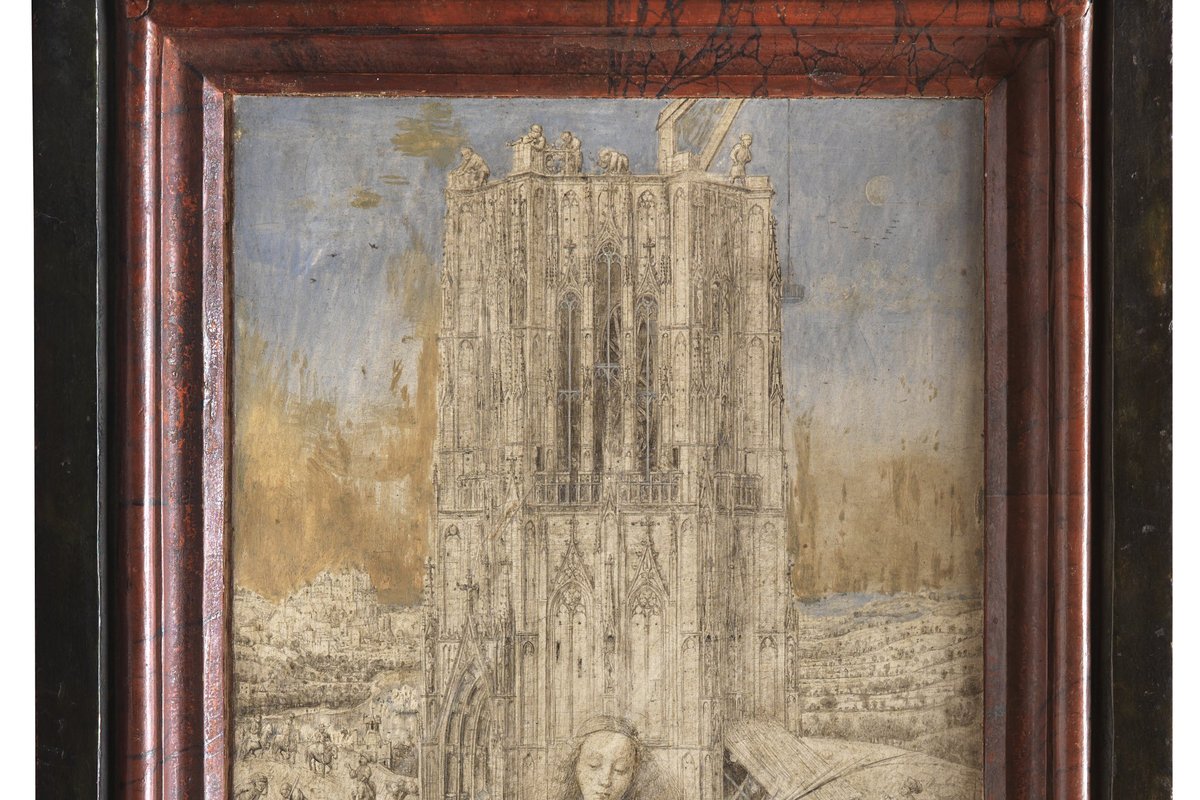
Jan van Eyck, 'Saint Barbara,' 1437, Royal Museum of Fine Arts Antwerp — public domain.
The tower, the bath, and the third window
Tradition places Barbara in the third century, the daughter of a wealthy pagan named Dioscorus, somewhere in the Eastern Mediterranean — different versions of the legend name Nicomedia, Antioch, or Heliopolis. Struck by her beauty, her father is said to have shut her away in a tower to keep suitors at bay. During his absence, Barbara converted to Christianity in secret and asked the workmen building a bathhouse for her to add a third window alongside the two her father had ordered — a quiet tribute to the Trinity that became the detail every later artist would seize on.
When Dioscorus discovered his daughter's faith, the legend turns brutal: he denounced her to the Roman authorities, and when she would not renounce Christ despite torture, he himself struck the fatal blow. Tradition holds that he was killed by a bolt of lightning almost immediately afterward — the detail that would eventually make Barbara the patron saint of anyone who works with sudden, violent, explosive danger.
How her cult reached the West
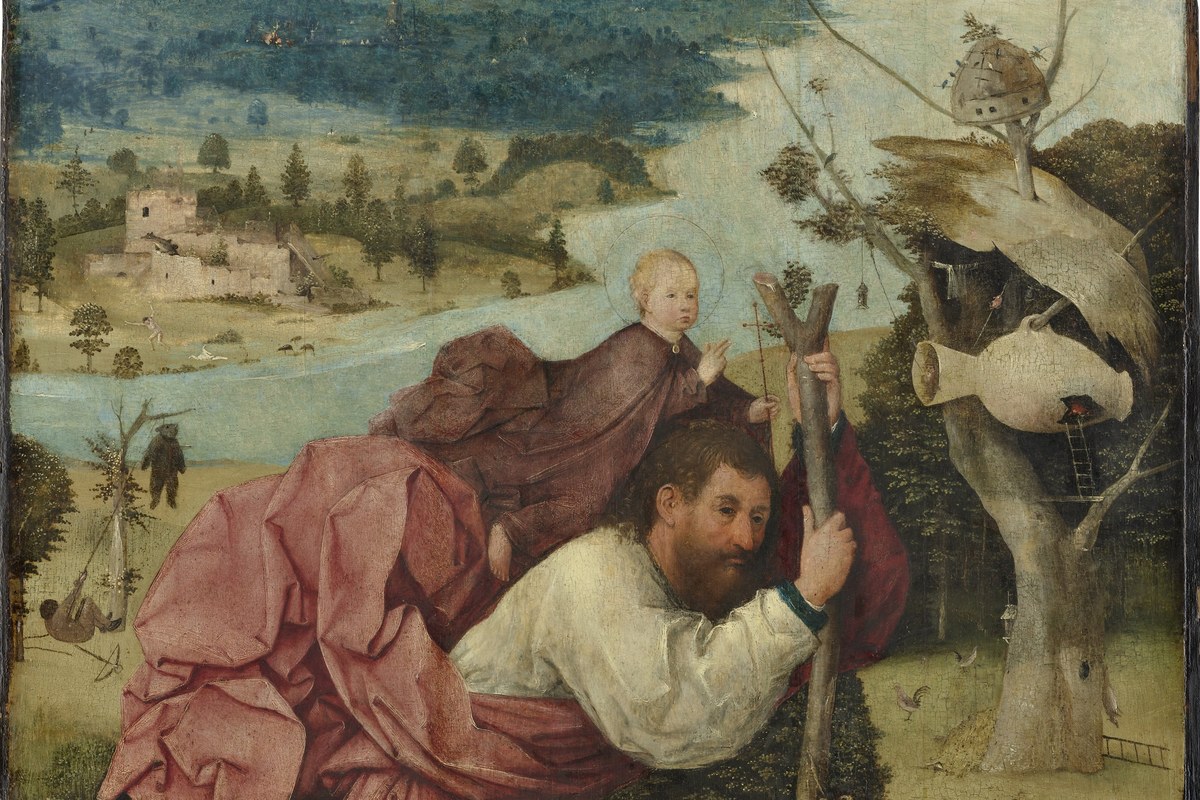
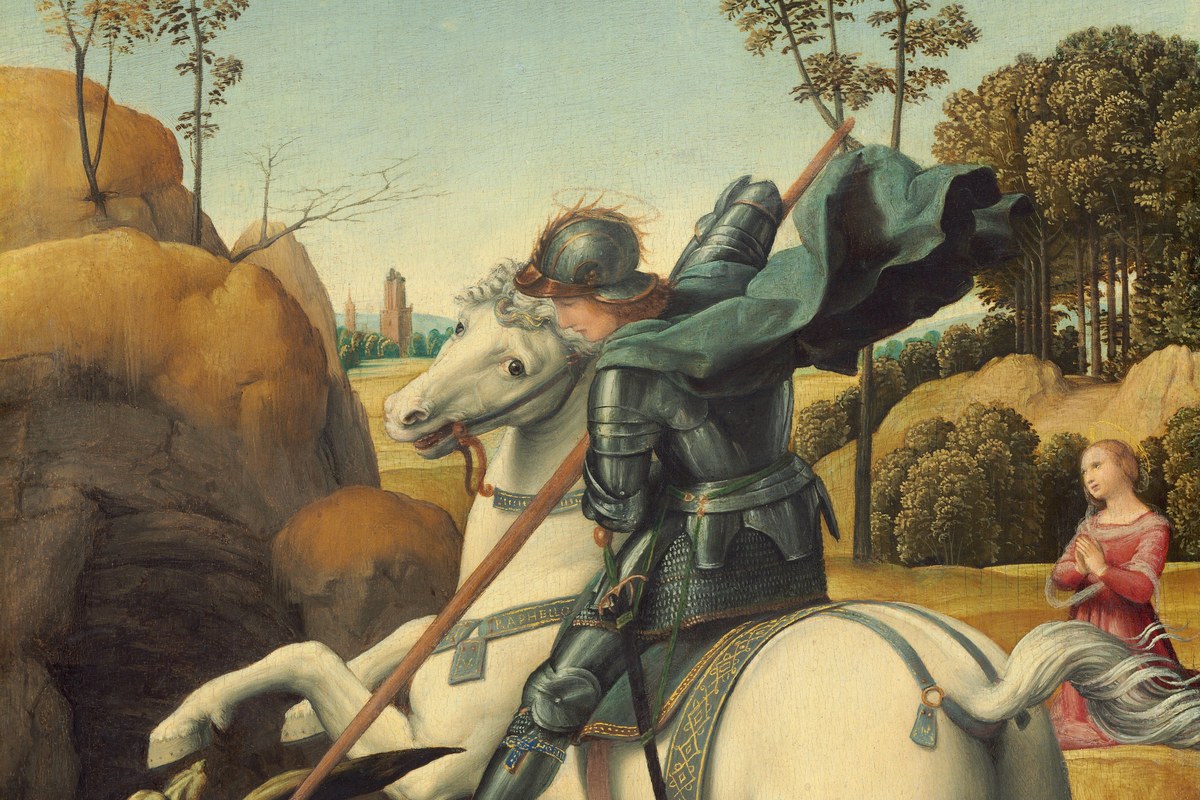
Barbara's veneration almost certainly began in the Christian East. The earliest traces of her cult appear in Greek sources from around the seventh century, well after the period in which her supposed martyrdom is set — another sign, historians note, that her story took shape gradually rather than being recorded by anyone who actually knew her. From there, her feast spread west through Byzantine trade routes and Crusader contact with the Eastern Mediterranean, and by the late Middle Ages she had become one of the Fourteen Holy Helpers, a group of saints singled out across German-speaking Europe for intercession against sudden death, plague, and other calamities that struck without warning. That grouping — which also includes figures like Saint George and Saint Christopher — tells you something about how medieval Christians experienced risk: death that arrived instantly, without time for last rites or confession, was a distinct fear, and Barbara's legend answered it directly, since tradition holds she received the Eucharist and final anointing miraculously just before her death, guaranteeing she would not die unprepared. Her popularity as a Holy Helper is part of why her cult outlasted the thinness of the historical record beneath it; readers curious about the broader company she keeps can find more of the virgin martyrs of the early church who share her pattern of legend outweighing documentation.
A saint who traveled with the mining trade
Barbara's association with miners in particular runs deeper than a single symbolic lightning bolt. Because miners historically faced sudden, unpredictable death underground — collapses, gas explosions, flooding — they gravitated toward a patron whose own story turned on an unexpected, violent end and a father struck down without warning. Mining communities across Central Europe, from Germany's Erzgebirge to Poland's Silesian coal country, built chapels and confraternities in her name, and to this day many mining towns mark December 4 with processions, blessings of equipment, and a day set aside from work — a devotional calendar that has outlasted the industries that first embraced it in several regions where mining itself has since faded.
Why artillerymen and miners claim her as patron
The lightning strike that tradition says killed Dioscorus is the thread that ties Barbara's legend to her most famous patronages. Long before modern explosives existed, people associated sudden, fiery death with lightning, and Barbara's story made her the natural saint to invoke against it. That association carried forward neatly into the gunpowder age: artillerymen, military engineers, miners, and firefighters have all claimed her as patron, and to this day many European artillery units mark December 4, her traditional feast day, with formal observances.
A saint the Church itself questions
In 1969, Pope Paul VI's revision of the General Roman Calendar removed a number of saints whose historical existence could not be adequately verified, and Barbara was among them. The reasons were straightforward: the surviving accounts of her life contradict each other on basic facts — where she lived, where she died, even her name in some early sources — and she is absent from the earliest Christian martyrologies, the lists of martyrs compiled close to the events they describe. That absence, more than any single contradiction, is what convinced Church historians that her story, however beloved, cannot be treated as a reliable historical record.
It's important to be precise about what that removal did and didn't mean. Barbara was not "un-sainted," and no one declared she never existed — the Church simply concluded that her feast should no longer be listed as obligatory for the universal calendar, given the uncertainty. She remains on the Church's rolls of saints, her feast is still kept locally in many dioceses and by the Eastern churches (which never dropped her), and devotion to her — especially among miners, gunners, and those who fear a sudden, unprepared death — has never really faded. Like several other early virgin martyrs whose stories come to us wrapped in legend rather than record, Barbara occupies a category Catholic tradition has always made room for: a figure venerated for what her story represents, even where the historical record beneath it stays thin.
Trivia
Why is Saint Barbara usually shown with a tower that has three windows?
What is Saint Barbara the patron saint of?
Is Saint Barbara's story historically verified?
Is Saint Barbara still venerated even though she was removed from the universal calendar?
You May Also Like
Related Reading