Virgin Martyrs of the Early Church

A category the Church still names by heart
Long before "virgin martyr" became a category art historians and hagiographers use to group saints together, it was simply a lived pattern repeating itself across the early centuries of Christian persecution: young, unmarried women choosing execution over either renouncing their faith or accepting a marriage or sacrifice imposed on them against their conscience. What makes this group unusually durable in Catholic memory is liturgical, not just literary — several of these names are spoken aloud at essentially every celebration of the Roman Canon, one of the oldest continuously used prayers in Christian worship, giving them a kind of permanence that few other historical figures from this period share.
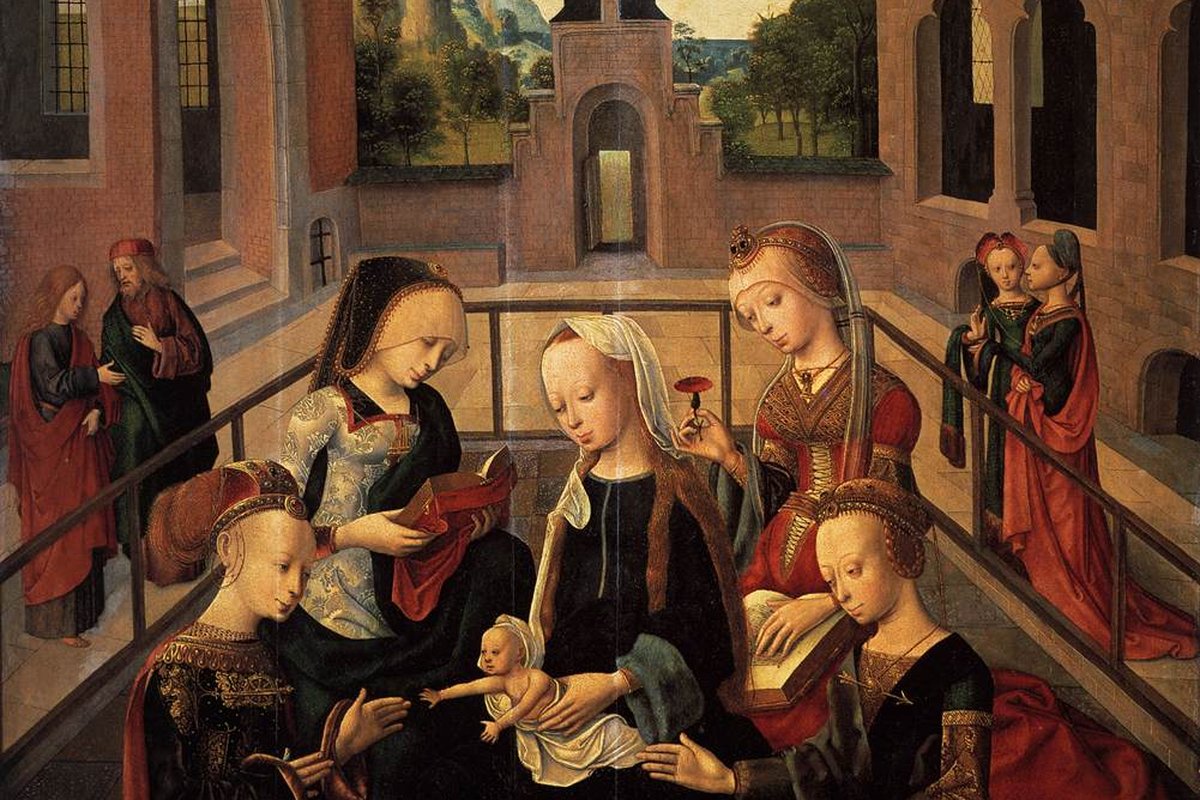
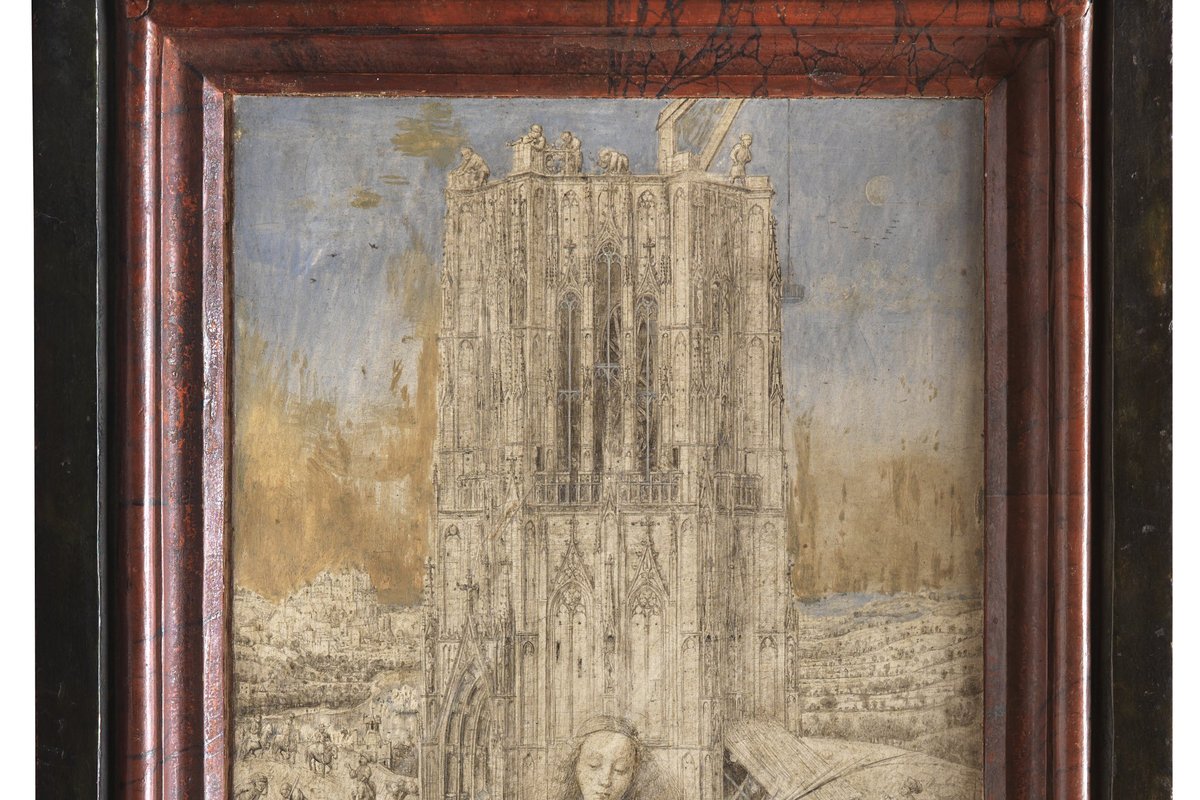
Master of the Virgo inter Virgines, 'Virgin and Child with Sts Catherine, Cecilia, Barbara, and Ursula,' c. 1495-1500 — public domain.
Saint Agnes of Rome
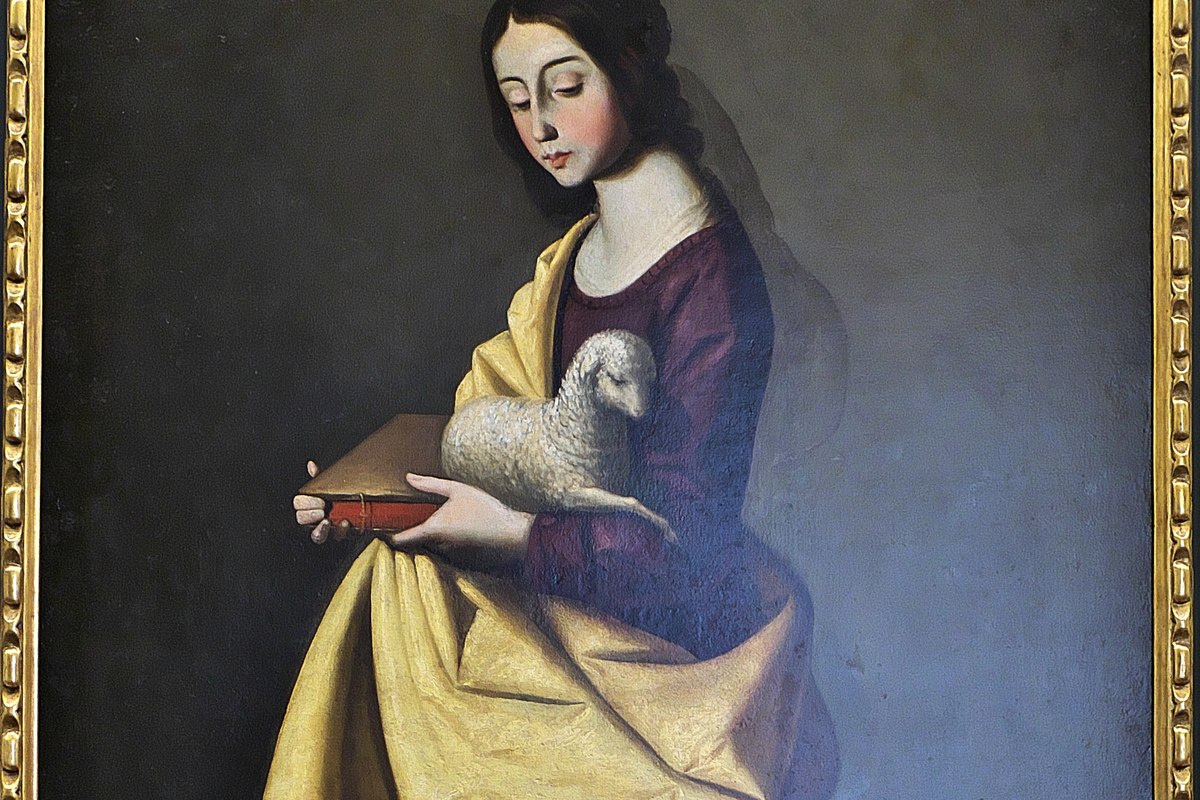
Tradition places Agnes's martyrdom during the persecution under Emperor Diocletian in the early fourth century, when she was reportedly only around twelve or thirteen years old. Her name carries a double meaning that later devotion leaned into heavily — evoking both the Greek word for "chaste" and the Latin agnus, "lamb" — and that lamb imagery is still marked every year when two lambs from the Trappist abbey of Tre Fontane are blessed on her January 21 feast day, their wool later used to weave the pallium vestments given to new archbishops. Read this blog's full article on Saint Agnes of Rome.
Saint Agatha of Sicily
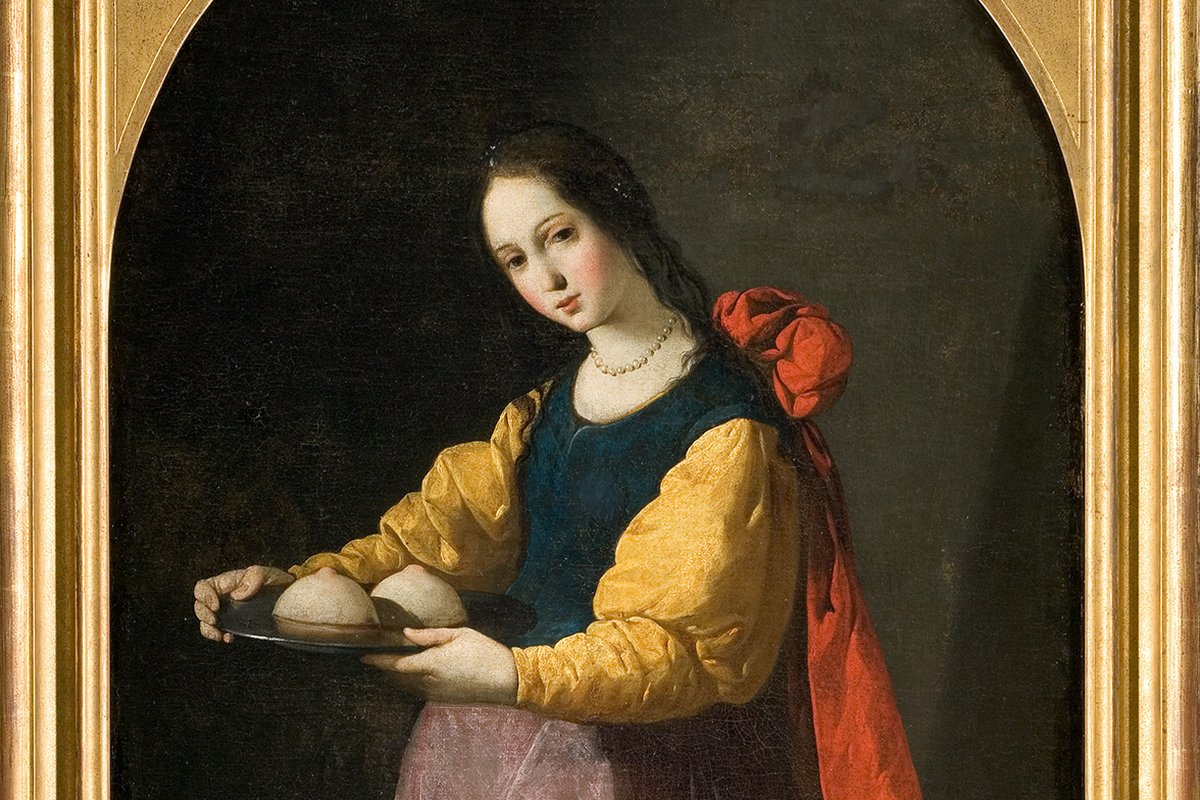
Venerated especially in her native Catania, Sicily, Agatha's traditional account places her martyrdom during the mid-third-century persecution under Emperor Decius, after she rejected the advances of a Roman official who then had her tortured for her refusal and her faith. She's honored today as a patron invoked against fire and, in a detail tied directly to her traditional torments, against breast cancer and diseases of the breast. Read this blog's full article on Saint Agatha of Sicily.
Saint Lucy of Syracuse
Also from Sicily, Lucy's traditional account places her death during the Diocletianic persecution in the early fourth century, after she consecrated her virginity to Christ and distributed her dowry to the poor rather than complete an arranged marriage. Her feast, observed December 13, became deeply woven into midwinter light traditions across Northern Europe, particularly in Scandinavia, where her name — rooted in the Latin lux, light — took on special resonance during the darkest days of the year. Read this blog's full article on Saint Lucy of Syracuse.
Saint Cecilia
Cecilia's traditional Acts describe a Roman noblewoman married against her own wish for consecrated virginity, who is said to have sung to God in her heart during her wedding ceremony — the detail that eventually made her the patron saint of musicians and church music, an association later artistic tradition expanded into countless paintings of her seated at an organ or surrounded by instruments. Her feast falls on November 22. Read this blog's full article on Saint Cecilia.
Saints Perpetua and Felicity
Perpetua and Felicity stand apart from the others on this list for one specific reason: the unusual quality of the historical record behind their story. Martyred together in Carthage in 203, during the persecution under Septimius Severus, their account incorporates what is presented as Perpetua's own prison diary — a twenty-two-year-old noblewoman, recently a mother, describing her own visions and her father's desperate pleas for her to recant — alongside an account of Felicity, an enslaved woman who gave birth in prison just days before their shared execution in the arena. Few martyrdom accounts from this early in Christian history carry this level of direct, first-person testimony. Their feast is kept March 7, and both are named together in the Roman Canon. Read this blog's full article on Saints Perpetua and Felicity.
Why their names outlasted the empires that killed them
It's worth sitting with the strangeness of this: the Roman authorities who executed these women intended their deaths to end the matter, to make an example that would discourage others from following the same path. Instead, veneration of each of these women began remarkably early — in several cases within decades of their deaths — and has continued, essentially without interruption, for over a millennium and a half. Their inclusion in the Roman Canon wasn't a later medieval flourish; it reflects some of the oldest strata of Christian liturgical memory, meaning worshippers at Mass today are, in a very real sense, using the same names the earliest post-persecution generations of Christians used to remember them. Whatever embellishment crept into the later retellings of these stories over the centuries, the core fact each account insists on has proven durable: ordinary young women who were offered an easy way out, and chose not to take it.
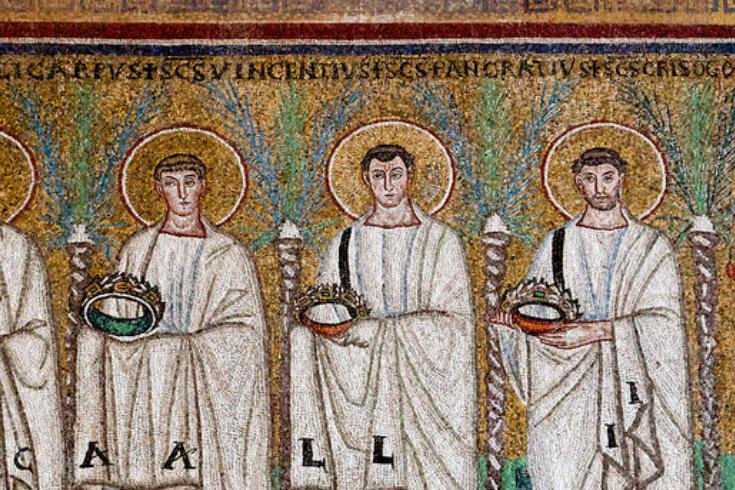
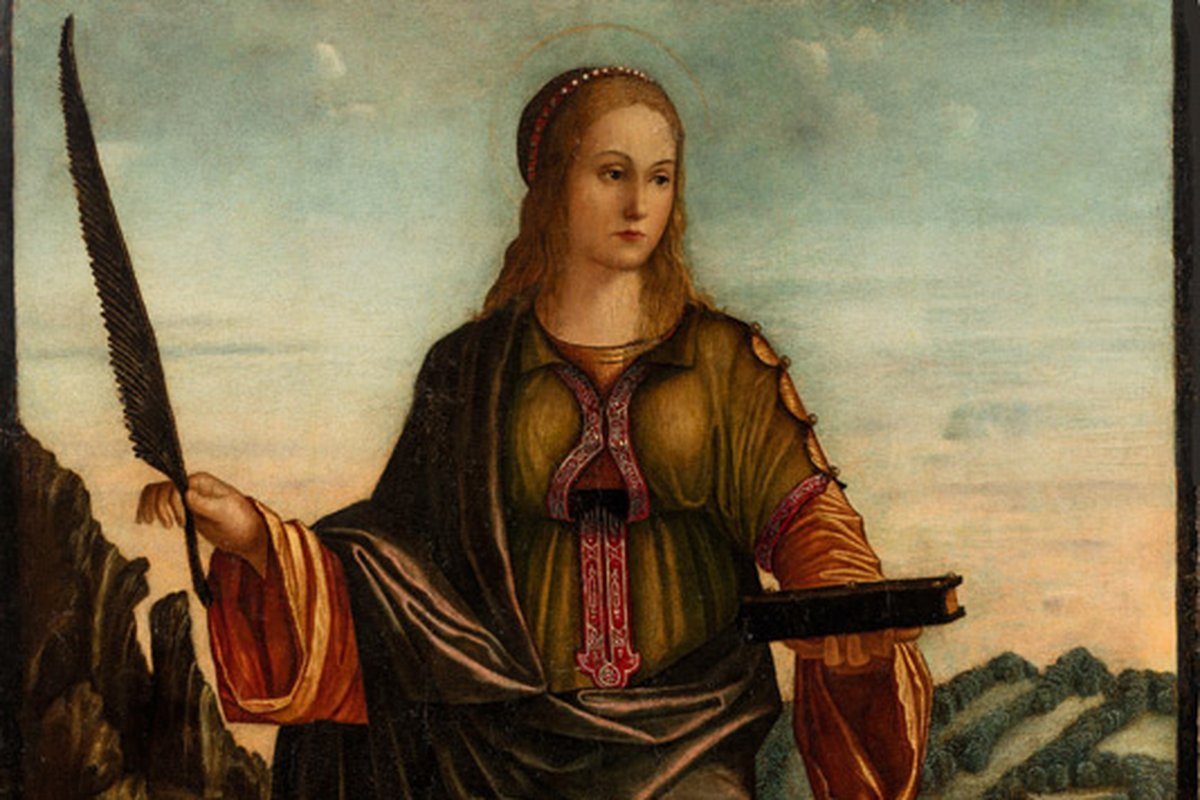
Their images spread just as widely as their names. Byzantine mosaics lined entire processions of virgin martyrs, each crowned and robed identically, along the walls of churches like Sant'Apollinare Nuovo in Ravenna, while medieval and Renaissance painters — including the artist behind this article's hero image — grouped them around the Virgin and Child as a kind of honor guard, each identifiable only by her particular attribute: Agnes with her lamb, Lucy with a dish bearing her eyes, Cecilia with an organ, Agatha with the shears or pincers of her torture. That visual shorthand let ordinary worshippers, most of whom couldn't read the Latin lives being read aloud in church, recognize each woman's story at a glance, and it kept their witness circulating in art long after the empires that executed them had themselves become history.
Trivia
Who counts as a 'virgin martyr' in Catholic tradition?
Which virgin martyrs are named directly in the Roman Canon of the Mass?
How old was Saint Agnes of Rome when she was martyred?
What is Saint Cecilia the patron saint of, and why?
Are the accounts of these martyrdoms historically reliable?
You May Also Like

Related Reading