Saint Elizabeth of Portugal: The Queen Who Made Peace Her Life's Work

A twelve-year-old bride, a court full of tension
Elizabeth was born in 1271 in Zaragoza, a princess of the royal house of Aragon, named after her great-aunt Elizabeth of Hungary, whose reputation for charity toward the poor she would later echo almost exactly. At age twelve, in the way of medieval royal politics, she was married off to King Denis of Portugal, entering a court and a marriage that would test her patience for the rest of her life. Denis was, by most historical accounts, a capable and effective ruler — but also a man whose infidelities were an open secret at court, and whose relationship with his wife was frequently strained.
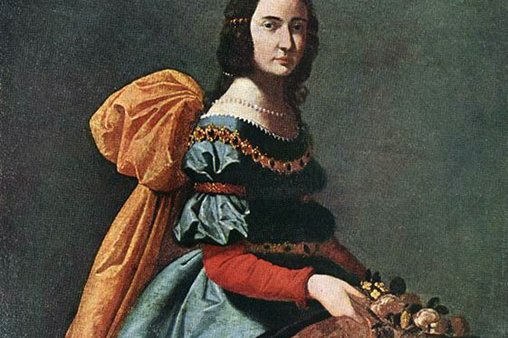
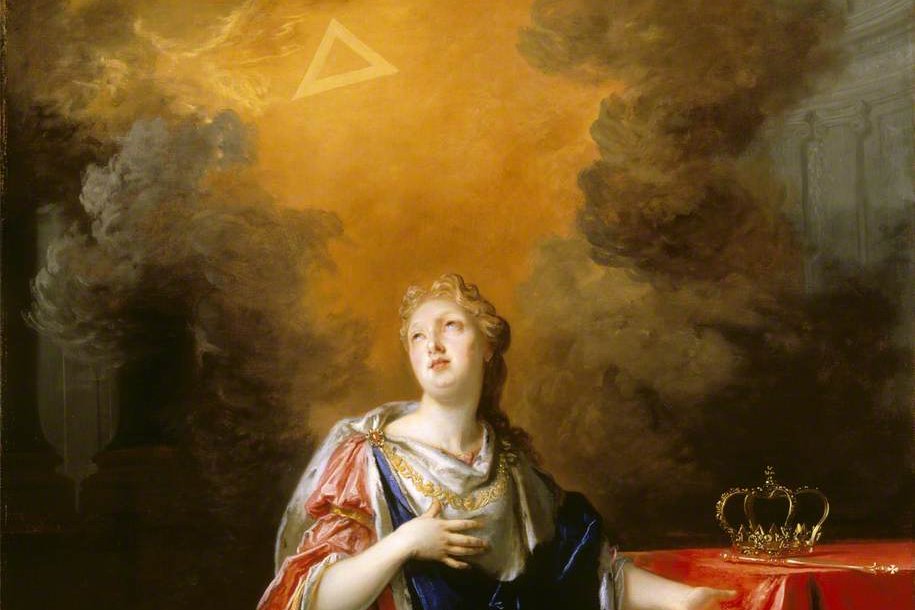
Francisco de Zurbaran, Saint Elizabeth of Portugal — public domain
Elizabeth's response to this difficult marriage was not withdrawal but an intensification of her own religious practice and charitable work. She attended Mass daily, kept a rigorous schedule of prayer, and — much to the irritation of a husband more concerned with royal appearances — regularly left the palace, sometimes in disguise, to bring food and assistance directly to the poor of the kingdom.
The Miracle of the Roses
The most enduring story attached to Elizabeth's name involves one of these charitable excursions. According to the legend, Denis, after growing frustrated with his wife's habit of distributing palace resources to beggars, confronted her one winter day as she left carrying bread hidden beneath her cloak, and demanded to know what she carried. "Roses, my lord," she is said to have answered. When he insisted she open her cloak to prove it, the bread had reportedly become a cascade of roses — an impossible bloom in the dead of winter.
It's worth being clear about what this story is and isn't. It appears in later hagiographic accounts of Elizabeth's life rather than in any contemporary record from her own lifetime, and versions of nearly identical "bread-to-roses" miracles appear attached to several other medieval saints, including her own namesake, Elizabeth of Hungary. The Church treats the story as pious legend, cherished for what it symbolizes — charity transformed and blessed — rather than as an established historical event. What is well documented, by contrast, is that Elizabeth's charitable activity toward the poor was extensive, consistent, and a defining feature of her reign regardless of any single miraculous episode.
The queen who rode between armies
Elizabeth's more historically secure legacy is her repeated, direct intervention to prevent war. Tensions between King Denis and their son, the future Afonso IV, escalated more than once into the threat of open civil war; each time, Elizabeth personally intervened, traveling between the opposing camps to negotiate and mediate until peace was restored. After Denis's death in 1325, she might reasonably have withdrawn from public life — instead, when a new conflict erupted between her son Afonso, now king, and his son-in-law Alfonso XI of Castile, Elizabeth, by then an elderly widow who had entered a Poor Clare convent in Coimbra, insisted on traveling to the battlefield at Estremoz to broker peace between the two armies one final time.
She succeeded. The exertion of that final journey, however, brought on the illness that led to her death shortly afterward, on July 4, 1336. It is a striking image: a queen who had left worldly life for a convent cell, still willing to put her own failing body between two armies rather than let the fighting continue. The Gospel's language for this kind of person is direct: "Blessed are the peacemakers, for they will be called children of God" (NABRE, Matthew 5:9).
A Franciscan queen
Elizabeth's charity and her eventual retreat to religious life weren't separate impulses — they both flowed from her membership in the Third Order of Saint Francis, a lay association that let men and women follow Franciscan spirituality (simplicity, penance, and service to the poor) while still married, ruling kingdoms, or otherwise living in the secular world rather than a cloister. She took this seriously enough that it shaped the rhythm of her whole life at court: fasting, plain dress under her royal robes, and a private devotional schedule that ran alongside the ceremonial obligations of being queen. When Denis died in 1325, Elizabeth didn't simply retire to comfort; she took the habit of the Poor Clares (the women's Franciscan order founded by Saint Clare of Assisi) and settled into a convent she had founded years earlier in Coimbra, though she stopped short of taking full vows herself, keeping just enough independence to act as a queen dowager when the kingdom needed her — which, as it turned out, it still did.
Her devotion to Francis's ideals also explains the particular shape of her charity. Rather than distributing alms occasionally as a gesture of royal piety, she funded hospitals, a shelter for abandoned children, and a refuge for reformed prostitutes in Coimbra, alongside her more famous habit of personally carrying food to the poor. That combination of personal, hands-on charity and sustained institutional giving is part of why later generations placed her alongside her great-aunt and namesake Elizabeth of Hungary, and it's a pattern echoed by other royal-born saints who traded comfort for service, including Saint Genevieve of Paris, whose own charitable work under difficult political circumstances draws a similar portrait of holiness exercised in public life rather than apart from it.
Canonization and legacy
Elizabeth was canonized by Pope Urban VIII on May 25, 1625, nearly three centuries after her death — a long gap that reflects the slow, careful pace of the Church's historical canonization processes rather than any doubt about her reputation for holiness, which had remained strong in Portugal continuously since her death. Her feast day is kept on July 4, and she is venerated today as a patroness of Portugal and of peacemakers, a queen remembered less for the crown she wore than for the conflicts she refused to let stand.
Her life offers a useful counterpoint to a common assumption about medieval sainthood — that holiness required withdrawal from worldly power. Elizabeth never left her position as queen to pursue virtue; she used the position itself, riding into the middle of political and military crises again and again, as the very instrument of her sanctity.
Trivia
Who was Saint Elizabeth of Portugal?
What is the Miracle of the Roses?
Why is she called 'the Peacemaker'?
When was Saint Elizabeth of Portugal canonized?
What is Saint Elizabeth of Portugal the patron saint of?
You May Also Like

Related Reading