Saint Margaret of Scotland: The Exiled Princess Who Reformed a Kingdom

An exile blown ashore
Margaret was born around 1045 into a royal line already in exile — her father, Edward the Exile, was a claimant to the English throne who had spent much of his life away from England, including years in Hungary, where Margaret herself is believed to have been born. The family eventually returned to England, but not for long: after the Norman Conquest of 1066 upended English royal succession entirely, Margaret's family attempted to flee toward continental Europe by ship. Tradition holds that the vessel was driven off course by a storm and forced to make landfall on the Scottish coast, where the family found shelter with King Malcolm III.
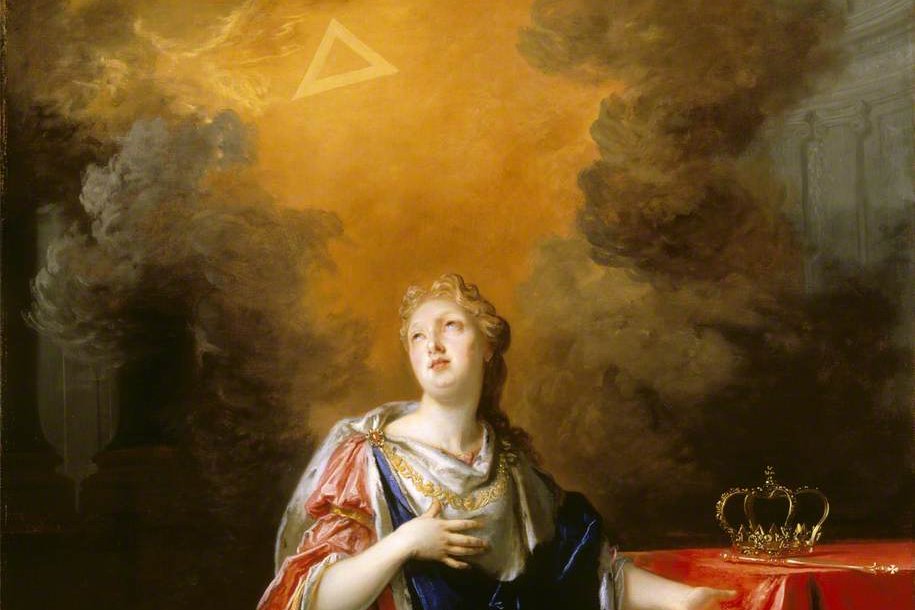
Nicolas de Largilliere, Saint Margaret, Queen of Scotland — public domain, National Trust
Whether the storm story is embellished in the retelling or not, what followed is well documented: Malcolm, a widower, married Margaret around 1070. It was, by the standards of the era, an unusually close and devoted royal marriage — chroniclers, including her own biographer Turgot, a bishop who knew her personally, describe Malcolm as deeply affectionate toward his pious wife, even reportedly having her prayer books rebound in gold, though he was, by his own admission, less inclined toward the intense religious discipline Margaret practiced herself.
A queen who fed the poor before herself
Margaret's reputation for holiness rested substantially on the consistency of her charity. Contemporary accounts describe her feeding large numbers of orphans and the poor daily at the palace, often personally serving them before she herself ate, and washing the feet of the poor in a practice that echoed the Gospel example of Christ himself. She founded hospices along pilgrim and travel routes, ensuring shelter for those journeying through often harsh terrain, and used her position and resources consistently to fund care for the sick and destitute across the kingdom.
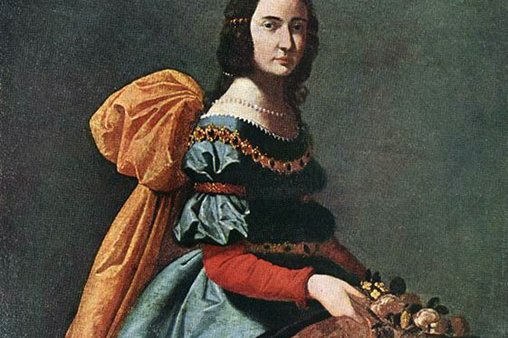
This wasn't charity performed as royal spectacle, of the kind Saint Elizabeth of Portugal would likewise be remembered for two centuries later. Margaret paired her public works with an intensely disciplined private devotional life — long hours of prayer, strict fasting, and a habit of rising in the night for private devotions that her biographer describes in some detail, suggesting the charity flowed from a genuinely rigorous interior life rather than functioning as mere political optics.
Reforming a Church at the edge of Christendom
Scotland's Christian practices, by the time Margaret arrived, had developed with a degree of independence from the wider Western Church, shaped by older Celtic Christian traditions that had taken distinct local forms over centuries of relative isolation. Margaret, drawing on the broader continental and English Church norms she had been raised with, worked — reportedly convening councils and working directly with clergy — to bring Scottish practice into closer alignment with the rest of Western Christendom: correcting the timing of the Lenten fast, restricting servile labor on Sundays in keeping with its observance as the Lord's Day, and addressing certain local liturgical customs that had drifted from wider norms.
She also invested directly in the Church's physical and institutional presence in Scotland, most notably founding Dunfermline Abbey, which grew into one of the most significant religious and, eventually, royal sites in Scottish history — several Scottish kings, including Malcolm and Margaret themselves, would later be buried there.
A relic she carried into battle, and a book she carried everywhere
Two objects tell you almost everything about how Margaret's contemporaries saw her. The first was a fragment of the True Cross, known in Scotland as the "Black Rood," which she is said to have brought with her and which later kings carried into battle as a sacred standard — a relic so closely tied to her memory that its eventual loss to the English at the Battle of Neville's Cross in 1346 was recorded by chroniclers as a genuine national loss, not merely a military one. The second was her personal gospel book, a small illuminated manuscript she carried and read from constantly. According to a story recorded by her biographer, it once fell into a river while being carried across a ford and was recovered from the water essentially undamaged — a story her contemporaries took as a small sign of divine favor. That gospel book survives today in the Bodleian Library at Oxford, one of the few personal possessions of an eleventh-century queen still in existence.
In art, Margaret is typically shown crowned and in royal dress, often holding a book (a reference to that gospel manuscript and to her reputation for learning) or a black cross, and sometimes accompanied by scenes of her distributing alms. This iconography sets her apart from the more common image of a medieval royal saint shown primarily with symbols of rulership — Margaret's attributes point toward literacy, prayer, and charity rather than power itself, which is exactly how the chroniclers who knew her wanted her remembered.
Sons who carried her reforms forward
Margaret and Malcolm had eight children together, and three of her sons — Edgar, Alexander I, and David I — each went on to rule Scotland in succession, continuing much of her work of reform and monastic patronage. David I in particular became one of medieval Scotland's great church-builders, founding numerous abbeys across the kingdom and extending the continental religious practices his mother had introduced. It's a detail worth pausing on: an exiled princess who nearly drowned reaching Scotland's shore ended up founding a dynasty whose religious character was still visibly her own two generations later.
Death and a legacy that outlasted a kingdom's turmoil
Margaret died in 1093, only days after receiving word of her husband Malcolm's death in battle — a loss chroniclers describe her receiving with remarkable composure even as her own health, already fragile, was failing. The kingdom she left behind did not have an easy transition; succession disputes followed her death, as they often did in the period. But her reputation for personal holiness endured well past the political turbulence, formalized when Pope Innocent IV canonized her in 1250, more than a century and a half after her death.
Her remains, along with Malcolm's, were later moved into a purpose-built shrine at Dunfermline Abbey, which became a major pilgrimage site in medieval Scotland before the shrine was disrupted during the Reformation. Today Margaret is venerated as the patron saint of Scotland, alongside Saint Andrew, and as a patroness of queens, widows, and large families — fitting for a woman who bore eight children while running a kingdom's charitable infrastructure and quietly steering its Church toward reform, all without ever losing the storm-tossed circumstances of how she'd arrived there in the first place. Readers curious about how other royal and noble women balanced power with radical charity can find more names gathered in the patron saints directory.
Trivia
Who was Saint Margaret of Scotland?
How did an English princess become Queen of Scotland?
What reforms did Margaret bring to the Scottish Church?
What was Margaret known for besides Church reform?
When was Saint Margaret of Scotland canonized and what is she patron of?
You May Also Like
Related Reading